Skip to Content Facebook Feature Image

New Transitional Housing Category C for Subdivided Unit Residents Launching October 2025.

HK

New Transitional Housing Category C for Subdivided Unit Residents Launching October 2025.
HK

HK

New Transitional Housing Category C for Subdivided Unit Residents Launching October 2025.

2025-09-26 15:40 Last Updated At:15:53

Category C tenants of transitional housing open for application

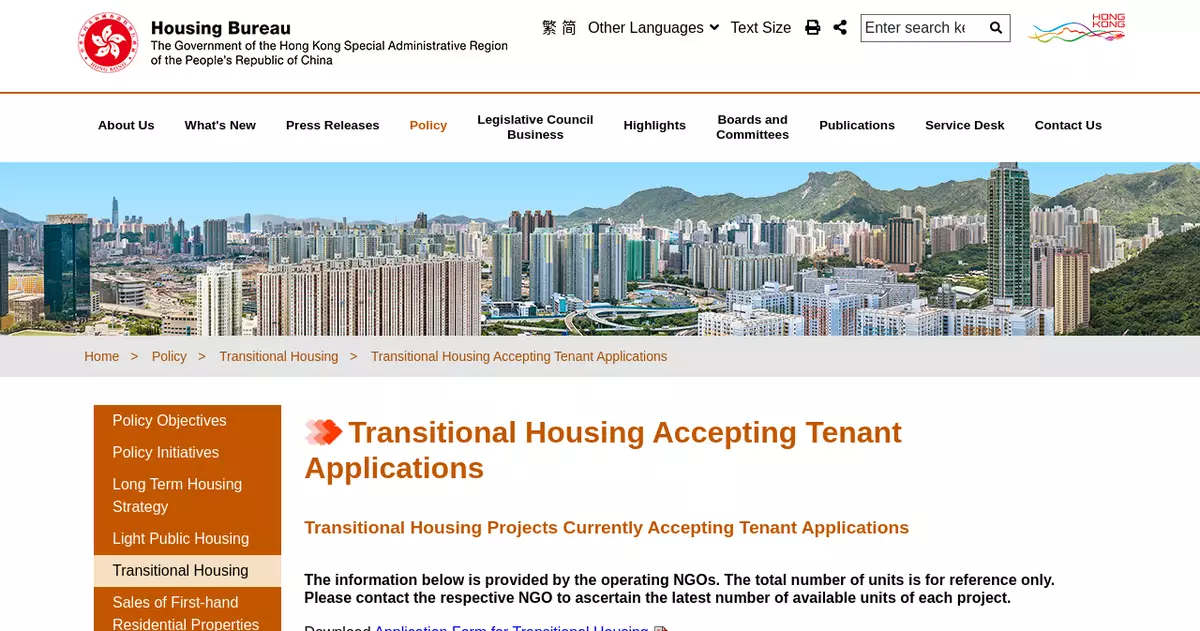
​In tandem with the implementation of the Basic Housing Unit (BHU) regulatory regime, residents of subdivided units (SDUs) with imminent short-term rehousing needs can apply for transitional housing (TH) as Category C tenants. Category C tenants will be open for application from October 3, 2025.

"The Basic Housing Units Bill was passed by the Legislative Council at its third reading today (September 26). The Basic Housing Units Ordinance will be gazetted on October 3 and come into effect on March 1, 2026. In view of the implementation of the BHU regulatory regime starting from March 1, 2026, SDU residents may be affected due to the need for alteration works in SDUs for obtaining BHU recognition, or the enforcement actions carried out by the Government upon expiry of the 12-month registration period (i.e. from March 1, 2027). Some of these residents may not be able to identify suitable accommodation within a short period of time. If the residents concerned are eligible to apply for Light Public Housing or TH, the projects which are currently in operation and coming on stream can provide them with sufficient accommodation options. However, we understand that some residents may not fulfil the relevant prevailing application requirements, e.g. income/asset exceeding the limits. Therefore, we will create a new type of Category C tenants for TH starting from October 3, in order to provide assistance to those SDU residents affected by alteration works or enforcement actions under the BHU regulatory regime in future and have imminent short-term rehousing needs," a spokesman for the Housing Bureau (HB) said.

Applicants for Category C tenants can be exempted from meeting the prevailing income/asset limits for TH, but they still need to meet other eligibility requirements (including the applicants must be 18 years of age or above; the applicants and/or their family member(s) must be residing in Hong Kong and have the right to land in Hong Kong; and must not own or co-own or have an interest in any domestic property in Hong Kong/Chinese Mainland/overseas, etc). In addition, the applicant for Category C tenants and/or his/her family member(s) must have lived in SDUs consecutively for at least six months, and provide valid documentary proof for review by any of the six District Service Teams (DSTs) commissioned by the HB to prove their rehousing needs.

Apart from reviewing the applications for Category C tenants of TH from SDU residents in need, the six DSTs will also continue to promote SDU tenancy control and the future BHU regulatory regime at the district level, as well as to provide support to SDU residents. If needed, the relevant DSTs can be contacted through the following channels:
Non-governmental organisation

Service region

Service district

(based on District Council boundaries)

Contact information

New Home Association Hong Kong Island Service Centre

Hong Kong Island

Central & Western, Eastern, Southern and Wan Chai

2807 2188 / 9267 9548

hkitcsu.nha@gmail.com

Y.T.M. Concern For Livelihood Association

Kowloon West (1)

Yau Tsim Mong

6257 4590

ytmcfla.sub@gmail.com

Hong Kong Single Parents Association

Kowloon West (2)

Sham Shui Po

9813 7512

sdu@hkspa.org.hk

New Home Association Kowloon West Service Centre

Kowloon Central & East

Kowloon City, Wong Tai Sin and Kwun Tong

2720 7010 / 6435 2496

sdu@nha.org.hk

New Territories Association of Societies (Community Services) Foundation

New Territories West

Yuen Long, Tuen Mun, Tsuen Wan, Kwai Tsing and Islands

5169 5757

ntwtpsitcsu01@gmail.com

Shatin Inhabitants Association

New Territories East

Tai Po, North, Sai Kung and Sha Tin

2691 8055 / 9683 0925

siadistrictserviceteam@gmail.com

​"The objective of creating Category C tenants for TH is to provide short-term accommodation for SDU residents in need before they identify suitable long-term accommodation. We anticipate that some Category C tenants may be able to identify suitable long-term accommodation soon after moving into TH (e.g. SDUs which have obtained BHU recognition upon completion of alteration works) and will not live in TH for a long time. Therefore, there will be a certain degree of flexibility in the tenancy for Category C tenants, which will be set on a monthly basis, with the shortest being one month and the longest generally not exceeding two years. A three-tier rental arrangement will be adopted for Category C tenants to prevent the precious housing resources from being abused. In short, Category C tenants shall pay the original rent of the TH project in the first 12 months of residence. Upon completion of the 12-month residence, they may apply for two extensions. For the first extension (i.e. 13th to 18th month of residence), upon assessment by the operating organisation, Category C tenants who are still in imminent rehousing need may be granted a six-month extension of lease, but they will be required to pay 1.5 times the rent. For the second extension (i.e. 19th to 24th month of residence), upon assessment by the operating organisation, Category C tenants who are still in imminent rehousing need may be granted a further six-month extension of lease, but they will be required to pay double rent. In addition, Category C tenants with residence of only one to six months may be required to pay an additional cleaning/administration fee to the relevant operating organisation, although this fee will not exceed half a month's rent for the relevant unit," the spokesman added.

Upon completion of review of Category C tenants by DSTs, applicants for Category C tenants can submit their applications through "TH-E" - Central and Unified Platform for TH via the HB's website; or complete the TH application form exclusively for Category C tenants and then upload it to the above-mentioned platform, or submit it by post (Task Force on Transitional Housing, Housing Bureau, P.O. Box 183, General Post Office), fax (3565 4382), email (thapp@hb.gov.hk), etc. The application form can be downloaded from the above-mentioned website or obtained from the DSTs.

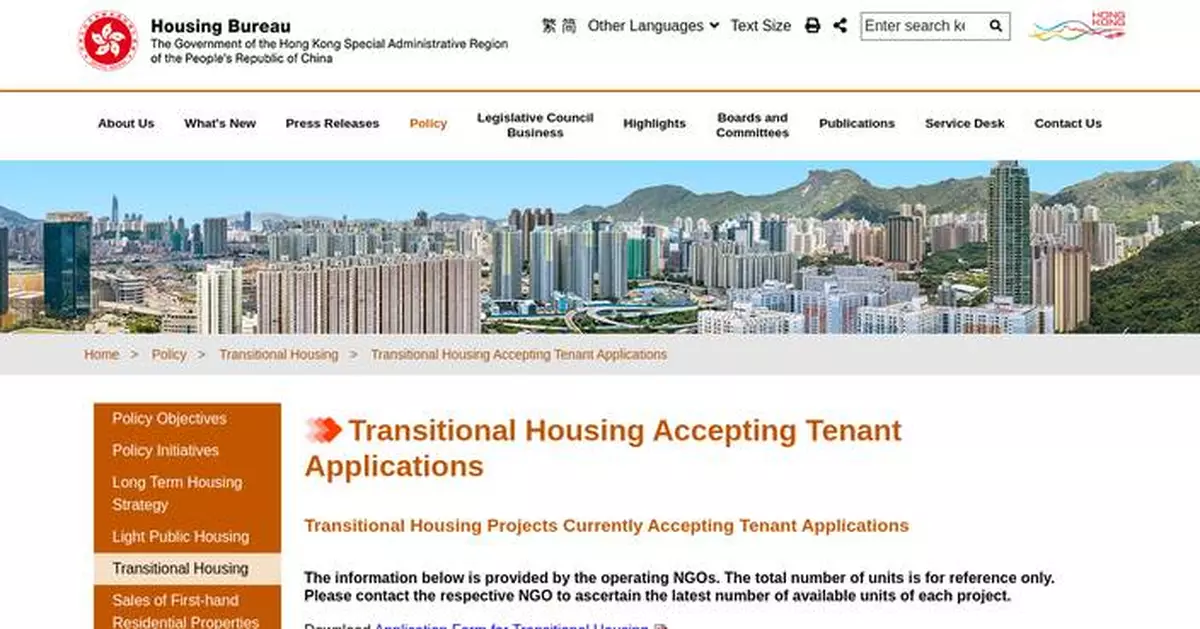
For information on the application for TH, please visit the HB's website www.hb.gov.hk/eng/policy/housing/policy/transitional/tenantapplications.html. For any enquiries, please contact the Task Force on Transitional Housing under the HB (Tel: 3611 8156; email: thapp@hb.gov.hk).

Source: AI-found images
Source: AI-found images

Seven persons arrested during anti-illegal worker operation

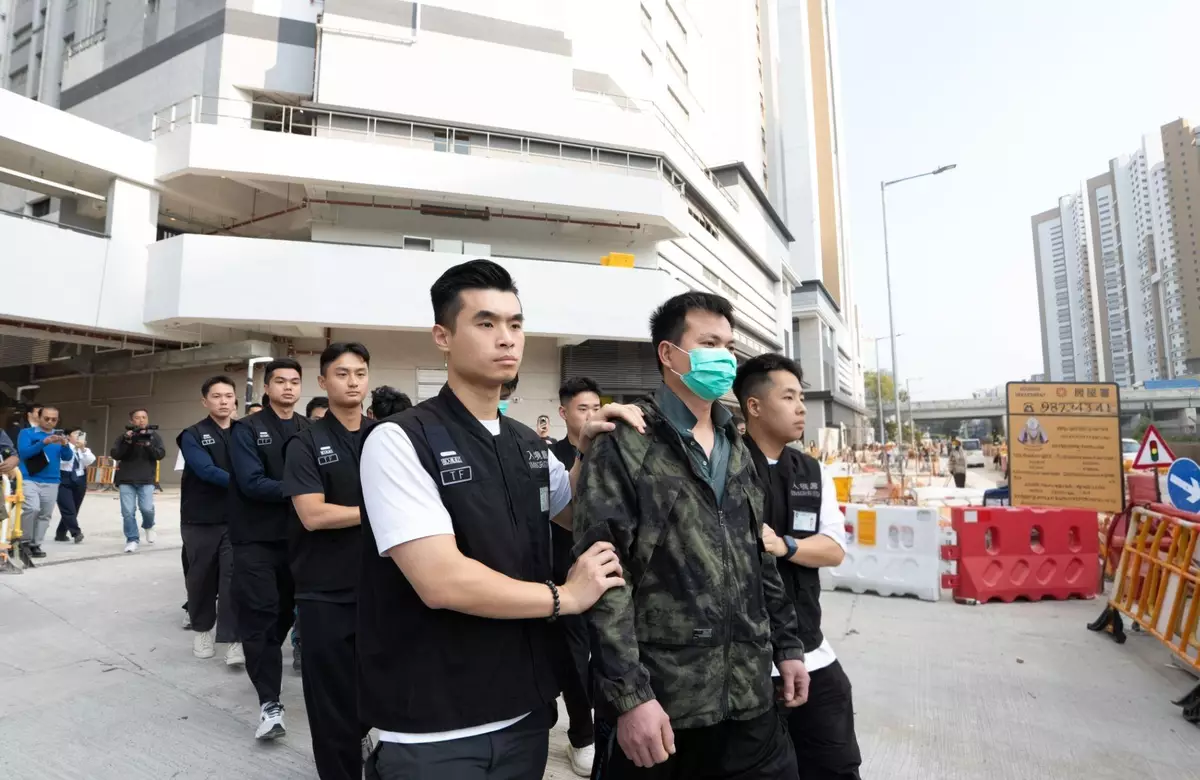
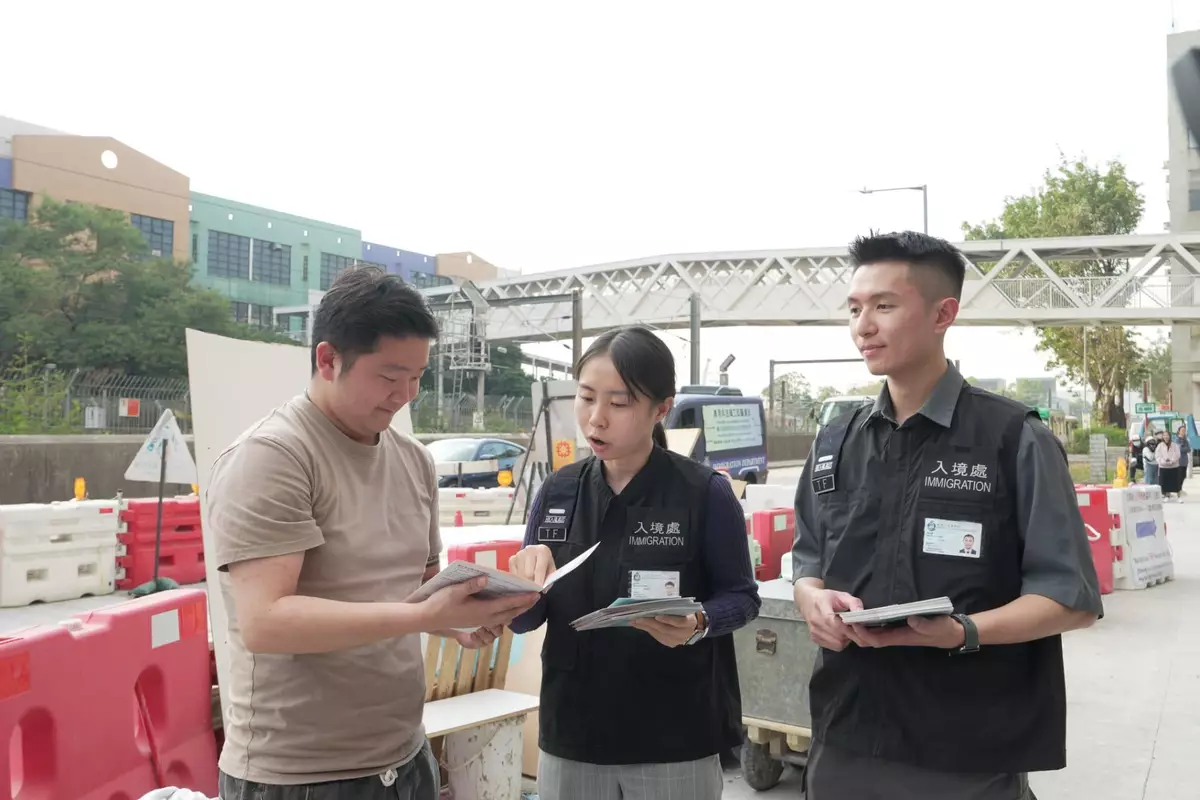
The Immigration Department (ImmD) mounted an anti-illegal worker operation codenamed "Contribute" today (January 15).During the operation, ImmD Task Force officers raided premises under renovation in a newly built public housing estate in Sheung Shui district.A total of six suspected illegal workers and one suspected employer were arrested. Thearrested suspected illegal workers comprise six men, aged 22 to 41. Furthermore, one man, aged 45, suspected of employing the illegal workers, was also arrested. An investigation into the suspected employers is ongoing, and the possibility of further arrests is not ruled out.

Apart from mounting the enforcement operation, ImmD officers and a promotional vehicle have been deployed to distribute "Don't Employ Illegal Workers" leaflets and convey the message in the estate.

An ImmD spokesman said, "Any person who contravenes a condition of stay in force in respect of him or her shall be guilty of an offence. Also, visitors are not allowed to take employment in Hong Kong, whether paid or unpaid, without the permission of the Director of Immigration. Offenders are liable to prosecution and upon conviction face a maximum fine of $50,000 and up to two years' imprisonment. Aiders and abettors are also liable to prosecution and penalties."

The spokesman stressed that it is a serious offence to employ people who are not lawfully employable. Under the Immigration Ordinance, the maximum penalty for an employer employing a person who is not lawfully employable, i.e. an illegal immigrant, a person who is the subject of a removal order or a deportation order, an overstayer or a person who was refused permission to land, has been significantly increased from a fine of $350,000 and three years' imprisonment to a fine of $500,000 and 10 years' imprisonment to reflect the gravity of such offences. The director, manager, secretary, partner, etc, of the company concerned may also bear criminal liability. The High Court has laid down sentencing guidelines that the employer of an illegal worker should be given an immediate custodial sentence.

According to the court sentencing, employers must take all practicable steps to determine whether a person is lawfully employable prior to employment. Apart from inspecting a prospective employee's identity card, the employer has the explicit duty to make enquiries regarding the person and ensure that the answers would not cast any reasonable doubt concerning the lawful employability of the person. The court will not accept failure to do so as a defence in proceedings. It is also an offence if an employer fails to inspect the job seeker's valid travel document if the job seeker does not have a Hong Kong permanent identity card. Offenders are liable upon conviction to a maximum fine of $150,000 and to imprisonment for one year. In that connection, the spokesman would like to remind all employers not to defy the law by employing illegal workers. The ImmD will continue to take resolute enforcement action to combat such offences.

Under the existing mechanism, the ImmD will, as a standard procedure, conduct an initial screening of vulnerable persons, including illegal workers, illegal immigrants, sex workers and foreign domestic helpers, who are arrested during any operation with a view to ascertaining whether they are trafficking in persons (TIP) and/or forced labour victims. When any TIP and/or forced labour indicator is revealed in the initial screening, the ImmD officers will conduct a full debriefing and identification by using a standardised checklist to ascertain the presence of TIP and/or forced labour elements. Identified TIP and/or forced labour victims will be provided with various forms of support and assistance, including urgent intervention, medical services, counselling, shelter or temporary accommodation and other supporting services. The ImmD calls on TIP and/or forced labour victims to report crimes to the relevant departments immediately.

For reporting illegal employment activities, please call the dedicated hotline 3861 5000, by fax at 2824 1166, email to anti_crime@immd.gov.hk, or submit "Online Reporting of Immigration Offences" form at www.immd.gov.hk.

Seven persons arrested during anti-illegal worker operation  Source: HKSAR Government Press Releases

Seven persons arrested during anti-illegal worker operation Source: HKSAR Government Press Releases

Seven persons arrested during anti-illegal worker operation  Source: HKSAR Government Press Releases

Seven persons arrested during anti-illegal worker operation Source: HKSAR Government Press Releases

Recommended Articles