Skip to Content Facebook Feature Image

Thune says a shutdown can still be avoided if Democrats 'dial back' their demands

News

Thune says a shutdown can still be avoided if Democrats 'dial back' their demands
News

News

Thune says a shutdown can still be avoided if Democrats 'dial back' their demands

2025-09-26 19:00 Last Updated At:19:10

WASHINGTON (AP) — Senate Majority Leader John Thune is rejecting Democratic demands on health care as unserious but says a government shutdown is still “avoidable” despite sharp divisions ahead of Wednesday's funding deadline.

“I’m a big believer that there’s always a way out,” the South Dakota Republican said in an interview with The Associated Press on Thursday. “And I think there are off-ramps here, but I don’t think that the negotiating position, at least at the moment, that the Democrats are trying to exert here is going to get you there.”

Thune said Democrats are going to have to “dial back” their demands, which include immediately extending health insurance subsidies and reversing the health care policies in the massive tax bill that Republicans passed over the summer. Absent that, Thune said, “we’re probably plunging forward toward the shutdown.”

It's just the latest standoff in Washington over government funding, stretching back through several administrations. President Donald Trump was the driving force behind the longest shutdown ever during his first term, as he sought money for a U.S.-Mexico border wall. This time it is Democrats who are making demands as they face intense pressure from their core supporters to stand up to the Republican president and his policies.

Democrats have shown little signs of relenting, just before spending runs out Wednesday. Their position remained the same even after the White House Office of Management and Budget on Wednesday released a memo that said agencies should consider a “reduction in force” for many federal programs if the government closes — meaning thousands of federal workers could be permanently laid off.

Senate Democratic Leader Chuck Schumer of New York said the OMB memo was simply an “attempt at intimidation” and predicted the “unnecessary firings will either be overturned in court or the administration will end up hiring the workers back.”

Thune stopped short of criticizing the White House threat of mass layoffs, saying the situation remains “a hypothetical.” Still, he said no one should be surprised by the memo as “everyone knows Russ Vought,” the head of the Office of Management and Budget, and his longtime advocacy for slashing government.

“But it’s all avoidable,” Thune said. “And so if they don’t want to go down that path, there’s a way to avoid going down that path.”

One way to avoid a shutdown, Thune said, would be for enough Democrats to vote with Republicans for a stripped-down “clean” bill to keep the government open for the next seven weeks while negotiations on spending continue. That’s how Republicans avoided a shutdown in March, when Schumer and several other Democrats decided at the last minute to vote with Republicans — to great political cost when Schumer's party then revolted.

A seven-week funding bill has already passed the House.

“What would eight Democrats be willing to support?” Thune asked. “In terms of a path forward, or at least understanding what that path forward looks like.”

Republicans in the 100-member Senate need at least seven Democrats to vote with them to get the 60 votes necessary for a short-term funding package, and they may lose up to two of their own — Republican Sens. Lisa Murkowski of Alaska and Rand Paul of Kentucky both opposed it in preliminary votes last week. A competing bill from Democrats also fell well short of 60 votes.

Thune suggested some individual bipartisan bills to fund parts of the government for the next year could be part of a compromise, “but that requires cooperation from both sides,” he said.

Democrats say they are frustrated that Thune hasn’t approached them to negotiate — and that Trump abruptly canceled a meeting with Schumer and House Democratic Leader Hakeem Jeffries of New York that had been scheduled for this week. Trump wrote on social media, “I have decided that no meeting with their Congressional Leaders could possibly be productive.”

Thune said he “did have a conversation with the president” and offered his opinion on the meeting, which he declined to disclose. “But I think the president speaks for himself, and I think he came to the conclusion that that meeting would not be productive,” Thune said.

Still, he says he thinks Trump could be open to a negotiation on the expanded health care subsidies that expire at the end of the year if Democrats weren't threatening a shutdown. Many people who receive the subsidies through the marketplaces set up by the Affordable Care Act are expected to see a sharp rise in premiums if Congress doesn’t extend them.

Some Republicans have agreed with Democrats that keeping the subsidies is necessary, but Thune says “reform is going to have to be a big part of it.” Democrats are likely to oppose such changes.

By Monday, when the Senate returns to session, lawmakers will have just over 24 hours to avoid federal closures.

Thune said he intends to bring up the bills that were rejected last week. “They’ll get multiple chances to vote,” he said, before a government shutdown begins at midnight Wednesday.

He said he hopes “cooler heads will prevail.”

“I don’t think shutdowns benefit anybody, least of all the American people,” Thune said.
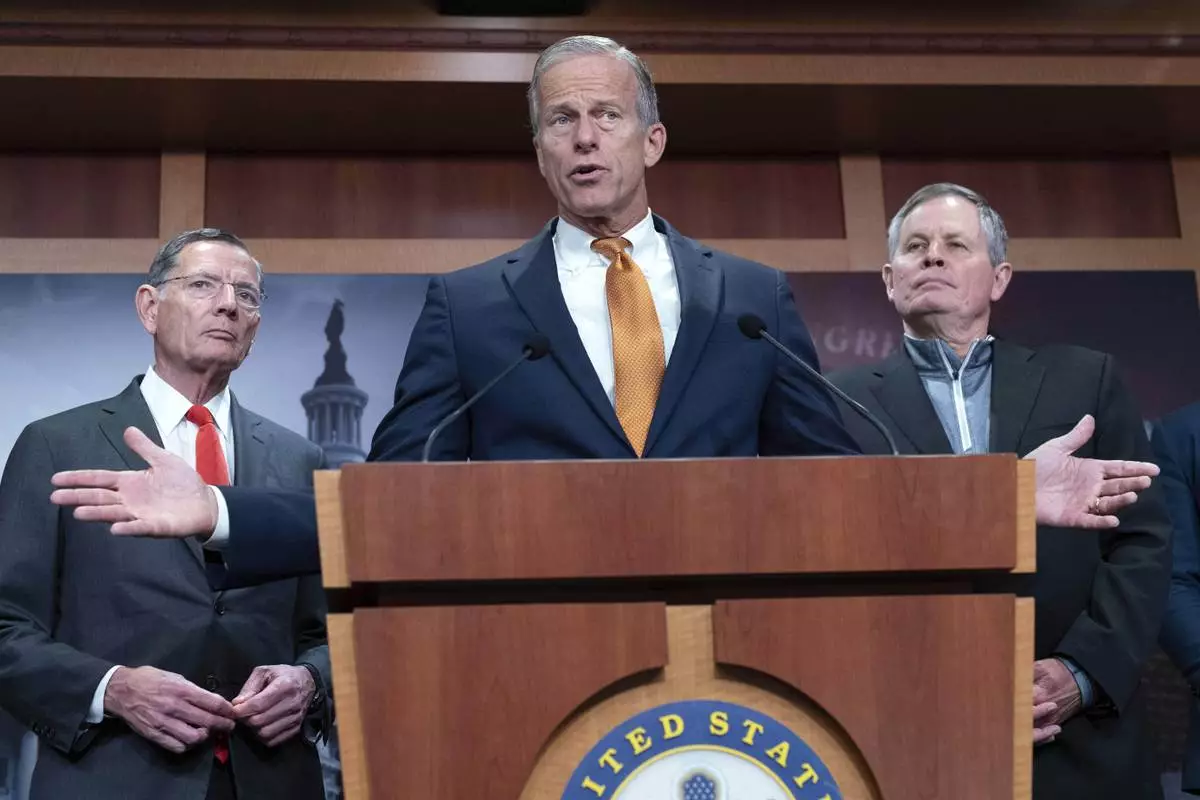
Senate Majority Leader John Thune, R-S.D., flanked by Sen. John Barrasso, R-Wyo., left, and Sen. Steve Daines, R-Mont., speaks during a news conference on Capitol Hill in Washington, Friday, Sept. 19, 2025. (AP Photo/Jose Luis Magana)
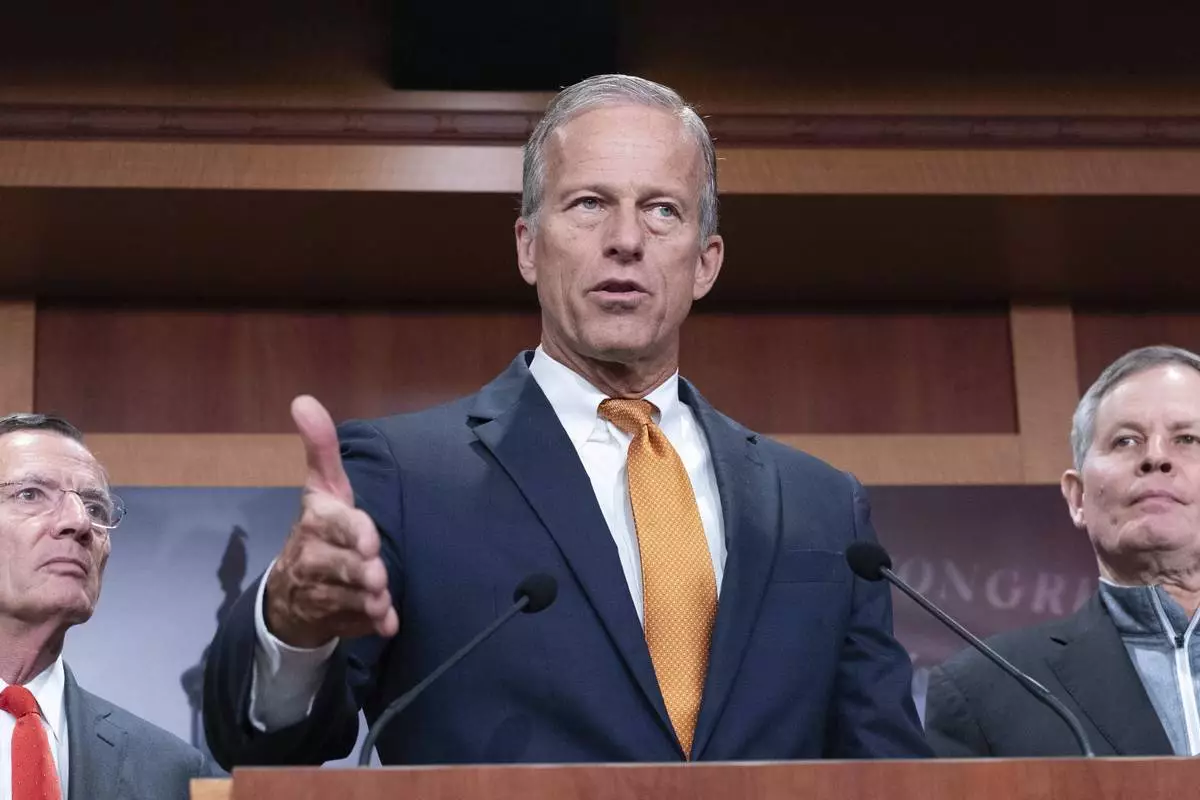
Senate Majority Leader John Thune, R-S.D., flanked by Sen. John Barrasso, R-Wyo., left, and Sen. Steve Daines, R-Mont., speaks during a news conference on Capitol Hill in Washington, Friday, Sept. 19, 2025. (AP Photo/Jose Luis Magana)
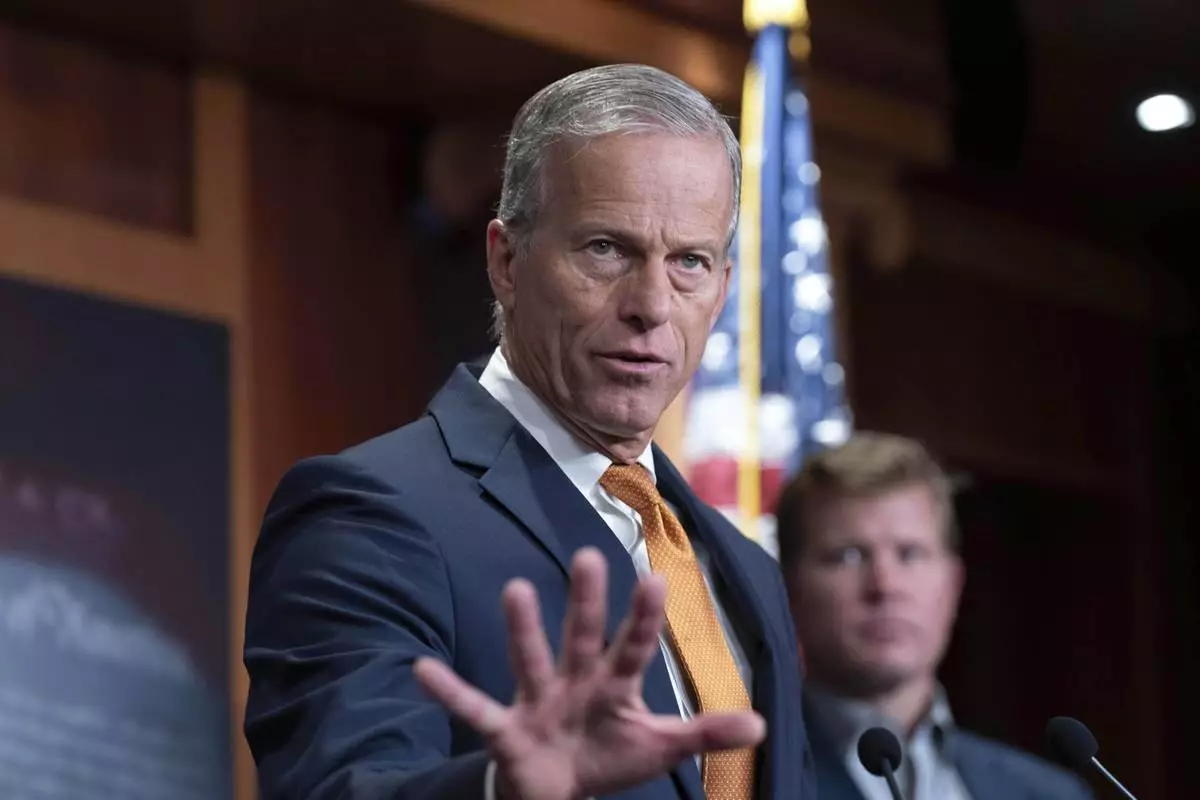
Senate Majority Leader John Thune, R-S.D., flanked by Sen. John Barrasso, R-Wyo., left, and Sen. Steve Daines, R-Mont., speaks during a news conference on Capitol Hill in Washington, Friday, Sept. 19, 2025. (AP Photo/Jose Luis Magana)
Senate Majority Leader John Thune, R-S.D., flanked by Sen. John Barrasso, R-Wyo., left, and Sen. Steve Daines, R-Mont., speaks during a news conference on Capitol Hill in Washington, Friday, Sept. 19, 2025. (AP Photo/Jose Luis Magana)

Senate Majority Leader John Thune, R-S.D., speaks during a news conference on Capitol Hill in Washington, Friday, Sept. 19, 2025. (AP Photo/Jose Luis Magana)

Senate Majority Leader John Thune, R-S.D., speaks during a news conference on Capitol Hill in Washington, Friday, Sept. 19, 2025. (AP Photo/Jose Luis Magana)
ABUJA, Nigeria (AP) — The United States airstrikes that targeted Islamic State militants in northwestern Nigeria on Thursday marked a major escalation in an offensive that Nigeria's overstretched military has struggled with for years.

U.S. President Donald Trump said on social media that the “powerful and deadly” strikes were carried out against Islamic State militants “targeting and viciously killing, primarily, innocent Christians.” Residents and security analysts have said Nigeria’s security crisis affects both Christians, predominant in the south, and Muslims, who are the majority in the north.

Nigeria, which is battling multiple armed groups, said the U.S. strikes were part of an exchange of intelligence and strategic coordination between the two countries.

The Associated Press could not confirm the extent of the strikes' impact. U.S. Defense Secretary Pete Hegseth, in a post on X about the airstrikes, said: “More to come...”

The armed groups in Africa’s most populous country include at least two affiliated with the Islamic State — an offshoot of the Boko Haram extremist group known as the Islamic State West Africa Province in the northeast, and the lesser-known Islamic State Sahel Province (ISSP) known locally as Lakurawa and prominent in the northwest.

Although officials did not say exactly which group was targeted, security analysts said the target, if indeed against Islamic State militants, was likely members of Lakurawa, which became more lethal in border states like Sokoto and Kebbi in the last year, often targeting remote communities and security forces.

The Nigerian military has said in the past that the group has roots in neighboring Niger and that it became more active in Nigeria's border communities following a 2023 military coup. That coup resulted in fractured relations between Nigeria and Niger, and affected their multinational military operations along the porous border.

Multiple analysts have said Lakurawa has been active in northwest Nigeria since around 2017 when it was invited by traditional authorities in Sokoto to protect their communities from bandit groups.

The militants, however, "overstayed their welcome, clashing with some of the community leaders ... and enforcing a harsh interpretation of sharia law that alienated much of the rural population,” according to James Barnett, an Africa researcher with the Washington-based Hudson Institute.

“Communities now openly say that Lakurawa are more oppressive and dangerous than the bandits they claim to protect them from," according to Malik Samuel, a Nigerian security researcher with Good Governance Africa.

Lakurawa controls territories in Sokoto and Kebbi states, and has become known for killings, kidnapping, rape and armed robbery, Samuel said.

But some of the attacks blamed on Lakurawa are by the Islamic State Sahel Province, which has expanded from Niger’s Dosso region to northwestern Nigeria, according to the U.S.-based Armed Conflict Location & Event Data Project.

“ISSP has maintained a low profile, operating covertly to infiltrate and entrench itself along the Niger-Nigeria border, and is now also expanding its operations toward the Beninese border,” the project said in a recent report.

The security woes are more of a governance problem than a military one.

Motives for attacks differ but the gangs are often driven by the near absence of a state and security presence in conflict hot spots, making recruitment easy. Those hot spots, data show, have some of the country's highest levels of poverty, hunger and lack of jobs.

Nigeria’s Minister of Defense Christopher Musa once said in his past capacity as the defense chief that military action is only 30% of what is needed to fix the country's security crisis, while the remaining 70% depends on good governance.

“The absence of the state in remote communities is making it easy for non-state actors to come in and present themselves to the people as the best alternative government,” said Samuel.

Thursday's U.S. strikes were seen as crucial help for Nigeria’s security forces, which are often overstretched and outgunned as they fight multiple security crises across different regions.

In states like Sokoto, the military often carries out airstrikes targeting militant hideouts and Nigeria has embarked on mass recruitment of security forces.

But analysts say military operations targeting the gangs are not usually sustained and the militants easily move on motorcycles to new locations through vast forests that connect several states in the north.

They also often use hostages — including schoolchildren — as cover, making airstrikes difficult.

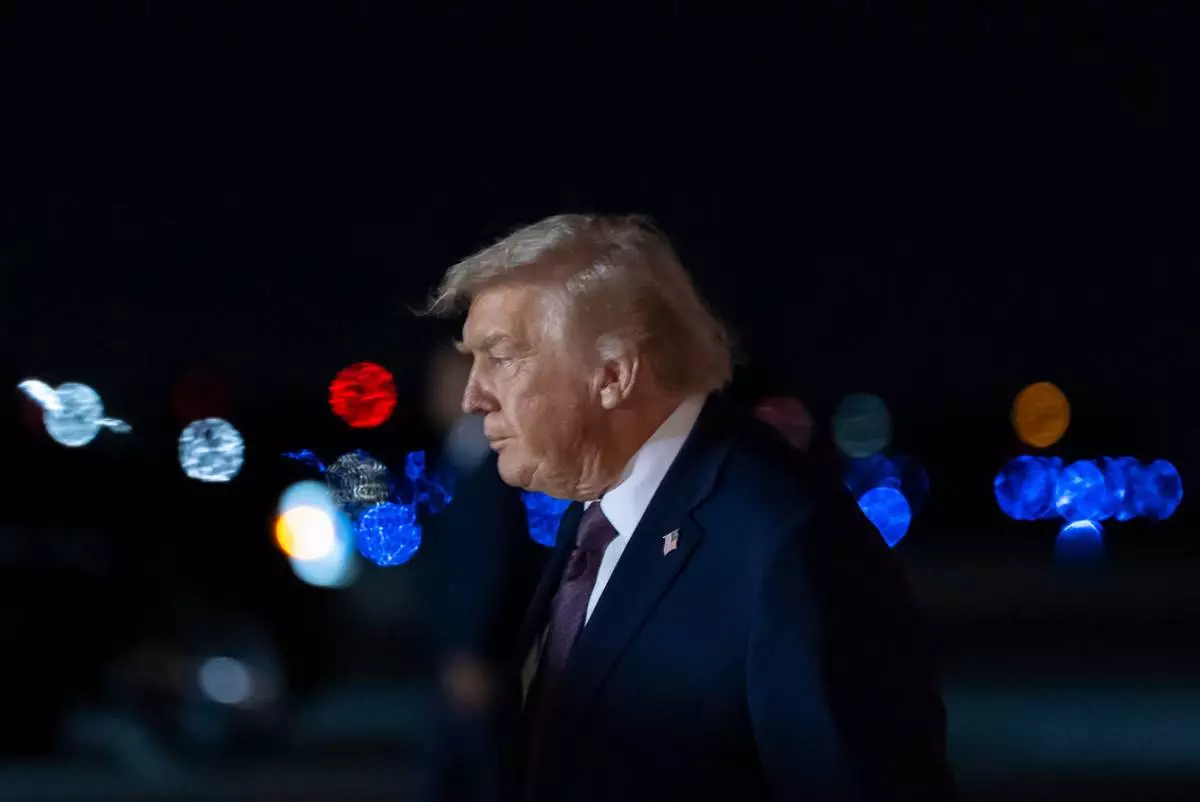
President Donald Trump arrives on Air Force One at Palm Beach International Airport, Saturday, Dec. 20, 2025, in West Palm Beach, Fla. (AP Photo/Alex Brandon)

President Donald Trump arrives on Air Force One at Palm Beach International Airport, Saturday, Dec. 20, 2025, in West Palm Beach, Fla. (AP Photo/Alex Brandon)

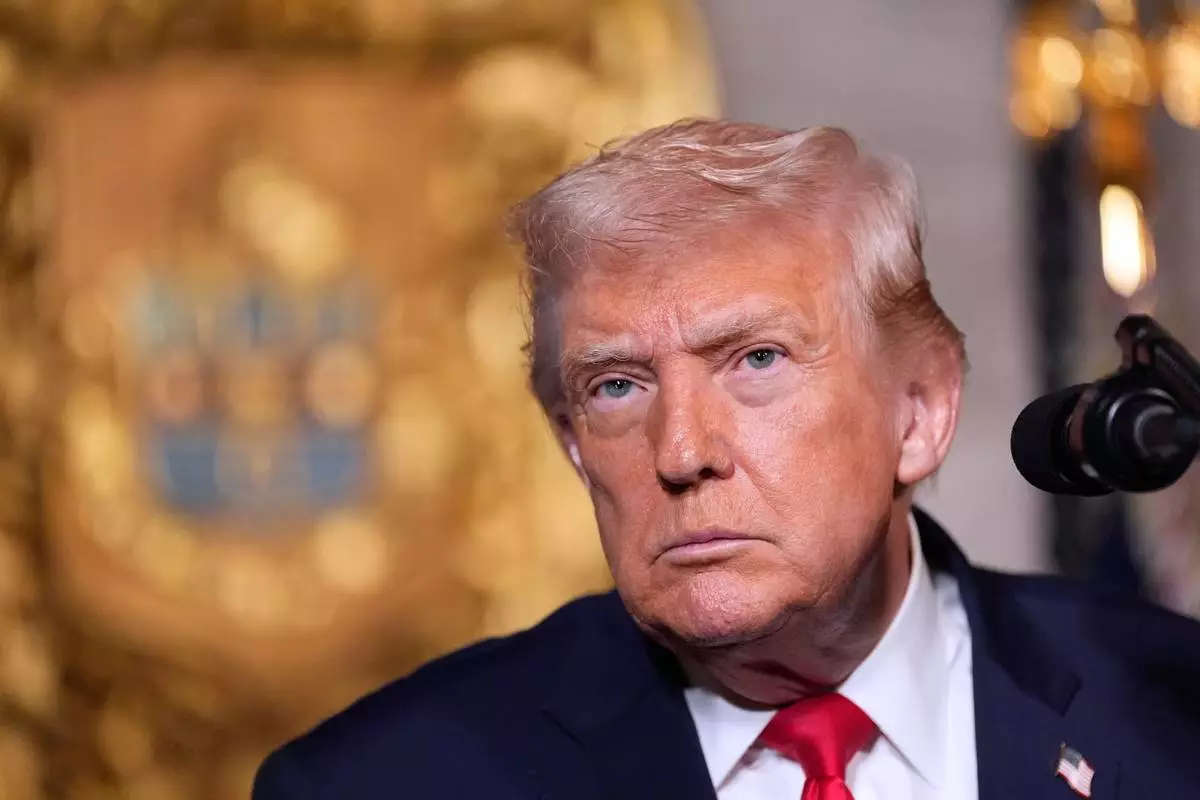
President Donald Trump speaks at his Mar-a-Lago club, Monday, Dec. 22, 2025, in Palm Beach, Fla. (AP Photo/Alex Brandon)

President Donald Trump speaks at his Mar-a-Lago club, Monday, Dec. 22, 2025, in Palm Beach, Fla. (AP Photo/Alex Brandon)

Recommended Articles