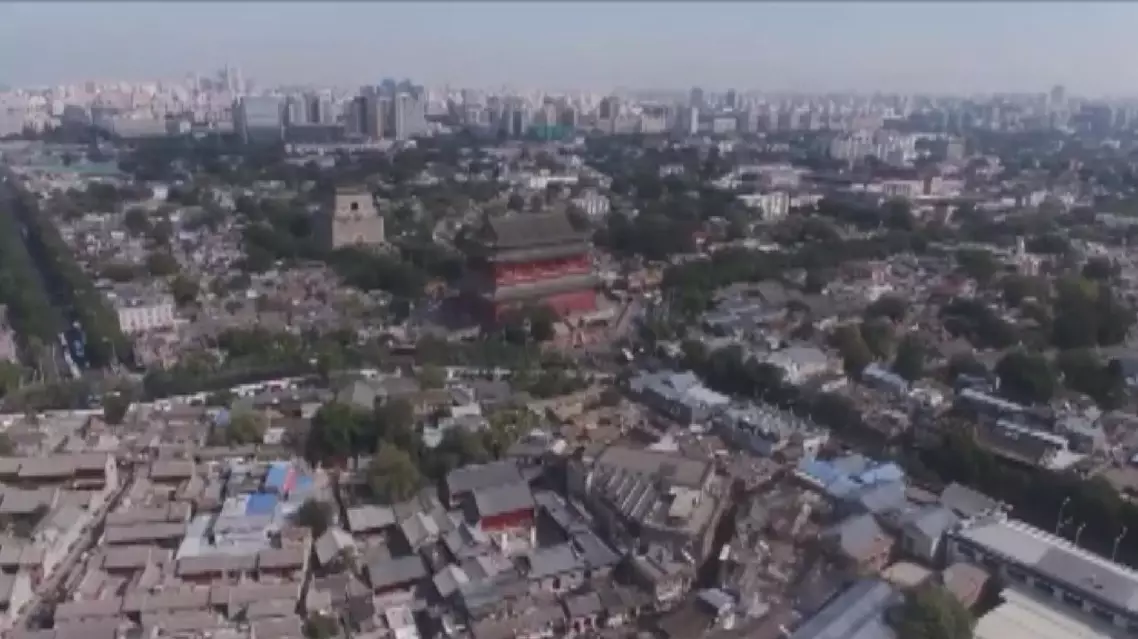
A Beijing hutong has been actively exploring democratic practices to improve community-level governance and manage neighborhood affairs.
Amid the rhythm of Beijing's broad avenues and towering skyline lies a quieter, more intimate pulse of life -- its neighborhoods. In one such community, residents are shaping their own future through a unique platform for dialogue and action: the Small Courtyard Council.
Beijing is a capital city of contrasts, an ancient history paired with cutting-edge modernity. This political and cultural hub faces a colossal task to ensure a high quality of life for over 21 million residents.
The success of this endeavor depends on effective management at the community level.
Beijing's Caochang community is home to around 2,700 residents. At its heart is the Small Courtyard Council -- a platform for discussing public affairs and community issues.
Through initiatives like this, the community has fostered greater engagement and created activities that meet the needs of residents, particularly seniors.
That impact is felt in daily life.
Resident Qin Hong, for example, is a member of a dance group comprised of retired enthusiasts who regularly train and perform -- an activity she says has greatly enriched their recreational lives.
"Since there are quite a lot of retirees in our neighborhood, the community set up a dance group to help enrich their free time. They brought together retired residents who love dancing to practice and perform together and they have given us tons of support," said Qin.
Li Caixian, a long-time community resident, serves as the coordinator of the Small Courtyard Council.
She spoke enthusiastically about how the platform has helped foster better communication, strengthen mutual understanding, and improve the management of the neighborhood.
"Everyone in the council actually lives right here in the hutong. Whenever someone notices an issue in the neighborhood, they will just post it in our WeChat group. Then we get together and talk it out. Like a little while back, we discussed the need for a safe place to charge e-bikes, and ended up building a whole charging shed because of it," said Li.
The charging shed mentioned by Li is located in the same hutong where resident Zhao Baochun lives. Zhao explained that many residents had been in urgent need of such a facility, as charging electric bikes at home posed safety risks, while makeshift solutions like dangling chargers from windows created clutter and inconvenience.
"Residents have realized how dangerous it is to charge bikes at home, so now they're happy to come here instead. Everyone parks neatly. It's been really popular. People really appreciate it," Zhao said.
Li Zheng, who serves as both Party Committee Secretary and Director of the Residents' Committee in Caochang Community, emphasized that the core purpose of the Small Courtyard Council is to deliver tangible benefits and everyday convenience to local residents.
"The 'Small Courtyard Council' was established in 2012 and has now been operating for 13 years. In its early days, it began informally -- a group of residents gathering under a tree or near doorsteps, discussing family matters, resolving minor neighborhood disputes, and addressing shared concerns about community management. Recognizing the value of their collaborative problem-solving approach, the Party Committee decided to formalize the initiative. Thus, the 'Small Courtyard Council' was established as a dedicated platform for community deliberation," Li said.
From charging sheds to dance groups, what unfolds here is more than just local problem-solving -- it's grassroots governance.
By blending grassroots voices with Party leadership, Caochang offers a glimpse into how urban China is building not just modern cities, but meaningful communities.
Beijing neighborhood builds community through grassroots democracy