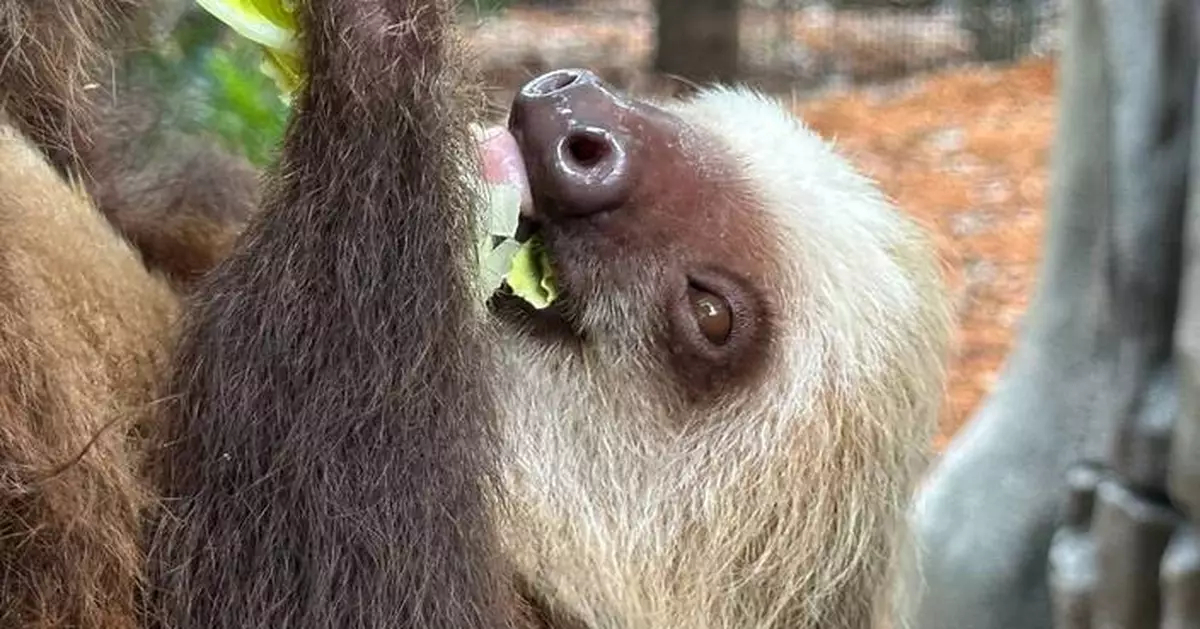
WEST PALM BEACH, Fla. (AP) — Golden lion tamarins and Hoffman's two-toed sloths have become unlikely roommates in a brand new habitat at the Palm Beach Zoo and Conservation Society in Florida.
Both species are native to the forests of South America, which is why the new habitat features a thick canopy of trees. The golden tamarins, with their distinct orange mane, love frolicking in the treetops, while the sloths are perfectly happy hanging from the trees.
“Maybe the golden tamarins think of the sloth as more furniture because they don’t really do too much. They’re more sedentary,” said Devin Clarke, a senior supervisor at the zoo. "They like to sleep during the day, a little bit more active at night. So just watching, you know, like their couch walking around at night isn’t too scary for them.”
The habitat, which opened in late August, offers the sloths and tamarins a unique space to interact with one another — or mind their own business. The space features a network of vines, ropes and tunnels that encourages exploration, zoo officials said.
“Just being able to see them up close and personal is really a way to inspire connection,” Clarke said. “And once people start really having that connection and harboring that connection with the wild animal, they’re able to look at their lives and say, ‘What can I do differently to help these animals’ wild counterparts down in Brazil and Central America thrive?’”
He said that in the 1970s, there were less than 200 golden tamarinds in the wild. Some 40 zoos accredited through the Association of Zoos and Aquariums put together a plan to rerelease the species into the wild. Their numbers topped 5,000 as of last year, he said.
The previous tamarin habitat at the zoo was a little smaller, Clarke said.
“We wanted to be able to give them a better well-being, so enhancing their lives with enrichment, with space, so they can act a little bit more natural,” he added.
Conservation is part of the Palm Beach Zoo's identity, so native Florida plants are part of the new habitat.
“Planting those Florida native plants within that habitat is a great way to highlight something we can do at our own homes ,” Clarke said. “Even if you have an apartment, just putting out a potted plant that’s a Florida native plant helps kind of revitalize the ecosystem that we have here in South Florida.”
The new habitat provides an opportunity for visitors to have get a closer view of the two species, said Margo McKnight, the zoo's president and CEO.
“We hope to foster a love for wildlife in wild places, including our own backyards. We hope every person leaves inspired to be a wildlife hero in their own community,” she said.
Frisaro reported from Fort Lauderdale, Florida.
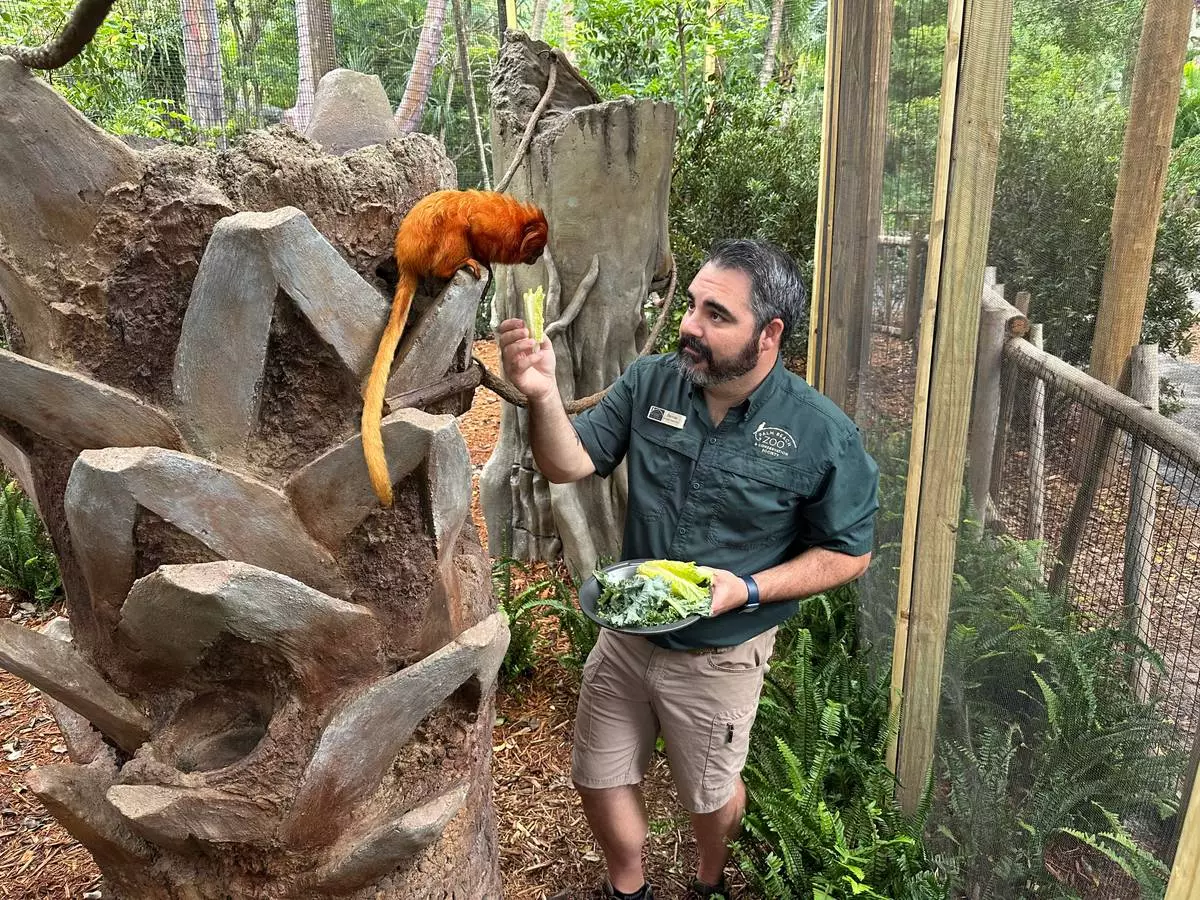
A golden lion tamarin is fed by Devin Clarke inside its new habitat at the Palm Beach Zoo Conservation Society on Thursday, Sept. 18, 2025 in West Palm Beach, Fla. (AP Photo/Cody Jackson)
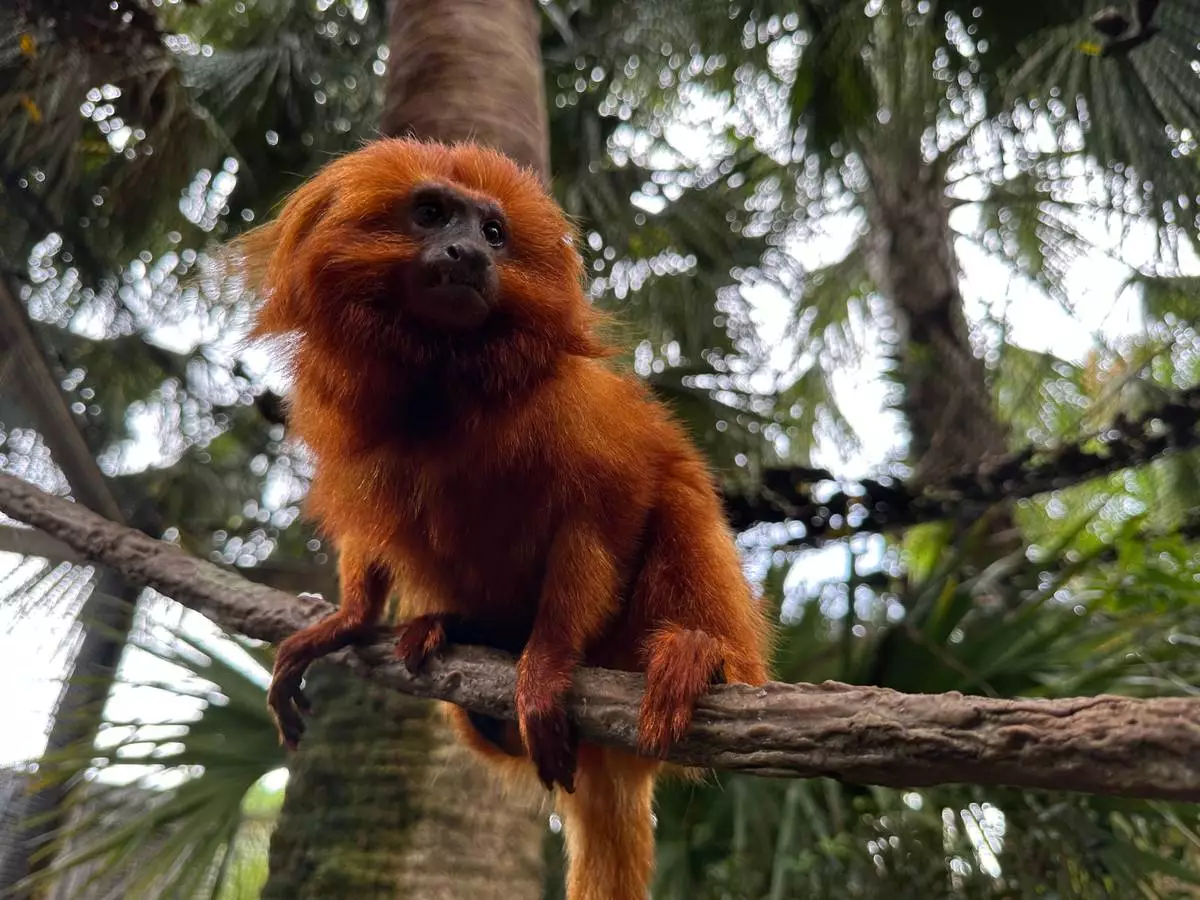
A golden lion tamarin is seen inside its new habitat at the Palm Beach Zoo Conservation Society on Thursday, Sept. 18, 2025 in West Palm Beach, Fla. (AP Photo/Cody Jackson)
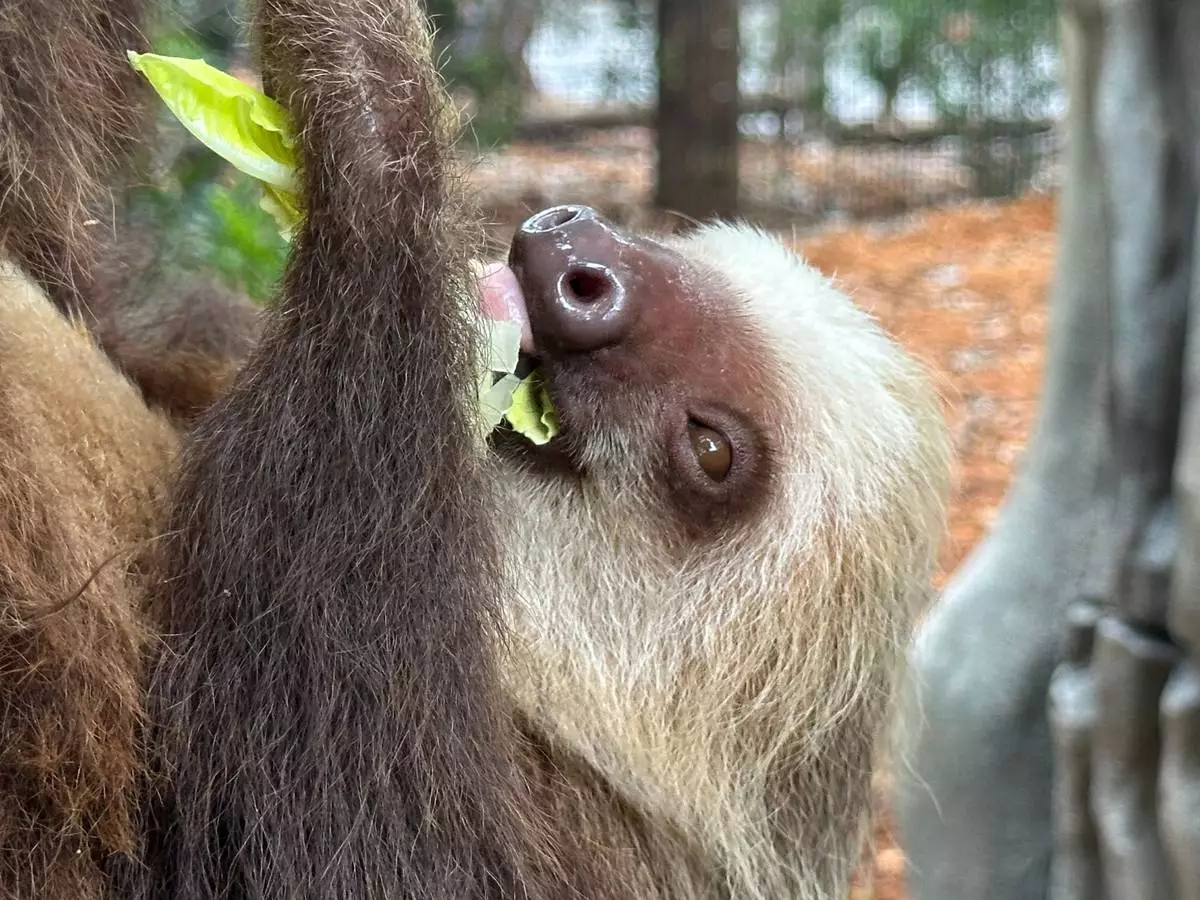
A Hoffman's two-toed sloth is seen eating inside its new habitat at the Palm Beach Zoo Conservation Society on Thursday, Sept. 18, 2025 in West Palm Beach, Fla. (AP Photo/Cody Jackson)
One U.S. service member was rescued and at least one was missing after two U.S. military planes went down in separate incidents including the first shoot-down since the war began nearly five weeks ago.
It was the first time U.S. aircraft have been downed in the conflict and came just two days after President Donald Trump said in a national address that the U.S. has “beaten and completely decimated Iran.”
One fighter jet was shot down in Iran, officials said. A U.S. crew member from that plane was rescued, but a second was missing, and a U.S. military search-and-rescue operation was underway.
Separately, Iranian state media said a U.S. A-10 attack aircraft crashed in the Persian Gulf after being struck by Iranian defense forces. A U.S. official, speaking on condition of anonymity to discuss a sensitive military situation, said it was not clear if the aircraft crashed or was shot down.
The war now entering its sixth week is destabilizing economies around the world as Iran responds to the U.S. and Israeli attacks by targeting the Gulf region's energy infrastructure and tightening its grip on oil and natural gas shipments through the Strait of Hormuz.
Here is the latest:
Israel’s rescue services said Saturday the man sustained glass shrapnel wounds after an Iranian missile hit the central city of Bnei Brak.
It wasn't clear if the glass shrapnel was caused by a direct strike or falling debris from an intercepted missile.
Israel’s Magen David Adom rescue services said it was taking the man to the hospital.
The Iranian judiciary's Mizan news agency said Saturday that the two men who were hanged belonged to the Iranian exile group Mujahedeen-e-Khalq.
The agency said Abul-Hassan Montazer and Vahid Bani-Amirian were convicted of “being members of a terrorist group.”
This brings to six the total number of MEK members executed since the start of the war.
Activists and rights groups say Iran routinely holds closed-door trials in which defendants are unable to challenge the accusations they face.
The Israeli military said on Saturday that its air force struck ballistic and and anti-aircraft missile storage sites in Tehran.
It said the strikes a day earlier included weapons manufacture sites as well as military research and development facilities in the Iranian capital.
It said the strikes are part of an ongoing phase to increase damage to Iran's “core systems and foundations.”
Authorities in Dubai said the facades of two buildings were damaged by debris from intercepted drones, including one belonging to U.S. tech firm Oracle. No injuries were reported.
Iran’s Revolutionary Guard has threatened to attack Oracle and 17 other U.S. companies after accusing them of being involved in “terrorist espionage” operations in Iran.
Previous Iranian drone strikes caused damage to three Amazon Web Services facilities in the United Arab Emirates and Bahrain.
As of Friday, 247 of the wounded were Army soldiers, 63 were Navy sailors, 19 were Marines and 36 were Air Force airmen, according to Pentagon data available online.
It is unclear if the data includes any of the service members involved in the downing of two combat aircraft reported Friday.
Most of the wounded — 200 — were also mid to senior enlisted troops, 85 were officers and 80 were junior enlisted service members.
The current death toll remains at 13 service members killed in combat.

Palestinian Muslims attend Friday prayers outside Jerusalem's Old City due to restrictions linked to the Iran war, April 3, 2026. (AP Photo/Mahmoud Illean)
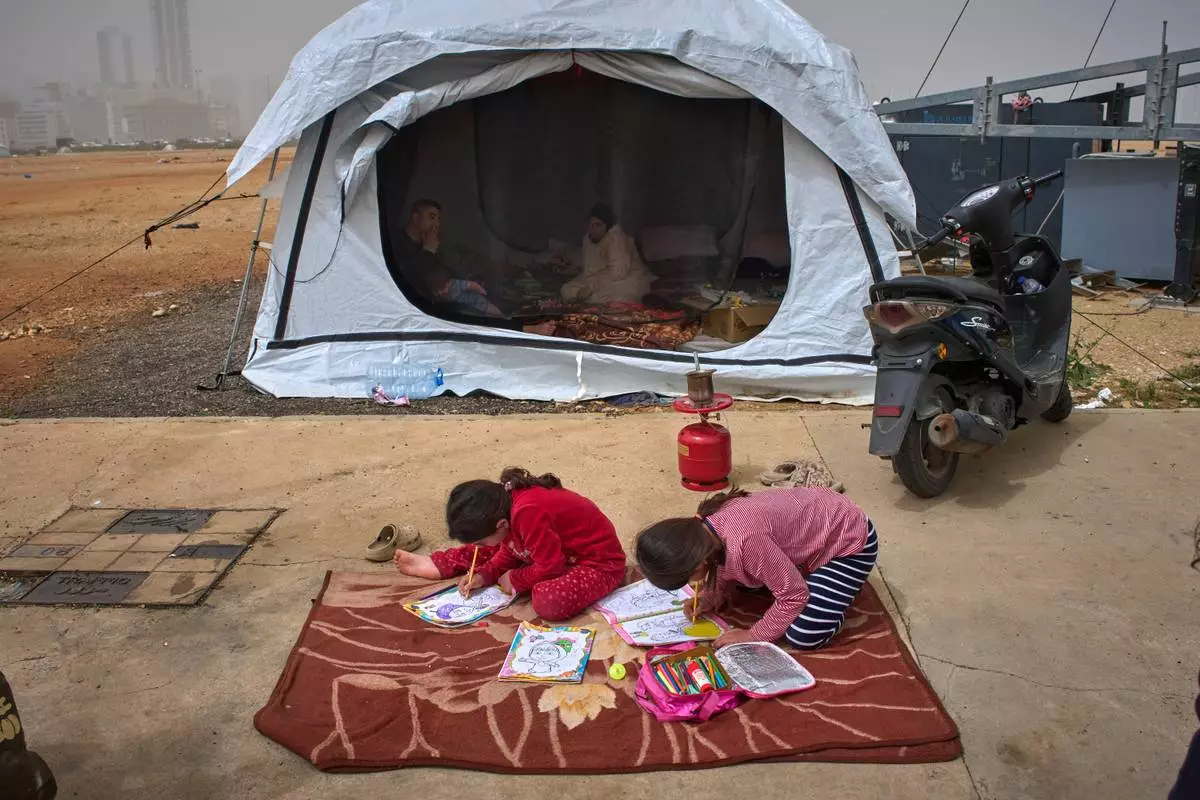
Tamara and her sister Amal color pictures on the floor as their parents, Sara and Ahmed, who fled their village of Khiyam in southern Lebanon due to Israeli bombardment, sit inside a tent used as a shelter in Beirut, Lebanon, Friday, April 3, 2026. (AP Photo/Emilio Morenatti)

Mohammad Qubaisi, 53, with burn wounds from an Israeli airstrike on southern Lebanon undergoes surgery by Dr. Mohammed Ziara, left, and his team, at the Sidon Government Hospital in Sidon, Lebanon, Thursday, April 2, 2026. (AP Photo/Emilio Morenatti)

A bridge struck by U.S. airstrikes on Thursday is seen in the town of Karaj, west of Tehran, Iran, Friday, April 3, 2026. (AP Photo/Vahid Salemi)
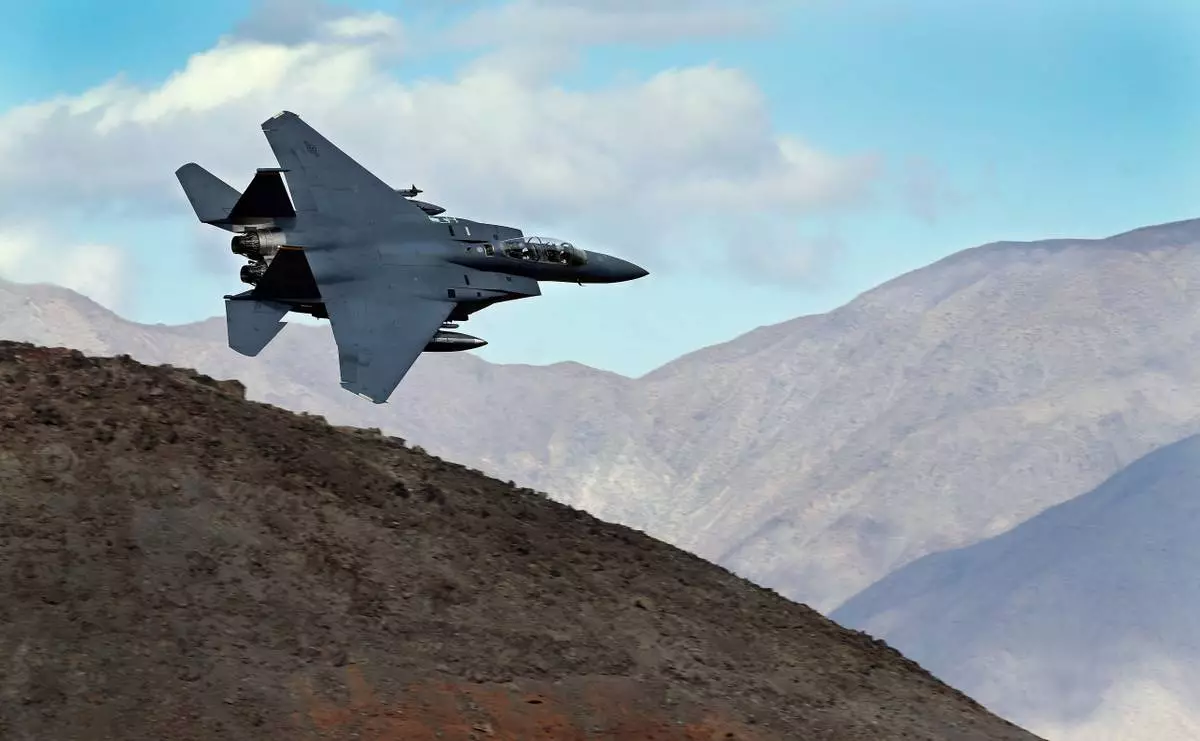
FILE - An F-15E Strike Eagle turns toward the Panamint range over Death Valley National Park, Calif., on Feb. 27, 2017. (AP Photo/Ben Margot, File)