Skip to Content Facebook Feature Image

CorWave Announces Presentation of Late Breaking Results from its First-In-Human Implant at HFSA Annual Scientific Meeting

News

CorWave Announces Presentation of Late Breaking Results from its First-In-Human Implant at HFSA Annual Scientific Meeting
News

News

CorWave Announces Presentation of Late Breaking Results from its First-In-Human Implant at HFSA Annual Scientific Meeting

2025-09-29 17:33 Last Updated At:17:40

CLICHY, France--(BUSINESS WIRE)--Sep 29, 2025--

CorWave, a clinical-stage medical device company dedicated to the fight against heart failure, today announced the presentation of interim results from its FIH study evaluating its Left Ventricular Assisting System (LVAS), the first heart pump based on breakthrough wave membrane technology. Results were presented at the 2025 Annual Scientific Meeting of the Heart Failure Society of America (HFSA) by Prof. Chris Hayward, Director of the Mechanical and Circulatory Support research program at St Vincent’s Private Hospital and Principal Investigator of the Study.

This press release features multimedia. View the full release here: https://www.businesswire.com/news/home/20250929228766/en/

On May 28, 2025, the CorWave LVAS, a next-generation durable heart pump, was implanted in a patient for the first time at St Vincent’s Hospital in Sydney by Dr. Paul Jansz. This implantation represented a major technological milestone in the field of durable mechanical circulatory support.

In a late breaking clinical science session at the HFSA annual meeting, Prof. Chris Hayward reported on the first patient experience with a focus on patient baseline, clinical course, and the device’s initial safety and effectiveness.

The primary endpoint of the study was achieved, with no device-related adverse events observed at 30 days, providing an early confirmation of the safety profile of the CorWave LVAS. Functional status improved to NYHA class I prior to discharge. On post-operative day 84, the patient successfully underwent a heart transplant. The CorWave device was explanted without complication, and preliminary analyses of the pump and outflow graft revealed no thrombus.

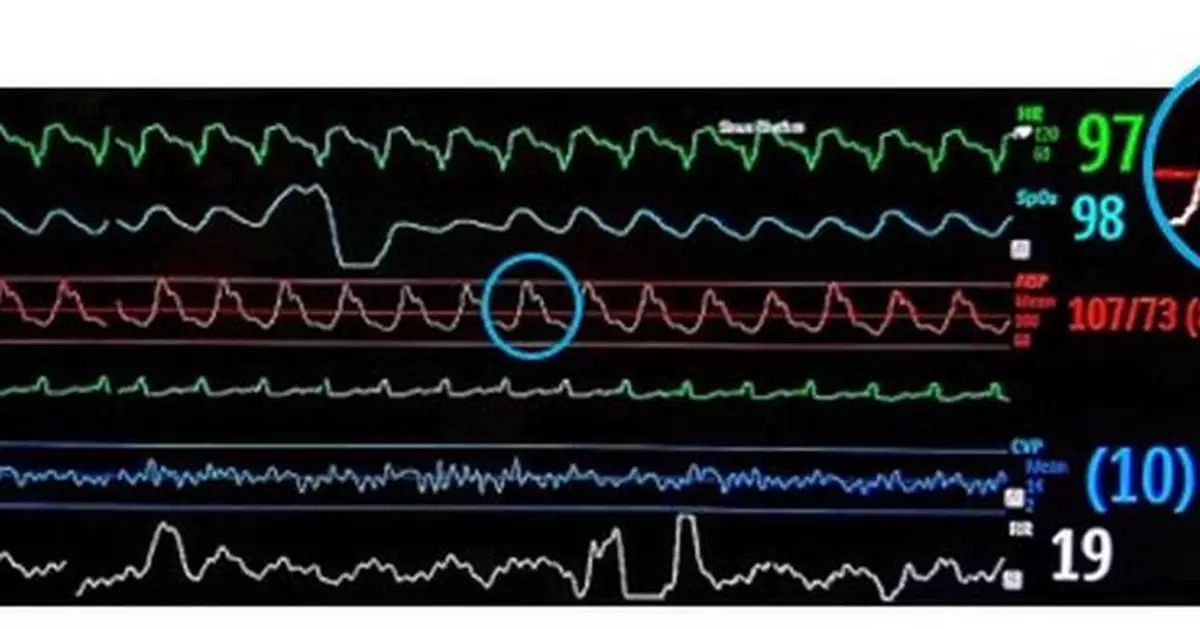
The pump performed as expected, providing full support and restoring a cardiac index above 2.5L/min/m² (1.6L/min/m² pre-operative), efficiently unloading the left ventricle. The unique membrane technology preserved an aortic pulse pressure of 25.5 ± 6.1 mmHg, periodically exceeding 40 mmHg and allowed consistent aortic valve opening despite post-operative LVEF of 15%-20%. The vital signs of the patient with physiological pulsatility are shown below.

“The results of the CorWave device are very encouraging. The physiologic pulse that we observed in the first CorWave patient stands out from the results we have observed in patients assisted with continuous-flow LVAD, in use since the 2000s.” said Prof. Chris Hayward, cardiologist at St Vincent's Hospital and principal investigator of the study. “This first experience suggests that CorWave LVAS can be implanted safely and has the potential to offer significant benefits for patients with heart failure. Further clinical experience will be needed to confirm these promising findings.”

“We are delighted with these first results from our FIH Study and grateful to see the first transplant successfully completed. The pulsatility performance of CorWave LVAS is remarkable and our goal is to translate that into improved outcomes for advanced heart failure patients. These results are a testament to the groundbreaking work conducted by our engineering team and the St Vincent’s clinical team.” said Louis de Lillers, CEO of CorWave.

The CorWave FIH Study plans to enroll a minimum of four patients before the start of the pivotal trial phase.

About CorWave

CorWave is a French company that develops and manufactures innovative cardiac assist devices. CorWave's undulating membrane is a breakthrough technology that distinguishes itself from currently marketed Left Ventricular Assist Devices (LVADs) through its physiological operation, designed to reproduce pulse and blood flow velocities similar to those of a healthy heart. Ultimately, CorWave's membrane pump technology should reduce complications associated with current devices and improve the management of patients suffering from heart failure. A member of French Tech 120, CorWave was founded in 2012 by the start-up studio MD Start and is funded by renowned investors, including Bpifrance, EIC Fund, Montpensier Arbevel, M&L Healthcare, Novo Holdings, Seventure Partners, Sofinnova Partners, Ysios Capital, and Vlerick Group. The company has raised over 80 million euros in equity funding and employs about a hundred people. In October 2023, after more than ten years of research and development, CorWave scaled up to industrial operations with the inauguration of its state-of-the-art urban factory in Clichy.

Further information: www.corwave.com | x.com/corwave | www.linkedin.com/company/corwave
CorWave LVAS is a medical device currently available for clinical investigations only.

This project received funding from the European Union’s research and innovation Horizon 2020 program under grant agreement #954151.

The SPI fund’s investment in CorWave is part of the France 2030 Initiative.

CorWave’s R&D program is supported by the French government through the Investments for the Future Program (PIA).

CorWave’s industrialization program is supported by Île-de-France region through the « Relance Industrie » call for projects.
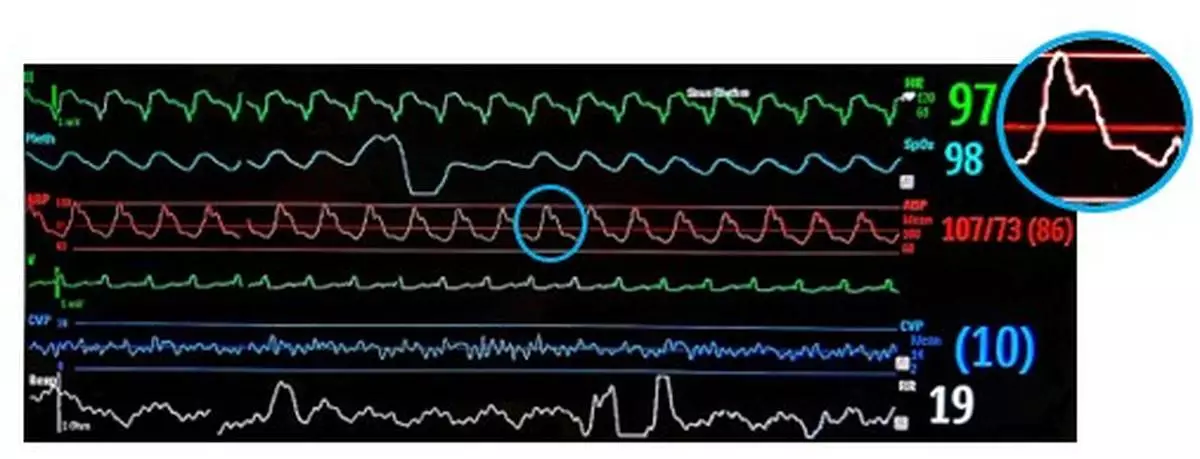
The vital signs of the patient with physiological pulsatility are shown in this picture.
The vital signs of the patient with physiological pulsatility are shown in this picture.
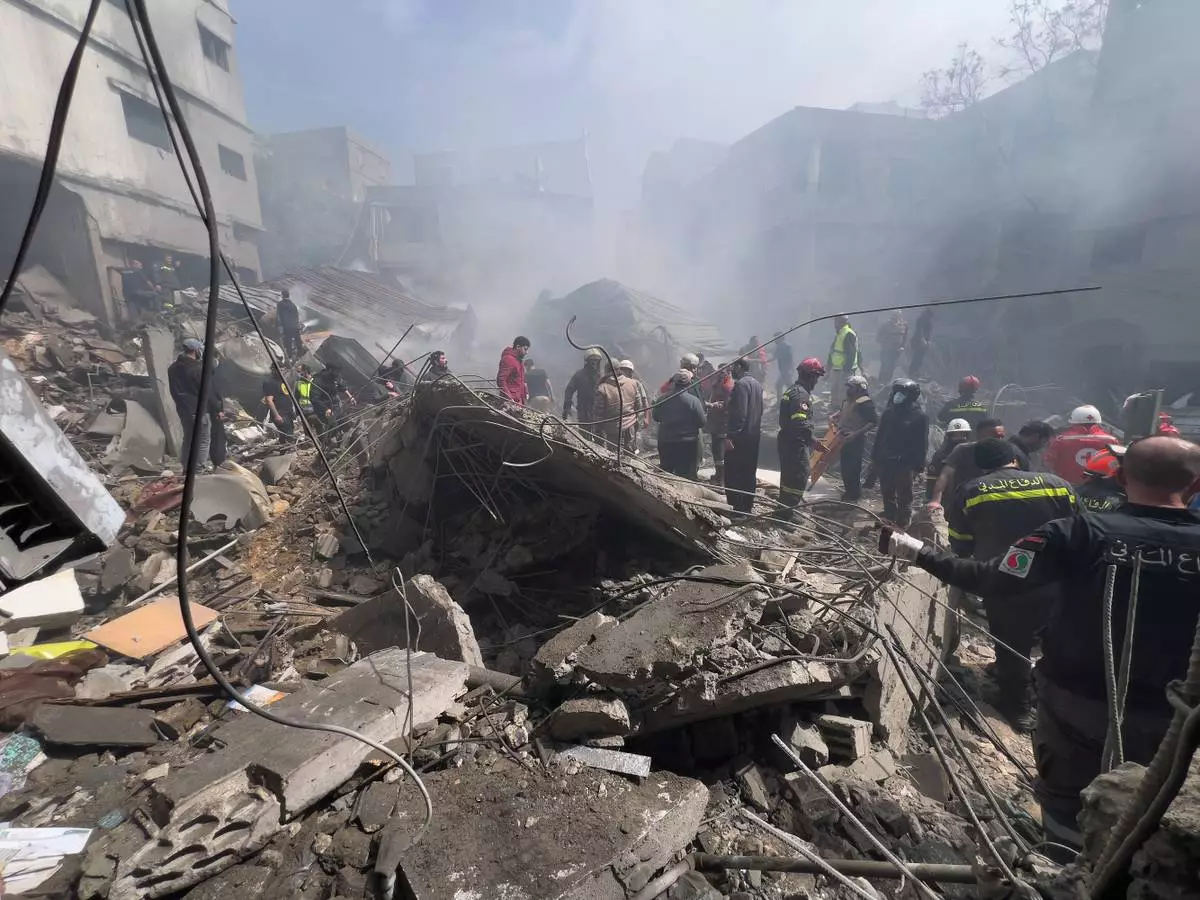
Strikes on cities across Iran have killed more than 25 people Sunday into Monday, while in Israel's Haifa two people were found dead and two others were missing in rubble a day after an Iranian attack.

U.S. President Donald Trump on Sunday stepped up his threat to hit Iran's critical infrastructure hard if the country's government doesn’t reopen the Strait of Hormuz by his Tuesday deadline.

Trump punctuated his threat with profanity in a social media post, saying Tuesday will be “Power Plant Day, and Bridge Day, all wrapped up in one, in Iran.”

The war began with joint U.S.-Israel strikes on Feb. 28 and has killed thousands, shaken global markets, cut off key shipping routes and spiked fuel prices. Both sides have threatened and hit civilian targets, bringing warnings of possible war crimes from the United Nations and international law experts.

Here is the latest:

Iran has executed another man convicted over charges stemming from the nationwide protests that swept Iran in January.

The judiciary’s Mizan news agency identified the man hanged as Ali Fahim in a report Monday.

It was unclear when he was executed.

Fahim had been convicted of allegedly storming a military base to seize weapons.

Amnesty International said Fahim and others convicted in the case “were subjected to torture and other ill-treatment in detention, including beatings, floggings, prolonged solitary confinement, and death threats at gunpoint before being convicted in grossly unfair trials that relied on forced ‘confessions’ extracted under torture and lasted only a few hours.”

The Human Rights Activist News Agency had said Fahim and others had entered a Tehran base of the all-volunteer Basij militia, an arm of the Revolutionary Guard, after it had been burned, then had been forced into confessions.

Israel rescue services reported Monday morning several sites were hit by missiles launched from Iran toward multiple cities in the center of Israel.

In Petach Tikvah, paramedics provided medical treatment to an injured woman in serious condition with a chest injury from shrapnel and evacuated her to the Beilinson Hospital.

Fire fighters in that city are handling cars on fire and continue searching to ensure there are no people trapped in the rubble.

In Tel Aviv, a man slightly injured by glass shrapnel was evacuated to the Ichilov Hospital.

Footage provided by rescue service Magen David Adom shows damage to residential buildings due to the attack.

Meanwhile, Israel’s military warned the public Monday morning of another missile barrage coming from Iran, the fourth-such alert of the day.

Israel’s Magen David Adom and Fire and Rescue services said early Monday that there are several reported sites of Iranian missile hits in the northern city of Haifa.

In one site, four people were slightly injured, including two children.

The missile attacks hit residential areas and a factory in the city.

The factory was hit by shrapnel from an interception.

It is unclear if all the reported hits were caused by shrapnel from interception or direct hits.

Video footage provided by Magen David Adom of the affected sites show active fire and bombed cars in what appears to be a residential area.

The missile strikes come a day after another attack from Iran also hit a Haifa residential area, killing two people and injuring others.

Two other people remain missing under the rubble caused by Sunday's strike and their fate is still unknown.

In the United Arab Emirates’ capital of Abu Dhabi, authorities said a Ghanaian man suffered wounds from shrapnel after the interception of an Iranian missile over the city’s Musaffah neighborhood.

That’s near Al Dhafra Air Base, which hosts U.S. forces and has been repeatedly targeted by Iran in the war.

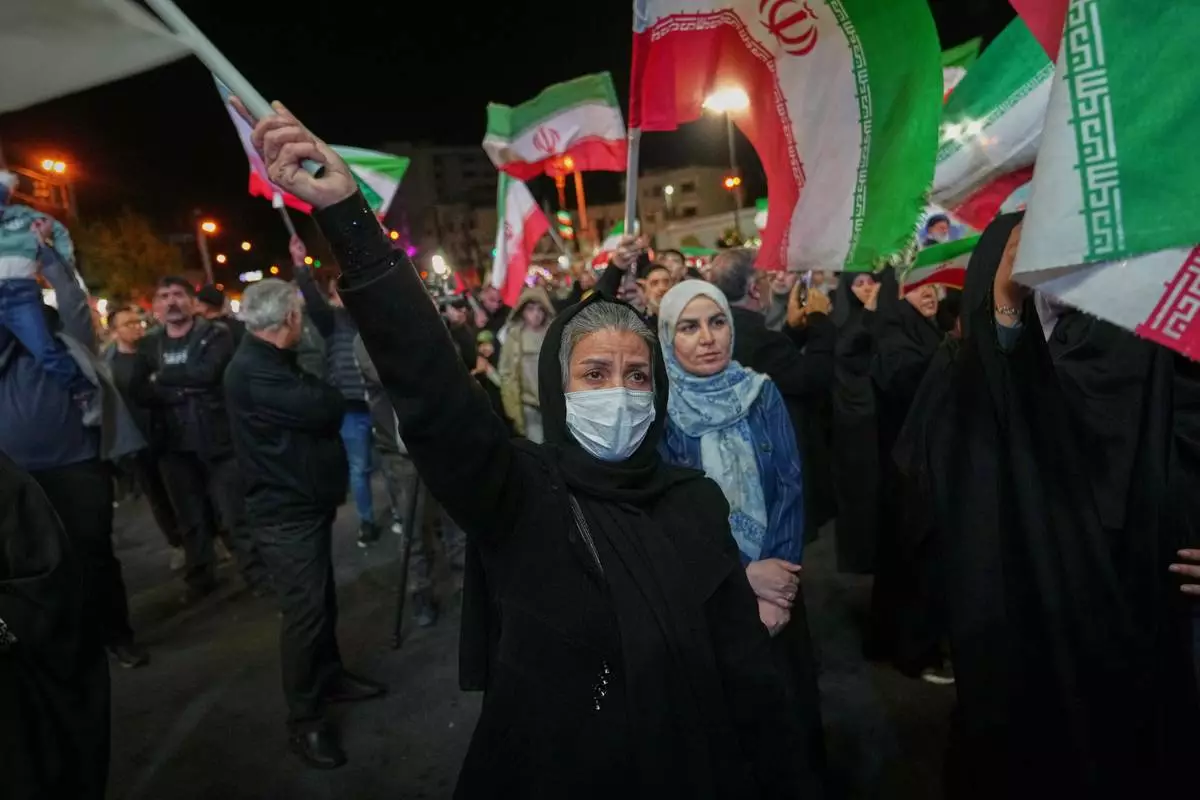
Women hold Iranian flags during a pro-government gathering in a square in Tehran, Iran, Sunday, April 5, 2026. (AP Photo/Francisco Seco)

Women hold Iranian flags during a pro-government gathering in a square in Tehran, Iran, Sunday, April 5, 2026. (AP Photo/Francisco Seco)

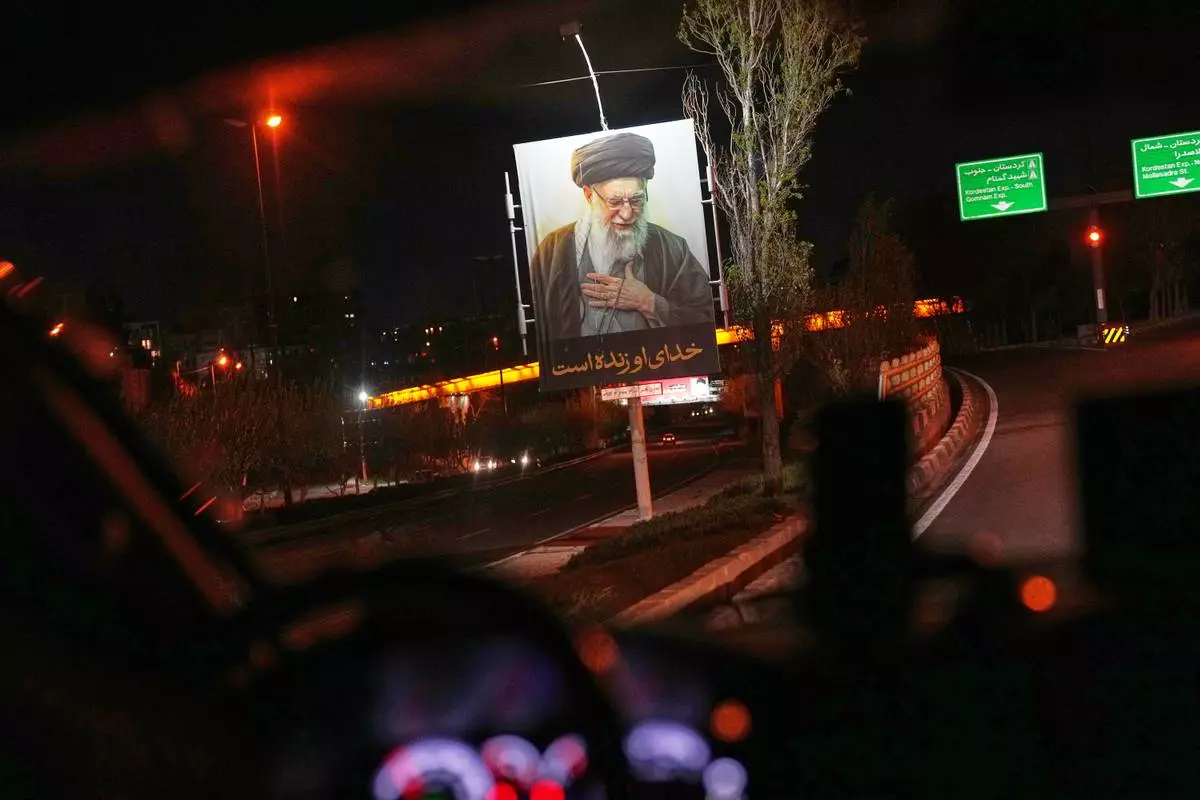
A picture of the late Iranian Supreme Leader Ayatollah Ali Khamenei hangs on the side of the road in the outskirts of Tehran, Iran, early Sunday, April 5, 2026. (AP Photo/Francisco Seco)

A picture of the late Iranian Supreme Leader Ayatollah Ali Khamenei hangs on the side of the road in the outskirts of Tehran, Iran, early Sunday, April 5, 2026. (AP Photo/Francisco Seco)

Rescue workers search for victims at the site of an Israeli airstrike that hit a crowded neighbourhood south of Beirut, Lebanon, Sunday, April 5, 2026. (AP Photo/Hussein Malla)

Rescue workers search for victims at the site of an Israeli airstrike that hit a crowded neighbourhood south of Beirut, Lebanon, Sunday, April 5, 2026. (AP Photo/Hussein Malla)

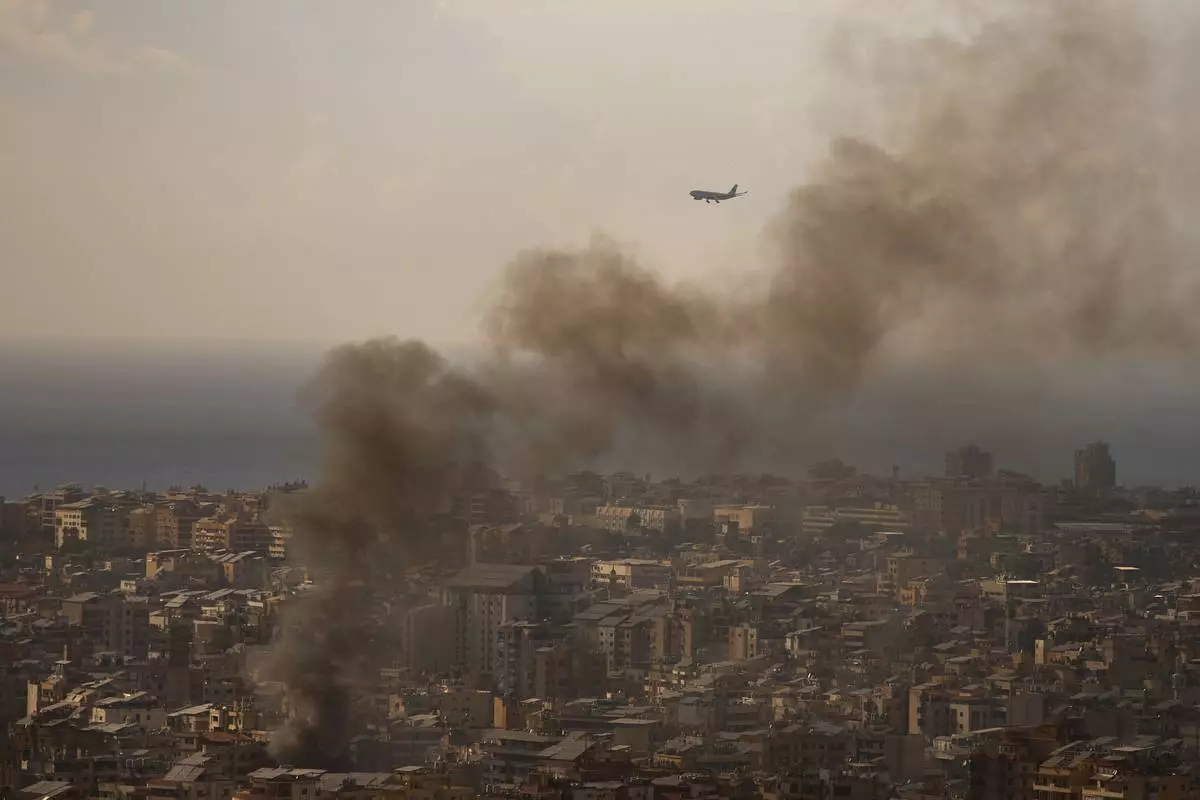
A commercial plane is preparing to land at Beirut Airport as smoke rises from Israeli airstrikes in Dahiyeh, a southern suburb of Beirut, Lebanon, Sunday, April 5, 2026. (AP Photo/Emilio Morenatti)

A commercial plane is preparing to land at Beirut Airport as smoke rises from Israeli airstrikes in Dahiyeh, a southern suburb of Beirut, Lebanon, Sunday, April 5, 2026. (AP Photo/Emilio Morenatti)

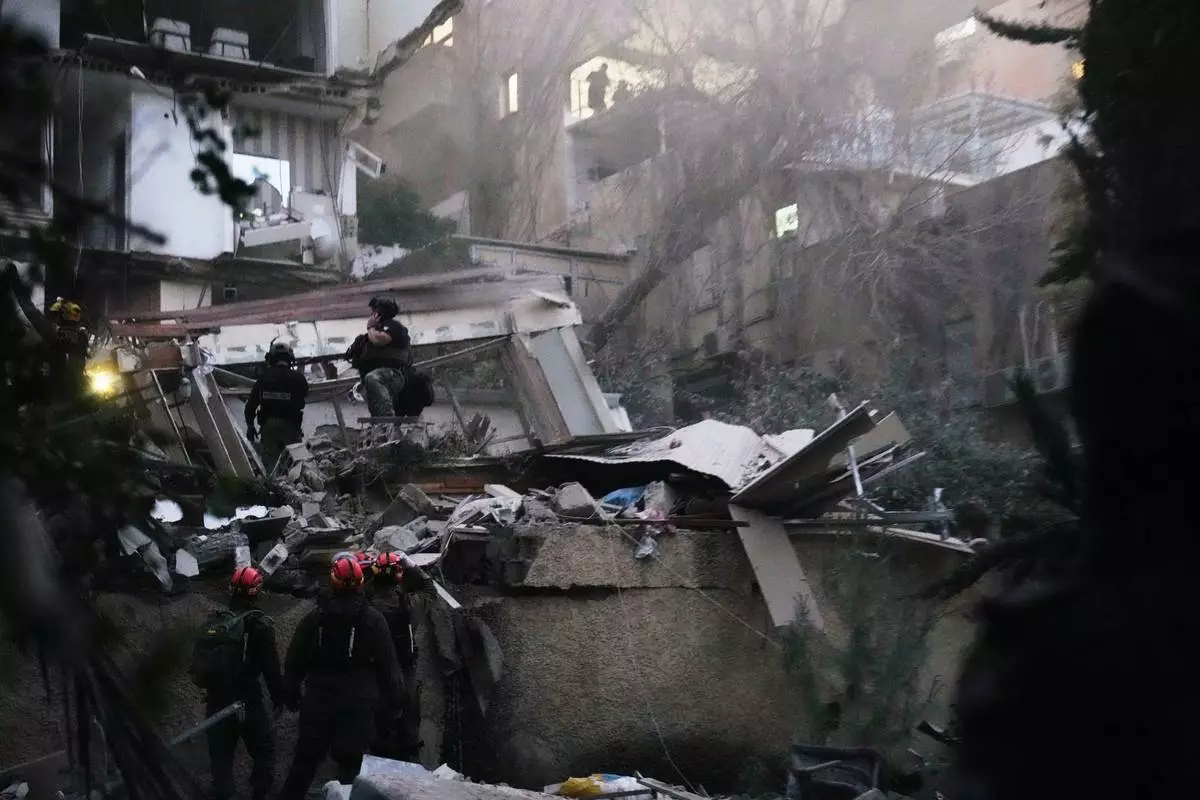
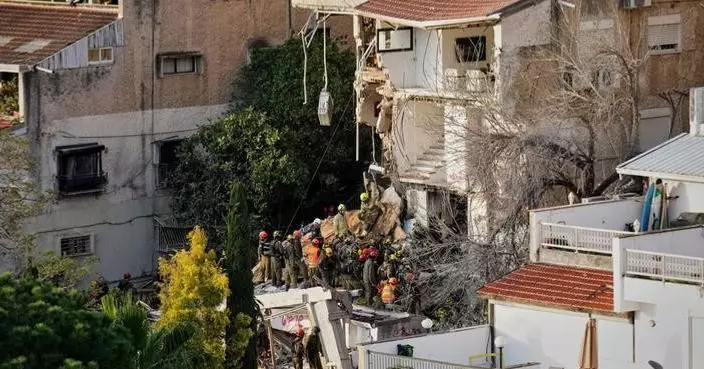
Israeli security forces and rescue teams work amid the rubble of a residential building struck by an Iranian missile in Haifa, Israel, Sunday, April 5, 2026. (AP Photo/Ariel Schalit)

Israeli security forces and rescue teams work amid the rubble of a residential building struck by an Iranian missile in Haifa, Israel, Sunday, April 5, 2026. (AP Photo/Ariel Schalit)

Recommended Articles