Skip to Content Facebook Feature Image

Thousands of jobs at risk in Africa as US trade deal expires

News

Thousands of jobs at risk in Africa as US trade deal expires
News

News

Thousands of jobs at risk in Africa as US trade deal expires

2025-09-30 21:17 Last Updated At:21:20

NAIROBI, Kenya (AP) — Workers and industry are bracing for the end of a longstanding U.S. trade agreement that gave African exporters preferential treatment and now leaves businesses vulnerable to new competitive pressures and tariffs.

The African Growth and Opportunity Act (AGOA) will terminate as scheduled on Tuesday amid uncertainty over renegotiations and the looming impact of new tariffs announced by the White House in April.

AGOA is a multilateral trade agreement that has given thousands of products from qualifying African nations duty-free access to U.S. markets since 2000.

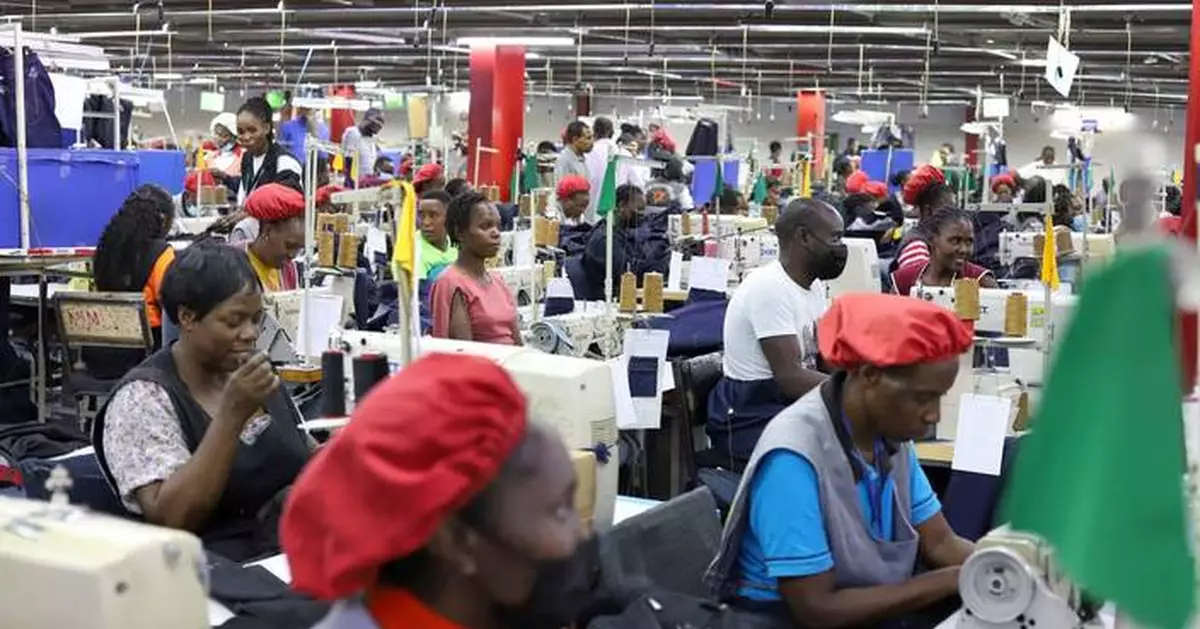
A key example of the deal's impact can be found in Kenya, where it has allowed the country’s textile and apparel sector — makers of jeans, for instance — to effectively compete with Asian exporters such as in Bangladesh and Vietnam.

“If AGOA goes away we have zero chance to compete with the Asian countries,” said Pankaj Bedi, owner of United Aryan, an apparel manufacturer in Nairobi that exports Levi's and Wrangler jeans to the U.S.

Textile and apparel exports from Kenya to the U.S. have grown from around $50 million when AGOA was first introduced to around $500 million today.

“I will be asking (Trump) for the U.S. to consider seriously renewing and extending AGOA for at least a minimum of five years,” Kenyan president William Ruto said last week at the UN General Assembly in New York. “It is a platform that connects Africa and the U.S. in a very fundamental way.”

AGOA had also given African countries hope that major elements of their export economies would be exempt from blanket tariffs of 10% — and in some cases much higher — announced by the U.S. earlier this year.

Kenya is already paying 10% on non-AGOA exports, which are not many. Kenyan manufacturers will struggle to compete with rivals in Asia, even though some Asian countries may face a higher U.S. tariff, because of the limited domestic supply chain in Kenya where most of the raw materials are imported, as well as higher energy costs, lending rates, and operating expenses.

Ruto and other African leaders are pushing for a last-minute renegotiation of AGOA while also scrambling to sign new bilateral agreements with the U.S. They are doing so amid a period of seismic change in global trade dynamics and with a White House that shows a mixed commitment to Africa.

“African countries including Kenya must be alive to the possibility that AGOA won’t be extended, AGOA won’t be remodified, and … America won’t be interested in having a trade pact,” said Raphael Obonyo, a public policy expert at UN Habitat.

Ruto said last week that Kenya and the U.S had made “good progress” toward a bilateral agreement that could be signed by the end of this year.

AGOA has mostly benefitted African economies in both big and small industries. The agreement has helped both the continent’s largest exporters—Nigerian and Angolan oil, South African autos, and Kenyan clothing—as well as some of its smallest economies where exports are highly concentrated, such as Lesotho and Eswatini.

Some African economies, like Nigeria and Lesotho, are likely to face “notable adverse effects” from the end of AGOA and new U.S. tariffs, researchers at the German Institute of Development and Sustainability wrote in a brief.

While there may be limited macroeconomic effects across Africa as a whole from changes to U.S. trade, these assumptions “likely understate the full impact of new Trump-era tariffs and do not capture the indirect effects like reduced foreign investment, weakened supply chains, rising poverty, or the loss of capacity-building,” the researchers added.

AGOA-dependent industries likely employ some 1.3 million people whose jobs are now at risk — in countries where many people have few if any other options in the case of sudden unemployment.

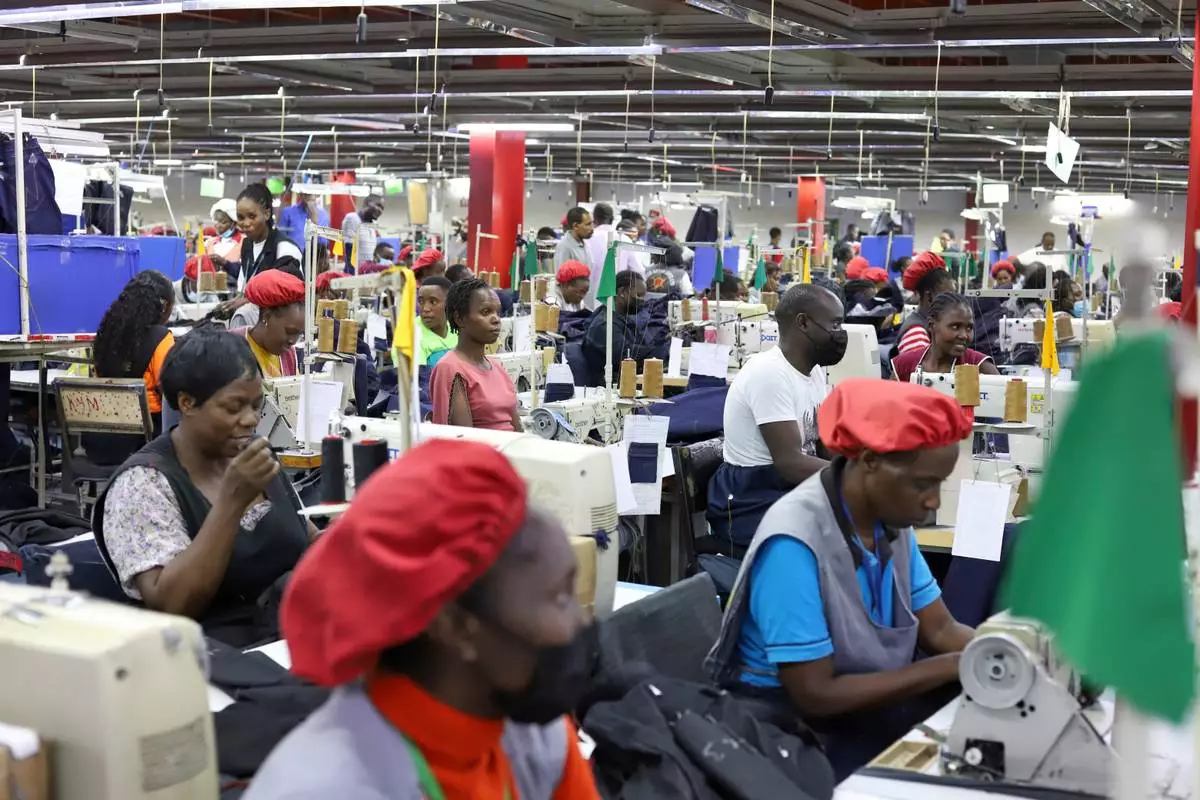
In Kenya, more than 66,000 people, many of them women, were employed through now-vulnerable textile and apparel exporters to the U.S. In the garment districts of Kenya’s bustling capital, job cuts and fears over livelihoods have already begun.

United Aryan said this week that it will shed some 1,000 jobs or 10% of its workforce amid trade uncertainty.

“There is no way we can survive,” added Bedi, who is also the apparel export sub-chair at the Kenya Association of Manufacturers.

For Julia Shigadi, a machinist at United Aryan, the end of AGOA is an existential threat.

“This has been my bread and butter,” said Shigadi. “I only depend on this job—so if it is gone, it means my life is gone too.”

For more on Africa and development: https://apnews.com/hub/africa-pulse

The Associated Press receives financial support for global health and development coverage in Africa from the Gates Foundation. The AP is solely responsible for all content. Find AP’s standards for working with philanthropies, a list of supporters and funded coverage areas at AP.org.
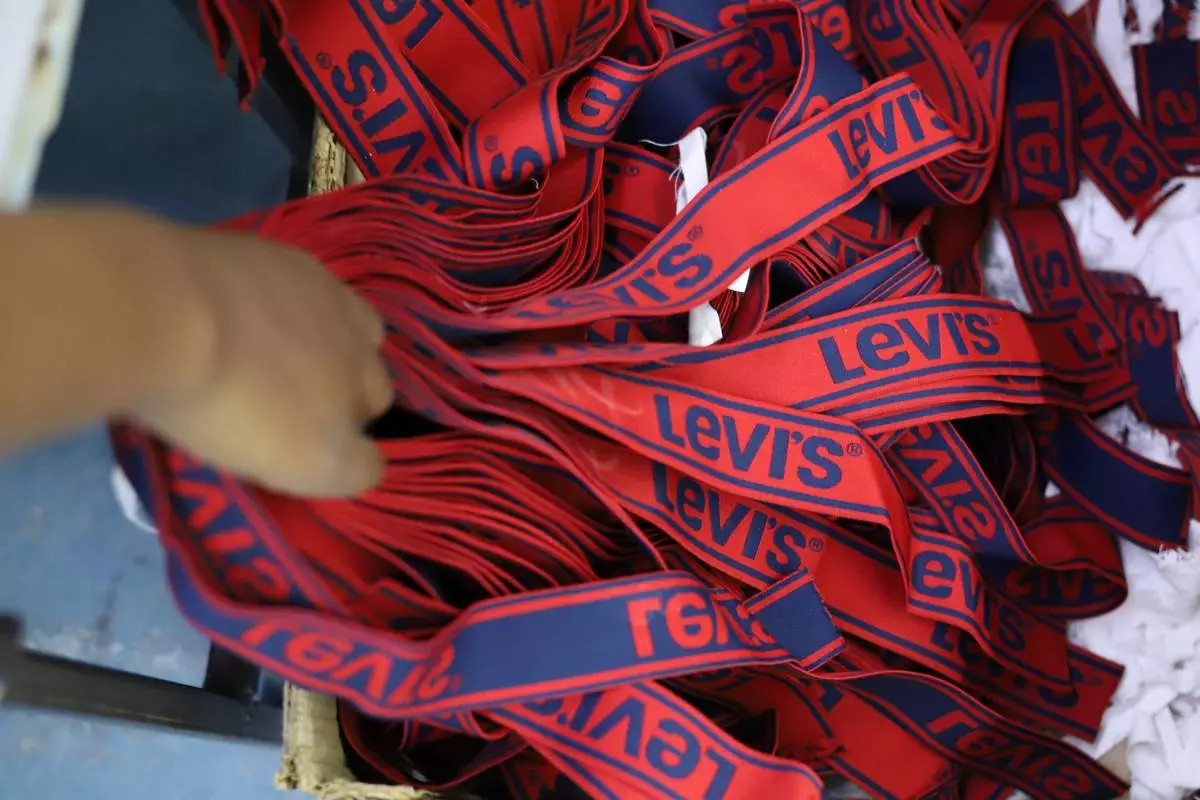
FILE - A label reading "Levis" on a pair of Levi Strauss & Co jeans is displayed at a production line at United Aryan EPZ Limited in Ruaraka on the outskirts of Nairobi, Kenya, March 21, 2025. (AP Photo/Andrew Kasuku, File)
FILE - A label reading "Levis" on a pair of Levi Strauss & Co jeans is displayed at a production line at United Aryan EPZ Limited in Ruaraka on the outskirts of Nairobi, Kenya, March 21, 2025. (AP Photo/Andrew Kasuku, File)
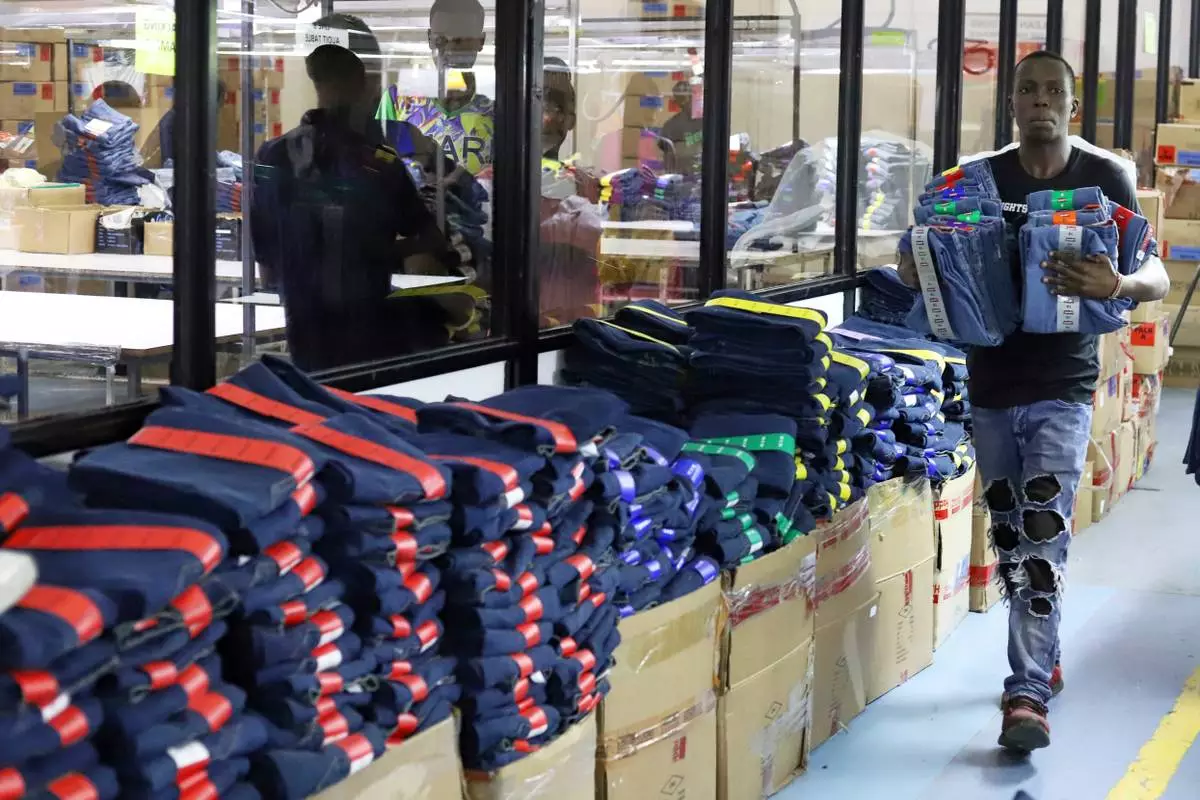
FILE - A factory worker arranges garments at United Aryan EPZ Limited in Ruaraka on the outskirts of Nairobi, Kenya, March 21, 2025. (AP Photo/Andrew Kasuku, File)

FILE - A factory worker arranges garments at United Aryan EPZ Limited in Ruaraka on the outskirts of Nairobi, Kenya, March 21, 2025. (AP Photo/Andrew Kasuku, File)
FILE - Factory workers operate machines to make garments at United Aryan EPZ Limited in Ruaraka on the outskirts of Nairobi, Kenya, March 21, 2025. (AP Photo/Andrew Kasuku, File)
FILE - Factory workers operate machines to make garments at United Aryan EPZ Limited in Ruaraka on the outskirts of Nairobi, Kenya, March 21, 2025. (AP Photo/Andrew Kasuku, File)
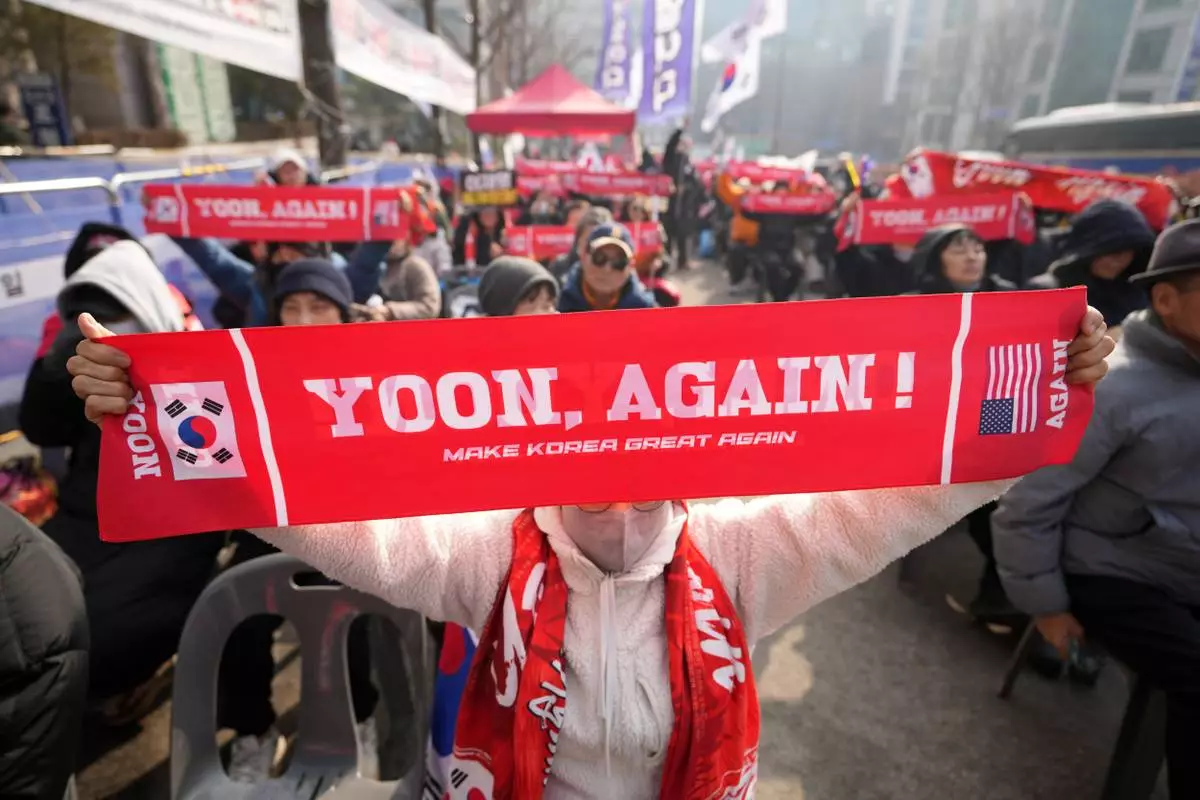
SEOUL, South Korea (AP) — A South Korean court sentenced former President Yoon Suk Yeol to five years in prison Friday in the first verdict from eight criminal trials over the martial law debacle that forced him out of office and other allegations.

Yoon was impeached, arrested and dismissed as president after his short-lived imposition of martial law in December 2024 triggered huge public protests calling for his ouster.

The most significant criminal charge against him alleges that his martial law enforcement amounted to a rebellion, and the independent counsel has requested the death sentence in the case that is to be decided in a ruling next month.

In Friday's case, the Seoul Central District Court sentenced Yoon for defying attempts to detain him, fabricating the martial law proclamation and sidestepping a legally mandated full Cabinet meeting.

Yoon has maintained he didn’t intend to place the country under military rule for an extended period, saying his decree was only meant to inform the people about the danger of the liberal-controlled parliament obstructing his agenda. But investigators have viewed Yoon’s decree as an attempt to bolster and prolong his rule, charging him with rebellion, abuse of power and other criminal offenses.

Judge Baek Dae-hyun said in the televised ruling that imposing “a grave punishment” was necessary because Yoon hasn’t shown remorse and has only repeated “hard-to-comprehend excuses.” The judge also restoring legal systems damaged by Yoon’s action was necessary.

Yoon, who can appeal the ruling, hasn’t immediately publicly responded to the ruling. But when the independent counsel demanded a 10-year prison term in the case, Yoon’s defense team accused them of being politically driven and lacking legal grounds to demand such “an excessive” sentence.

Prison sentences in the multiple, smaller trials Yoon faces would matter if he is spared the death penalty or life imprisonment at the rebellion trial.

Park SungBae, a lawyer who specializes in criminal law, said there is little chance the court would decide Yoon should face the death penalty in the rebellion case. He said the court will likely issue a life sentence or a sentence of 30 years or more in prison.

South Korea has maintained a de facto moratorium on executions since 1997 and courts rarely hand down death sentences. Park said the court would take into account that Yoon’s decree didn’t cause casualties and didn’t last long, although Yoon hasn’t shown genuine remorse for his action.

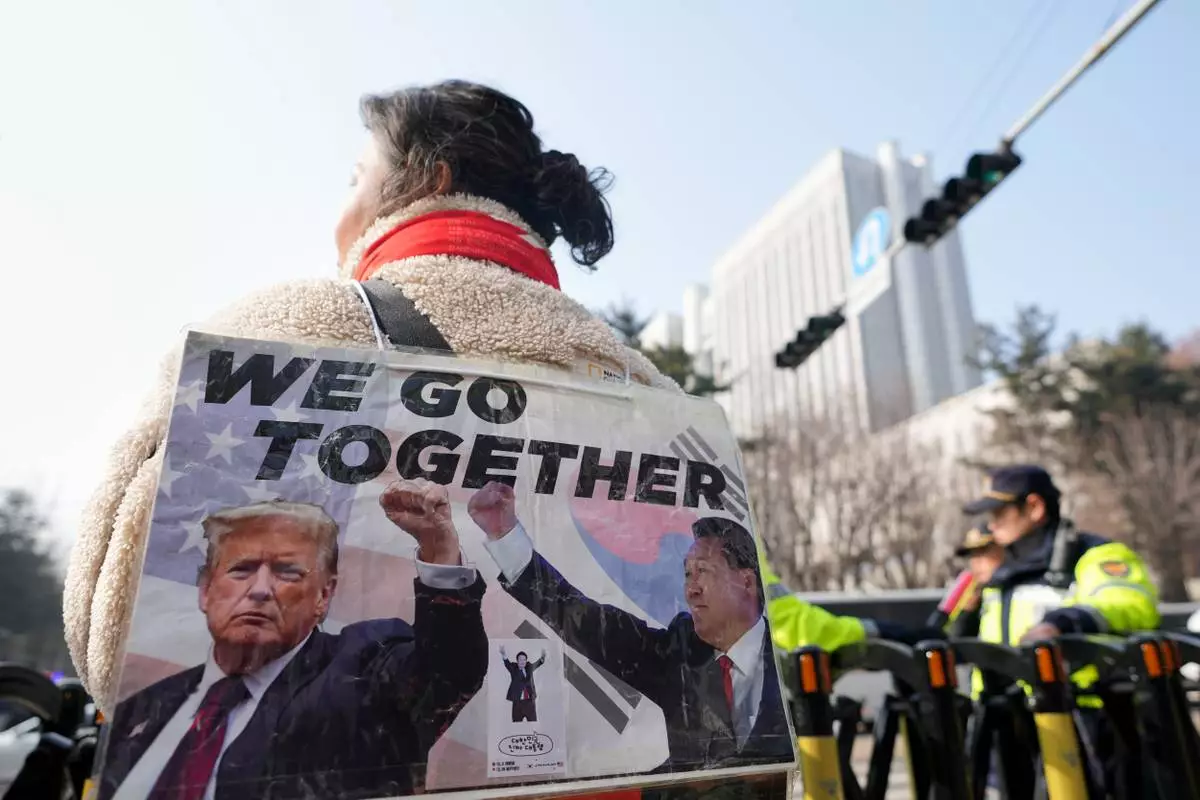
A supporter of former South Korean President Yoon Suk Yeol shouts slogans outside Seoul Central District Court, in Seoul, South Korea, Friday, Jan. 16, 2026. (AP Photo/Lee Jin-man)

A supporter of former South Korean President Yoon Suk Yeol shouts slogans outside Seoul Central District Court, in Seoul, South Korea, Friday, Jan. 16, 2026. (AP Photo/Lee Jin-man)

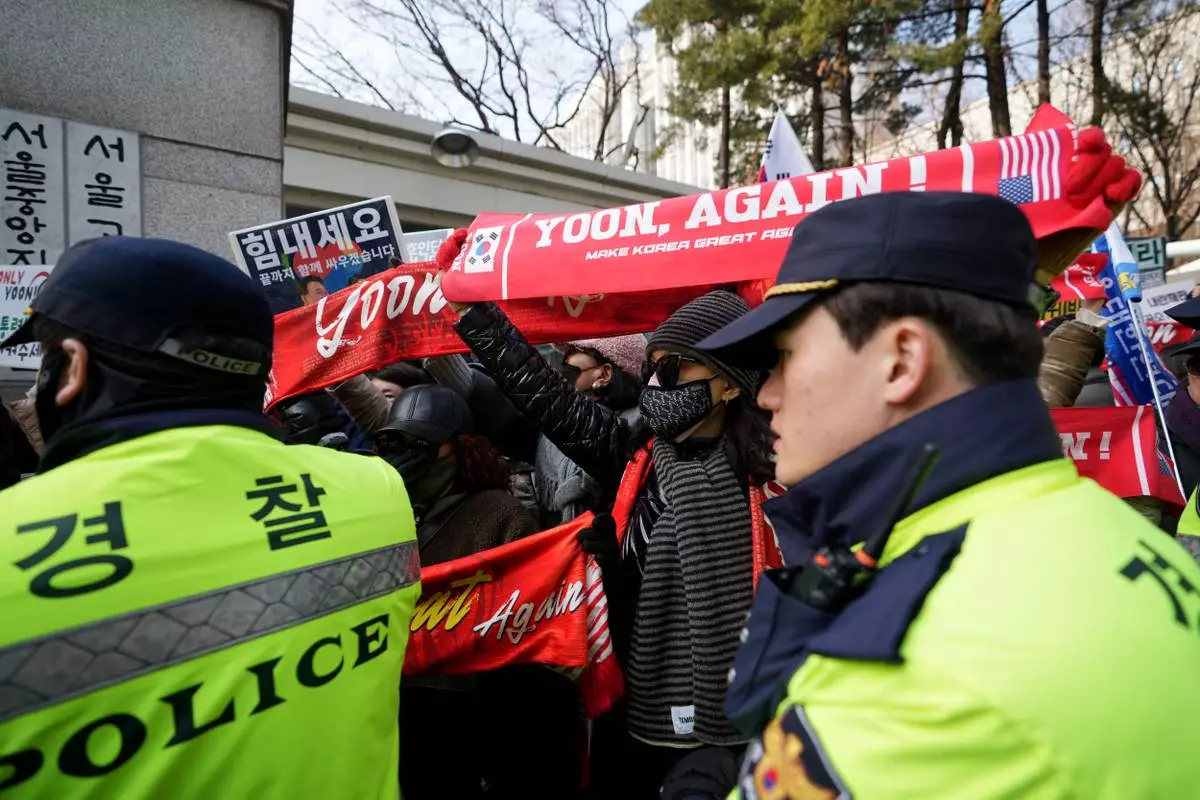
Supporters of former South Korean President Yoon Suk Yeol hold signs and flags outside Seoul Central District Court, in Seoul, South Korea, Friday, Jan. 16, 2026. (AP Photo/Lee Jin-man)

Supporters of former South Korean President Yoon Suk Yeol hold signs and flags outside Seoul Central District Court, in Seoul, South Korea, Friday, Jan. 16, 2026. (AP Photo/Lee Jin-man)

A supporter of former South Korean President Yoon Suk Yeol waits for a bus carrying former South Korean President Yoon Suk Yeol outside Seoul Central District Court, in Seoul, South Korea, Friday, Jan. 16, 2026. (AP Photo/Lee Jin-man)

A supporter of former South Korean President Yoon Suk Yeol waits for a bus carrying former South Korean President Yoon Suk Yeol outside Seoul Central District Court, in Seoul, South Korea, Friday, Jan. 16, 2026. (AP Photo/Lee Jin-man)

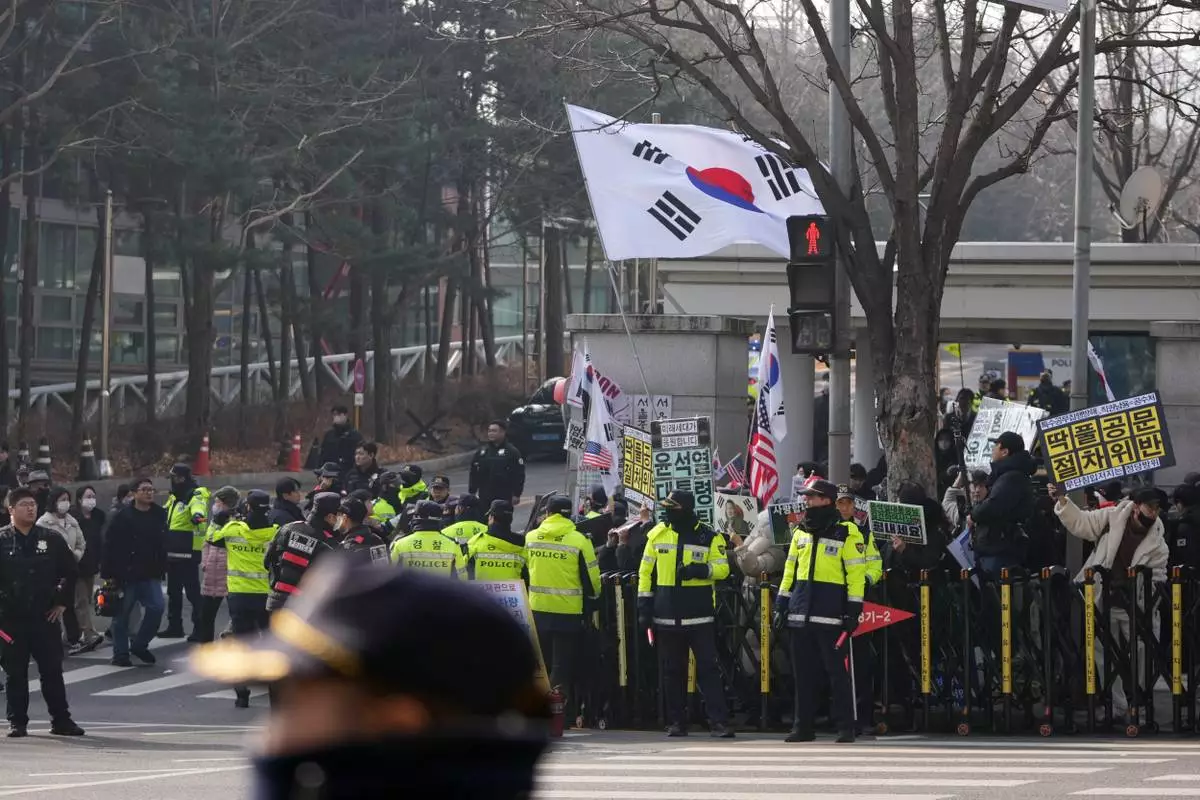
Supporters of former South Korean President Yoon Suk Yeol hold signs as police officers stand guard outside Seoul Central District Court, in Seoul, South Korea, Friday, Jan. 16, 2026. (AP Photo/Lee Jin-man)

Supporters of former South Korean President Yoon Suk Yeol hold signs as police officers stand guard outside Seoul Central District Court, in Seoul, South Korea, Friday, Jan. 16, 2026. (AP Photo/Lee Jin-man)

Supporters of former South Korean President Yoon Suk Yeol hold signs and flags outside Seoul Central District Court, in Seoul, South Korea, Friday, Jan. 16, 2026. (AP Photo/Lee Jin-man)

Supporters of former South Korean President Yoon Suk Yeol hold signs and flags outside Seoul Central District Court, in Seoul, South Korea, Friday, Jan. 16, 2026. (AP Photo/Lee Jin-man)

Supporters of former South Korean President Yoon Suk Yeol hold signs outside Seoul Central District Court, in Seoul, South Korea, Friday, Jan. 16, 2026. (AP Photo/Lee Jin-man)

Supporters of former South Korean President Yoon Suk Yeol hold signs outside Seoul Central District Court, in Seoul, South Korea, Friday, Jan. 16, 2026. (AP Photo/Lee Jin-man)

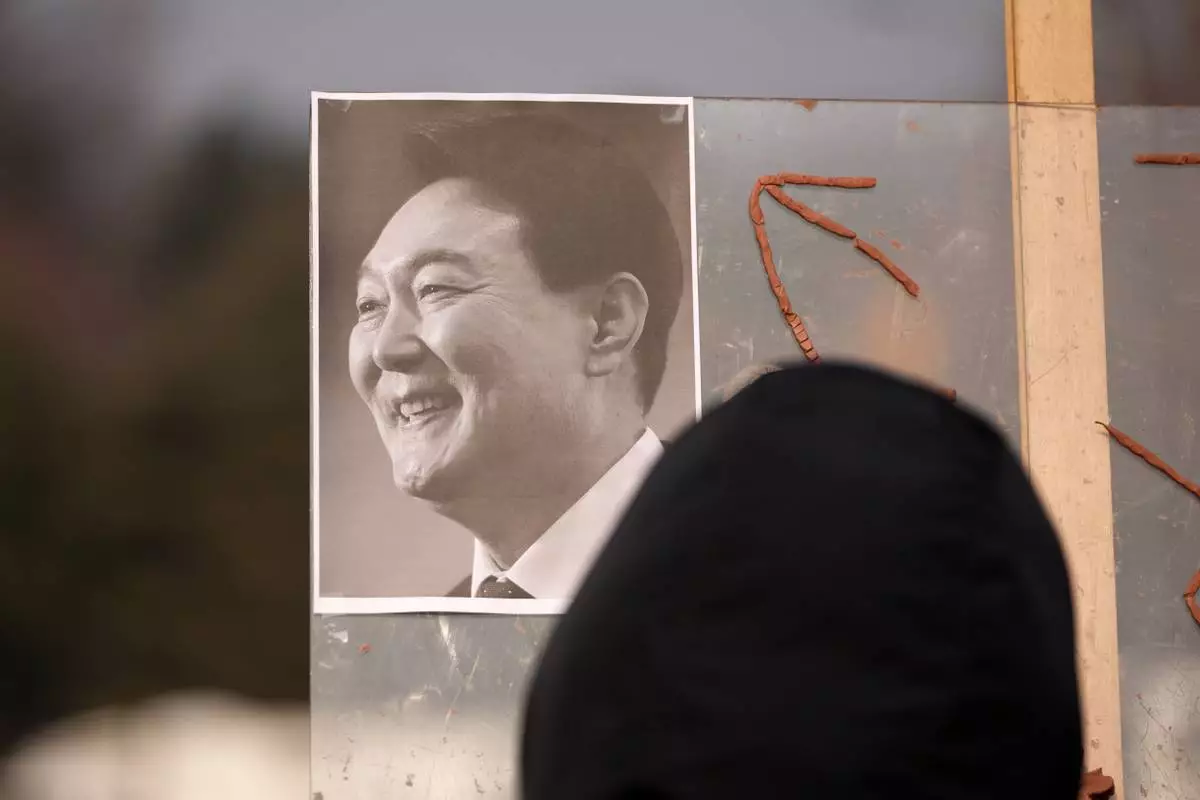
A picture of former South Korean President Yoon Suk Yeol is placed on a board as supporters gather outside Seoul Central District Court, in Seoul, South Korea, Friday, Jan. 16, 2026. (AP Photo/Lee Jin-man)

A picture of former South Korean President Yoon Suk Yeol is placed on a board as supporters gather outside Seoul Central District Court, in Seoul, South Korea, Friday, Jan. 16, 2026. (AP Photo/Lee Jin-man)

Recommended Articles