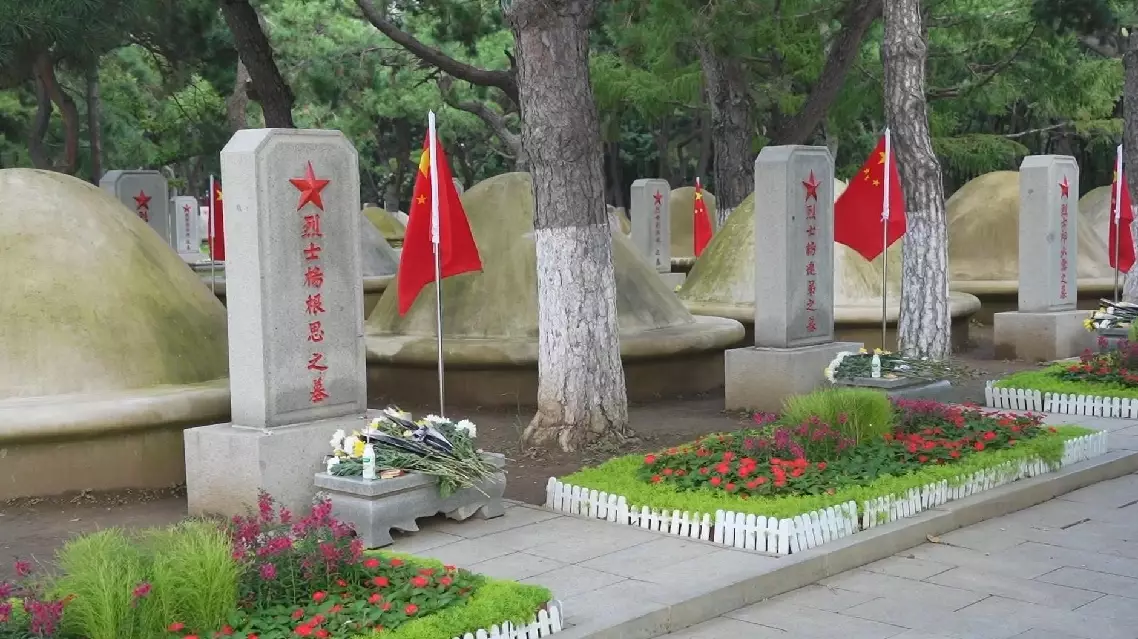
A ceremony was held to honor the 1,011 martyrs of the Chinese People's Volunteers (CPV) buried at the Shenyang Cemetery for Martyrs of the War to Resist U.S. Aggression and Aid Korea at this permanent rest place of these heroes in the provincial capital of Liaoning in northeast China on Tuesday.
Five flower baskets were presented to the soldiers who laid down their lives 70 years ago to mark China's 12th Martyrs' Day. The remains of the 1,011 CPV soldiers were returned from South Korea in 12 batches and buried at the Shenyang cemetery since 2014.
The returning began on March 28, 2014, when the first group of 437 martyrs was brought home and buried at the Shenyang cemetery. In the same year, the cemetery built a memorial wall carrying the names of more than 197,000 CPV soldiers who died in the war.
From 2015 to 2019, the remains of another 162 CPV soldiers were returned in five separate transfers. In September 2020, China deployed its Y-20 transport aircraft for the first time to carry 117 fallen soldiers.
A year later in September 2021, the remains of another 109 CPV martyrs returned home. In 2022, the country for the first time sent J-20 stealth fighters to escort the homecoming flight of 88 martyrs.
In November 2023 and 2024, the 10th and 11th groups of the remains of 25 and 43 martyrs respectively were returned. This September, the remains of 30 more fallen soldiers were taken back home.
On October 19, 1950, the CPV crossed the Yalu River and made their way to the Korean battlefield, marking the beginning of the Chinese people's efforts to aid Korea and resists U.S. aggression. They fought the invaders side by side with the Korean People's Army to safeguard peace and combat invasion. By June 1951, the Chinese and the Korean armies had launched five campaigns and driven the U.S. troops back to the 38th parallel line, forcing the U.S. to enter truce talks. The talks were intermingled with fighting and dragged on for two years until a truce was signed on July 27, 1953, marking the end of the war. After fighting the enemies together for two years and nine months, the Chinese and the Korean peoples and armies finally won their war of justice.
The War to Resist U.S. Aggression and Aid Korea resisted Western imperialist aggression, defended the security of New China, protected the peaceful life of the Chinese people, stabilized the situation on the Korean Peninsula, and safeguarded peace in Asia and the world at large.
1,011 returned CPV martyrs honored in Shenyang cemetery
The building of a constructive China-U.S. relationship of strategic stability will provide vast potential for cooperation in trade, technology and investment between the two countries, a Chinese scholar said on Thursday.
Wu Xinbo, executive dean of the Institute of International Studies under the Fudan University in Shanghai, said that the new vision of bilateral ties agreed on by Chinese President Xi Jinping and visiting U.S. President Donald Trump during their talks on Thursday is expected to provide strategic guidance for bilateral ties over the next three years and beyond.
Xi said the "constructive strategic stability" means positive stability with cooperation as the mainstay, sound stability with moderate competition, constant stability with manageable differences, and enduring stability with promises of peace.
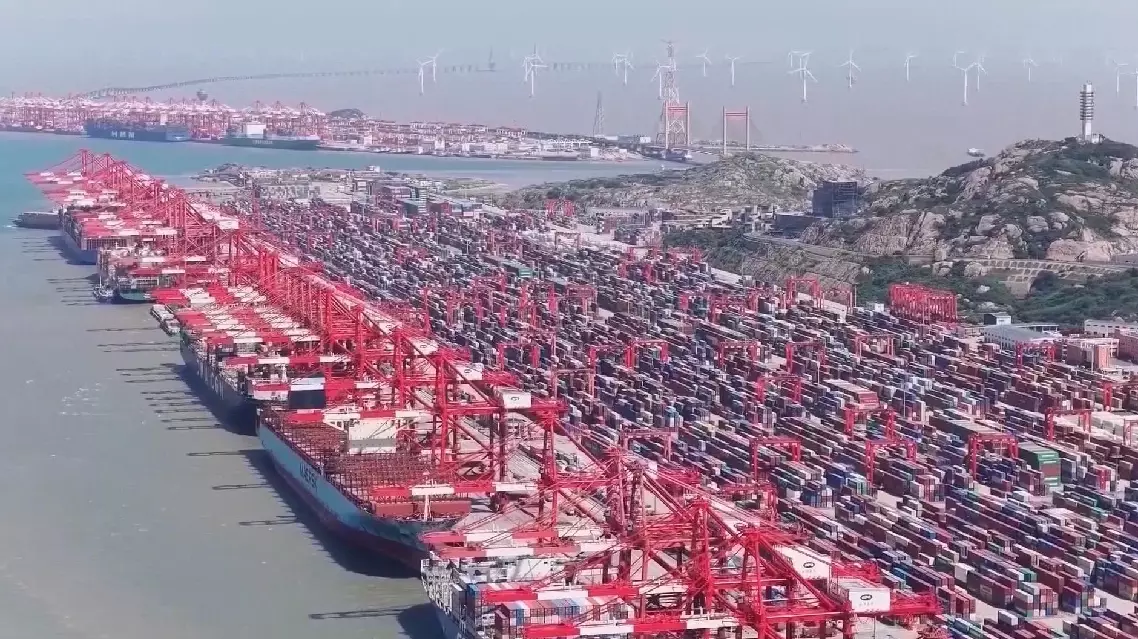
"First, cooperation should be a primary aspect of China-U.S. relations, with both sides working together to expand the pie of cooperation. Second, competition between China and the U.S. is inevitable. However, this competition should be benign, not malicious. Third, differences will continue to exist between China and the U.S. in many areas. These differences cannot be resolved in the short term, but they can be well managed to prevent them from escalating into crises or even conflicts. Finally, and most importantly, China and the U.S. must maintain a peaceful relationship," said Wu. Wu also talked about on how to translate the new positioning of bilateral relations into actions, and jointly promote the stable, healthy and sustainable development of China-U.S. relations. "In the past, the U.S. addressed trade imbalances by launching unilateral tariff wars. I think tariffs will play a declining role as a bargaining chip in managing China-U.S. trade relations. The only solution to China-U.S. economic and trade problems is to expand the trade pie. Therefore, trade is the area where breakthroughs are most likely to be achieved," he said.
In the technology sector, with the advancement of Chinese technology, American companies have realized that if they ban the sales of their high-tech products to China now, they will permanently lose this market in a few years, which is detrimental to the development of the United States.
"As I said just now, insightful individuals within the United States, including business leaders, are calling on the U.S. to adjust its unreasonable and ineffective policies of suppressing and containing Chinese technology. The presence of so many tech industry leaders at this recent China-U.S. meeting demonstrates their emphasis on the Chinese market and indicates that the Trump administration values their demands," said Wu.
In the investment field, Chinese companies show willingness to invest in the United States, and American companies are also keen to expand their investment in China. Therefore, policy adjustments will unleash great potential for cooperation in major areas between them, said the expert.
Huge potential lies ahead for cooperation between China,US in trade, technology, investment: scholar