The U.S. government is taking a minority stake in Lithium Americas, a company that is developing one of the world’s largest lithium mines in northern Nevada.
The Department of Energy will take a 5% equity stake in the miner, which is based in Vancouver. It will also take a 5% stake in the Thacker Pass lithium mining project, a joint venture with General Motors.
Thacker Pass is considered crucial in reducing U.S. reliance on China for lithium, a critical material used to produce the high tech batteries used in cell phones, electric vehicles and renewable energy. Both Republicans and Democrats support the project and narrowing the production gap. China is the world’s largest lithium processor.
U.S. Energy Secretary Chris Wright said in a statement that the deal with Lithium Americas “helps reduce our dependence on foreign adversaries for critical minerals by strengthening domestic supply chains and ensures better stewardship of American taxpayer dollars.”
Thacker Pass is expected to produce 40,000 metric tons of battery-quality lithium carbonate per year in its first phase, enough to help power 800,000 EVs.
The equity stake in Lithium Americas is the latest example of the direct intervention by the Trump administration with private companies. The government is getting a 10% stake in Intel through the conversion of billions in previously granted government funds and pledges. The administration spent $400 million of taxpayer money in July on MP Materials stock to make the U.S government the biggest owner in the Las Vegas rare earths miner. Trump also made a deal with Nvidia and AMD to give the U.S. government a 15% cut of revenue from selling certain chips to China.
Lithium Americas said Wednesday that it reached a non-binding agreement in principle with the DOE to advance the first draw of $435 million on the federal loan. The DOE has agreed to defer $182 million of debt service over the first five years of the loan.
The White House and Canada's Lithium Americas seemed to be moving forward with the deal late last month, as both parties agreed on changes to an approximately $2.3 billion federal loan that could allow the project to move forward to extract the silver-white metal used in electric vehicle batteries. GM has pledged more than $900 million to help develop Thacker Pass, which holds enough lithium to build 1 million electric vehicles annually.
Dan Ives, an analyst with Wedbush, called Thacker Pass is a “massive opportunity” for the U.S. to reduce its reliance on China and other foreign adversaries for lithium.
“Despite having some of the largest deposits, the U.S. produced less than 1% of the global lithium supply but this deal helps reduce dependence on foreign adversaries for critical minerals strengthening domestic supply chains and ensuring better stewardship of American taxpayer dollars with lithium production set to grow exponentially over the coming years,” he wrote.
Shares of Lithium Americas spiked more than 30% Wednesday.

FILE - Construction continues at the Lithium Nevada Corp. mine site Thacker Pass project, April 24, 2023, near Orovada, Nev. (AP Photo/Rick Bowmer, File)
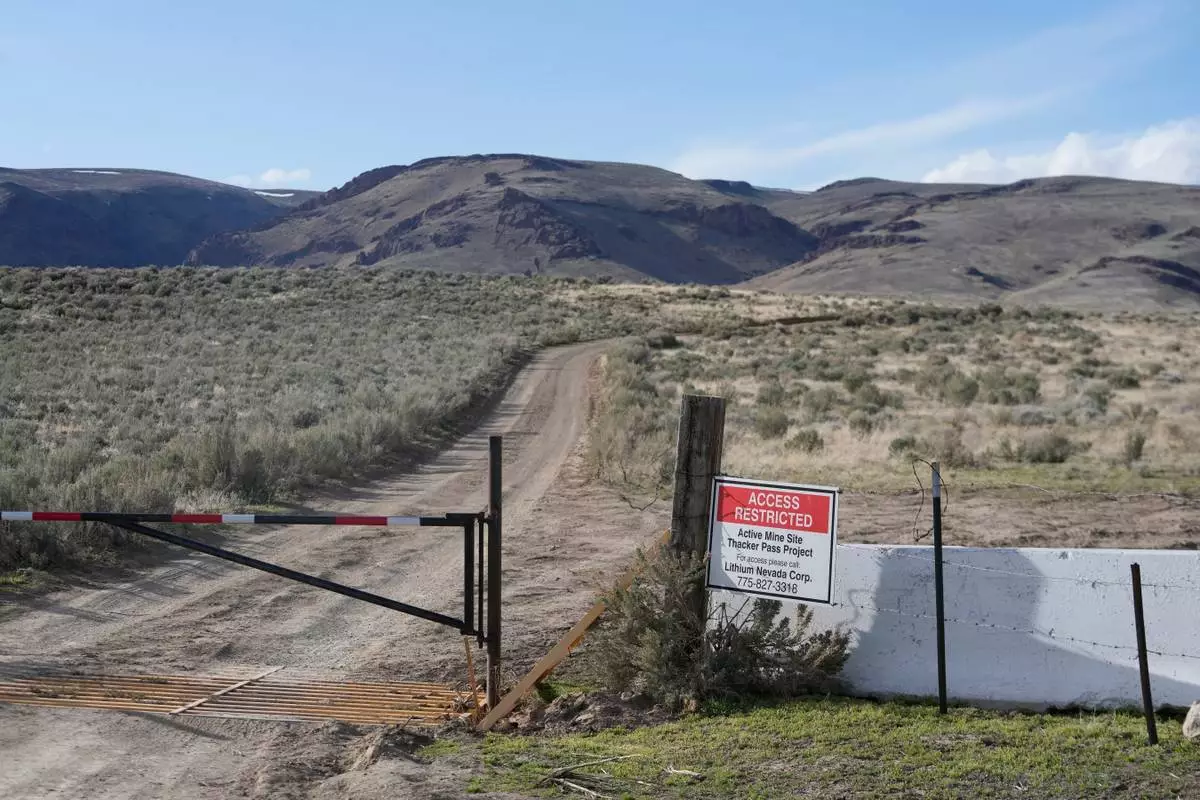
FILE - An "Access Restricted" sign is displayed at the Lithium Nevada Corp. mine site at Thacker Pass, April 24, 2023, near Orovada, Nev. (AP Photo/Rick Bowmer, File)

FILE - Construction continues at the Lithium Nevada Corp. mine site Thacker Pass project, April 24, 2023, near Orovada, Nev. (AP Photo/Rick Bowmer, File)
PROVIDENCE, R.I. (AP) — Investigations into the Brown University mass shooting and the slaying of a Massachusetts Institute of Technology professor shifted Thursday when authorities discovered evidence they say indicates they were committed by the same man, who was then found dead from a self-inflicted gunshot wound.
The attacker at Brown killed two students and wounded nine others in an engineering building on Saturday. Some 50 miles (80 kilometers) away MIT professor Nuno F.G. Loureiro was killed Monday night in his home in the Boston suburb of Brookline.
The FBI had earlier said it knew of no links between the cases.
Here are some answers to questions about the attacks and investigations:
Claudio Neves Valente, 48, a former Brown student and Portuguese national, was found dead in a New Hampshire storage facility after a six-day search that spanned several New England states.
Brown University President Christina Paxson said Neves Valente was enrolled at Brown from the fall of 2000 to the spring of 2001. He was admitted to the graduate school to study physics beginning in September 2000.
“He has no current affiliation with the university,” she said.
Neves Valente had studied at Brown on a student visa. He eventually obtained legal permanent residence status in September 2017. His last known residence was in Miami.
There are still “a lot of unknowns” in regard to motive, Rhode Island Attorney General Peter Neronha said. “We don’t know why now, why Brown, why these students and why this classroom,” he said.
Loureiro, 47, who was married, joined MIT in 2016 and was named last year to lead the school’s Plasma Science and Fusion Center, where he worked to advance clean energy technology and other research. The center, one of MIT’s largest labs, had more than 250 people working across seven buildings when he took the helm. He was a professor of physics and nuclear science and engineering.
Valente and Loureiro attended the same academic program at a university in Portugal between 1995 and 2000, Foley said. Loureiro graduated from the physics program at Instituto Superior Técnico, Portugal’s premier engineering school, in 2000, according to his MIT faculty page.
The same year, Neves Valente was let go from a position at the Lisbon university, according to an archive of a termination notice from the school’s then-president in February 2000.
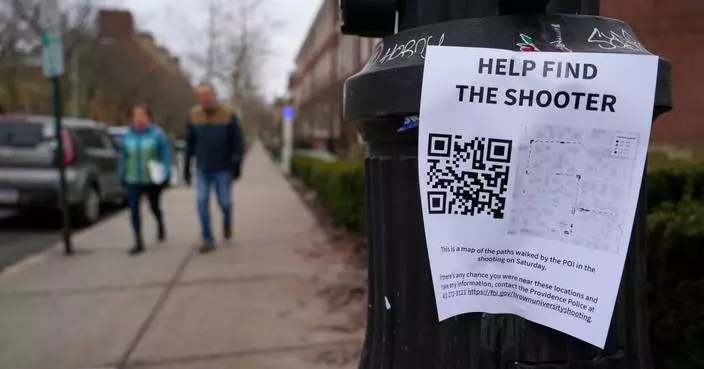
Authorities released several security videos of a person thought might have carried out the Brown attack. They showed the individual standing, walking and even running along the streets, but their face is masked or turned away in all of them.
Police say a witness then gave investigators a key tip: he saw someone who looked like the person of interest with a Nissan sedan displaying Florida plates. That enabled Providence police officers to tap into a network of more than 70 street cameras operated around the city by surveillance company Flock Safety. Those cameras track license plates and other vehicle details.
After leaving Rhode Island for Massachusetts, Providence officials said the suspect stuck a Maine license plate over the rental car’s plate to help conceal his identity.
Video footage showed Neves Valente entering an apartment building near Loureiro’s. About an hour later, he was seen entering the New Hampshire storage facility where he was later found dead, Foley said.
The two students who were killed and the nine others wounded were studying for a final in a first-floor classroom in an older section of the engineering building when the shooter walked in and opened fire.
Those killed were 19-year-old sophomore Ella Cook and 18-year-old freshman MukhammadAziz Umurzokov. Cook, whose funeral is Monday, was active in her Alabama church and served as vice president of the Brown College Republicans. Umurzokov’s family immigrated to the U.S. from Uzbekistan when he was a child, and he aspired to be a doctor.
As for the wounded, six were in stable condition Thursday, officials said. The other three were discharged.
Neves Valiente gained permanent residency status through a green card lottery program, Homeland Security Secretary Kristi Noem said in a post on X.
She said President Donald Trump ordered her to pause the United States Citizenship and Immigration Services program.
The diversity visa program makes up to 50,000 green cards available each year by lottery to people from countries that are little represented in the United States, many of them in Africa.
The lottery was created by Congress, and the move is almost certain to invite legal challenges.
Whittle reported from Portland, Maine. Contributing were Associated Press reporters Kimberlee Kruesi, Amanda Swinhart, Robert F. Bukaty, Matt O’Brien and Jennifer McDermott in Providence; Michael Casey in Boston; Heather Hollingsworth in Mission, Kansas; Kathy McCormack and Holly Ramer in Concord, New Hampshire; Christopher Weber in Los Angeles; and Alanna Durkin Richer, Mike Balsamo and Eric Tucker in Washington.

This combo image made with photos provided by the FBI and the Providence, Rhode Island, Police Department shows a person of interest in the shooting that occurred at Brown University in Providence, R.I., Saturday, Dec. 13, 2025. (FBI/Providence Police Department via AP)

A memorial of flowers and signs lay outside the Barus and Holley engineering building at Brown University, on Hope Street in Providence, R.I., on Tuesday, Dec 16, 2025. (AP Photo/Matt OBrien)

A Brown University student leaves campus, Tuesday, Dec. 16, 2025, after all classes, exams and papers were canceled for the rest of the Fall 2025 semester following the school shooting, in Providence, R.I. (AP Photo/Robert F. Bukaty)