The High Energy Photon Source (HEPS), China's flagship synchrotron radiation facility, is set to begin trial operations by the end of 2025, according to the project team.
As one of the country's key scientific and technological infrastructure projects, the HEPS is expected to become a fourth-generation synchrotron radiation facility featuring the world's highest brightness and will serve as a research platform for material science, chemical engineering, biomedicine and other fields, said the Institute of High Energy Physics (IHEP) under the Chinese Academy of Sciences, main developer of the HEPS.
A synchrotron radiation light source is a source of electromagnetic radiation usually produced by a storage ring. It acts like a super-powered "X-ray microscope" to "see" the micro-world, the IHEP explained.
Located in Beijing's suburban Huairou District, the HEPS facility, which comprises several parts including accelerators, beamlines, end stations and support facilities, has made significant construction milestones since breaking ground in 2019. "We are to realize the performance targets for all beamlines by November, then our whole project will meet all the set specifications. In December, we will begin to receive some users for the project's trial run. We'll remain in the state of trial run until next June. Once the acceptance inspection by the state is finished, we will officially go into operation," said Pan Weimin, director of the project.
Once completed, the HEPS will ultimately accommodate up to 90 beamlines. Plans aim for 45 beamlines by 2030. The team is actively engaging with research institutes and industry to secure funding for continued beamline construction and gather critical experimental demands, according to Pan.
Pan said that the new facility has already begun some optical experiments, demonstrating superior performance compared with ordinary X-ray photography, and laying an important foundation for future research.
China now possesses all four generations of such sources with the first and fourth generations located in Beijing, the second-generation based in Hefei in east China's Anhui Province and the third-generation in Shanghai.
The HEPS, as China's first fourth-generation of high-energy source, promises to revolutionize research in fields like solid-state batteries, high-temperature superconductors and drug discovery -- via its unparalleled brightness and coherence.
The HEPS will leverage the experience gained from previous facilities and "focus on national strategic needs, industrial innovation and scientific frontiers," Pan said.
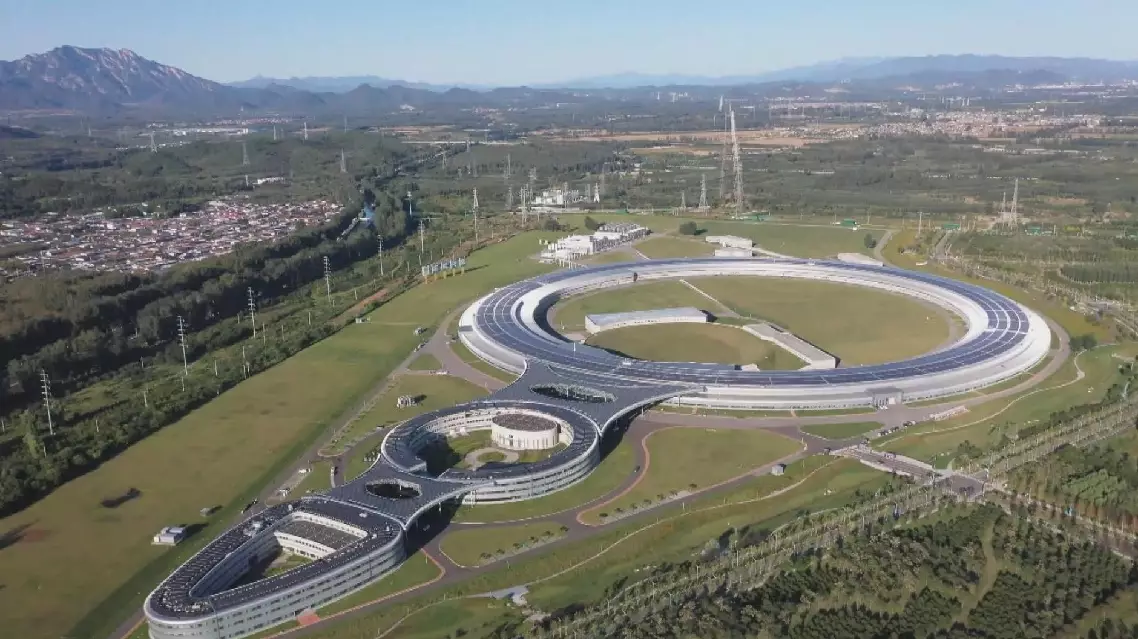
China's High Energy Photon Source set for trial run