WASHINGTON (AP) — The U.S. government shut down Wednesday, with Democratic lawmakers insisting that any deal address their health care demands and Republicans saying those negotiations can happen after the government is funded.
At issue are tax credits that have made health insurance more affordable for millions of people since the COVID-19 pandemic. The subsidies, which go to low- and middle-income people who purchase health insurance through the Affordable Care Act, are slated to expire at the end of the year if Congress doesn't extend them. Their expiration would more than double what subsidized enrollees currently pay for premiums next year, according to an analysis by KFF, a nonprofit that researches health care issues.
Democrats have demanded that the subsidies, first put in place in 2021 and extended a year later, be extended again. They also want any government funding bill to reverse the Medicaid cuts in President Donald Trump'smega-bill passed this summer, which don't go into effect immediately but are already driving some states to cut Medicaid payments to health providers.
Some Republicans have expressed an openness to extending the tax credits, acknowledging many of their constituents will see steep hikes in insurance premiums. But the party's lawmakers in Congress argue negotiations over health care will take time, and a stopgap measure to get the government funded is a more urgent priority.
A record 24 million people have signed up for insurance coverage through the ACA, in large part because billions of dollars in subsidies have made the plans more affordable for many people.
With the expanded subsidies in place, some lower-income enrollees can get health care with no premiums, and high earners pay no more than 8.5% of their income. Eligibility for middle-class earners is also expanded.
When the tax credits expire at the end of 2025, enrollees across the income spectrum will see costs spike. Annual out-of-pocket premiums are estimated to increase by 114% — an average of $1,016 — next year, according to the KFF analysis.
Republicans’ tax and spending bill passed this summer includes more than $1 trillion in cuts to Medicaid and food assistance over the next decade, largely by imposing new work requirements on those receiving aid and by shifting certain federal costs onto the states.
Medicaid's programs, which serve low-income Americans, enroll roughly 78 million adults and children. The nonpartisan Congressional Budget Office projects 10 million additional Americans will become uninsured in the next decade as a result of Republicans' law, between Medicaid and other federal health care programs.
Democrats want to roll back the Medicaid cuts in any government funding measure, while Republicans have argued that cuts are needed to reduce federal deficits and eliminate what they say is waste and fraud in the system.
Democrats have insisted an extension of the health subsidies needs to be negotiated immediately as people are beginning to receive notices of premium increases for next year.
“In just a few days, notices will go out to tens of millions of Americans because of the Republican refusal to extend the Affordable Care Act tax credits,” House Democratic Leader Hakeem Jeffries said Tuesday on the steps of the U.S. Capitol.
He added the higher health care costs millions of Americans are facing are coming “in an environment where the cost of living is already too high.”
At the White House on Monday, congressional Democratic leaders shared their health care concerns with Trump. Senate Democratic Leader Chuck Schumer said after the meeting that Trump “was not aware” that so many Americans would see increases to their health care costs.
Republicans say they handed Democrats a noncontroversial stopgap funding measure and argue that Democrats are instead choosing to shut the government down.
“We didn’t ask Democrats to swallow any new Republican policies,” Senate Majority Leader John Thune said after Tuesday's failed vote. "We didn’t add partisan riders. We simply asked Democrats to extend the existing funding levels, to allow the Senate to continue the bipartisan appropriations work that we started. And the Senate Democrats said no.”
They've also falsely claimed that Democrats forced the government shutdown fight to give free health care to immigrants living in the U.S. illegally. These immigrants are not eligible for insurance bought on the ACA exchange or for Medicaid.
Republican leaders have offered to negotiate with Democrats on ACA health insurance subsidies — after they vote to keep the government open until Nov. 21.
“I will go to the Capitol right now to talk to Chuck Schumer and Senate Democrats about premium support for the Affordable Care Act, but only after they’ve reopened the government,” Vice President JD Vance said Wednesday on Fox News.
That might be easier said than done, with many Republicans in Congress still strongly opposed to extending the enhanced tax credits.
Swenson reported from New York.
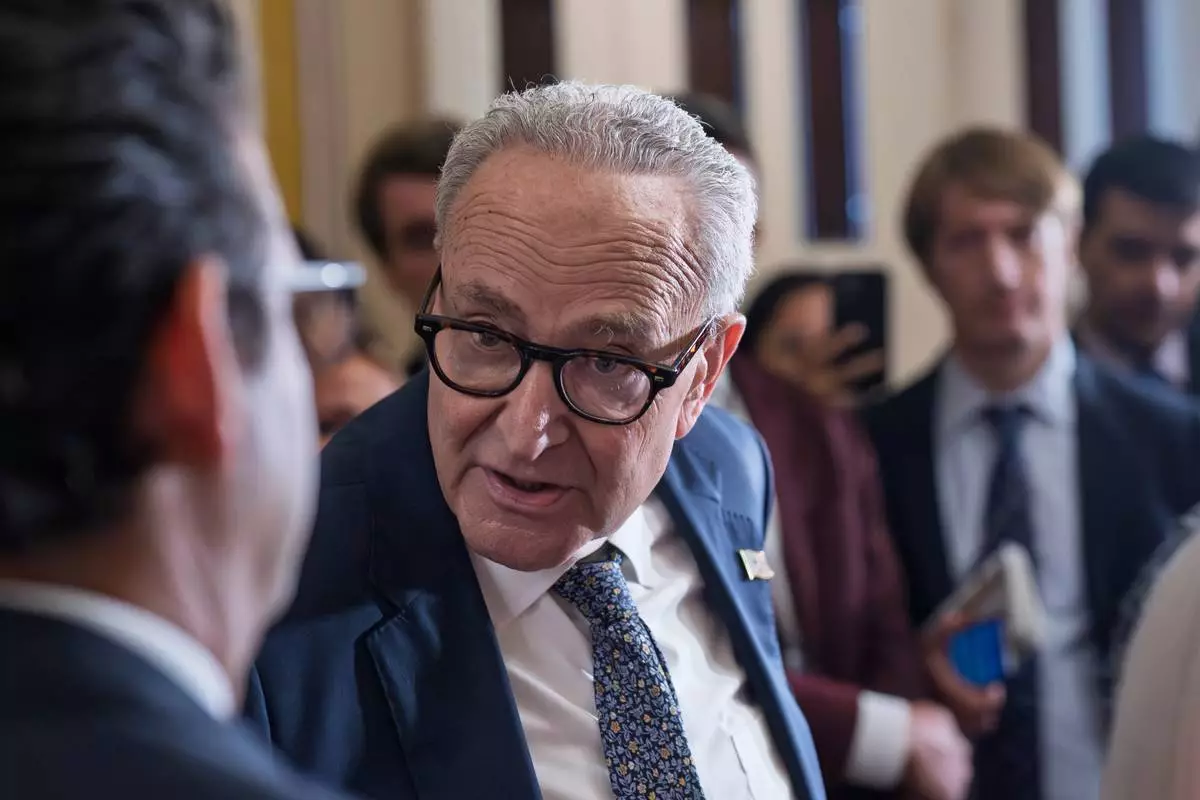
Senate Minority Leader Chuck Schumer, D-N.Y., turns to Sen. Brian Schatz, D-Hawaii, while speaking with reporters as the government lurches toward a shutdown if the Senate does not pass a House measure that would extend federal funding for seven weeks, at the Capitol in Washington, Tuesday, Sept. 30, 2025. (AP Photo/J. Scott Applewhite)
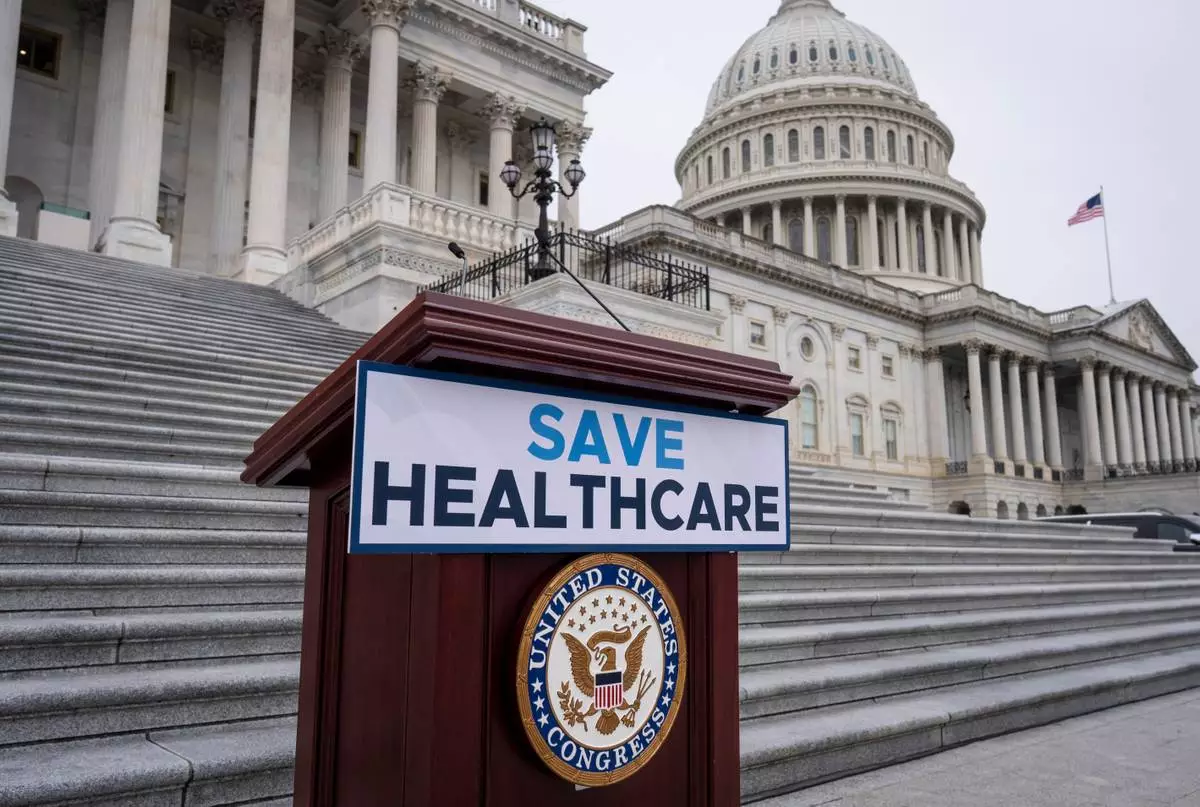
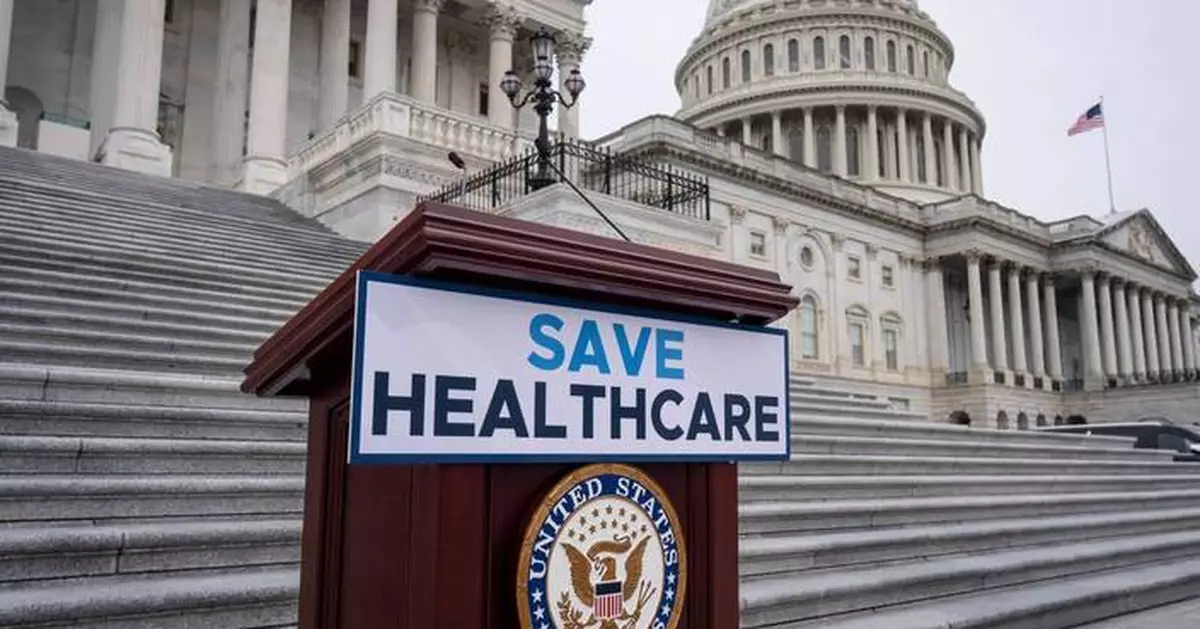
House Democrats prepare to speak on the steps of the Capitol to insist that Republicans include an extension of expiring health care benefits as part of a government funding compromise, in Washington, Tuesday, Sept. 30, 2025. (AP Photo/J. Scott Applewhite)
Several Middle Eastern allies of the United States have urged the Trump administration to hold off on strikes against Iran for the government’s deadly crackdown on protesters, according to an Arab diplomat familiar with the matter.
Top officials from Egypt, Oman, Saudi Arabia and Qatar have raised concerns in the last 48 hours that a U.S. military intervention would shake the global economy and destabilize an already volatile region, said the diplomat who spoke on condition of anonymity to describe the sensitive conversations.
Oil prices fell Thursday as the markets appeared to take note of President Donald Trump’s shifting tone as a sign that he’s leaning away from attacking Iran after days of launching blistering threats at Tehran for its brutal crackdown.
Nevertheless, White House press secretary Karoline Leavitt on Thursday maintained that “all options remain on the table” for Trump as he deals with Iran.
Here's the latest:
Exiled Crown Prince Reza Pahlavi told reporters Friday in Washington that he still believes Trump’s promise that “help is on the way” for the Iranian people still stands despite lack of action by the U.S.
Asked if he’s lost faith in the U.S. president, Pahlavi said, “I believe the president is a man of his word. As I said before, how many days it may take? Who knows? Hopefully sooner than later. But as I said before, regardless of whether action is taken or not, we as Iranians have no choice to carry on the fight.”
There had been reports that Pahlavi met over the weekend with Trump’s envoy Steve Witkoff, but Pahlavi refused to discuss any meetings with U.S. officials, including whether he’ll directly meet Trump.
“I may put a tariff on countries if they don’t go along with Greenland,” the president said, without providing details. “We need Greenland for national security.”
Trump for months has insisted the U.S. should control Greenland, a self-governing territory that’s part of the kingdom of Denmark.
But he’d not previously mentioned using tariffs to try and force the issue.
European leaders have joined Denmark in saying the U.S. can’t control the world’s largest island.
The department’s Office for Civil Rights has opened fewer than 10 sexual violence investigations nationwide since it was hit by mass layoffs last March, according to internal data obtained by The Associated Press.
Previously, it had been opening dozens of such investigations a year.
The layoffs last year left half as many lawyers to investigate complaints of discrimination based on race, sex or disability in schools.
At the same time, the administration has doubled down on sexual discrimination cases of another kind. Trump officials have used Title IX, a 1972 gender-equality law, against schools that make accommodations for transgender students and athletes. The Office for Civil Rights has opened nearly 50 such investigations since Trump took office.
▶ Read more about Education Department sexual violence investigations
The president quickly turned his health care forum into a grievance session against Democrats and a bragging session on the votes he’s gotten in rural America.
“I’m all about the rural community. … We’re taking care of those great people,” he said, arguing that former President Barack Obama “didn’t care about the rural community, to be totally blunt.”
“The Democrats are so horrible toward the rural community,” Trump added. He asked voters to “remember ... in the midterms” that Democrats did not back his “Big Beautiful Bill” that included $10 billion for rural healthcare this year.
Trump effectively blamed Obama’s “Un-Affordable Care Act” for rural hospital closures and financial struggles. In truth, KFF has found that rural hospitals closed at a higher rate in states that did not expand Medicaid under Democrats’ 2010 health care overhaul than in states that did expand to take in more federal money.
“I actually want to keep you where you are, if you know the truth,” Trump told Kevin Hassett, the director of the National Economic Council.
Trump made the comment at a White House event on rural health, drawing laughter in the room. But it wasn’t clear the president himself was joking.
It comes as Trump is believed to be in final interviews with potential replacements for the Fed’s current chair, Jerome Powell, a frequently target of Trump’s public attacks.
“We don’t want to lose him Susie,” Trump said of Hassett to White House chief of staff Susie Wiles, who also at the health event. “We’ll see how it all works out.”
The White House is touting health care spending across small-town America intended to transform how care is delivered in places that have lost many hospitals and providers.
A look at some numbers:
That makes him the highest ranking U.S. official to visit the country following the U.S. military strike which captured former leader Nicolás Maduro.
Thursday’s meeting, first reported by The New York Times, was confirmed Friday by a U.S. government official who spoke on condition of anonymity because they weren’t authorized to discuss the matter publicly.
The official said the meeting in Caracas came at President Trump’s direction and was intended to demonstrate the U.S. desire for a better relationship with Venezuela. The official said Ratcliffe discussed potential economic collaboration with the U.S. and warned that Venezuela can never again allow the presence of American adversaries, including drug traffickers.
— David Klepper
As Attorney General Pam Bondi approaches her first year on the job, the firings of Justice Department attorneys have defined her turbulent tenure. The terminations and a larger voluntary exodus of lawyers have erased centuries of combined experience and left the department with fewer career employees to act as a bulwark for the rule of law at a time when President Trump, a Republican, is testing the limits of executive power by demanding prosecutions of his political enemies.
Interviews by The Associated Press of more than a half-dozen fired employees offer a snapshot of the toll throughout the department. The departures include lawyers who prosecuted violent attacks on police at the U.S. Capitol on Jan. 6, 2021, environmental, civil rights and ethics enforcers, counterterrorism prosecutors, immigration judges and attorneys who defend administration policies. They continued this week, when several prosecutors in Minnesota moved to resign amid turmoil over an investigation into the shooting of a woman by an Immigration and Customs Enforcement officer.
▶ Read more about firings at the Justice Department
The White House and a bipartisan group of governors are pressuring the operator of the mid-Atlantic power grid to take urgent steps to boost energy supply and curb price hikes, holding a Friday event aimed at addressing a rising concern among voters about the enormous amount of power used for artificial intelligence ahead of elections later this year.
The White House said its National Energy Dominance Council and the governors of several states, including Pennsylvania, Ohio and Virginia, want to try to compel PJM Interconnection to hold a power auction for tech companies to bid on contracts to build new power plants.
The Trump administration and governors will sign a statement of principles toward that end Friday.
▶ Read more about the administration and AI-driven power shortages
The Justice Department’s investigation into Federal Reserve Chair Jerome Powell has brought heightened attention to a key drama that will play out at the central bank in the coming months: Will Powell leave the Fed when his term as chair ends, or will he take the unusual step of remaining a governor?
Powell’s term as Fed chair ends May 15, but because of the central bank’s complex structure, he has a separate term as one of seven members of its governing board that lasts until January 31, 2028. Historically, nearly all Fed chairs have stepped down from the board when they’re no longer chair. But Powell could be the first in nearly 50 years to stay on as a governor.
Many Fed-watchers believe the criminal investigation into Powell’s testimony about cost overruns for Fed building renovations was intended to intimidate him out of taking that step. If Powell stays on the board, it would deny the White House a chance to gain a majority, undercutting the Trump administration’s efforts to seize greater control over what has for decades been an institution largely insulated from day-to-day politics.
▶ Read more about Federal Reserve Chair Jerome Powell
Trump on Thursday announced the outlines of a health care plan he wants Congress to take up as Republicans have faced increasing pressure to address rising health costs after lawmakers let subsidies expire.
The cornerstone is his proposal to send money directly to Americans for health savings accounts so they can handle insurance and health costs as they see fit. Democrats have rejected the idea as a paltry substitute for the tax credits that had helped lower monthly premiums for many people.
Trump’s plan also focuses on lowering drug prices and requiring insurers to be more upfront with the public about costs, revenues, rejected claims and wait times for care.
Trump has long been dogged by his lack of a comprehensive health care plan as he and Republicans have sought to unwind former President Barack Obama’s signature legislation, the Affordable Care Act. Trump was thwarted during his first term in trying to repeal and replace the law.
▶ Read more about Trump’s health care plan
Most American presidents aspire to the kind of greatness that prompts future generations to name important things in their honor.
Donald Trump isn’t leaving it to future generations.
As the first year of his second term wraps up, his Republican administration and allies have put his name on the U.S. Institute of Peace, the Kennedy Center performing arts venue and a new class of battleships.
That’s on top of the “Trump Accounts” for tax-deferred investments, the TrumpRx government website soon to offer direct sales of prescription drugs, the “Trump Gold Card” visa that costs at least $1 million and the Trump Route for International Peace and Prosperity, a transit corridor included in a deal his administration brokered between Armenia and Azerbaijan.
On Friday, he plans to attend a ceremony in Florida where local officials will dedicate a 4-mile (6-kilometer) stretch of road from the airport to his Mar-a-Lago estate in Palm Beach as President Donald J. Trump Boulevard.
▶ Read more about Trump’s renaming efforts
Nearly a year into his second term, Trump’s work on the economy hasn’t lived up to the expectations of many people in his own party, according to a new AP-NORC survey.
The poll from The Associated Press-NORC Center for Public Affairs Research finds a significant gap between the economic leadership Americans remembered from Trump’s first term and what they’ve gotten so far as he creates a stunning level of turmoil at home and abroad.
Just 16% of Republicans say Trump has helped “a lot” in addressing the cost of living, down from 49% in April 2024, when an AP-NORC poll asked Americans the same question about his first term.
At the same time, Republicans are overwhelmingly supportive of the president’s leadership on immigration — even if some don’t like his tactics.
There is little sign overall, though, that the Republican base is abandoning Trump. The vast majority of Republicans, about 8 in 10, approve of his job performance, compared with 4 in 10 for adults overall.
▶ Read more about the poll’s findings
Several Middle Eastern allies of the United States have urged the Trump administration to hold off on strikes against Iran for the government’s deadly crackdown on protesters, according to an Arab diplomat familiar with the matter.
Top officials from Egypt, Oman, Saudi Arabia and Qatar have raised concerns in the last 48 hours that a U.S. military intervention would shake the global economy and destabilize an already volatile region, said the diplomat who spoke on condition of anonymity to describe the sensitive conversations.
Oil prices fell on Thursday as the markets appeared to take note of President Donald Trump’s shifting tone as a sign that he’s leaning away from attacking Iran after days of launching blistering threats at Tehran for its brutal crackdown.
Nevertheless, White House press secretary Karoline Leavitt on Thursday maintained that “all options remain on the table” for Trump as he deals with Iran.
▶ Read more about Trump and Iran
— Matthew Lee, Aamer Madhani and Ben Finley
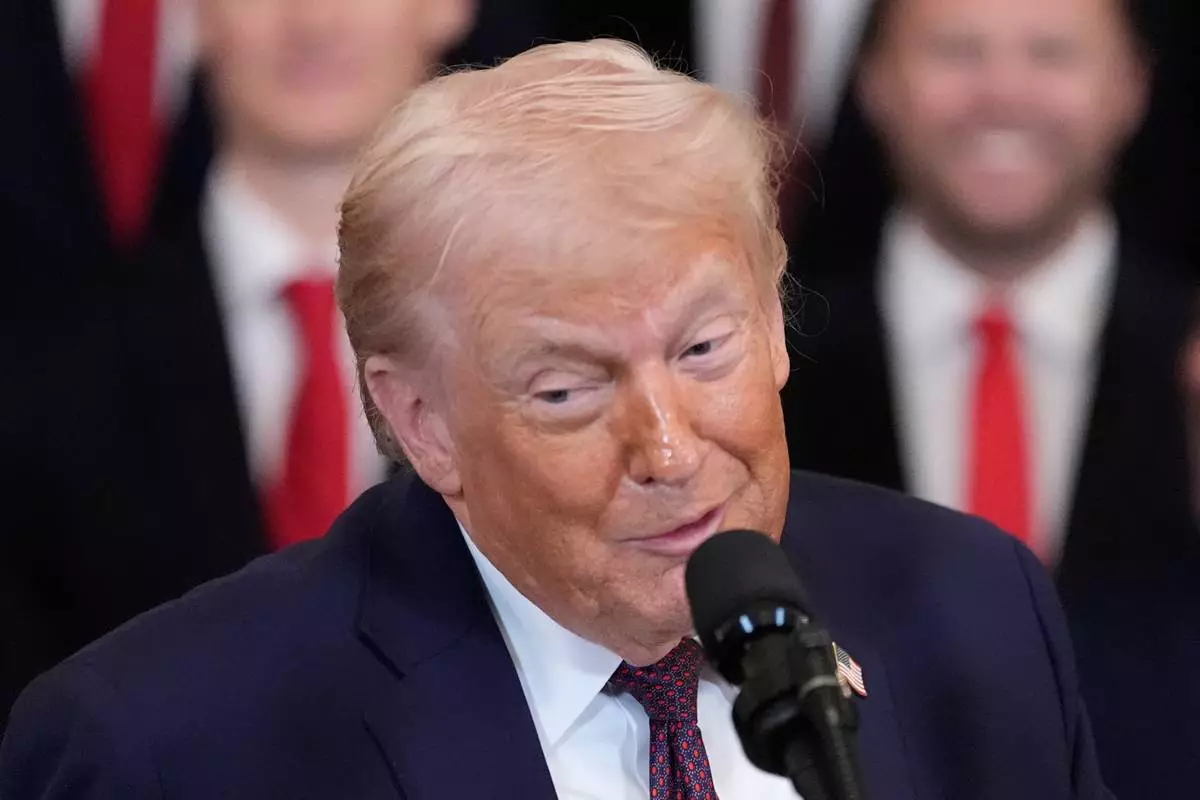
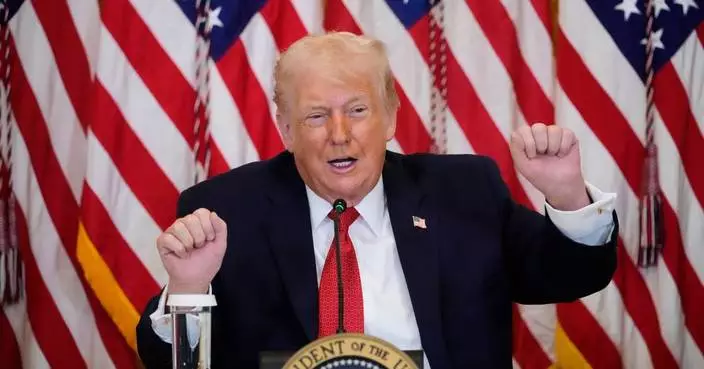
President Donald Trump speaks during an event to honor the 2025 Stanley Cup Champion Florida Panthers in the East Room of the White House, Thursday, Jan. 15, 2026, in Washington. (AP Photo/Alex Brandon)