Skip to Content Facebook Feature Image

Kilauea's lava soared as high as a skyscraper during a 6-hour eruption. Here's what to know

News

Kilauea's lava soared as high as a skyscraper during a 6-hour eruption. Here's what to know
News

News

Kilauea's lava soared as high as a skyscraper during a 6-hour eruption. Here's what to know

2025-10-02 04:37 Last Updated At:04:40

HONOLULU (AP) — Hawaii's Kilauea volcano has been shooting lava from its summit crater at semiregular intervals since late last year, delighting residents, visitors and online viewers alike with a fire hose of molten rock.

On Wednesday, the volcano had its 34th episode since December. Scientists believe they are all part of the same eruption because magma has been following the same pathway to the surface.

Fountains from the south vent at Kilauea's summit crater soared 1,300 feet (400 meters) into the air, the U.S. Geological Survey said. That is taller than New York's Empire State Building which is more than 100 stories.

The eruption died down after six hours.

The lava has been contained within the summit crater inside Hawaii Volcanoes National Park and hasn't threatened homes or buildings. It isn't expected to affect local commercial airports.

Park visitors can see the eruption in person. Others can watch popular livestreams offering a choice of three different camera angles made possible by U.S. government geologists.

Kilauea is on Hawaii Island, the largest of the Hawaiian archipelago. It is about 200 miles (320 kilometers) south of the state’s largest city, Honolulu, which is on Oahu.

Here's what to know about the latest eruption at Kilauea, one of the world's most active volcanoes:

A lower magma chamber under Halemaumau Crater has been receiving magma directly from the earth’s interior at about 5 cubic yards (3.8 cubic meters) per second, said Ken Hon, scientist-in-charge at the Hawaiian Volcano Observatory. This blows the chamber up like a balloon and forces magma into an upper chamber. From there it gets pushed above ground through cracks.

Many of the eruptive episodes since December have featured lava flying high into the air. In some cases, the lava formed towers topping 1,000 feet (300 meters.) The fountains are generated in part because magma — which holds gases that are released as it rises — has been traveling to the surface through narrow, pipelike vents.

The expanding magma supply is capped by heavier magma that had expelled its gas at the end of the prior episode. Eventually enough new magma accumulates to force the degassed magma off, and the magma shoots out like a Champagne bottle that was shaken before the cork was popped.

This is the fourth time in 200 years that Kilauea has shot lava fountains into the air in repeated episodes. There were more episodes the last time Kilauea followed this pattern: The eruption that began in 1983 started with 44 sessions of shooting fountains. Those were spread out over three years, however. And the fountains emerged in a remote area, so few got to watch.

The other two occurred in 1959 and 1969.

Scientists don’t know how the current eruption will end or how it may change. In 1983, magma built enough pressure that Kilauea opened a vent at a lower elevation and started continuously leaking lava from there rather than periodically shooting out from a higher elevation. The eruption continued in various forms for three decades and ended in 2018.

Something similar could happen again. Or the current eruption could instead stop at the summit if its magma supply peters out.

Scientists can estimate when lava is likely to emerge days ahead of time by using sensors that indicate when magma is inflating or deflating.

“Our job is like being a bunch of ants crawling on an elephant trying to figure out how the elephant works,” Hon said.

At times the lava fountains have been shorter. Steve Lundblad, a University of Hawaii at Hilo geology professor, said the vent may have gotten wider in such cases, leaving molten rock less pressurized.

Some people may see lava flows as destructive. But Huihui Kanahele-Mossman, the executive director of the Edith Kanakaʻole Foundation, said lava is a natural resource that hardens into land and forms the foundation for everything on Hawaii Island.

Kanahele-Mossman’s nonprofit is named after her grandmother — the esteemed practitioner of Hawaiian language and culture. The foundation's hula halau, or school, is celebrated for its mastery of a style of hula rooted in the stories of Pele and her sister, Hiʻiaka.

Kanahele-Mossman has visited the crater a few times since the eruption began. She initially watches in awe and reverence. But then she observes more details so she can go home and compare it to the lava in the centuries-old tales that her school performs. While at the crater, she also delivers a chant prepared in advance and places offerings. Recently she presented awa, a drink made with kava, and a fern lei.

“You as the dancer, you are the storyteller and you carry that history that was written in those mele forward,” she said, using the Hawaiian word for song. “To be able to actually see that eruption that’s described in the mele, that’s always exciting to us and drives us and motivates us to stay in this tradition.”

Park visitation has been increasing since the eruption began. In April, there were 49% more visitors than the same month of 2024.

Park spokesperson Jessica Ferracane said those wanting to see the lava in person should sign up for U.S. Geological Survey alert notifications because the eruption could be over quickly, she said. Most episodes since December have lasted a day or less.

She cautioned that visitors should stay on marked trails and overlooks because unstable cliff edges and cracks in the earth may not be immediately apparent, and falling could lead to serious injury or death. Young children should be kept close to adults.

Volcanic gas, glass and ash can also be dangerous. Nighttime visitors should bring a flashlight.
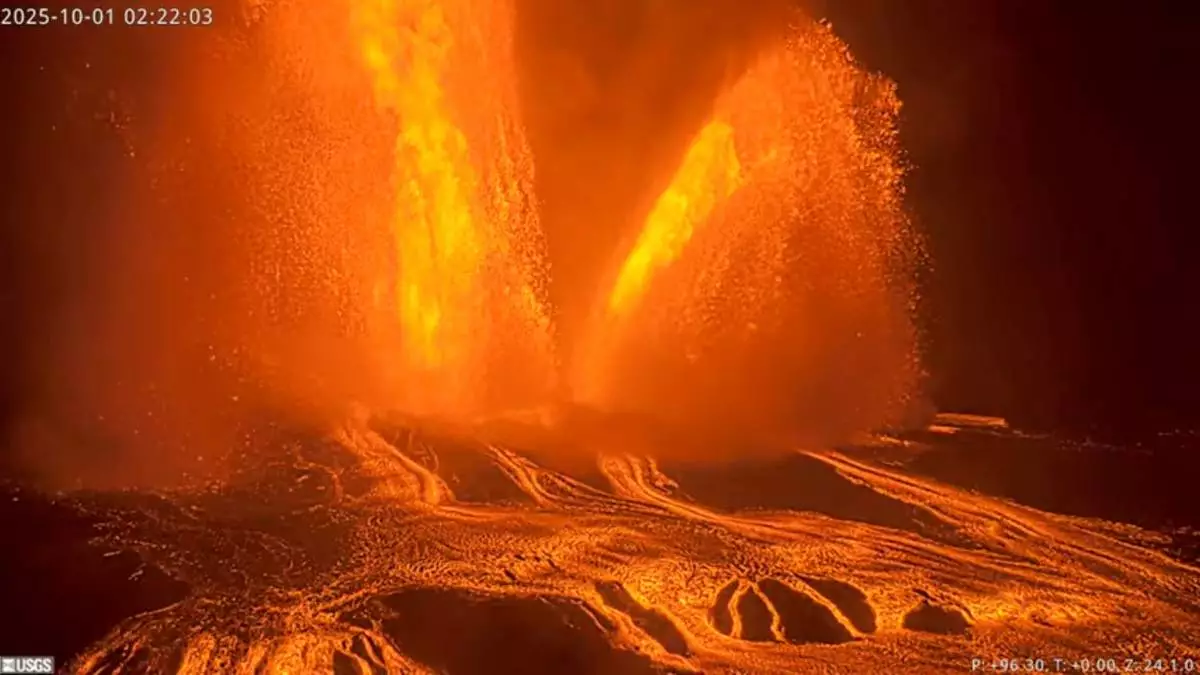
This image from webcam footage provided by the United States Geological Survey (USGS) shows lava fountains shooting up in the air in the latest episode of an ongoing eruption of Kilauea volcano inside Hawaii Volcanoes National Park on Wednesday, Oct. 1, 2025, in Hawaii. (U.S. Geological Survey via AP)
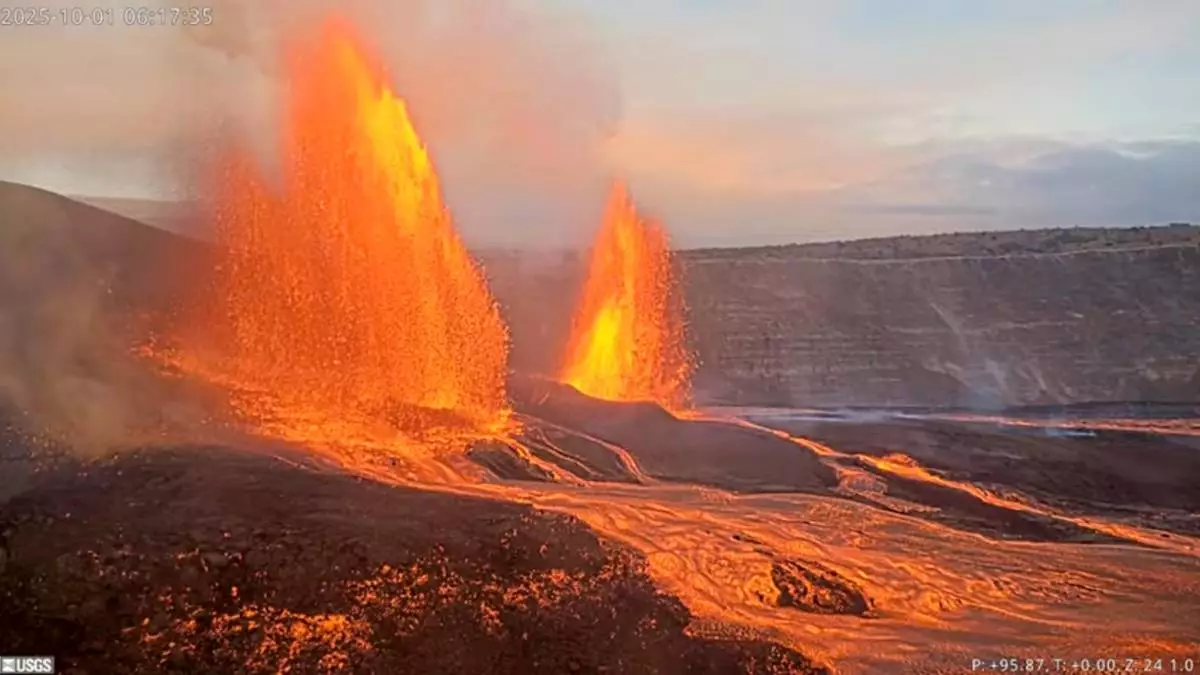
This image from webcam footage provided by the United States Geological Survey (USGS) shows lava fountains shooting up in the air in the latest episode of an ongoing eruption of Kilauea volcano inside Hawaii Volcanoes National Park on Wednesday, Oct. 1, 2025, in Hawaii. (U.S. Geological Survey via AP)

This image from webcam footage provided by the United States Geological Survey (USGS) shows lava fountains shooting up in the air in the latest episode of an ongoing eruption of Kilauea volcano inside Hawaii Volcanoes National Park on Wednesday, Oct. 1, 2025, in Hawaii. (U.S. Geological Survey via AP)
This image from webcam footage provided by the United States Geological Survey (USGS) shows lava fountains shooting up in the air in the latest episode of an ongoing eruption of Kilauea volcano inside Hawaii Volcanoes National Park on Wednesday, Oct. 1, 2025, in Hawaii. (U.S. Geological Survey via AP)
FORT LAUDERDALE, Fla. (AP) — Lionel Messi's legacy was long secured when he came to Inter Miami and joined Major League Soccer. He'd won a World Cup, won dozens of trophies, was generally considered the greatest player in the sport's history.

He didn't need an MLS Cup.

But he wanted one — and got it.

Messi and Inter Miami have completed their ascent, beating the Vancouver Whitecaps 3-1 on Saturday in the MLS Cup final for the franchise's first championship. It came 2 1/2 years after the legend arrived in South Florida, a move that stunned plenty of onlookers at the time.

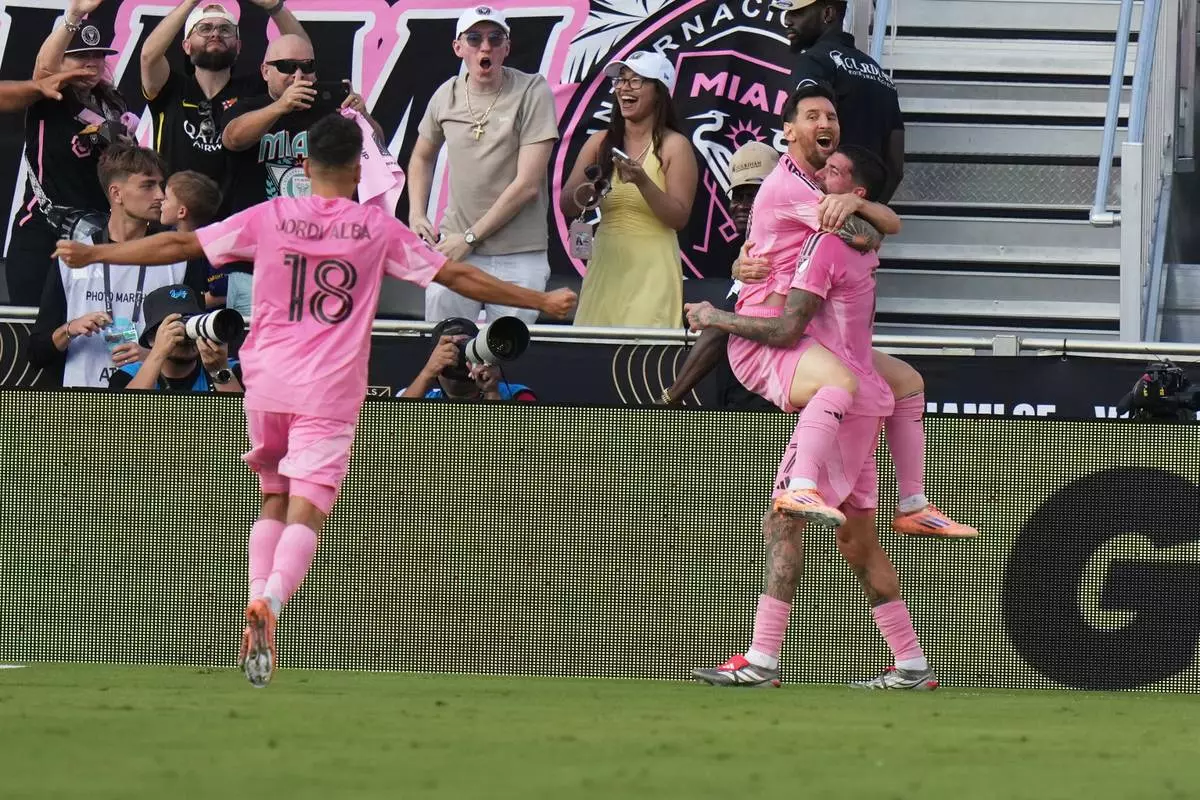
He set up the title-clinching goal with a 72nd-minute assist to Rodrigo De Paul, a play where Messi stole the ball and threaded a pass through a tiny gap in a wall of Vancouver defenders. De Paul got it in stride, pushed it into the far corner of the net — and Messi went airborne to hop into his arms a few seconds later, all smiles.

And as the final minutes ticked away, Inter Miami's pink-clad fans — most wearing Messi's No. 10 on their backs — stood and stomped and cheered. South Florida has seen NFL and NBA and Major League Baseball and NHL titles in the past.

It's a soccer town now, too. Messi made that happen. Tadeo Allende scored in the sixth minute of stoppage time — off another Messi assist, of course — to make it 3-1.

Inter Miami became the 16th franchise in the league's 30-year history to win an MLS title. And this extends a run of parity for MLS, which has seen five different franchises win championships in the last five years and eight franchises claim a title in the last nine seasons — only Columbus has won twice in that span.

It was also the culmination of a 12-year odyssey for David Beckham, part of Inter Miami’s ownership group.

He retired as a player in 2013 and his MLS contract said he could start a franchise at a discounted rate when his career ended. Beckham chose Miami and it took him years to finally make it happen; it wasn’t until January 2018 when the franchise was formally born, after he partnered with Miami businessmen Jorge Mas and Jose Mas, and even then the team didn’t have a stadium plan.

The team started play in 2020, and Messi arrived halfway through the 2023 season. Inter Miami was in last place in MLS at the time.

And then Messi arrived. The last-place team then now runs the league.

“It’s been an incredible journey,” Beckham said.

The trophy is Messi’s 47th for club and country, extending his global men’s soccer record. He’s now won at least 21 titles in one-match final situations, many of them with the core of this team — Sergio Busquets, Jordi Alba, Luis Suarez and Javier Mascherano, his longtime Barcelona teammates.

Busquets and Alba are retiring and got to go out as champions. Suarez’s future is uncertain. Mascherano is the coach now, one who changed Inter Miami’s lineup and tactics halfway through the season with this moment in mind.

And the 38-year-old Messi, the 2024 MLS MVP who seems like a lock to win the award again this season, still is like none other in the biggest moments with a contract that could have him playing with Miami into his early 40s.

“He’s not just here to enjoy living in Miami,” Beckham said. “His wife and the kids love Miami, but he’s come here to win, and that’s really what Leo is all about. He wants to win. He’s got that dedication, the loyalty that he shows to his teammates, to the city, to the club. Leo is a winner. It’s simple as that.”

Inter Miami went up 1-0 on an own goal in the eighth minute, before Vancouver tied it in the 60th on a score by Ali Ahmed. Another Vancouver shot hit both posts about two minutes later but stayed out, and Inter Miami got the lead for good when Messi found De Paul.

And when it was over, Messi went over to the Inter Miami supporters section and threw both his hands in the air. It was a moment 2 1/2 years in the making.

AP soccer: https://apnews.com/hub/soccer

Vancouver Whitecaps' Ali Ahmed (right) celebrates his goal against Inter Miami with Andres Cubas during the second half of the MLS Cup final soccer match, in Fort Lauderdale, Fla., on Saturday, Dec. 6, 2025. (Darryl Dyck/The Canadian Press via AP)

Vancouver Whitecaps' Ali Ahmed (right) celebrates his goal against Inter Miami with Andres Cubas during the second half of the MLS Cup final soccer match, in Fort Lauderdale, Fla., on Saturday, Dec. 6, 2025. (Darryl Dyck/The Canadian Press via AP)

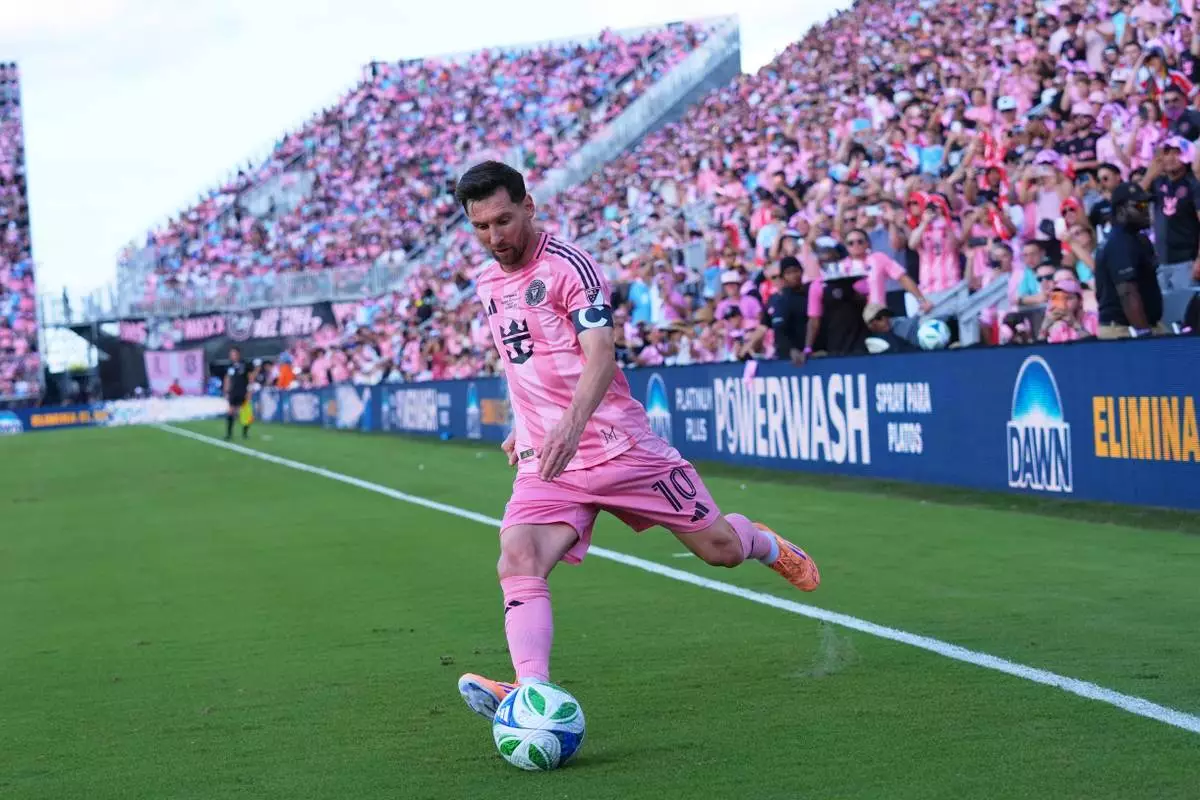
Inter Miami forward Lionel Messi (10) kicks a corner kicks during the first half of the MLS Cup final soccer match against the Vancouver Whitecaps Saturday, Dec. 6, 2025, in Fort Lauderdale, Fla. (AP Photo/Lynne Sladky)

Inter Miami forward Lionel Messi (10) kicks a corner kicks during the first half of the MLS Cup final soccer match against the Vancouver Whitecaps Saturday, Dec. 6, 2025, in Fort Lauderdale, Fla. (AP Photo/Lynne Sladky)

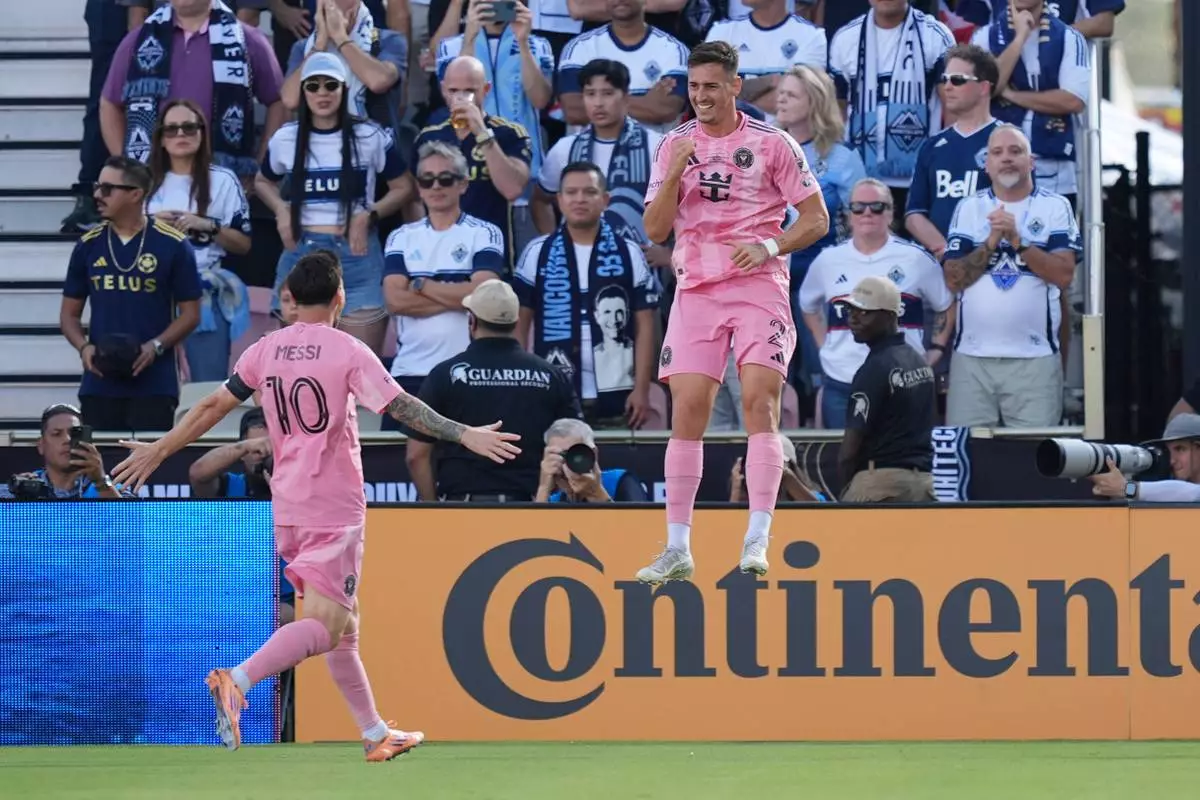
Inter Miami forwards Lionel Messi (10) and Tadeo Allende (21) celebrate after Vancouver Whitecaps defender Édier Ocampo scored an own goal during the first half of the MLS Cup final soccer match Saturday, Dec. 6, 2025, in Fort Lauderdale, Fla. (AP Photo/Rebecca Blackwell)

Inter Miami forwards Lionel Messi (10) and Tadeo Allende (21) celebrate after Vancouver Whitecaps defender Édier Ocampo scored an own goal during the first half of the MLS Cup final soccer match Saturday, Dec. 6, 2025, in Fort Lauderdale, Fla. (AP Photo/Rebecca Blackwell)

Inter Miami midfielder Rodrigo de Paul (7) celebrates a goal with forward Lionel Messi (10) and defender Jordi Alba (18) during the second half of the MLS Cup final soccer match against the Vancouver Whitecaps Saturday, Dec. 6, 2025, in Fort Lauderdale, Fla. (AP Photo/Lynne Sladky)

Inter Miami midfielder Rodrigo de Paul (7) celebrates a goal with forward Lionel Messi (10) and defender Jordi Alba (18) during the second half of the MLS Cup final soccer match against the Vancouver Whitecaps Saturday, Dec. 6, 2025, in Fort Lauderdale, Fla. (AP Photo/Lynne Sladky)

Recommended Articles