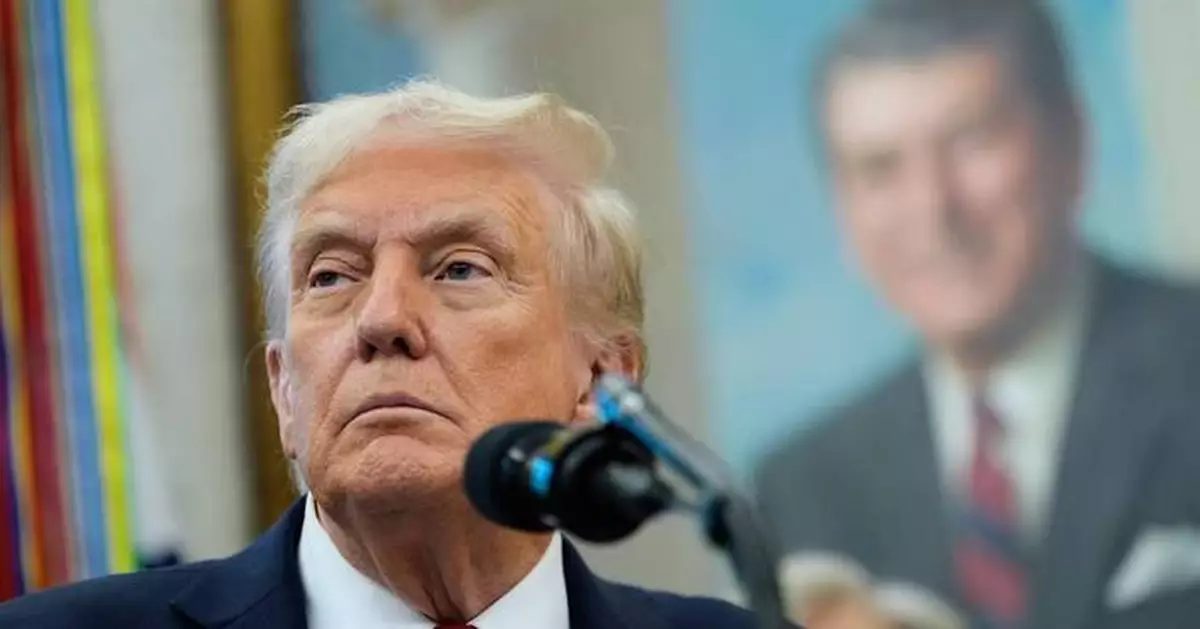
WASHINGTON (AP) — The U.S. government had shut down, and Donald Trump was calling on Democrats and Republicans to work together to get out of the mess.
“You have to get people in a room, and you have to just make deals for the good of the country,” Trump remarked.
The year was 2013, and Trump was then a business mogul who had yet to enter politics. Now that he is president, Trump and his fellow Republicans are taking a strikingly different posture, refusing to negotiate with Democrats in a shutdown that the GOP say the minority party instigated.
Just last year, Senate Democratic leader Chuck Schumer of New York was criticizing ideologues who “amazingly believe that causing a shutdown is somehow a good thing, if it gets them what they want.” Now Schumer and most other Democrats are rejecting bills to open and fund the government because they want health care provisions included.
If you’ve been in Washington long enough, you’ve most likely argued both sides of a shutdown. Both parties have used the threat of shutdowns to force a policy outcome and both sides have decried the other for doing the same. Nobody likes a shutdown, but each side insists the American people are on their side — whether their side is supporting a shutdown or not.
“Everybody just makes the mistake of believing in the righteousness of their positions, and it blinds them to the reality of shutdowns,” said Brendan Buck, who served as a top aide to House Speakers John Boehner, R-Ohio, and Paul Ryan, R-Wis. “It’s a political messaging exercise framed as a negotiating tactic, but there’s very little evidence that it really serves a policymaking purpose. It is more just a platform to talk about what’s important to you.”
Not many politicians, save the few moderates who always chafe at shutdown maneuvers, are immune.
When Vice President JD Vance was a senator last year and when Congress, yet again, was on the brink of a funding lapse, he made an assertive case for using government funding as leverage to get what Republicans wanted.
“Why shouldn’t we be trying to force this government shutdown fight to get something out of it that’s good for the American people?” Vance asked in a September 2024 podcast interview. “Why have a government if it’s not a functioning government?”
Vance is taking a much different approach now. Standing with GOP leaders at the White House this week, he said it was “not reasonable” for Democrats to use their proposals “as leverage and to shut down the government unless we give you everything you want.”
In 2013, when Massachusetts Democrat Elizabeth Warren was in her first Senate term, she argued in a floor speech that the “bare minimum that we can do” would be to pass a short-term funding bill “to keep the doors open and the lights on.”
Now, Warren has twice voted against a stopgap measure pushed by GOP lawmakers and the White House.
“Democrats are at the negotiating table. We don’t have a long list of demands. We’re not saying we need to find more money,” Warren wrote on the social media site X. “We just want Republicans to restore the health care coverage they took away from millions of Americans.”
What changes from each shutdown scenario is what specific policy the instigating party wants out of it.
In the fall of 2013, Republicans headed by Texas Sen. Ted Cruz and House conservatives were adamant that any government funding bill needed to strip money from the Affordable Care Act and they led the nation into a 16-day shutdown. In January 2018, it was Democrats who were insisting that any government spending bill offer legal protections to “Dreamers,” young people who were brought to the United States illegally as children by family. Trump refused to negotiate, and the shutdown ended after three days.
Later in Trump's first term, he demanded money for a U.S.-Mexico border wall that lawmakers would not approve. Trump said he would “be the one to shut it down” as he sparred with congressional leaders over who would be responsible for the closures. That partial shutdown lasted 35 days.
One common theme is that the party forcing the shutdown hardly ever gets what it wants.
The Obama-era health law was not defunded, Democrats only got a vote on protecting “Dreamers” and Trump had to declare a national emergency to get money for his border wall. If past is prologue, that would suggest Democrats this time will not get what they want: an extension of health care subsidies for people who purchase plans through “Obamacare,” plus a reversal of Medicaid cuts put in place through the GOP's signature tax law earlier this year.
Michael Thorning, who worked for former Sen. Tom Udall, D-N.M., said he believes shutdowns are happening more often because both Democrats and Republicans have concluded “that the public is not going to punish them at the polls.”
“It's hard to see any pattern of public accountability there,” said Thorning, now the director of the structural democracy project at the Bipartisan Policy Center. “I think that has probably reduced the riskiness of what was seen as a pretty hardball tactic.”
Two years ago, while Democrat Joe Biden was president, Trump posted on Truth Social that any Republican fears of being blamed for a shutdown were overblown.
“Wrong!!! Whoever is President will be blamed,” he wrote, later adding, “UNLESS YOU GET EVERYTHING, SHUT IT DOWN!”
Asked for comment on Trump’s previous shutdown-related comments, the White House press office did not respond immediately. Their general press line gave an automatic message that due to “resulting from the Democrat Shutdown, the typical 24/7 monitoring of this press inbox may experience delays.”
Later, spokeswoman Abigail Jackson responded that “Chuck Schumer and the Democrats are so desperate to distract from their decision to shut down the government that they’re making the AP write stories on their week old Instagram posts." She was referring to a post from Schumer's account that featured Trump's comments from 2013.
“Here’s the truth: Democrats shut down the government because they want free health care for illegal aliens and they know it hurts the American people,” Jackson said. “Just listen to their own statements.”
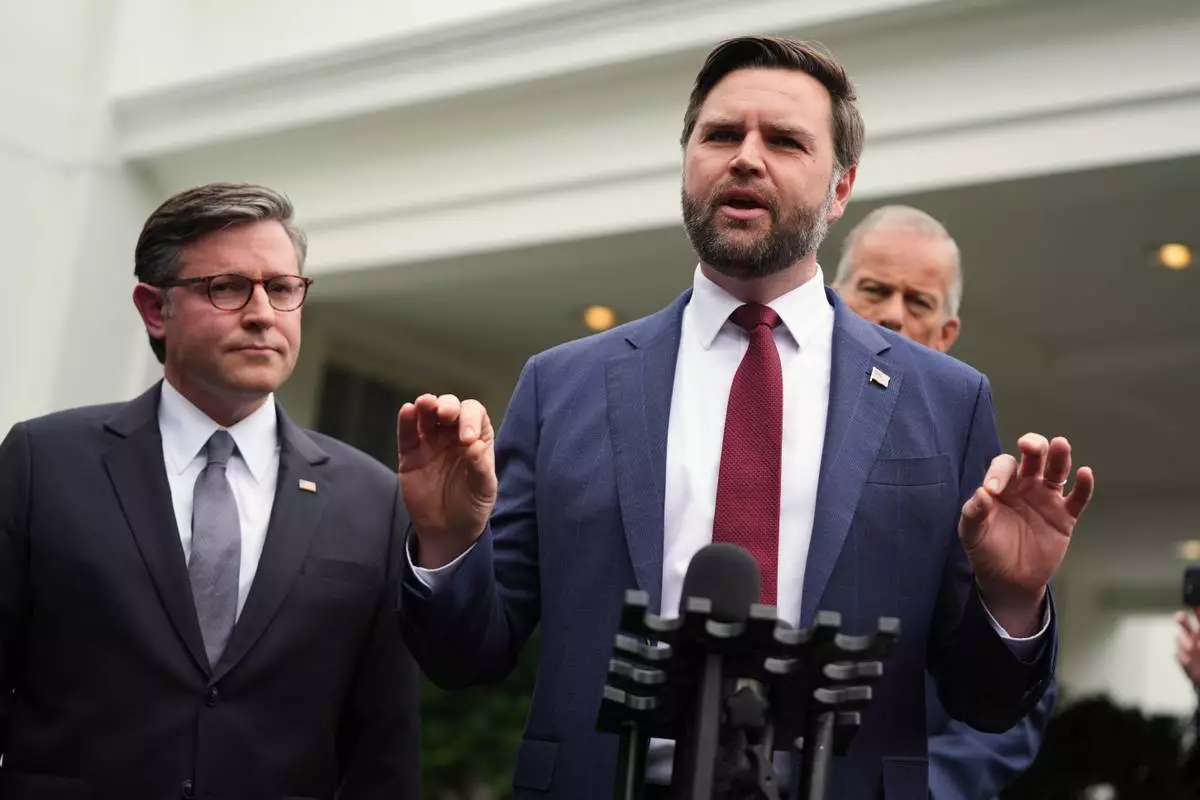
Vice President JD Vance, right, and House Speaker Mike Johnson, R-La., speak to members of the media outside the West Wing at the White House in Washington, Monday, Sept. 29, 2025, in Washington. (AP Photo/Evan Vucci)
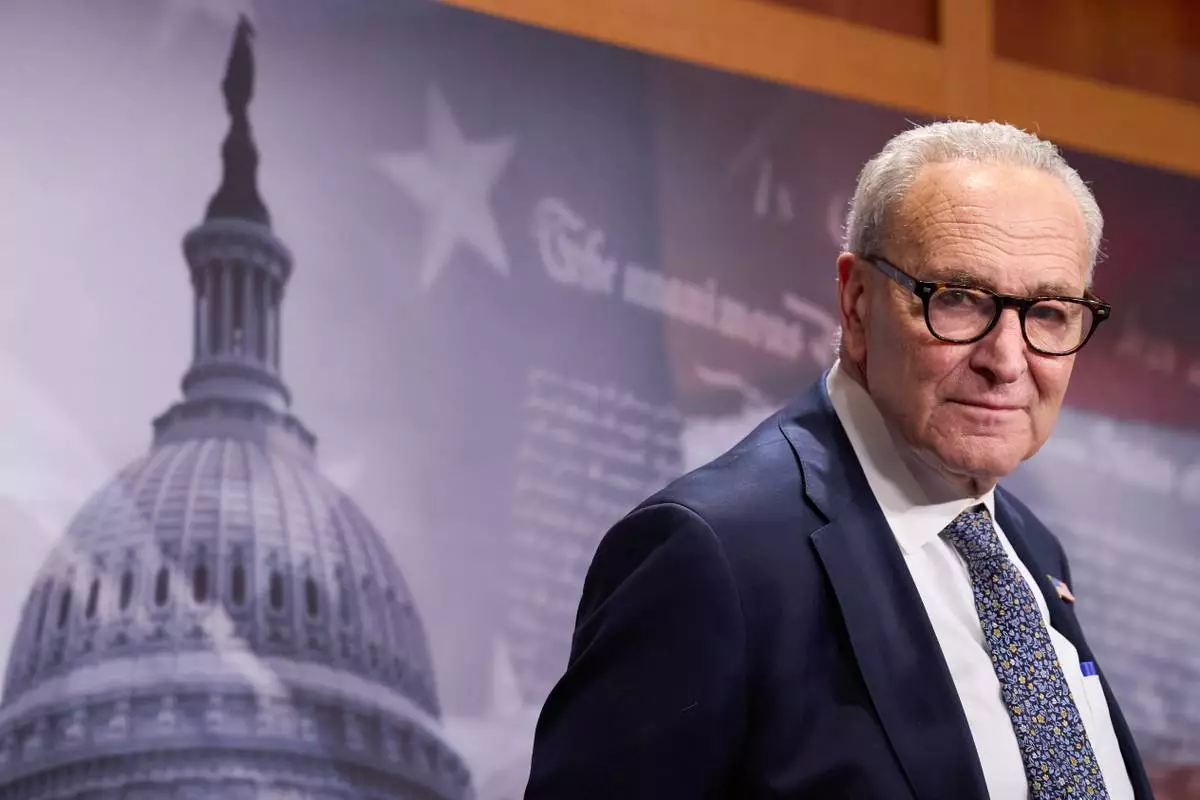
Senate Minority Leader Chuck Schumer, D-N.Y., attends a news conference about the government shutdown, Tuesday, Sept. 30, 2025, on Capitol Hill in Washington. (AP Photo/Jacquelyn Martin)
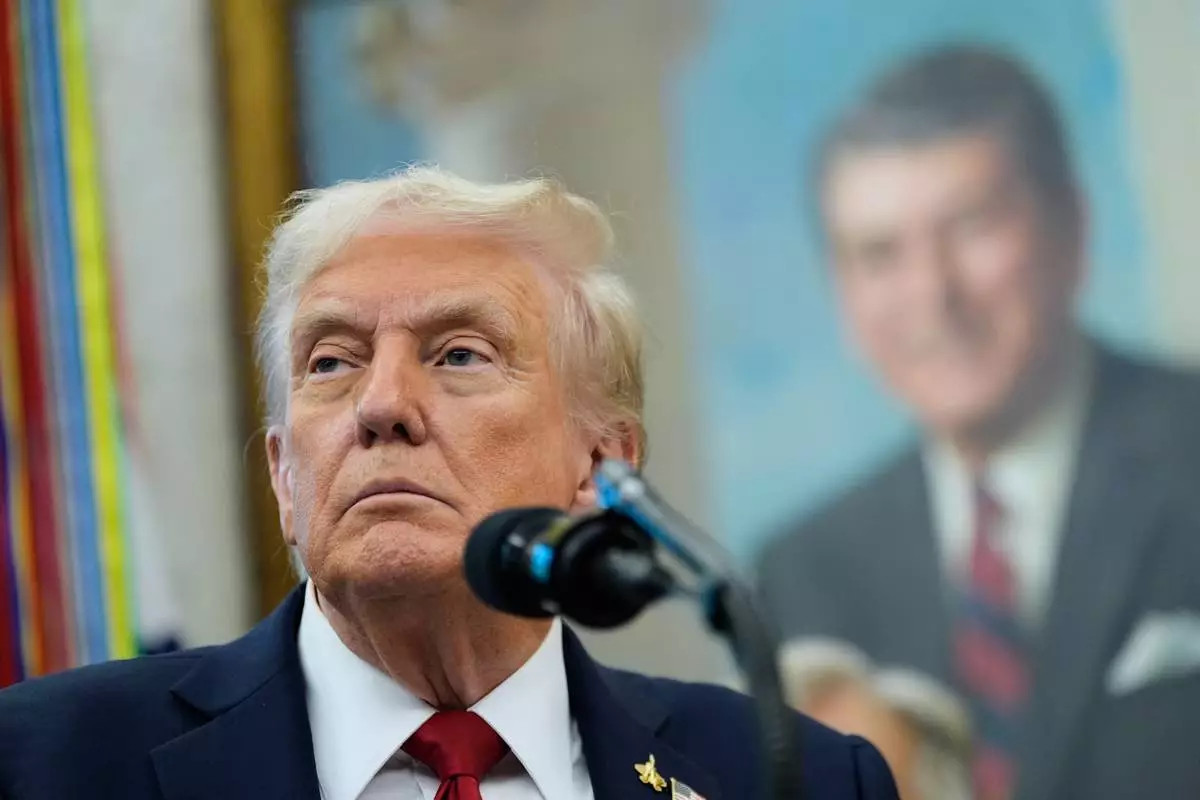
President Donald Trump speaks in the Oval Office of the White House, Tuesday, Sept. 30, 2025, in Washington. (AP Photo/Alex Brandon)
SYDNEY (AP) — An accused gunman in Sydney’s Bondi Beach massacre was charged with 59 offenses including 15 charges of murder on Wednesday, as hundreds of mourners gathered in Sydney to begin funerals for the victims.
Two shooters slaughtered 15 people on Sunday in an antisemitic mass shooting targeting Jews celebrating Hanukkah at Bondi Beach, and more than 20 other people are still being treated in hospitals. All of those killed by the gunmen who have been identified so far were Jewish.
As investigations unfold, Australia faces a social and political reckoning about antisemitism, gun control and whether police protections for Jews at events such as Sunday’s were sufficient for the threats they faced.
Naveed Akram, the 24-year-old alleged shooter, was charged on Wednesday after waking from a coma in a Sydney hospital, where he has been since police shot him and his father at Bondi. His father Sajid Akram, 50, died at the scene.
The charges include one count of murder for each fatality and one count of committing a terrorist act, police said.
Akram was also charged with 40 counts of causing harm with intent to murder in relation to the wounded and with placing an explosive near a building with intent to cause harm.
Police said the Akrams' car, which was found at the crime scene, contained improvised explosive devices.
Akram's lawyer did not enter pleas and did not request his client's release on bail during a video court appearance from his hospital bed, a court statement said.
Akram is being represented by Legal Aid NSW, which has a policy of refusing media comment on behalf of clients. He is expected to remain under police guard in hospital until he is well enough to be transferred to a prison.
Families from Sydney's close-knit Jewish community gathered, one after another, to begin to bury their dead. The victims of the attack ranged in age from a 10-year-old girl to an 87-year-old Holocaust survivor.
Jews are usually buried within 24 hours from their deaths, but funerals have been delayed by coroner’s investigations.
The first farewelled was Eli Schlanger, 41, a husband and father of five who served as the assistant rabbi at Chabad-Lubavitch of Bondi and organized Sunday's Chanukah by the Sea event where the attack unfolded. The London-born Schlanger also served as chaplain in prisons across New South Wales state and in a Sydney hospital.
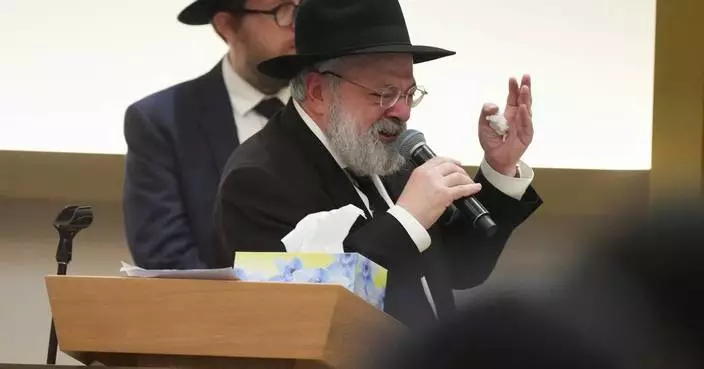
“After what happened, my biggest regret was — apart from, obviously, the obvious – I could have done more to tell Eli more often how much we love him, how much I love him, how much we appreciate everything that he does and how proud we are of him,” said Schlanger's father-in-law, Rabbi Yehoram Ulman, who sometimes spoke through tears.
“I hope he knew that. I’m sure he knew it,” Ulman said. "But I think it should've been said more often.”
One mourner, Dmitry Chlafma, said as he left the service that Schlanger was his longtime rabbi.
“You can tell by the amount of people that are here how much he meant to the community,” Chlafma said. “He was warm, happy, generous, one of a kind.”
Outside the funeral, not far from the site of the attack, the mood was hushed and grim, with a heavy police presence.
Authorities believe that the shooting was “a terrorist attack inspired by Islamic State,” Australia's federal police commissioner Krissy Barrett said Wednesday.
The Islamic State group is a scattered and considerably weaker group since a 2019 U.S.-led military intervention drove it out of territory it had seized in Iraq and Syria, but its cells remain active and it has inspired a number of independent attacks including in western countries.
Authorties are also examining a trip the suspects made to the Philippines in November.
Groups of Muslim separatist militants, including Abu Sayyaf in the southern Philippines, once expressed support for IS and have hosted small numbers of foreign militants from Asia, the Middle East and Europe in the past. Philippine military and police officials say there has been no recent indication of any foreign militants in the country’s south.
The news that the suspects were apparently inspired by the Islamic State group provoked more questions about whether Australia's government had done enough to stem hate-fueled crimes, especially directed at Jews. In Sydney and Melbourne, where 85% of Australia's Jewish population lives, a wave of antisemitic attacks has been recorded in the past year.
After Jewish leaders and survivors of Sunday's attack lambasted the government for not heeding their warnings of violence, Prime Minister Anthony Albanese vowed Wednesday to take whatever government action was needed to stamp out antisemitism.
Albanese and the leaders of some Australian states have pledged to tighten the country’s already strict gun laws in what would be the most sweeping reforms since a shooter killed 35 people in Port Arthur, Tasmania, in 1996. Mass shootings in Australia have since been rare.
Albanese has announced plans to further restrict access to guns, in part because it emerged the older suspect had amassed six weapons legally. Proposed measures include restricting gun ownership to Australian citizens and limiting the number of weapons a person can hold.
Meanwhile, Australians seeking ways to make sense of the horror settled on practical acts. Hours-long lines were reported at blood donation sites and at dawn on Wednesday, hundreds of swimmers formed a circle on the sand, where they held a minute's silence. Then they ran into the sea.
Not far away, part of the beach remained behind police tape as the investigation into the massacre continued, shoes and towels abandoned as people fled still strewn across the sand.
One event that would return to Bondi was the Hanukkah celebration the gunmen targeted, which has run for 31 years, Ulman said. It would be in defiance of the attackers' wish to make people feel like it was dangerous to live as Jews, he added.
“Eli lived and breathed this idea that we can never ever allow them not only to succeed, but anytime that they try something we become greater and stronger,” he said.
“We’re going to show the world that the Jewish people are unbeatable."
Graham-McLay reported from Wellington and McGuirk from Melbourne.
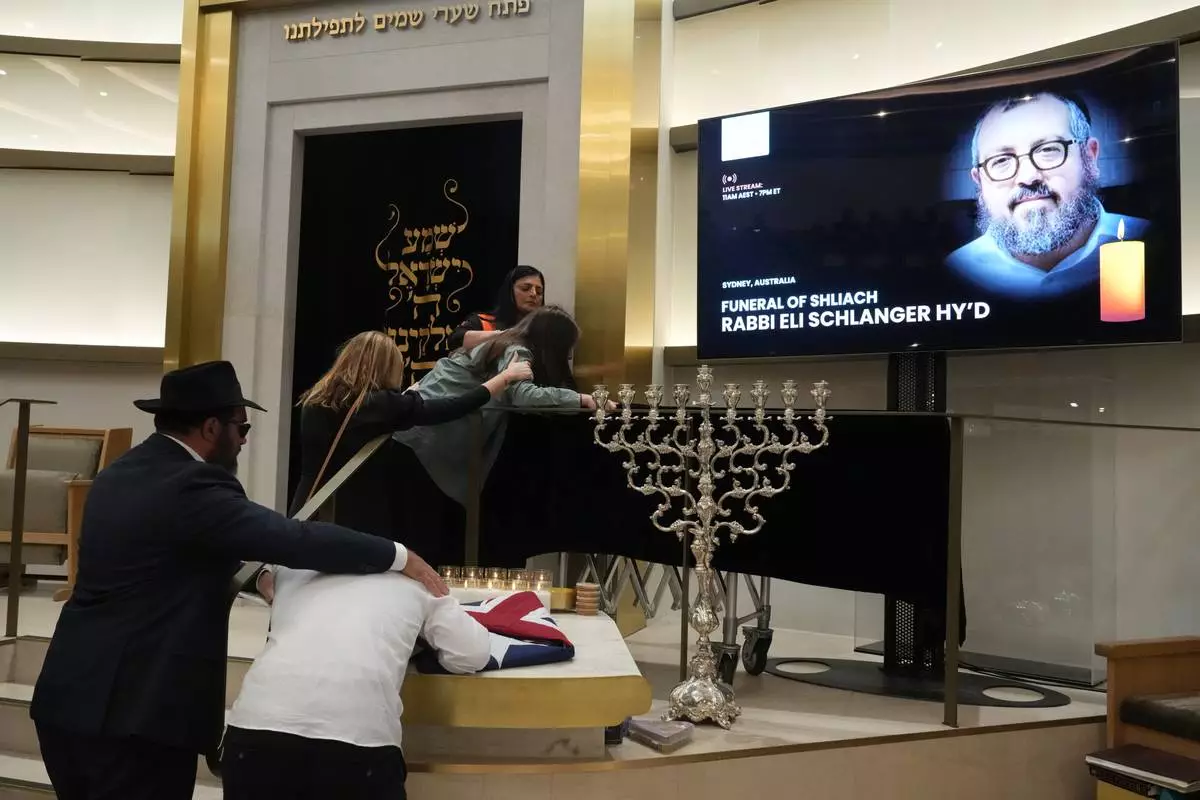
Family react at the coffin of Rabbi Eli Schlanger, a victim in the Bondi Beach mass shooting, during his funeral at a synagogue in Bondi on Wednesday, Dec. 17, 2025, in Sydney, Australia. (AP Photo/Mark Baker, Pool)
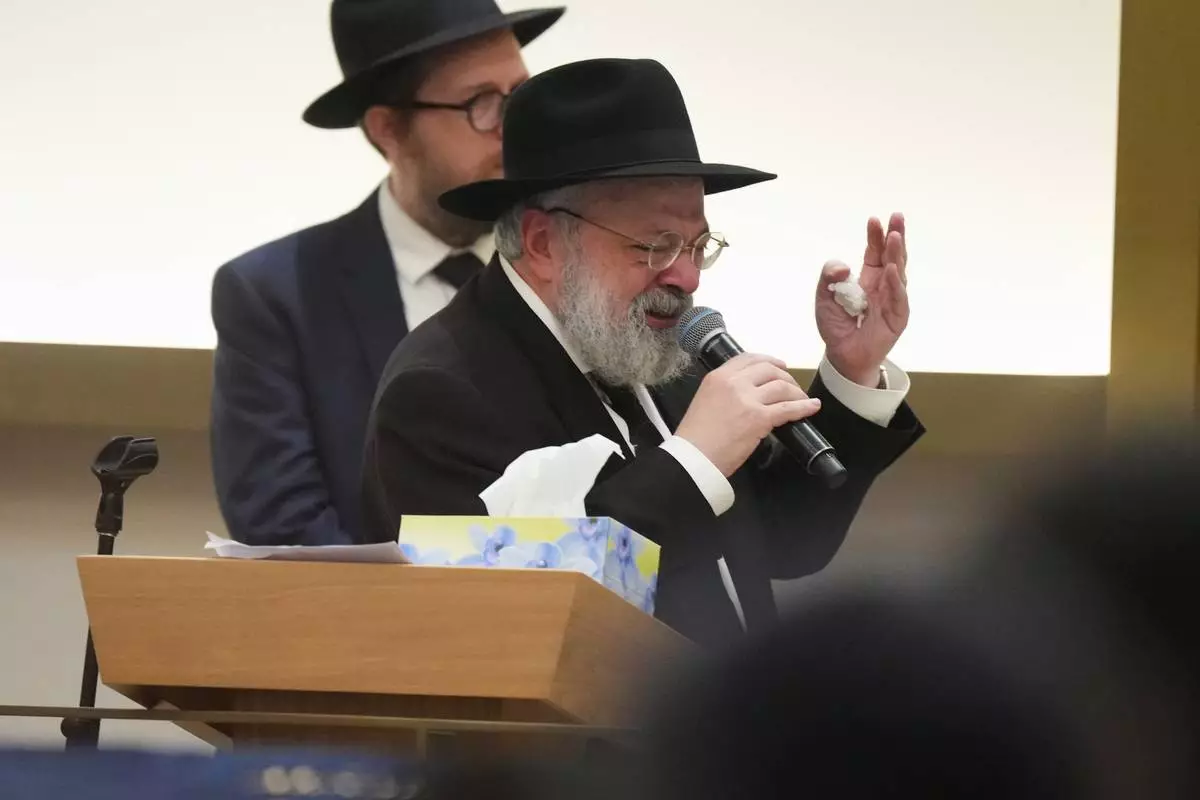
Rabbi Yehoram Ulman, father-in-law of Rabbi Eli Schlanger, a victim in the Bondi Beach mass shooting, speaks at his funeral at a synagogue in Bondi on Wednesday, Dec. 17, 2025, in Sydney, Australia. (AP Photo/Mark Baker, Pool)
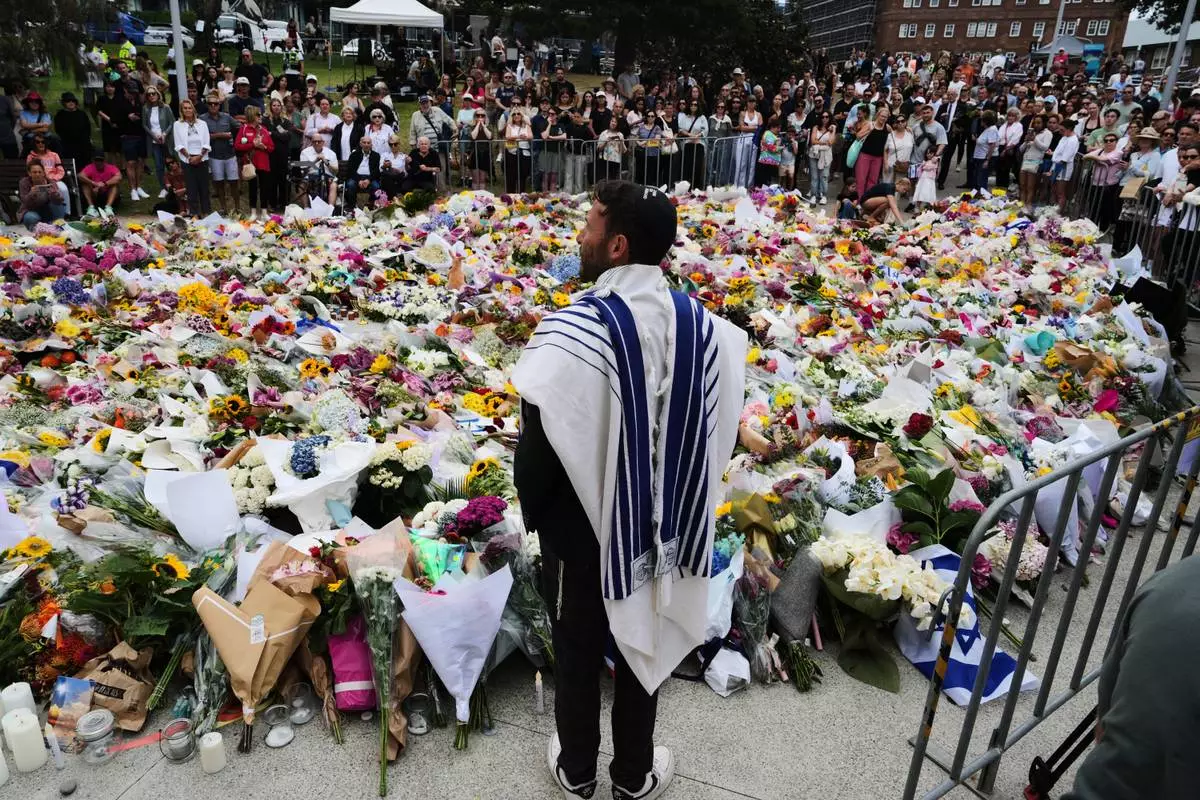
Rabbi Yossi Friedman speaks to people gathering at a flower memorial by the Bondi Pavilion at Bondi Beach on Tuesday, Dec. 16, 2025, following Sunday's shooting in Sydney, Australia. (AP Photo/Mark Baker)
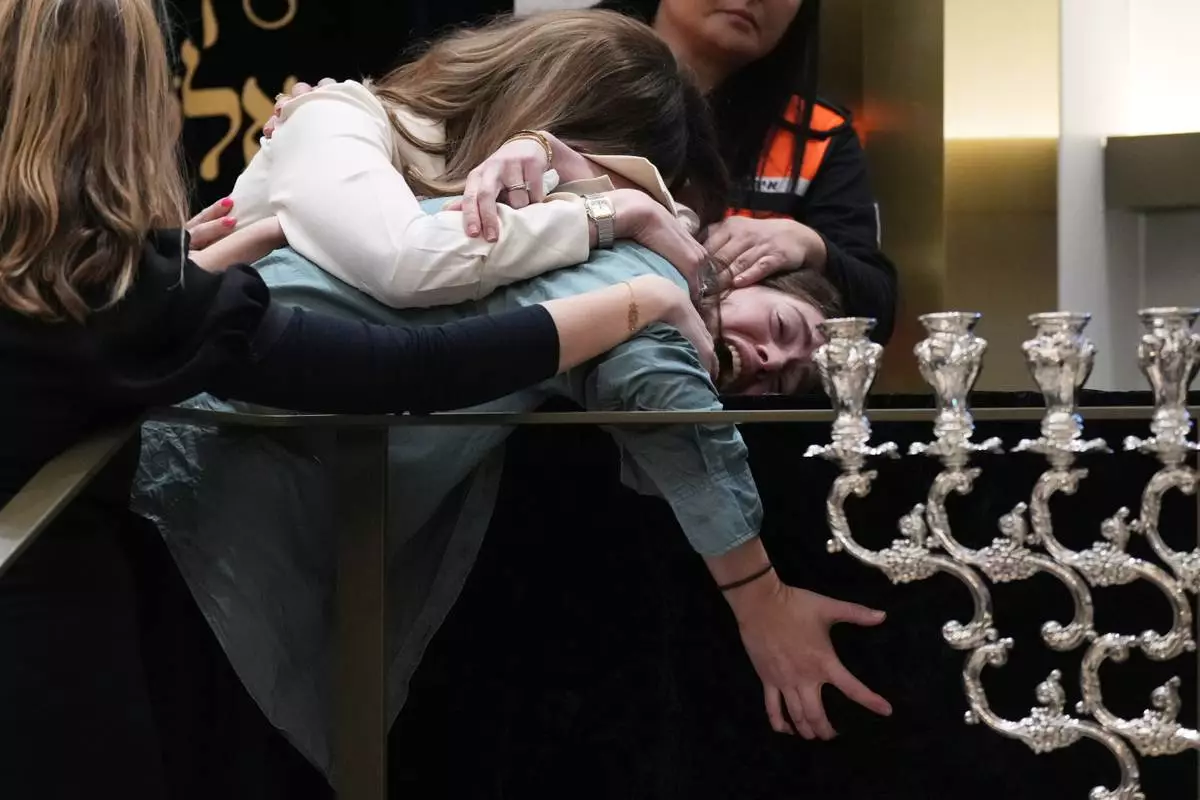
Family react at the coffin of Rabbi Eli Schlanger, a victim in the Bondi Beach mass shooting, during his funeral at a synagogue in Bondi on Wednesday, Dec. 17, 2025, in Sydney, Australia. (AP Photo/Mark Baker, Pool)