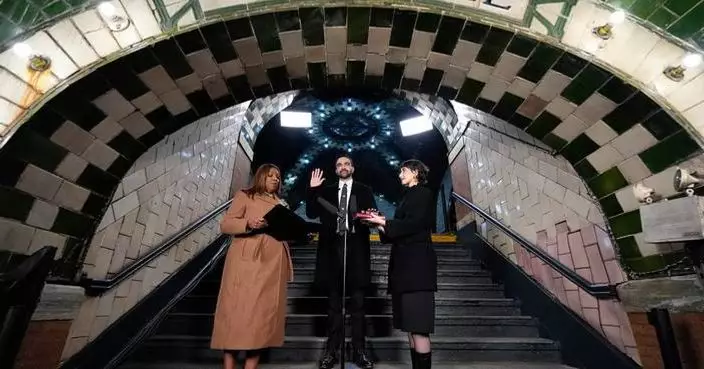
LOS ANGELES (AP) — Kim Kardashian and her mother, Kris Jenner, are suing her ex-boyfriend Ray J for saying they are under federal investigation and on the verge of being indicted.
The defamation lawsuit filed in Los Angeles Superior Court on Wednesday by the reality TV stars and businesspeople is a fast and aggressive pushback against allegations they say are entirely baseless.
They say Ray J, whose legal name is Ray Norwood Jr., falsely claimed that he was working with federal investigators on a racketeering case against them that will soon lead to their indictment.
The lawsuit says Ray J's comments are part of a “sustained campaign of harassment and defamation” that has gone on for years.
“Unable to accept the end of his fleeting relationship with Ms. Kardashian over twenty years ago, Ray J has repeatedly sought to attach himself to Plaintiffs’ names and exploit their prominence for personal gain,” the lawsuit says.
The women say two recent statements crossed a line and forced a lawsuit.
The court filing points to a TMZ special that aired in May, in which Ray J said “racketeering charges against the Kardashians would be appropriate,” and “if you told me that the Kardashians were being charged for racketeering, I might believe it."
He went further in a Sept. 30 livestream that according to the lawsuit had millions of viewers, saying, “The federal RICO I’m about to drop on Kris and Kim is about to be crazy” and “the feds is coming.” He added that the racketeering case would be “worse than Diddy.”
An email to a Ray J representative seeking comment was not immediately answered.
The lawsuit says he gave no evidence for his “blatantly false” statements.
“No such federal investigation exists; no law enforcement agency has initiated any criminal proceedings or investigations related to racketeering charges against Ms. Kardashian or Ms. Jenner; and no credible evidence whatsoever supports these inflammatory allegations,” it says.
Ray J is a singer, actor and brother to pop star Brandy. But he probably remains best known for his relationship with Kardashian, and a sex tape showing the couple that was leaked in 2007.
“Ray J’s acknowledged animosity toward the Kardashian family, coupled with his demonstrated willingness to lie for attention, leaves no room for doubt that his recent RICO statements were neither careless nor impulsive,” the lawsuit says. “They were the latest salvo in a deliberate and malicious campaign of harassment and defamation intended to defame Plaintiffs while reviving his own fading notoriety.”
The lawsuit says the “media storm” set off by the comments has caused them reputational and financial damages that will be established at trial.
Kardashian and Jenner are represented in the case by attorney Alex Spiro, who has become a go-to lawyer for prominent figures and led the team that got charges against Alec Baldwin dismissed in the middle of his trial.

FILE - Kim Kardashian arrives at the Vanity Fair Oscar Party on March 2, 2025, in Beverly Hills, Calif. (Photo by Evan Agostini/Invision/AP, File)
DUBAI, United Arab Emirates (AP) — With the ceasefire in Iran still shaky, U.S. Vice President JD Vance headed Friday to Pakistan for high-level talks with Iranian officials, as Israel and Hezbollah traded fire and Tehran maintained its stranglehold on the Strait of Hormuz.
Many issues could derail the truce and the negotiations aimed at making a broader deal to stop the fighting permanently.
Iran’s semiofficial Tasnim news agency, close to the paramilitary Revolutionary Guard, claimed that the talks set for Saturday would not happen unless Israel stopped its attacks in Lebanon. And U.S. President Donald Trump said on his social media platform that Iran has no leverage except to restrict ship traffic in the strait, through which 20% of the world’s traded oil once passed.
Kuwait, meanwhile, said it was targeted by seven drone attacks since Thursday that it blamed on Iran and its militia allies in the region. Though the Guard denied launching any assault, it has carried out attacks across the Mideast in the past that it did not claim.
Preparations for the talks between Iran and the U.S. appeared to be moving forward, with Vance boarding Air Force Two for the long flight to Islamabad.
Elsewhere, negotiations between Israel and Lebanon were expected to begin next week in the U.S. capital, according to a U.S. official and a person familiar with the plans, who spoke on condition of anonymity due to the delicacy of the matter.
Before his departure, Vance said he believed the negotiations with Iran will be “positive.”
But he added, “If they’re going to try and play us, then they’re going to find that the negotiating team is not that receptive.”
In Islamabad, security forces locked down key parts of the Pakistani capital, erecting barricades along routes from the airport to the city before the delegations arrived.
The Iranian delegation led by Parliament Speaker Mohammad Bagher Qalibaf arrived early Saturday in Islamabad, Iranian state TV reported. The delegation included security, political, military, economic and legal teams. The report said negotiations will begin only if the other side accepts Iran’s preconditions.
Hours earlier, Qalibaf posted on social media that two points that he said had been mutually agreed on — a ceasefire in Lebanon and the release of blocked Iranian assets — have yet to be implemented.
“These two matters must be fulfilled before negotiations begin,” he wrote.
Israel’s insistence that the ceasefire in Iran does not include a pause in its fighting with Hezbollah has threatened to sink the deal. The militant group joined the war in support of its backer, Iran.
The day the truce was announced, Israel pounded Beirut with airstrikes, killing more than 300 people, according to the Lebanese Health Ministry. It was the deadliest day in the country since the war began Feb. 28.
Trump said Thursday that he had asked Israeli Prime Minister Benjamin Netanyahu to dial back the strikes.
Then on Friday, Israeli warplanes struck near a state security office in the southern town of Nabatieh, killing 13 officers, according to the Lebanese presidency. Israeli forces said they also hit about 10 rocket launchers in Lebanon that had fired toward northern Israel.
A day earlier, Netanyahu said he authorized the negotiations with Lebanon with the aim of disarming Hezbollah militants and establishing relations between the neighbors, which have technically been at war since Israel was established in 1948.
The Lebanese government did not respond.
In a first statement since Israel announced direct negotiations with Lebanon, Hezbollah chief Naim Kassem urged Lebanese officials to stop offering “free concessions,” but he did not take a clear stance on the talks.
Two days after Israel's intense barrage, people sifted through the wreckage of their homes, trying to salvage furniture and personal mementos. Some expressed gratitude that they did not lose loved ones.
“There is no substitute for family,” said Wissam Tabila, 35. “Everything else can be replaced.”
Iran’s closure of the Strait of Hormuz has sent oil prices skyrocketing, driven stocks down and roiled the world economy. Tehran's control over the waterway has proved its biggest strategic advantage in the war.
The spot price of Brent crude, the international standard, was around $97 Friday, up more than 30% since the war started.
Before the conflict, over 100 ships passed through the strait each day — many carrying oil to Asia. With the ceasefire in place, only 12 have been recorded passing through.
Trump said Iran has little clout in the negotiations.
“The Iranians don’t seem to realize they have no cards, other than a short term extortion of the World by using International Waterways,” Trump posted Friday. “The only reason they are alive today is to negotiate!”
Questions also remain over the fate of Iran’s missile and nuclear programs, which the U.S. and Israel sought to eliminate in going to war.
The U.S. insists Iran must never be able to build nuclear weapons and wants to remove Tehran’s stockpile of highly enriched uranium, which could be used to make them. Iran insists its program is peaceful.
Trump has said that the U.S. would work with Iran to remove the uranium, though Tehran has not confirmed that.
More than 3,000 people have been killed in Iran, a top Iranian officer told the state-run Iran newspaper. Iran’s government has not provided any definitive death toll from the war.
In Lebanon, more than 1,888 people have been killed and 1 million have been displaced. Over a dozen people have died in Gulf Arab states and the occupied West Bank, while 23 civilians were killed in Israel. Thirteen U.S. service members have been killed.
In other developments, Ukrainian President Volodymyr Zelenskyy said Ukrainian forces shot down Iranian‑designed Shahed drones in several Middle Eastern countries during the Iran war. The missions, carried out with domestically produced interceptor drones, were part of efforts to help partners counter the same weapons Russia uses in Ukraine, he said.
Mednick reported from Tel Aviv, Israel. Associated Press writers Chan Ho-him in Hong Kong; Zeke Miller, Matthew Lee and Will Weissert in Washington; Hannah Schoenbaum in Salt Lake City; and Kareem Chehayeb and Hussein Malla in Beirut contributed to this report.
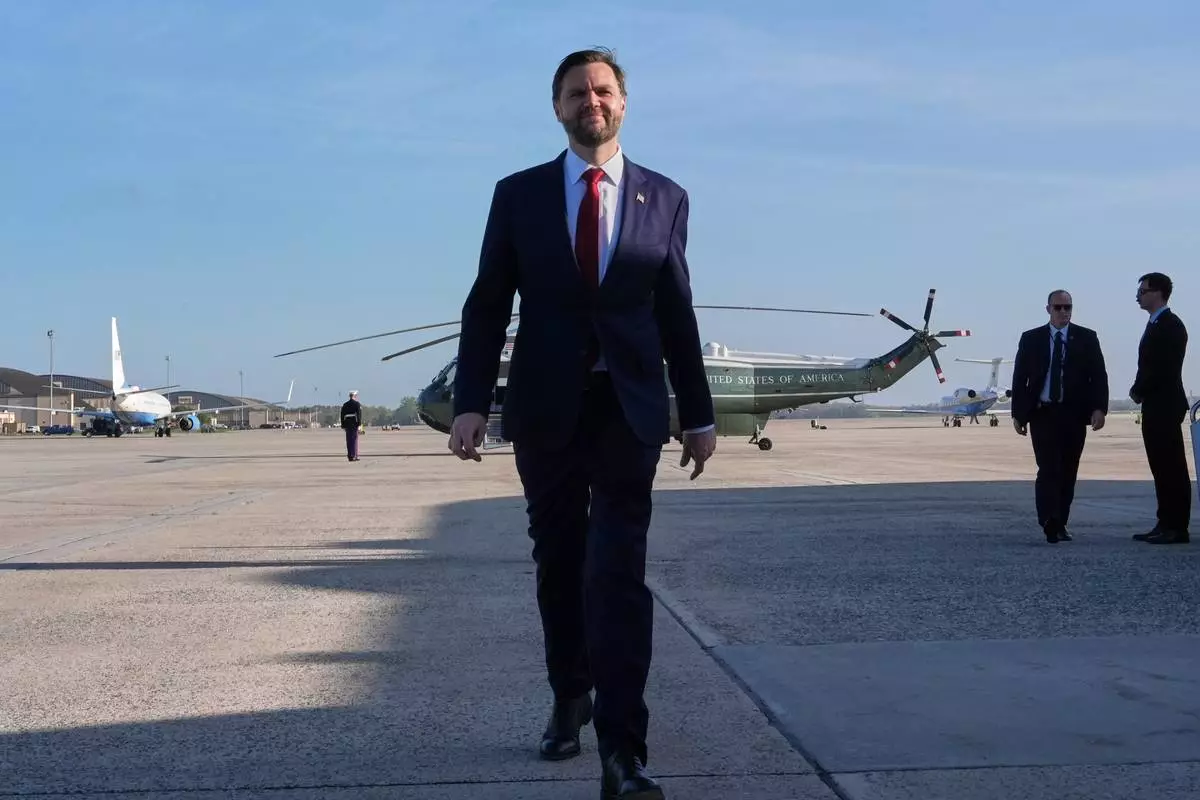
Vice President JD Vance walks to speak with the Press before boarding Air Force Two, Friday, April 10, 2026, at Joint Base Andrews, Md., for expected departure to Pakistan, for talks on Iran. (AP Photo/Jacquelyn Martin, pool)
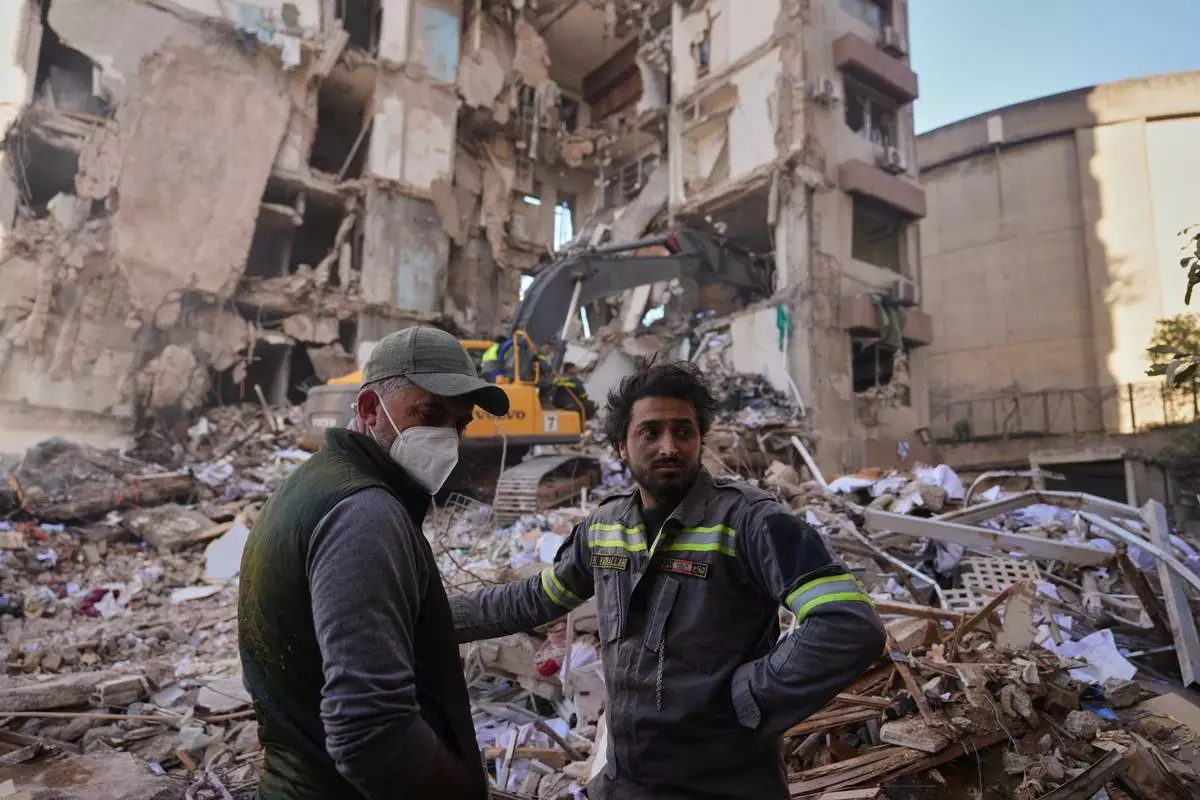
A Lebanese civil defense worker, right, stands with a resident at the site of a building destroyed in an Israeli airstrike a day earlier in central Beirut, Lebanon, Thursday, April 9, 2026. (AP Photo/Hassan Ammar)
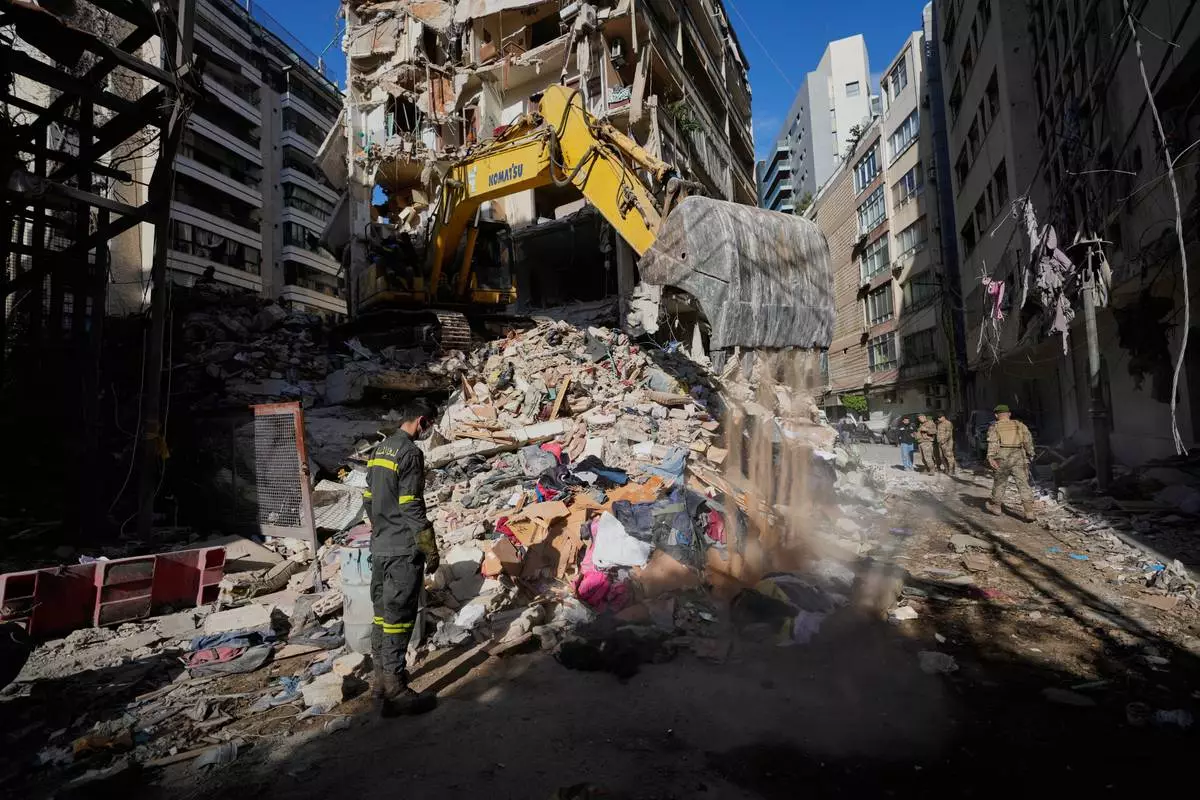
A Lebanese civil defense worker looks on as an excavator operates on the rubble of a building destroyed in an Israeli airstrike a day earlier in Beirut, Lebanon, Thursday, April 9, 2026. (AP Photo/Hussein Malla)
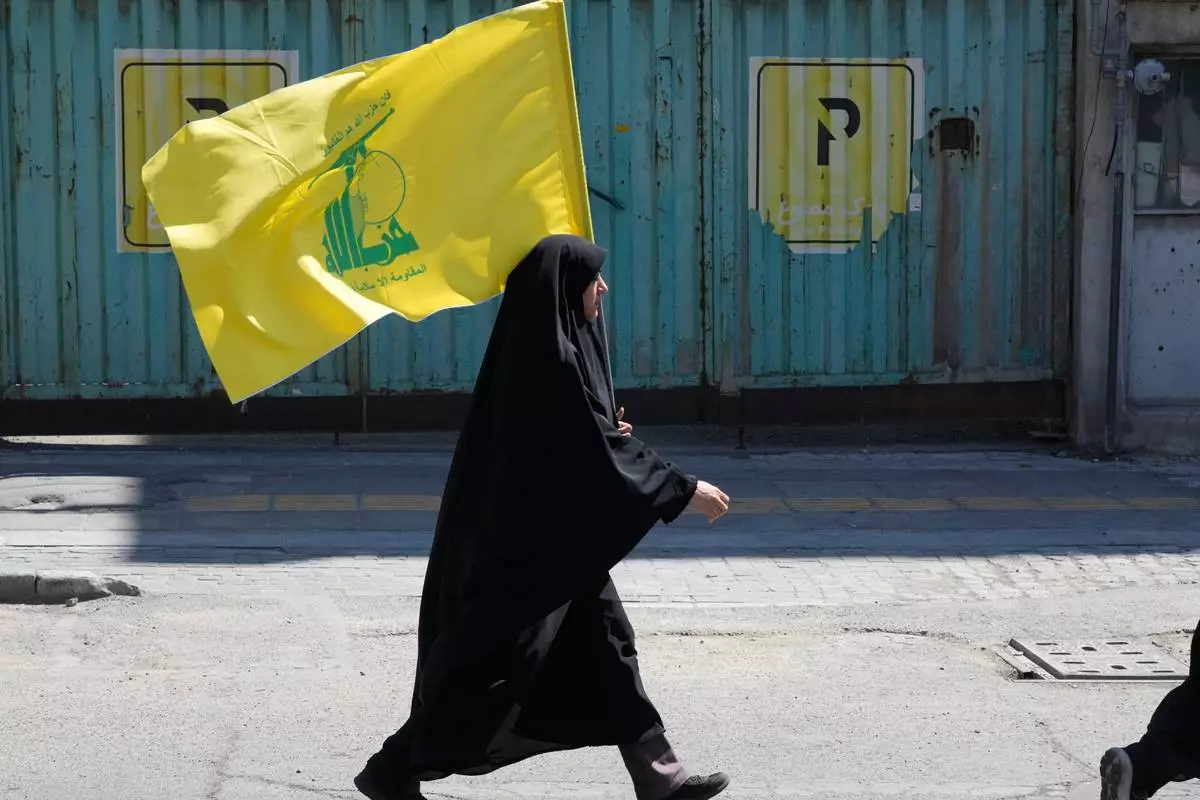
A woman carries a flag of Lebanon's militant Hezbollah group during a ceremony marking the 40th day since the death of Iranian Supreme Leader Ayatollah Ali Khamenei in Tehran, Iran, Thursday, April 9, 2026. (AP Photo/Vahid Salemi)
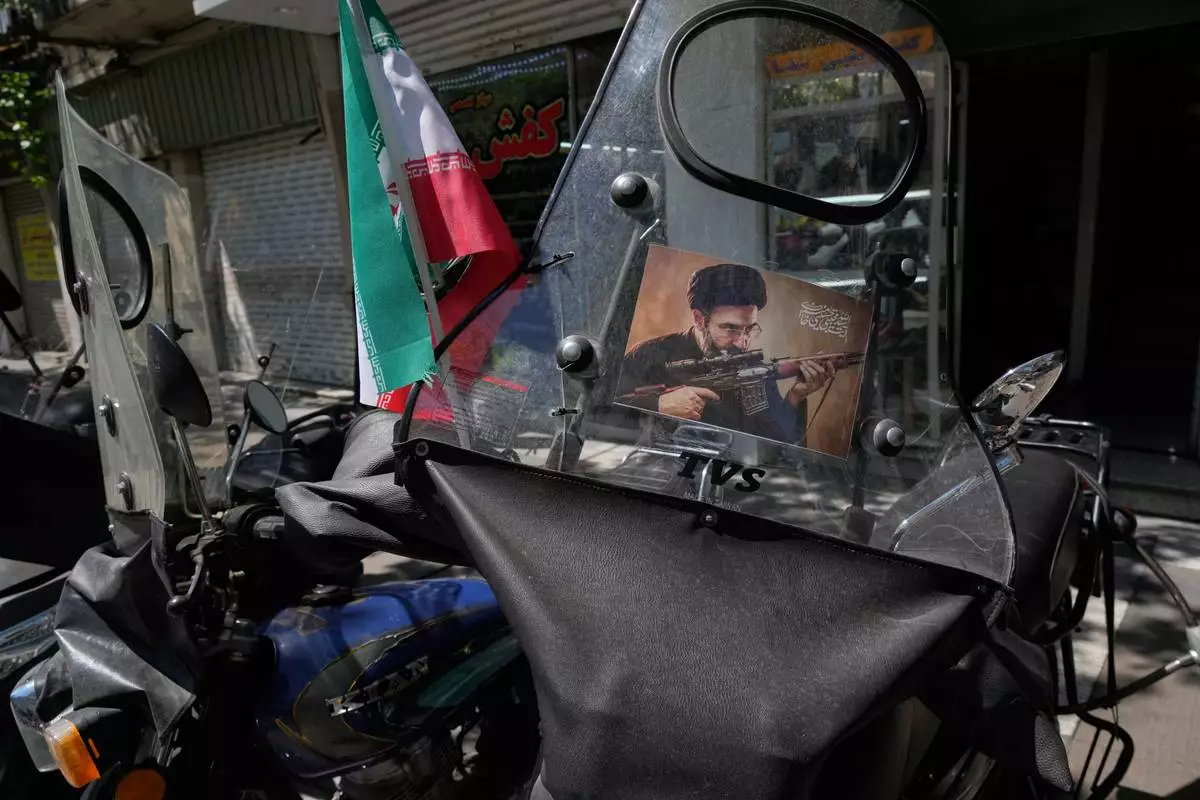
A poster is pasted on a motorbike windshield with graphic depicting Iran's Supreme Leader Ayatollah Mojtaba Khamenei as government supporters gather to mark the 40th day since the killing of his father, Supreme Leader Ayatollah Ali Khamenei, in Tehran, Iran, Thursday, April 9, 2026. (AP Photo/Vahid Salemi)
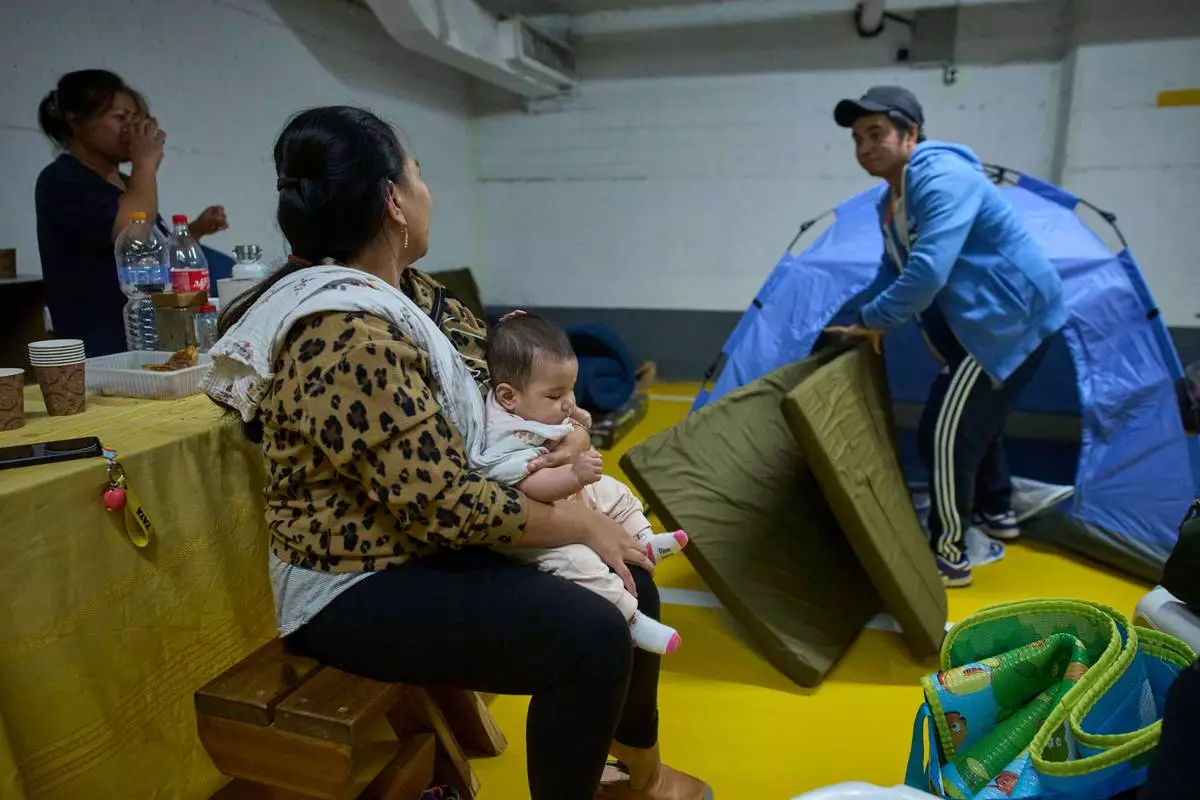
People residing in an underground shelter pack up their belongings as they prepare to leave after the announcement of a two-week ceasefire agreement between Iran and the US, in Tel Aviv, Israel, Thursday, April 9, 2026. (AP Photo/Ohad Zwigenberg)
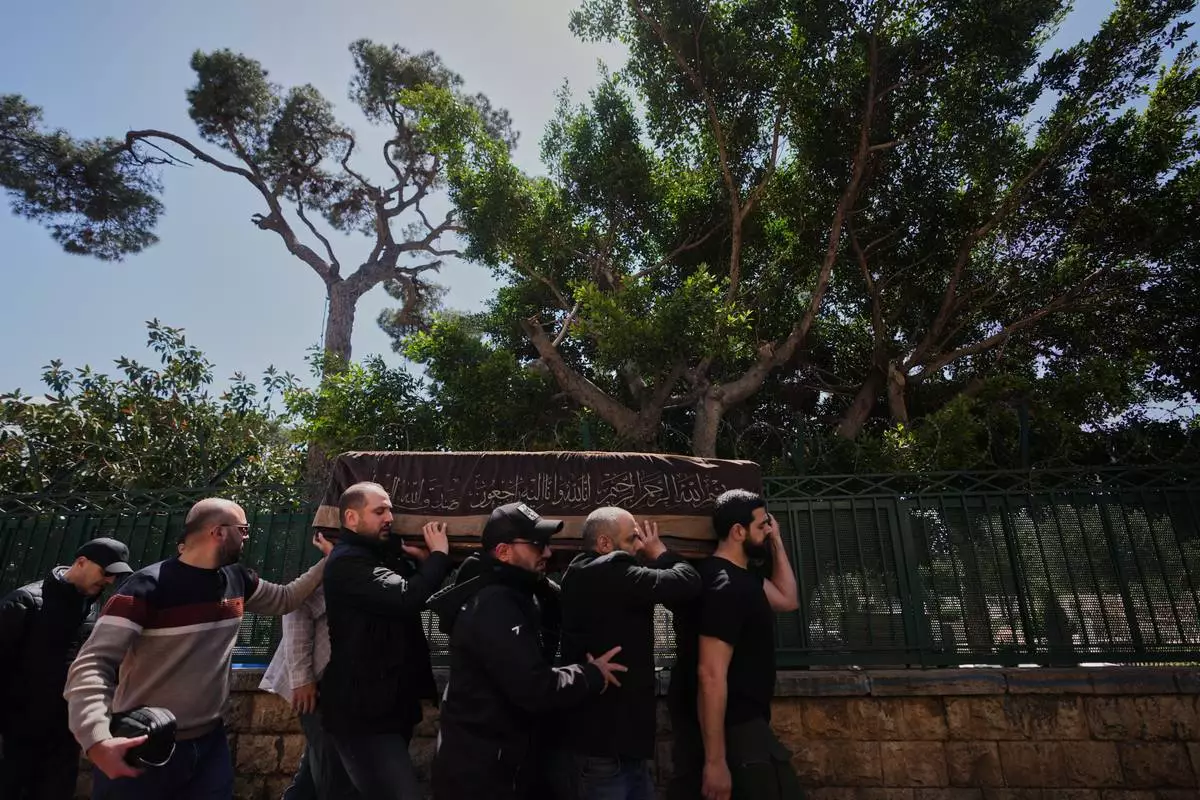
Mourners carry the coffin of Mohammad Zein al-Abedin Shehab, who was killed in an Israeli airstrike a day earlier, during his funeral procession in Beirut, Lebanon, Thursday, April 9, 2026. (AP Photo/Hassan Ammar)
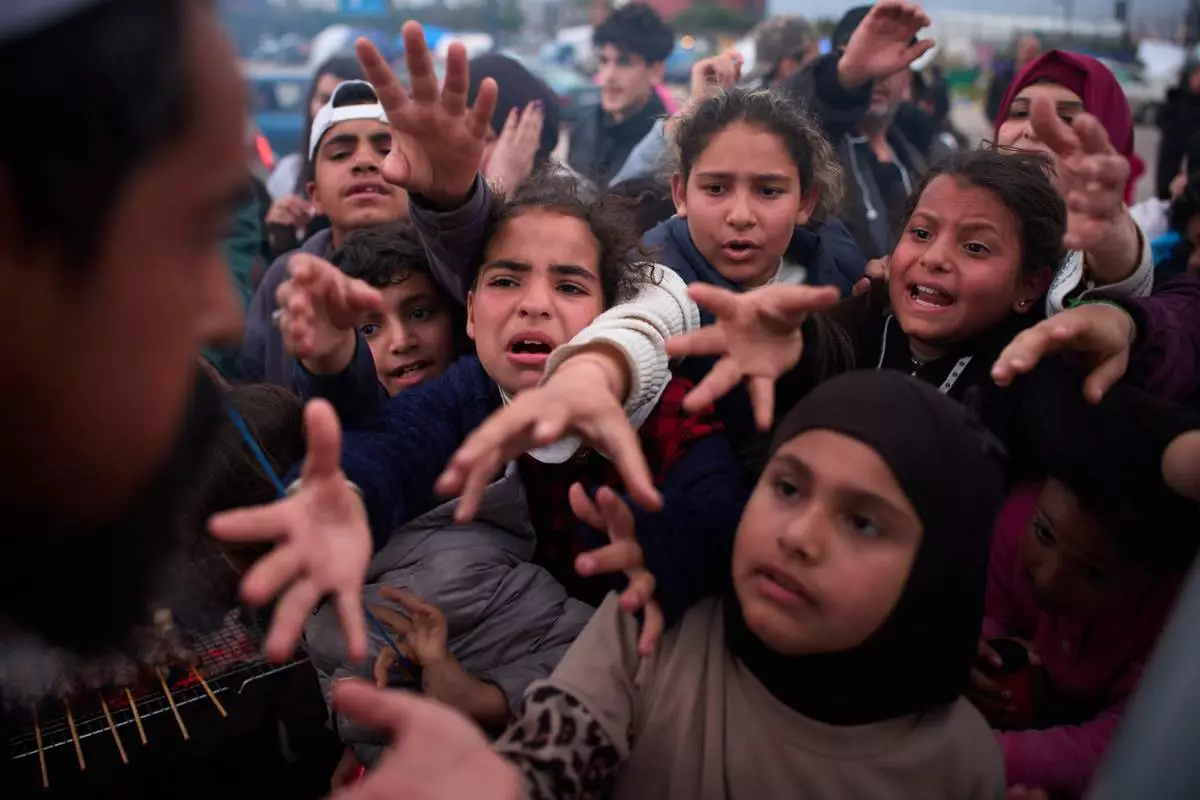
Displaced families extend their hands while waiting for donated food beside the tents they use as shelters after fleeing Israeli bombardment in southern Lebanon, in Beirut, Lebanon, Thursday, April 9, 2026. (AP Photo/Emilio Morenatti)