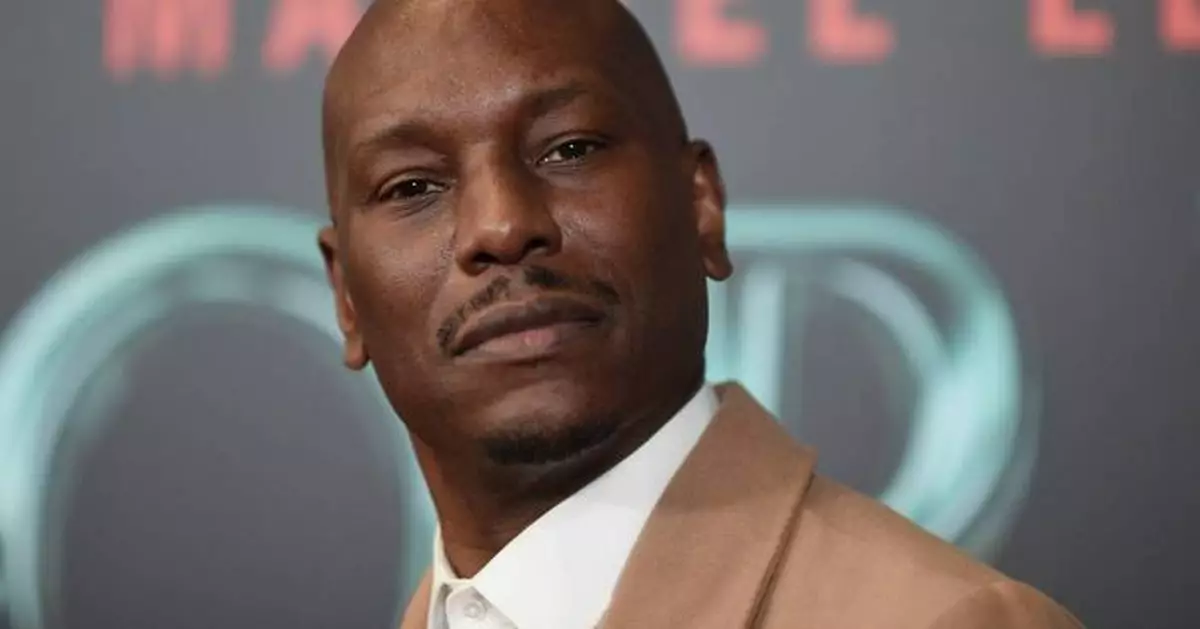
Tyrese Gibson was booked into a Georgia jail early Friday, a week after he failed to turn himself in following an arrest warrant for cruelty to animals, police said.
Gibson was released the same day on a $20,000 bond, Fulton County Police Captain Nicole Dwyer said. He has still not turned his four Cane Corso dogs to police, who authorities say killed a neighbor’s small dog in mid-September and had roamed the neighborhood unsupervised at various times over the past few months.
“We are glad he did the right thing and turned himself in,” Dwyer wrote to The Associated Press, noting the four dogs are still unaccounted for.
Gibson's lawyer, Gabe Banks, wrote to the AP Friday that his legal team secured a consent bond, meaning the terms of his bond were set before he voluntarily turned himself in. Banks wrote Gibson “has cooperated fully with legal authorities and will continue to do so until this matter is resolved.”
Banks had previously told AP that the actor wasn't home when the incident took place and “immediately made the difficult decision to rehome his dogs to a safe and loving environment,” including two adult dogs and their three puppies.
A search warrant for the “Fast & Furious” actor's property was issued alongside the arrest warrant days after the Sept. 18 incident, when the dogs attacked a small spaniel owned by a neighbor about a half a mile away from Gibson's house. The dog was rushed to a veterinary hospital, but did not survive, Dwyer said.
The dogs were seen on camera minutes later at the next-door neighbor's house, where the owner called police to report she couldn't reach her car because of the animals. Animal control officers responded and were able to keep the dogs back while the neighbor went to her vehicle.
Gibson had initially told police he would surrender his dogs on Sept 22, but when officers arrived, he said he needed a few more days, according to a police press release.
Gibson posted a video to Instagram that included various clips of his dogs early Monday and reposted it the following day with a statement from him and his lawyer. Banks wrote Gibson had dealt with stalkers for years, and “his only motivation in bringing these dogs into his life was to protect his family and provide peace of mind.”
Banks added the dogs weren’t “trained to be vicious,” and “had never harmed a child, a person, or another dog. This tragic event is shocking and traumatizing for him and his family — and he can only imagine how devastating it has been for the family who lost their pet.”
“I had no idea I would ever wake up to this nightmare, and I know the family must feel the same way. To them, please know that my heart is broken for you,” Gibson said in the statement. “I am praying for your healing and for your beloved pet, who never deserved this. I remain committed to facing this matter with honesty, responsibility, and compassion.”
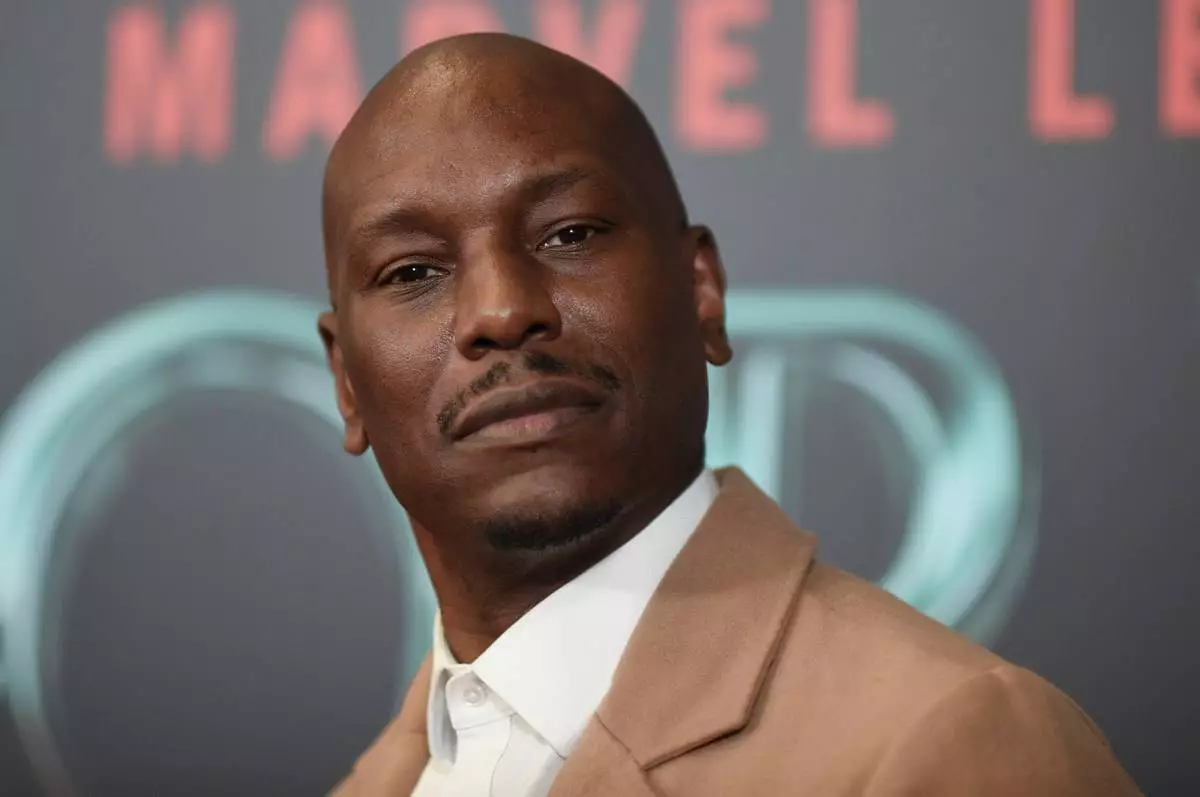
FILE - Tyrese Gibson arrives at a special screening of "Morbius" on March 30, 2022, at Cinemark Playa Vista theater in Los Angeles. (Photo by Richard Shotwell/Invision/AP, File)
DOHA, Qatar (AP) — Qatar’s prime minister on Saturday said the Gaza ceasefire has reached a “critical moment” as its first phase winds down, with the remains of one Israeli hostage still to be handed over by militants.
Sheikh Mohammed bin Abdulrahman Al Thani told a conference in the Qatari capital that international mediators, led by the U.S., are working “to force the way forward” to the second phase to cement the deal.
“What we have just done is a pause,” he told the Doha Forum. “We cannot consider it yet a ceasefire.”
He added: “A ceasefire cannot be completed unless there is a full withdrawal of Israeli forces, there is stability back in Gaza, people can go in and out, which is not the case today."
While the ceasefire halted the heavy fighting of the two-year war, Gaza health officials say that over 360 Palestinians have been killed by Israeli fire since the truce took effect on Oct. 10.
In new violence, two Palestinians were killed in an Israeli airstrike northwest of Gaza City, Shifa Hospital said.
Israel's army said it wasn't aware of an airstrike in that location. However, it said that Israeli soldiers on Saturday killed three militants who crossed the “yellow line” into Israeli-controlled northern part of Gaza and “posed an immediate threat."
The Israeli army has said it has carried out a number of attacks on Palestinians crossing the ceasefire line.
Under the first phase of U.S. President Donald Trump’s 20-point peace plan, the fighting stopped and dozens of hostages held in Gaza were exchanged for hundreds of Palestinians held in Israeli prison. Israel sent a delegation last week to Egypt for talks on returning the remains of the last hostage.
The next phase has not begun. It includes the deployment of an international security force in Gaza, formation of a new technocratic government for the territory, disarmament of Hamas and an eventual withdrawal of Israeli forces.
Arab and Western officials told The Associated Press on Friday that an international body overseeing the ceasefire, to be led by Trump himself, is expected to be appointed by the end of the year. In the long term, the plan also calls for a possible “pathway” to Palestinian independence.
Qatar’s prime minister said that even the upcoming phase should be “temporary” and that peace in the region could only take place with the eventual establishment of a Palestinian state — something that is opposed by Israel's hard-line government.
“If we are just resolving what happened in Gaza, the catastrophe that happened in the last two years, it’s not enough,” he said. “There is a root for this conflict. And this conflict is not only about Gaza."
He added: “It’s about Gaza. It’s about the West Bank. It’s about the rights of the Palestinians for their state. We are hoping that we can work together with the U.S. administration to achieve this vision at the end of the day.”
Turkish Foreign Minister Hakan Fidan said there is a “big question” over the formation of an international security force for Gaza. Speaking at the conference, he said it's unclear which countries will join, what the command structure would look like and what its “first mission” will be.
Turkey is one of the guarantors of the ceasefire, but Israel, which has rocky relations with the Ankara government, has rejected any Turkish participation in the force.
“Thousands of details, questions are in place,” Fidan said. "I think once we deploy ISF, the rest will come.”
A day after an overwhelming international endorsement, the U.N. agency for Palestinian refugees said its future role in Gaza is unclear.
Throughout the war, Israel and the United States have sidelined UNRWA, accusing it cooperating with Hamas, a charge UNRWA denies.
Tamara Alrifai, UNRWA’s director of external relations and communications, said the agency continues to offer humanitarian and educational services in Gaza. But she said UNRWA has been excluded from U.S.-led talks on the ceasefire's second phase.
Alrifai said that UNRWA serves as the de facto “public sector” in Gaza. And with 12,000 employees, she said it will be nearly impossible for the international community to duplicate the agency's network of services.
“If you squeeze UNRWA out, what other agency can fill that void?” she said on the sidelines of the Doha Forum.
The U.S., formerly the largest donor to UNRWA, halted funding to the agency in early 2024. On Friday, the U.N. General Assembly renewed UNRWA’s mandate through 2029. But Alrifai said the cash crisis continues.
“Votes are great. Cash is better,” Alrifai said.
The war erupted on Oct. 7, 2023, when Hamas-led militants entered Israel, killing some 1,200 people and taking over 250 people hostage. Israel responded with an offensive that has killed over 70,000 Palestinians, according to Gaza's Health Ministry.
The ministry does not differentiate between civilians and combatants, but says that nearly half the dead have been women and children. The ministry is part of Gaza's Hamas government and its numbers are considered reliable by the U.N. and other international bodies.
Find more of AP’s Israel-Hamas coverage at https://apnews.com/hub/israel-hamas-war

Palestinian fishermen work in the Mediterranean Sea in the port of Gaza City, Saturday, Dec. 6, 2025. (AP Photo/Jehad Alshrafi)
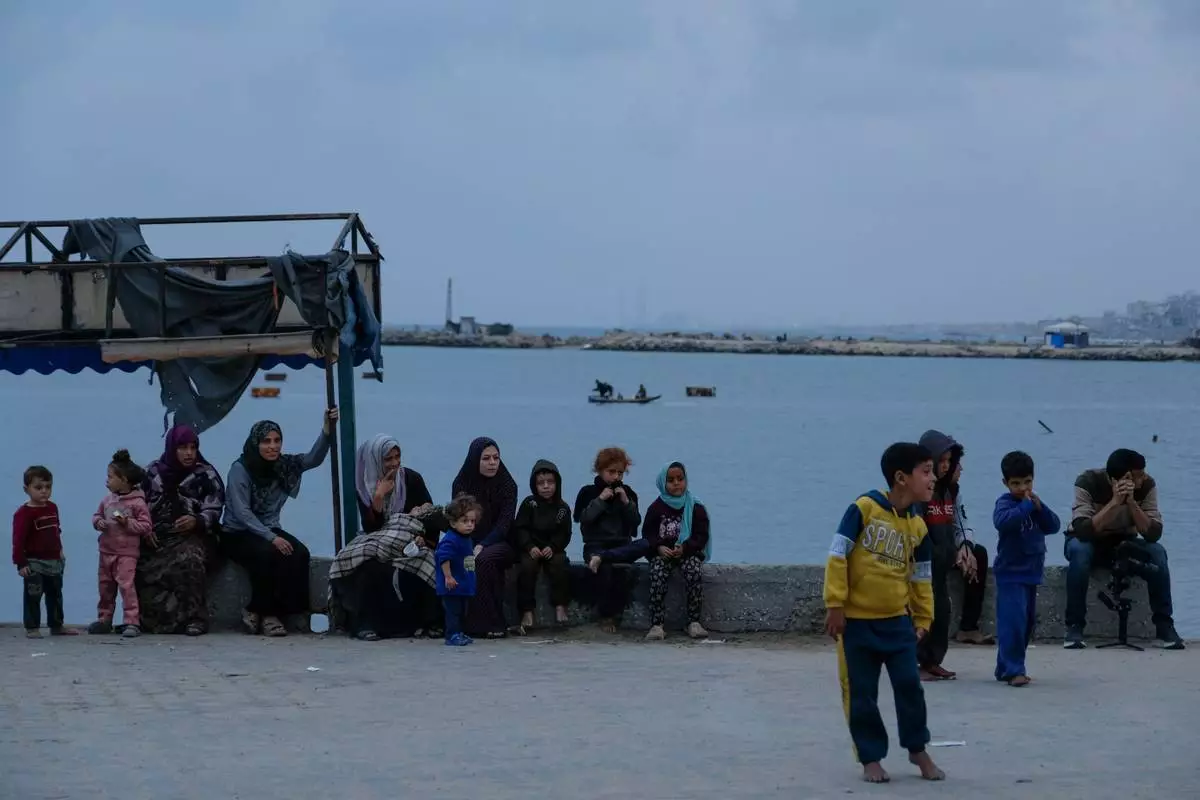
Palestinians sit on the pavement by the Mediterranean Sea in the port of Gaza City, Saturday, Dec. 6, 2025. (AP Photo/Jehad Alshrafi)
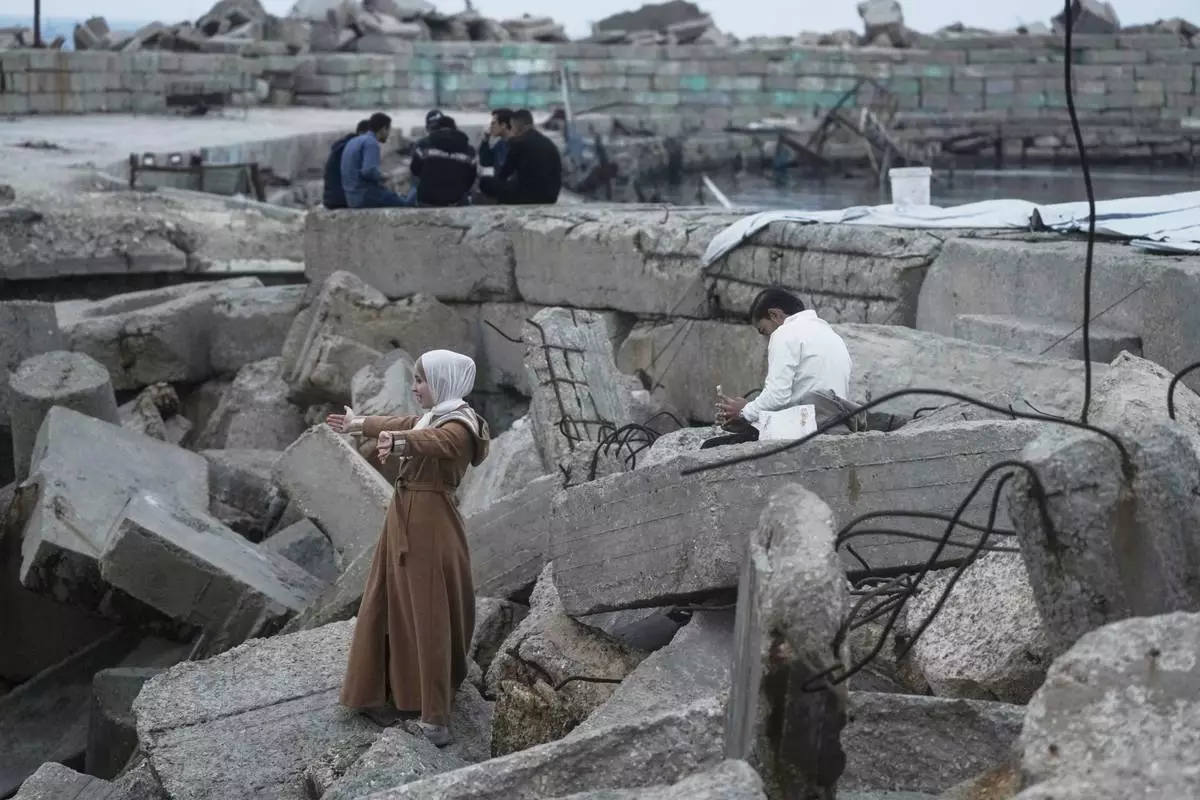
A Palestinian man and his fiancee take pictures on the Mediterranean Sea in the port of Gaza City, Saturday, Dec. 6, 2025. (AP Photo/Jehad Alshrafi)
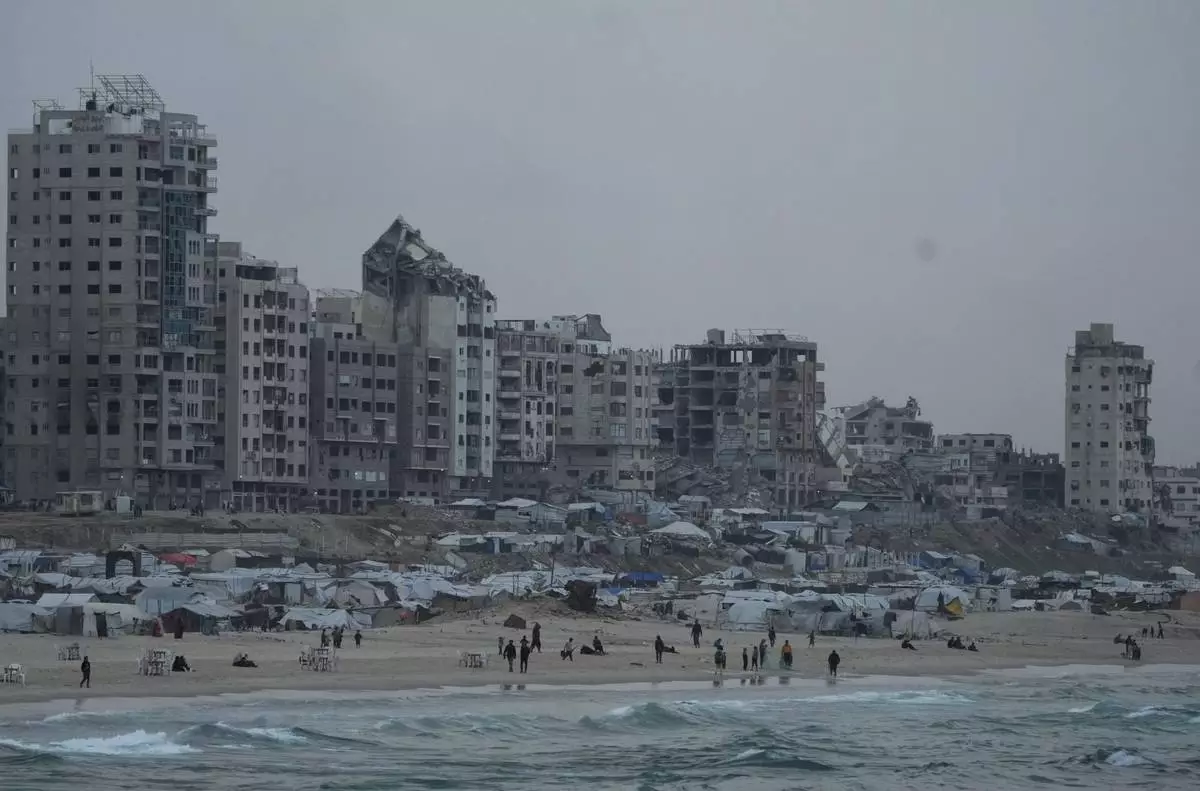
Palestinians walk by the Mediterranean beach front in Gaza City, Saturday, Dec. 6, 2025. (AP Photo/Jehad Alshrafi)
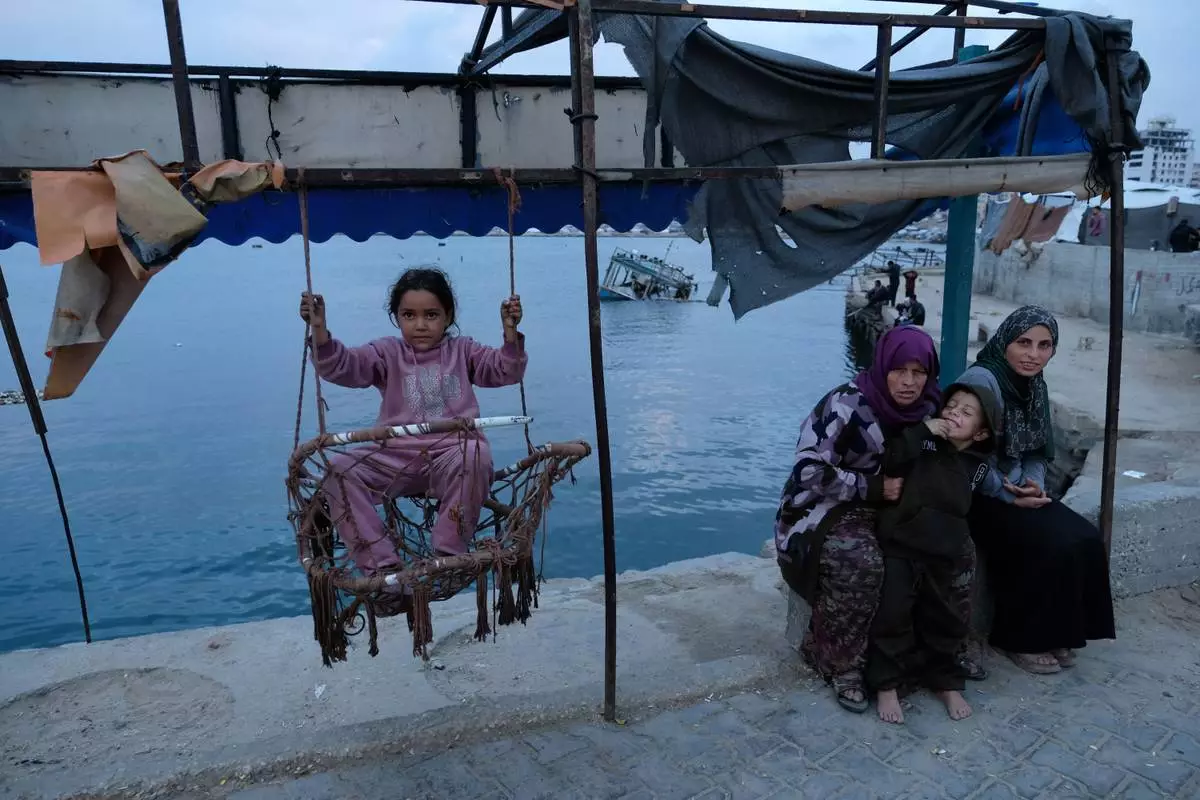
A Palestinian girl sits on a swing in the port of Gaza City on the Mediterranean Sea, Saturday, Dec. 6, 2025. (AP Photo/Jehad Alshrafi)
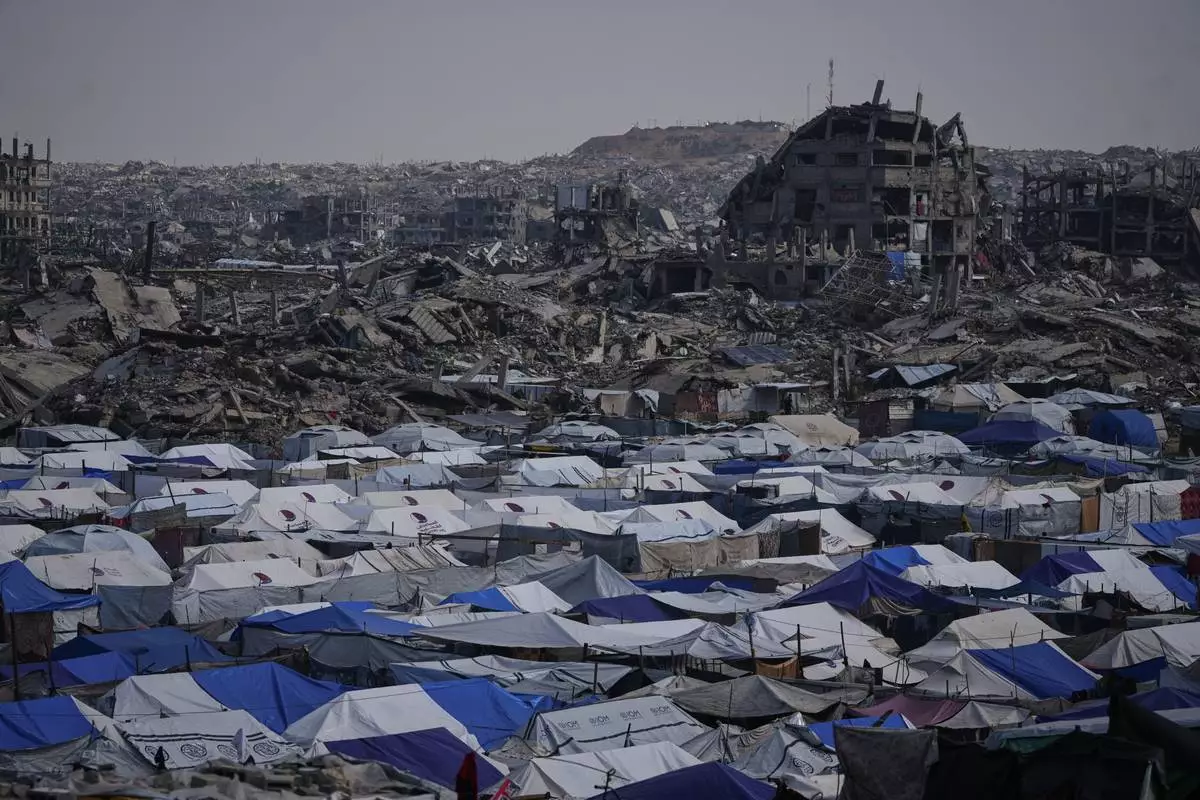
Tents sheltering displaced Palestinians stand amid the destruction left by the Israeli air and ground offensive in Gaza City Friday, Dec. 5, 2025. (AP Photo/Abdel Kareem Hana)