MIAMI (AP) — Jonas Richards became homeless several years ago after losing his job as a truck driver. Despite suffering from high blood pressure and diabetes, seeing a doctor hasn't been a major priority since then.
“When you're homeless, it's not easy,” Richards said. “You find yourself hustling, trying to keep a little money in your pocket, trying to find something to eat.”
Click to Gallery
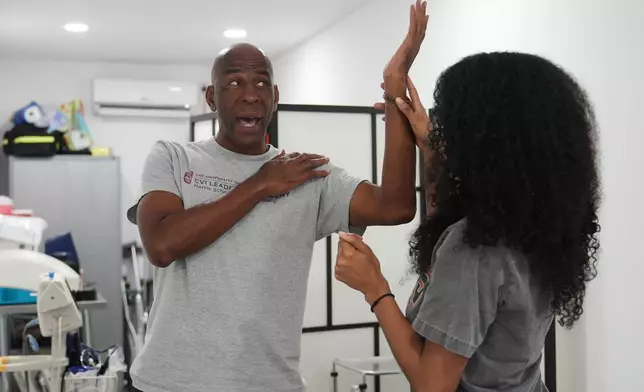
Lyle Muhammad, left, receives treatment at the Doctors Within Borders Clinic, which provides free urgent care, Thursday, Sept. 4, 2025, in Miami. (AP Photo/Lynne Sladky)
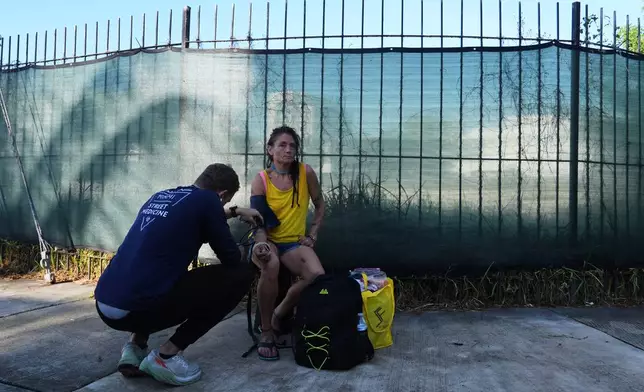
Malachi Peterson-Hester, left, takes the blood pressure of Jeremias Rodriguez Catalina, right, while working with Miami Street Medicine to provide medical services to homeless people, Saturday, Sept. 20, 2025, in Miami. (AP Photo/Lynne Sladky)

Nadien D'arcangelo, of the Frame Project, left, tests eyeglasses with Terry Rhodin, right, while working with the Miami Street Medicine team to provide medical services to homeless people, Saturday, Sept. 20, 2025, in Miami. (AP Photo/Lynne Sladky)
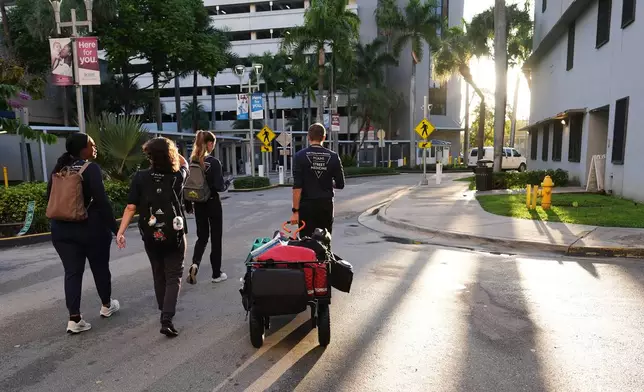
Malachi Peterson-Hester, right, pulls a cart with medical supplies as the Miami Street Medicine team heads out to provide medical services to homeless people, Saturday, Sept. 20, 2025, in Miami. (AP Photo/Lynne Sladky)
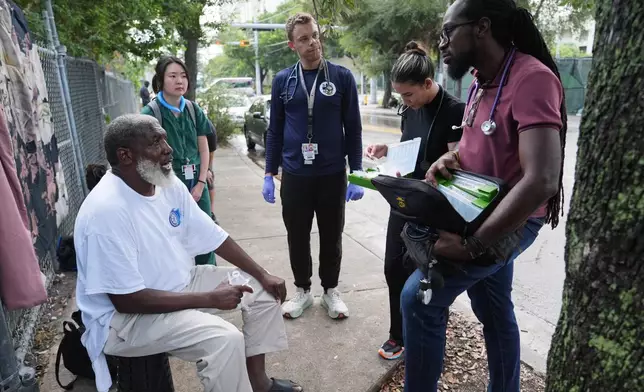
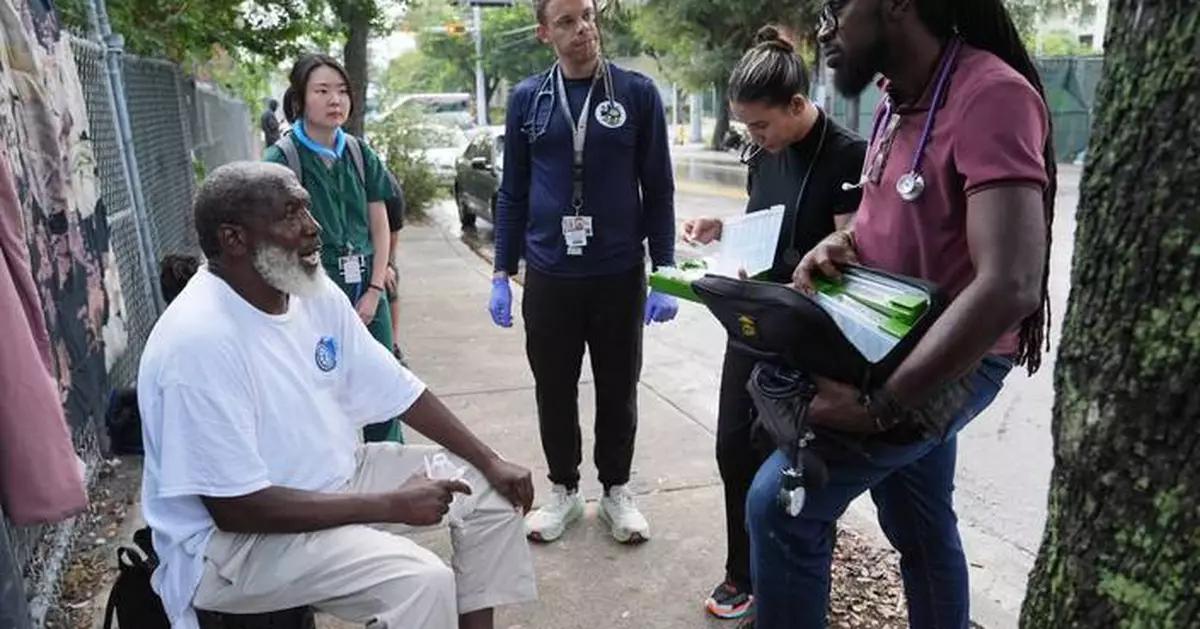
Dr. Inaki Bent, right, talks with Jonas Richards, left, while working with the Miami Street Medicine team to provide medical services to homeless people, Saturday, Aug. 23, 2025, in Miami. (AP Photo/Lynne Sladky)
But Richards recently had his first visit with doctors from Miami Street Medicine while sitting on a curb outside a homeless shelter.
“You get everything done right here very fast,” Richards said. “It was a big help.”
Miami Street Medicine is a nonprofit organization providing free mobile health care services to homeless people. It’s part of a larger group, Dade County Street Response, which also includes a free clinic called Doctors Within Borders, a disaster relief team and a mental health crisis line.
Miami Street Medicine teams of paid staff and medical school student volunteers aren’t just bandaging cuts and handing out aspirin. They’re performing intake on patients with tablet computers and offer follow-up visits for chronic conditions. They're working with specialists like dermatologists, neurologists and cardiologists.
“We’re out there to meet the needs of our patients,” founder Dr. Dan Bergholz said. “And if that’s a cough drop, we’ve got you. We are happy to help you with that cough drop. But really the mission is so much greater. It’s showing that we care, and we’re there for them. So when that cough becomes pneumonia, they’ll let us listen to their lungs and maybe trust us to take them to the hospital.”
Bergholz began laying groundwork for Miami Street Medicine about seven years ago. He said he had started doing charity outreach with homeless people as an undergraduate, but it seemed like more could be done.
“It just felt like we weren’t quite moving the needle for folks,” Bergholz said.
After learning more about the growing trend of street medicine and being accepted to the University of Miami’s medical school, Bergholz began working with other students to set up a program.
“I moved down to Miami early and just started hitting the streets and chatting with people,” he said. “You could call it a needs assessment.”
Just as Miami Street Medicine was taking off, the COVID-19 pandemic hit and forced the group to adjust. Bergholz connected with Dade County Street Response to provide health care to more underserved areas.
“A sort of bigger vision emerged to fill the gaps in the local social safety net,” Bergholz said.
One challenge is the transient nature of homeless people, which makes it difficult to provide continual care. Dr. Armen Henderson, founder of Dade County Street Response, said the problem is compounded by laws that target homeless people.
“The criminalization of homelessness has significantly impacted our patients’ ability to be in one place to get services,” Henderson said. “For the street medicine team, they know they meet us in one place. But if the majority of those patients are now ending up in jail, now the people are trying to figure out what places are police not harassing them.”
Another challenge is fighting the common sentiment that providing services actually increases homelessness, Henderson said.
“The only thing that ends homelessness is easy access to housing,” he said. “There’s nothing that encourages people to be unsheltered. No one wants to be unsheltered. So by offering services like this, we’re actually trying to ease people’s suffering. When people come in here, they want to get off the street. They want to figure out a plan.”
Members of Miami Street Medicine have noticed more people losing their homes in recent years as prices increase and wages remain stagnant. Dr. Inaki Bent, who oversees street medicine teams, said he’s also seen an increase in undocumented migrants on the streets as the state and federal governments have expanded immigration enforcement this year.
“I see patients here who are no longer working,” Bent said. “They’re no longer working because the fields and the construction sites have become targets. And they would prefer not to be employed or not to expose themselves to that risk.”
In addition to the individual benefit to patients, providing medical treatment on the street and at the group's clinic prevents treatable conditions from becoming emergencies that ultimately strain the entire health care system. For example, Bent had a patient who had previously been treated for seizures at an emergency room and received a prescription, but couldn't afford it. The patient would have eventually ended up back in the ER, but Miami Street Medicine paid for his medicine.
“So we’re able to fill that void and hopefully prevent a couple more admissions,” Bent said. “But we're also able to do a human service for him, for our fellow man, to provide him with the necessary health care so he can begin his path toward a productive life.”
Associated Press Video Journalist Daniel Kozin in Miami contributed to this report.
Follow David Fischer on the social platform Bluesky: @dwfischer.bsky.social
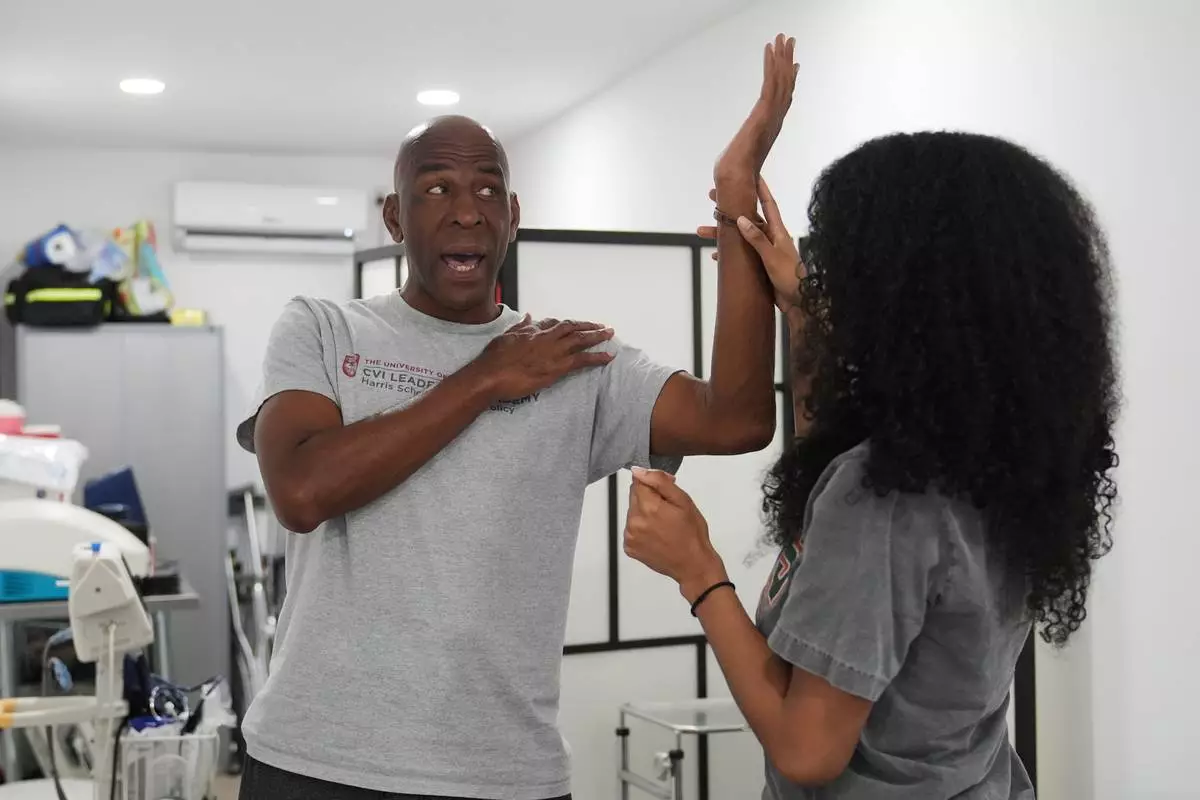
Lyle Muhammad, left, receives treatment at the Doctors Within Borders Clinic, which provides free urgent care, Thursday, Sept. 4, 2025, in Miami. (AP Photo/Lynne Sladky)

Malachi Peterson-Hester, left, takes the blood pressure of Jeremias Rodriguez Catalina, right, while working with Miami Street Medicine to provide medical services to homeless people, Saturday, Sept. 20, 2025, in Miami. (AP Photo/Lynne Sladky)

Nadien D'arcangelo, of the Frame Project, left, tests eyeglasses with Terry Rhodin, right, while working with the Miami Street Medicine team to provide medical services to homeless people, Saturday, Sept. 20, 2025, in Miami. (AP Photo/Lynne Sladky)

Malachi Peterson-Hester, right, pulls a cart with medical supplies as the Miami Street Medicine team heads out to provide medical services to homeless people, Saturday, Sept. 20, 2025, in Miami. (AP Photo/Lynne Sladky)

Dr. Inaki Bent, right, talks with Jonas Richards, left, while working with the Miami Street Medicine team to provide medical services to homeless people, Saturday, Aug. 23, 2025, in Miami. (AP Photo/Lynne Sladky)