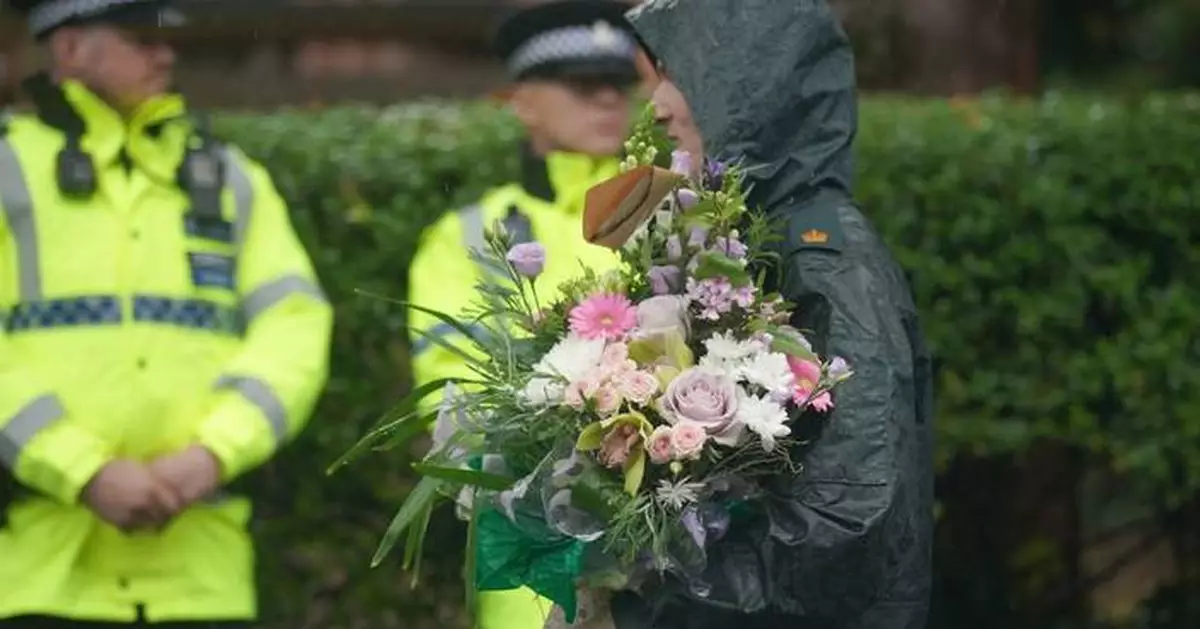
LONDON (AP) — U.K. police were given extra time Saturday to question four people arrested on suspicion of terror offenses after an attack on a synagogue in northwest England that left two people dead and Britain’s Jewish community shocked and grieving.
Two other people who had been arrested were released without charge.
Click to Gallery
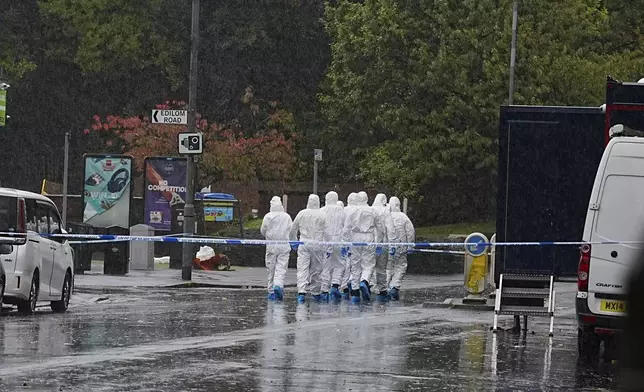
Police officers attend the scene of attack at Heaton Park Hebrew Congregation synagogue in Crumpsall, Manchester, England, Saturday Oct. 4, 2025. (Peter Byrne/PA via AP)
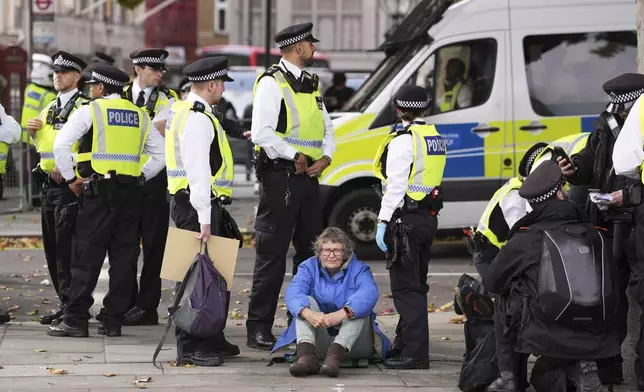
Police remove a protester taking part in a demonstration organised by Defend our Juries, in support of Palestine Action in Trafalgar Square, London Saturday Oct. 4, 2025. (Maja Smiejkowska/PA via AP)
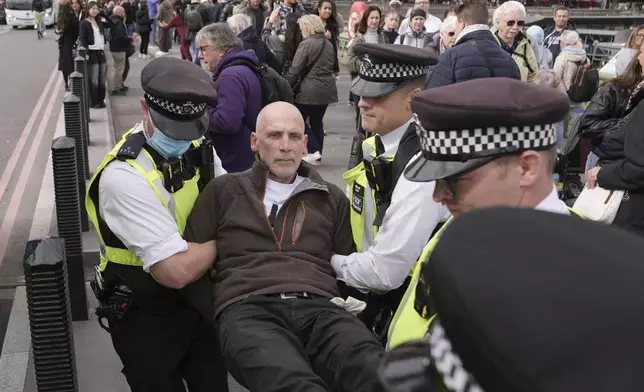
Police remove a protester after a banner was unfurled on Westminster Bridge, London, as part of a demonstration organised by Defend our Juries, in support of Palestine Action, Saturday Oct. 4, 2025. (Stefan Rousseau/PA via AP)
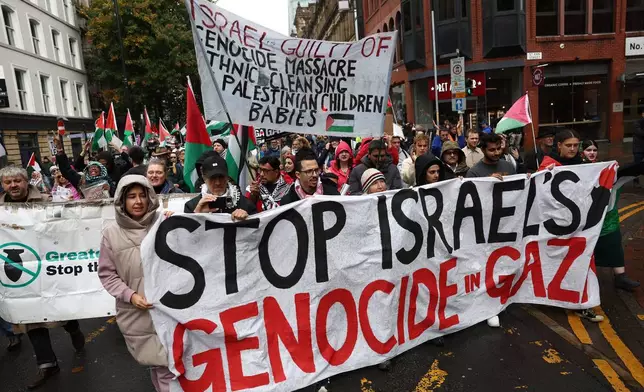
People take part in a demonstration organized by GM Friends of Palestine at Manchester Cathedral, in Manchester, England, Saturday, Oct. 4 2025. (Ryan Jenkinson/PA via AP)
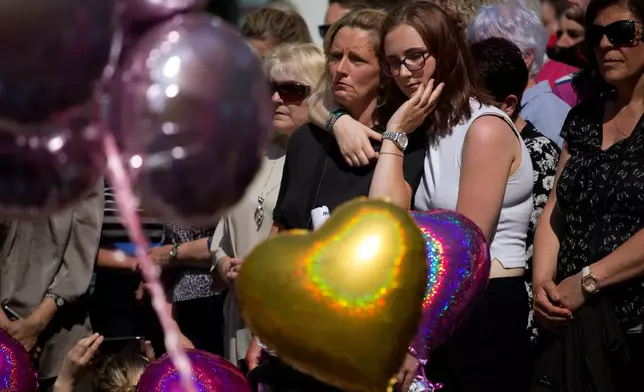
FILE - People hold a minute of silence in a square in central Manchester, England, on May 25, 2017, after a suicide bombing attack at an Ariana Grande concert at the Manchester Arena. (AP Photo/Emilio Morenatti, File)
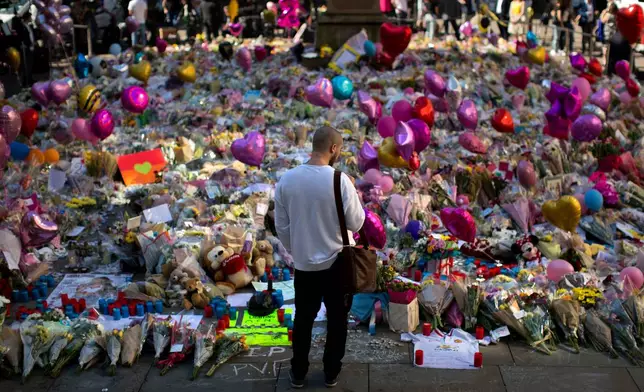
FILE - A man stands next to flowers for the victims of a bombing at St. Ann's Square in central Manchester, England, May 26, 2017. (AP Photo/Emilio Morenatti, File)
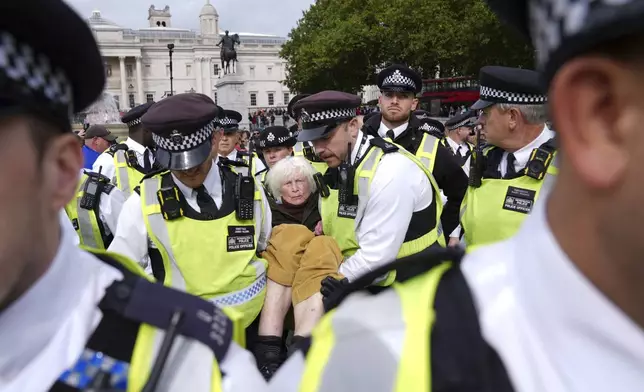
Police remove a protester taking part in a demonstration organised by Defend our Juries, in support of Palestine Action in Trafalgar Square, London Saturday Oct. 4, 2025. (Maja Smiejkowska/PA via AP)
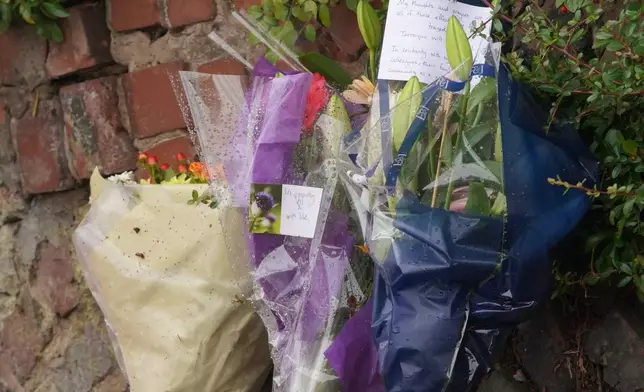
Flowers laid near by the scene of a stabbing incident at Heaton Park Hebrew Congregation synagogue, in Crumpsall, Manchester, England, Friday, Oct. 3, 2025. (AP Photo/Ian Hodgson)
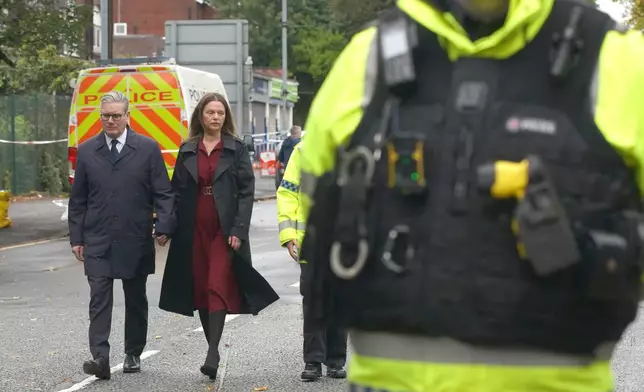
Britain's Prime Minister Keir Starmer and his wife Victoria arrive to meet emergency workers near Heaton Park Hebrew Congregation synagogue in Manchester, England, Friday, Oct. 3, 2025, where two people died in a terror attack on Thursday. (AP Photo/Ian Hodgson)
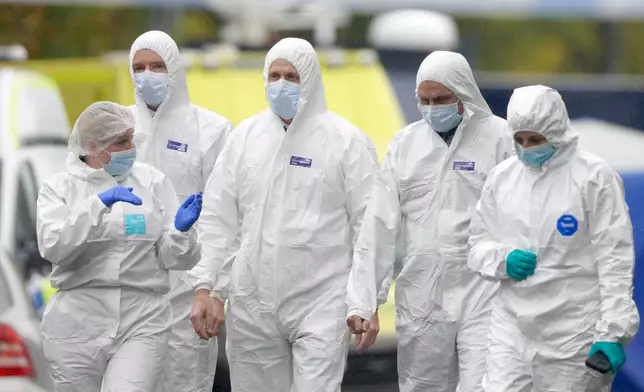
Forensic teams work at the scene of a stabbing incident that took place on Thursday, at Heaton Park Hebrew Congregation synagogue, in Manchester, England, Friday, Oct. 3, 2025. (AP Photo/Ian Hodgson)
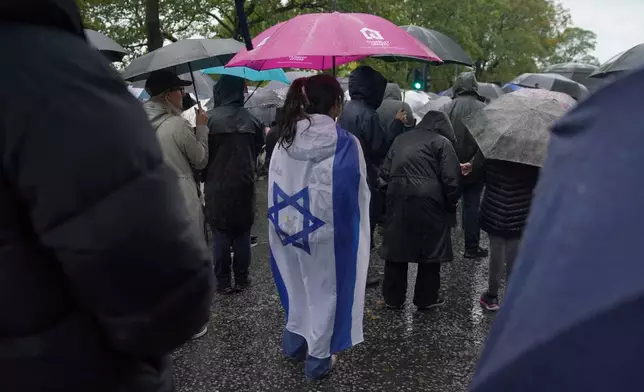
A woman wears the flag of Israel wrapped over her back as she attends a vigil for the victims of the attack on at Heaton Park Hebrew Congregation synagogue, in Crumpsall, Manchester, England, Friday, Oct. 3, 2025. (AP Photo/Ian Hodgson)
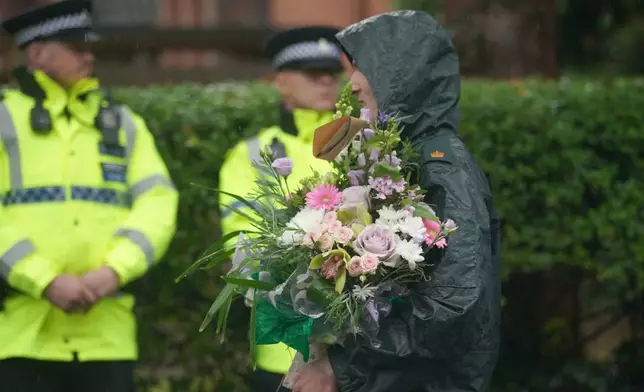
A woman brings flowers as she attends a vigil for the victims of the attack on the Heaton Park Hebrew Congregation synagogue, in Crumpsall, Manchester, England, Friday, Oct. 3, 2025, the attack happened Thursday. (AP Photo/Ian Hodgson)
Jihad Al-Shamie, 35, was shot dead by police on Thursday outside the Heaton Park Congregation Synagogue in Manchester after he rammed a car into pedestrians, attacked them with a knife and tried to force his way into the building.
Congregation members Melvin Cravitz, 66, and Adrian Daulby, 53, died in the attack on Yom Kippur, the holiest day of the Jewish year. Police say Daulby was accidentally shot by an armed officer as he and other congregants barricaded the synagogue to block Al-Shamie from entering. Three other men are hospitalized with serious injuries.
Detectives say Al-Shamie, a British citizen of Syrian origin who lived in Manchester, may have been influenced by “extreme Islamist ideology.” He wore what appeared to be an explosives belt, which was found to be fake.
Police said that Al-Shamie was on bail over an alleged rape at the time of the attack, but hadn't been charged.
Three men and three women were arrested in the greater Manchester area on suspicion of the “commission, preparation and instigation of acts of terrorism,” as police work to determine whether the attacker acted alone. A court on Saturday granted police five more days to hold four of the suspects: men ages 30 and 32, and women ages 46 and 61. An 18-year-old woman and a 43-year-old man were released with no further action, police said.
Police haven't identified those arrested or disclosed their links to Al-Shamie.
The attack has devastated Britain’s Jewish community and intensified debate about the line between criticism of Israel and antisemitism.
Recorded antisemitic incidents in the U.K. have risen sharply since Hamas’ Oct. 7, 2023, attack on Israel and Israel’s ensuing campaign against Hamas in Gaza, according to Community Security Trust, a charity that provides advice and protection for British Jews.
Some politicians and religious leaders claimed pro-Palestinian demonstrations, which have been held regularly since the war in Gaza began, had played a role in spreading hatred of Jews. The protests have been overwhelmingly peaceful, but some say chants such as “From the river to the sea, Palestine will be free” incite anti-Jewish hatred.
Some also say that the U.K.’s recognition of a Palestinian state last month has emboldened antisemitism — a claim that the government rejects. Deputy Prime Minister David Lammy was interrupted by boos and shouts of “Shame on you” on Friday as he addressed a vigil for victims of the attack in Manchester.
Israeli Prime Minister Benjamin Netanyahu and his supporters have frequently accused critics of Israel or its conduct of the war of antisemitism. Critics see it as an attempt to stifle even legitimate criticism.
Chief Rabbi Ephraim Mirvis, the head of Orthodox Judaism in Britain, said that the attack was the result of “an unrelenting wave of Jew hatred” on the streets and online.
Pro-Palestinian demonstrators were held in Manchester and London on Saturday despite objections from police and politicians. U.K. Prime Minister Keir Starmer said that organizers should “recognize and respect the grief of British Jews this week” and postpone the protests.
About 100 people gathered in a central Manchester square in heavy rain, waving Palestinian flags and demanding an end to the war in Gaza.
In London, organizers said that about 1,000 people demonstrated against the banning of Palestine Action, a direct-action group that has vandalized British military planes and targeted sites with links to the Israeli military. It has been labeled a terrorist organization by the government, making support for the group illegal. Critics say that tramples on free speech and the right to protest.
Police officers carried away a number of people who sat silently in Trafalgar Square holding signs saying “I oppose genocide, I support Palestine Action.” Police said they made at least 493 arrests.
More than 2,000 people have now been arrested at protests since Palestine Action was proscribed in July, and more than 130 charged with terrorism offenses.
Campaigner Jonathon Porritt said that protesters would “demonstrate huge respect and real grief for those affected by the absolute atrocity at Heaton Park.
“But I don’t think that means that we should be asked to give up on our right to stand up for those who are being devastated by an ongoing, real-time genocide in Gaza,” he told the BBC.
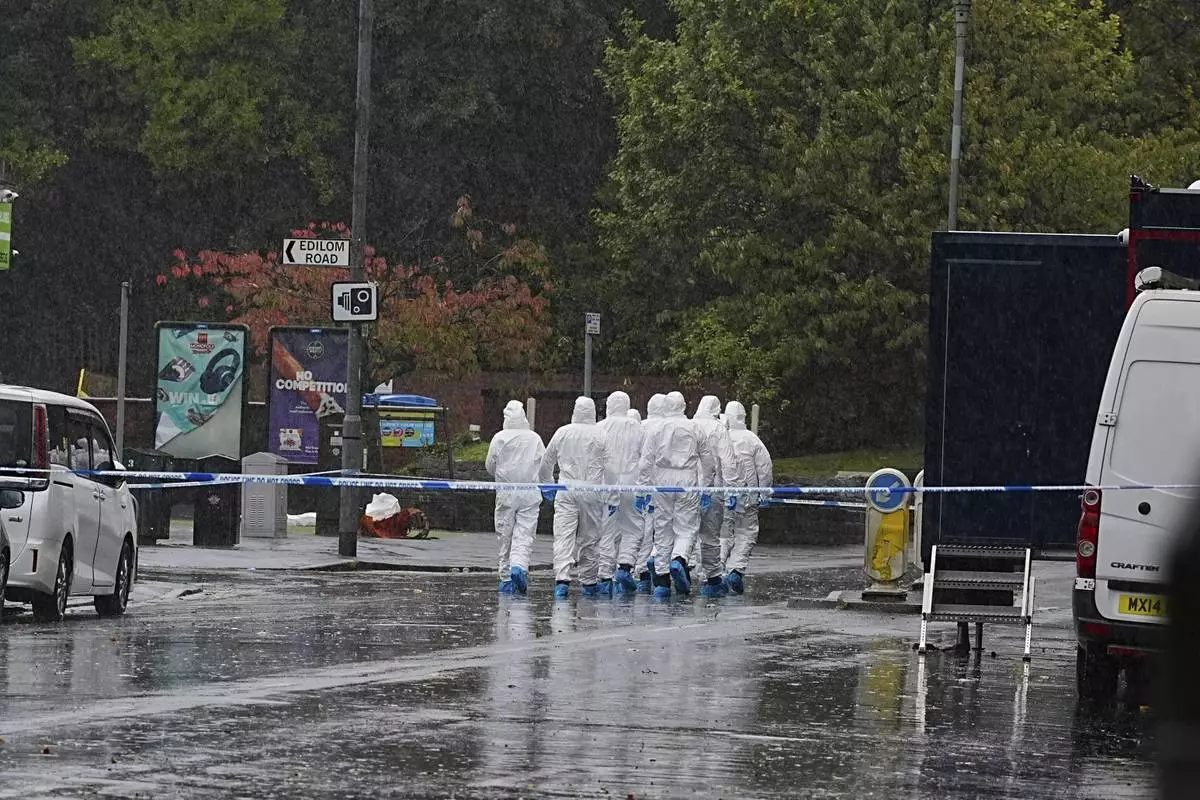
Police officers attend the scene of attack at Heaton Park Hebrew Congregation synagogue in Crumpsall, Manchester, England, Saturday Oct. 4, 2025. (Peter Byrne/PA via AP)
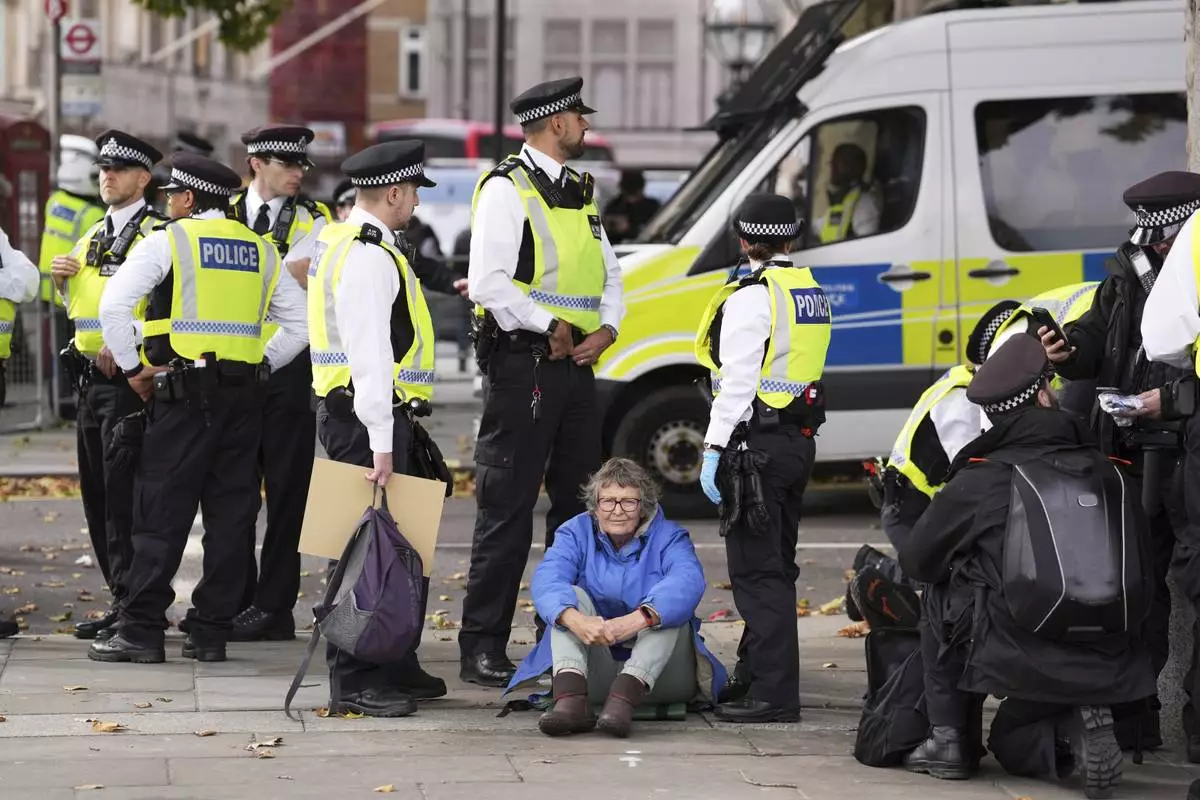
Police remove a protester taking part in a demonstration organised by Defend our Juries, in support of Palestine Action in Trafalgar Square, London Saturday Oct. 4, 2025. (Maja Smiejkowska/PA via AP)
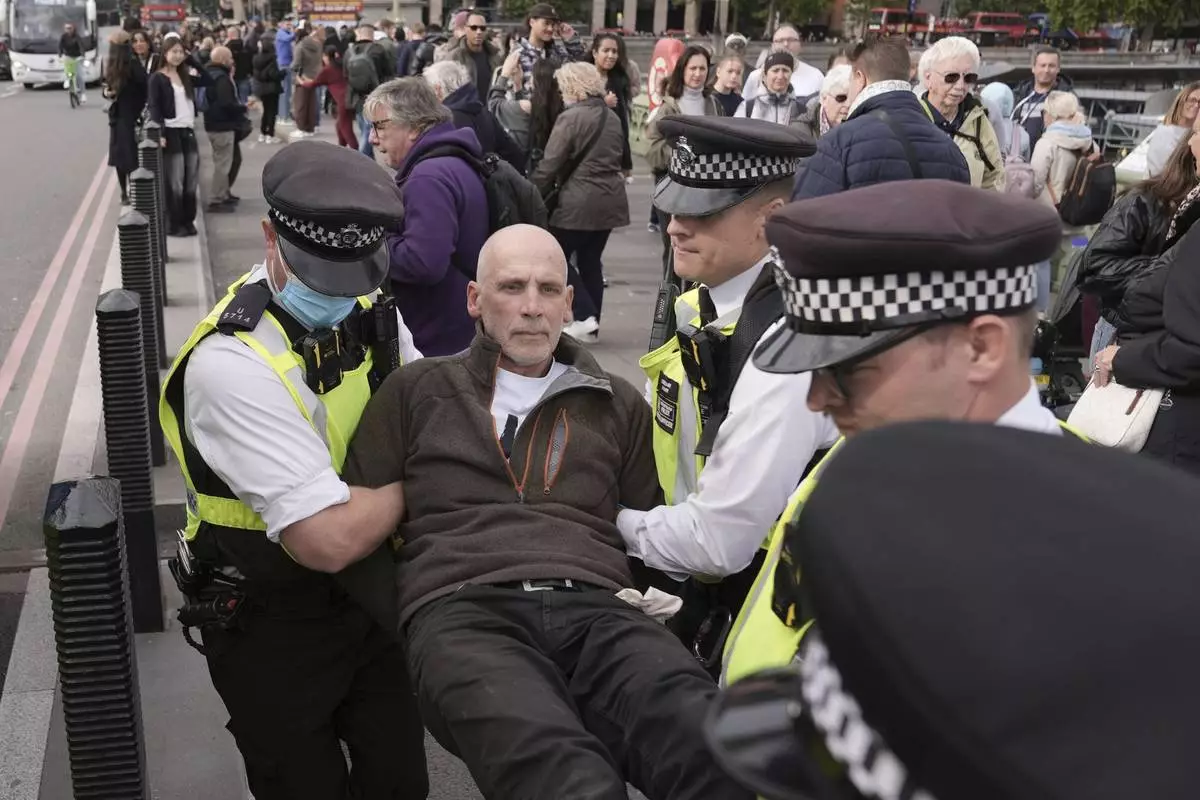
Police remove a protester after a banner was unfurled on Westminster Bridge, London, as part of a demonstration organised by Defend our Juries, in support of Palestine Action, Saturday Oct. 4, 2025. (Stefan Rousseau/PA via AP)

People take part in a demonstration organized by GM Friends of Palestine at Manchester Cathedral, in Manchester, England, Saturday, Oct. 4 2025. (Ryan Jenkinson/PA via AP)
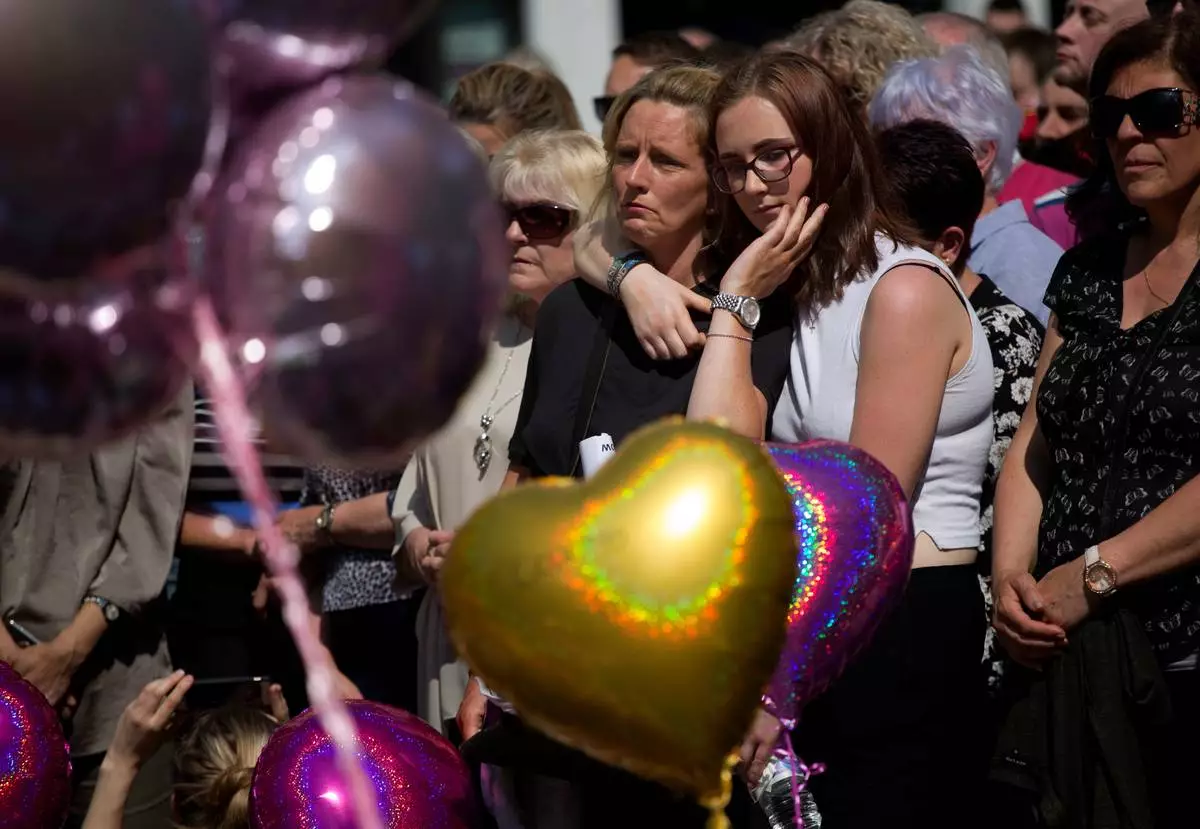
FILE - People hold a minute of silence in a square in central Manchester, England, on May 25, 2017, after a suicide bombing attack at an Ariana Grande concert at the Manchester Arena. (AP Photo/Emilio Morenatti, File)
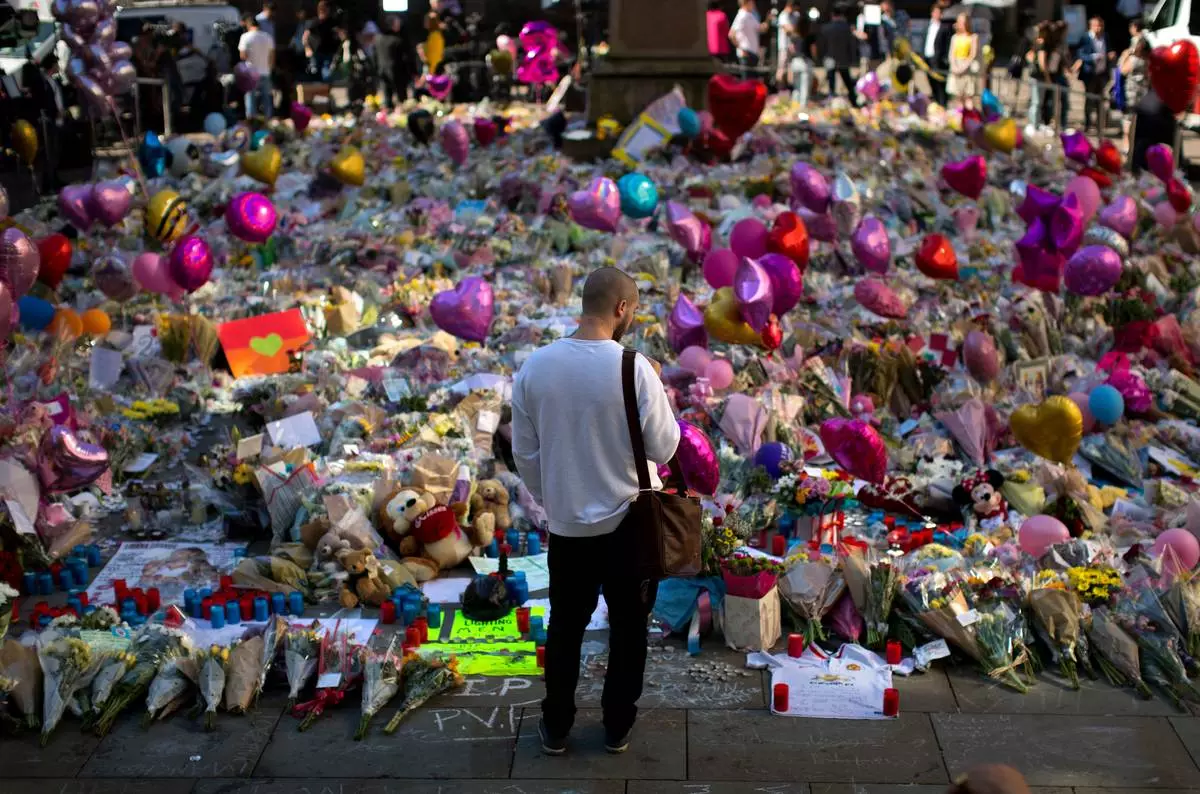
FILE - A man stands next to flowers for the victims of a bombing at St. Ann's Square in central Manchester, England, May 26, 2017. (AP Photo/Emilio Morenatti, File)
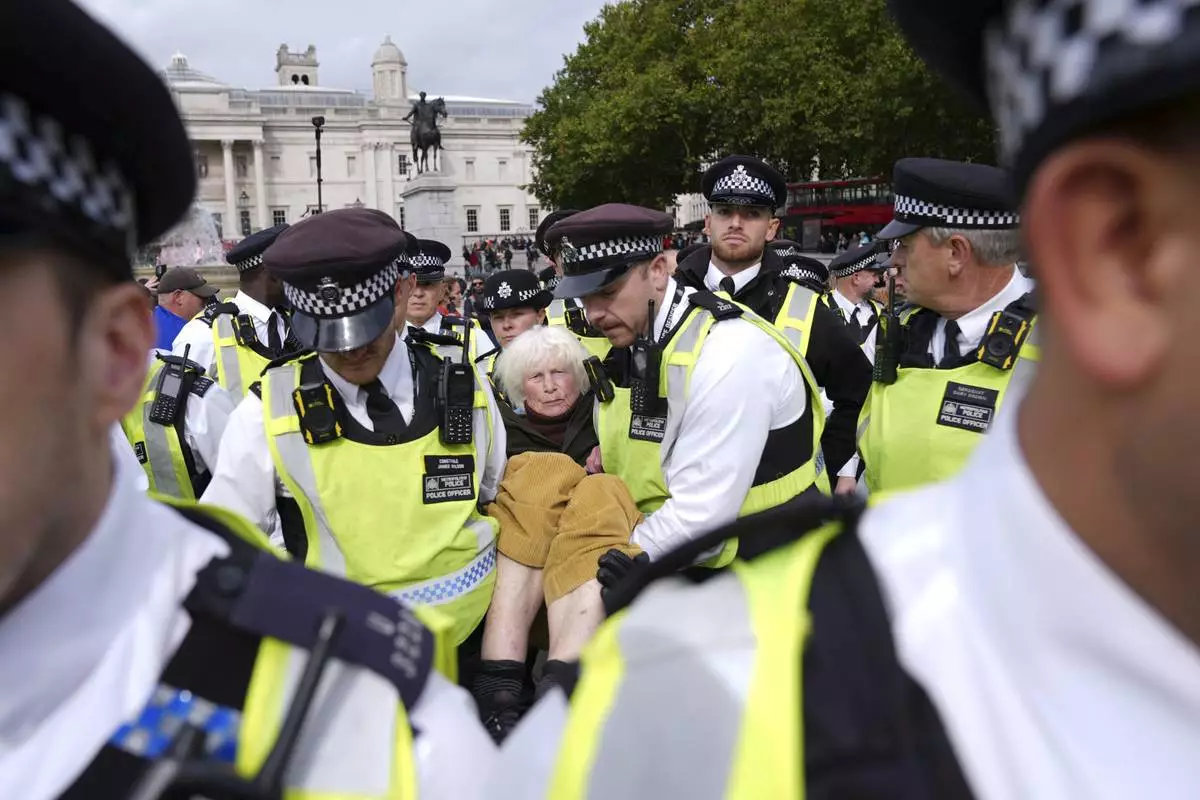
Police remove a protester taking part in a demonstration organised by Defend our Juries, in support of Palestine Action in Trafalgar Square, London Saturday Oct. 4, 2025. (Maja Smiejkowska/PA via AP)
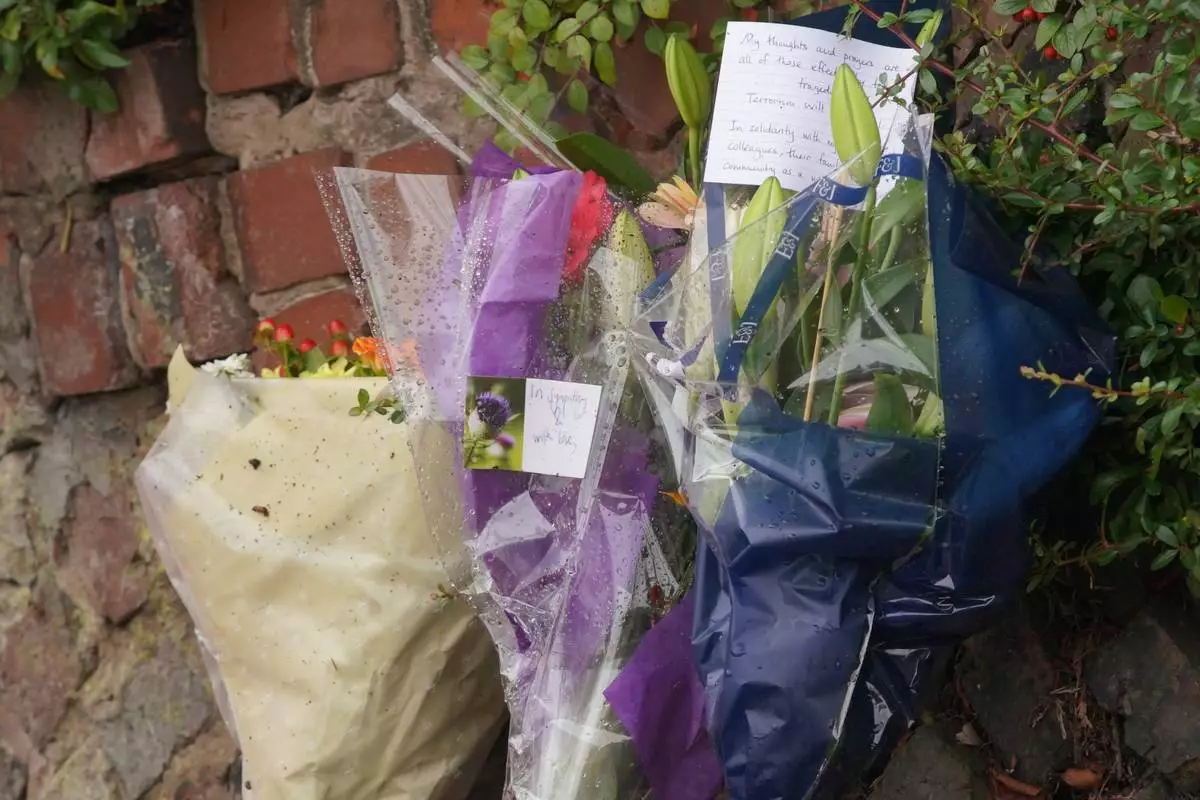
Flowers laid near by the scene of a stabbing incident at Heaton Park Hebrew Congregation synagogue, in Crumpsall, Manchester, England, Friday, Oct. 3, 2025. (AP Photo/Ian Hodgson)
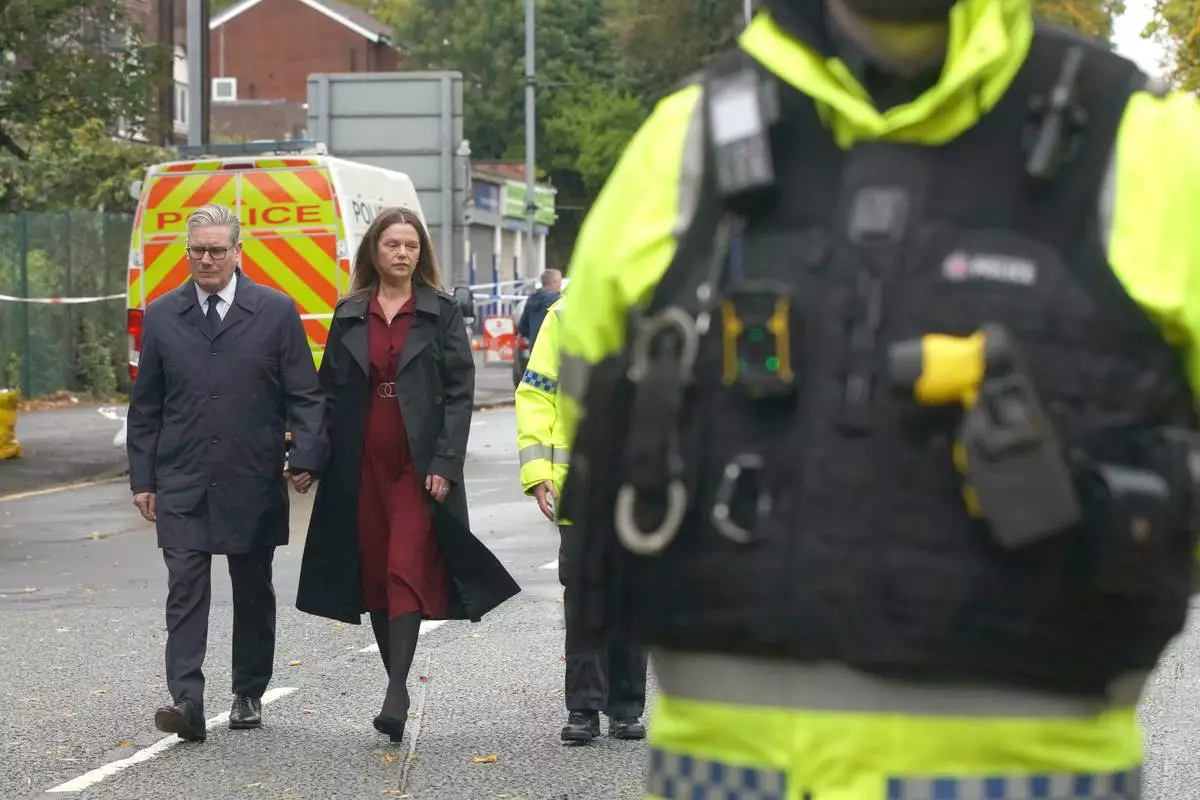
Britain's Prime Minister Keir Starmer and his wife Victoria arrive to meet emergency workers near Heaton Park Hebrew Congregation synagogue in Manchester, England, Friday, Oct. 3, 2025, where two people died in a terror attack on Thursday. (AP Photo/Ian Hodgson)

Forensic teams work at the scene of a stabbing incident that took place on Thursday, at Heaton Park Hebrew Congregation synagogue, in Manchester, England, Friday, Oct. 3, 2025. (AP Photo/Ian Hodgson)

A woman wears the flag of Israel wrapped over her back as she attends a vigil for the victims of the attack on at Heaton Park Hebrew Congregation synagogue, in Crumpsall, Manchester, England, Friday, Oct. 3, 2025. (AP Photo/Ian Hodgson)

A woman brings flowers as she attends a vigil for the victims of the attack on the Heaton Park Hebrew Congregation synagogue, in Crumpsall, Manchester, England, Friday, Oct. 3, 2025, the attack happened Thursday. (AP Photo/Ian Hodgson)