Skip to Content Facebook Feature Image

Nectar's, the Vermont venue that launched Phish, closes on a quiet note after 50 years

ENT

Nectar's, the Vermont venue that launched Phish, closes on a quiet note after 50 years
ENT

ENT

Nectar's, the Vermont venue that launched Phish, closes on a quiet note after 50 years

2025-10-05 05:04 Last Updated At:05:10

BURLINGTON, Vt. (AP) — As a Greek immigrant who came to the United States in 1956, Nectar Rorris never imagined the Vermont restaurant and music club he opened 50 years ago would become synonymous with Phish, but he credits the jam band with giving Nectar’s a national spotlight and making it a place sought out by local and traveling musicians alike.

“Phish made Nectar's,” the 86-year-old Rorris said recently.

More Images
FILE - From left to right, members of the band Phish, Page McConnell, Jon Fishman, Trey Anastasio and Mike Gordon appear in the press room after performing at the Rock and Roll Hall of Fame induction ceremony, Monday, March 15, 2010 in New York. (AP Photo/Peter Kramer, File)
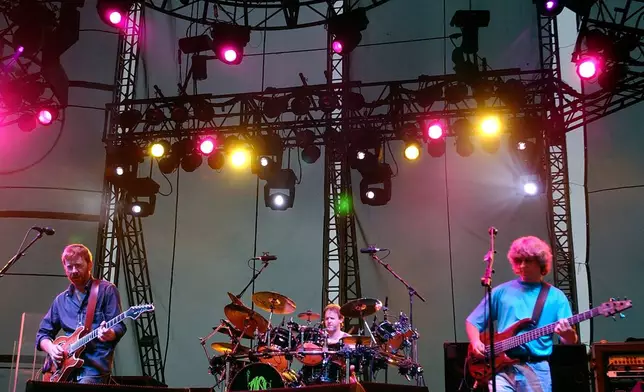
FILE - From left to right, members of the band Phish, Page McConnell, Jon Fishman, Trey Anastasio and Mike Gordon appear in the press room after performing at the Rock and Roll Hall of Fame induction ceremony, Monday, March 15, 2010 in New York. (AP Photo/Peter Kramer, File)

FILE - Phish's Trey Anastasio, left, drummer Jon Fishman, center, and bassist Mike Gordon perform with the band at Keyspan Park in the Brooklyn borough of New York Thursday, June 17, 2004. (AP Photo/Chad Rachman, File)
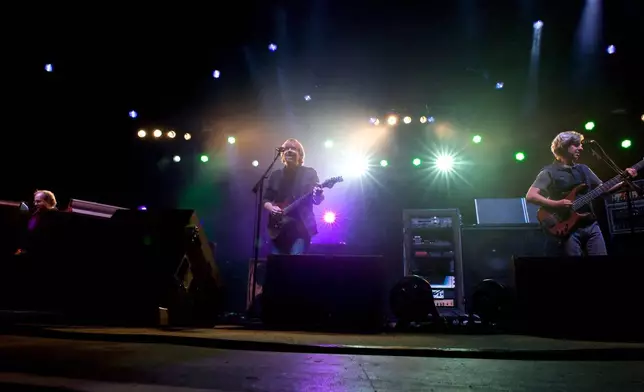
FILE - Phish's Trey Anastasio, left, drummer Jon Fishman, center, and bassist Mike Gordon perform with the band at Keyspan Park in the Brooklyn borough of New York Thursday, June 17, 2004. (AP Photo/Chad Rachman, File)

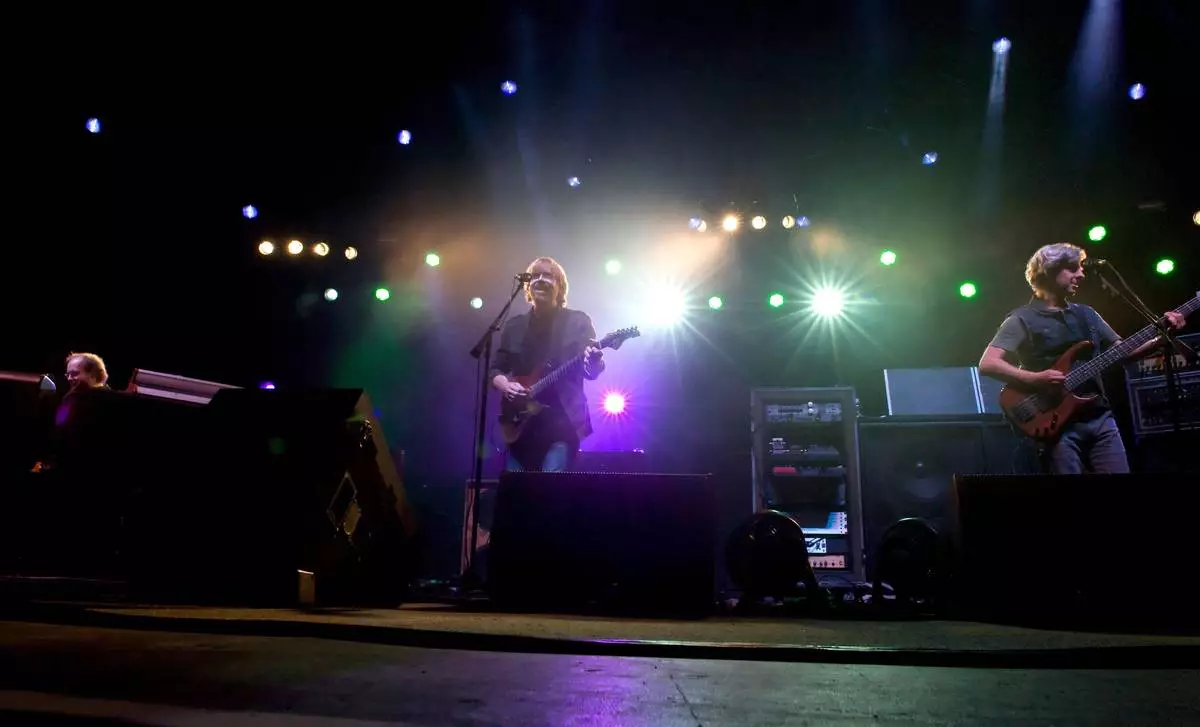
FILE - Phish band members Page McConnell, Trey Anastasio, Mike Gordon, from left, performs during their benefit concert at the Champlain Valley Exposition in Essex Junction, Vt, on Wednesday, Sept. 14, 2011. (AP Photo/Alison Redlich, File)

FILE - Phish band members Page McConnell, Trey Anastasio, Mike Gordon, from left, performs during their benefit concert at the Champlain Valley Exposition in Essex Junction, Vt, on Wednesday, Sept. 14, 2011. (AP Photo/Alison Redlich, File)

People walk by Nectar's, the music club where jam band Phish got their start, in downtown Burlington, Vt., Wednesday, July 30, 2025. (AP Photo/Amanda Swinhart)

People walk by Nectar's, the music club where jam band Phish got their start, in downtown Burlington, Vt., Wednesday, July 30, 2025. (AP Photo/Amanda Swinhart)

A plaque and posters that used to hang on the walls inside Nectar's music club in Burlington, where the jam band Phish got its start, are displayed in Essex, Vt., Thursday, Oct. 2, 2025. (AP Photo/Amanda Swinhart)

A plaque and posters that used to hang on the walls inside Nectar's music club in Burlington, where the jam band Phish got its start, are displayed in Essex, Vt., Thursday, Oct. 2, 2025. (AP Photo/Amanda Swinhart)

Nectar Rorris, one of the original owners of Nectar's music club in Burlington, Vt., looks at a plaque featuring a photo of the jam band Phish and a message dedicating their 1992 album "A Picture of Nectar" to Rorris and the venue, Thursday, Oct. 2, 2025 in Essex, Vt. (AP Photo/Amanda Swinhart)

Nectar Rorris, one of the original owners of Nectar's music club in Burlington, Vt., looks at a plaque featuring a photo of the jam band Phish and a message dedicating their 1992 album "A Picture of Nectar" to Rorris and the venue, Thursday, Oct. 2, 2025 in Essex, Vt. (AP Photo/Amanda Swinhart)
Nectar Rorris, one of the original owners of Nectar's music club in Burlington, Vt., looks at a plaque featuring a photo of the jam band Phish and a message dedicating their 1992 album "A Picture of Nectar" to Rorris and the venue, Thursday, Oct. 2, 2025 in Essex, Vt. (AP Photo/Amanda Swinhart)

Nectar Rorris, one of the original owners of Nectar's music club in Burlington, Vt., looks at a plaque featuring a photo of the jam band Phish and a message dedicating their 1992 album "A Picture of Nectar" to Rorris and the venue, Thursday, Oct. 2, 2025 in Essex, Vt. (AP Photo/Amanda Swinhart)

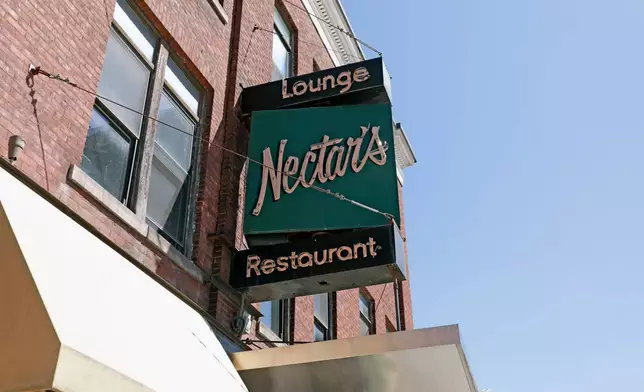
Nectar's, the music club where jam band Phish got their start, is shown in downtown Burlington, Vt., Wednesday, July 30, 2025. (AP Photo/Amanda Swinhart)
Nectar's, the music club where jam band Phish got their start, is shown in downtown Burlington, Vt., Wednesday, July 30, 2025. (AP Photo/Amanda Swinhart)

FILE - The group Phish, drummer Jon Fishman, guitarist Trey Anastasio, center, and bassist Mike Gordon, perform in this Dec. 31, 2002 file photo at New York's Madison Square Garden. (AP Photo/Stephen Chernin, File)

FILE - The group Phish, drummer Jon Fishman, guitarist Trey Anastasio, center, and bassist Mike Gordon, perform in this Dec. 31, 2002 file photo at New York's Madison Square Garden. (AP Photo/Stephen Chernin, File)

Phish meanwhile credits Rorris with their early success, giving them a stage to experiment on when they were starting out in the early '80s.

But now, the iconic Burlington venue that fostered a community of diverse artists has closed its doors, despite negotiations to keep the music going.

Nectar’s announced it was taking a pause in June, citing “immense challenges affecting both downtown Burlington and the local live music and entertainment scene.” Several weeks later, the venue announced on social media that it was closing for good. The post immediately drew hundreds of comments and tributes from musicians, former employees and fans.

“As a musician, you want to move up. You get a few fans; you go to a bigger club. That’s what Nectar’s was,” said Chris Farnsworth, who covers Burlington’s music scene for the Vermont newspaper Seven Days.

Farnsworth noted that the venue — a brick building with a neon sign — “holds a very important place” in Phish lore. The band's 1992 record was titled “A Picture of Nectar” as a tribute to the venue and to Rorris, who gave the fledgling band a residency for nearly two years.

“The guys from Phish were very good to us,” said Alex Budney, who started at Nectar’s in 2001 as a cook when he was 19, making their famous gravy fries and later working almost every job in the building over 20 years.

“My college band would play there on Monday nights and it would be like nobody there. But the keyboard player from Phish would come down in a snowstorm and sit at the bar and watch us play and talk to us,” Budney said.

Phish bassist Mike Gordon, who still lives in the area, even popped in during singer-songwriter Maggie Rose’s sound check last September and joined her band for two songs that night. Rose had rerouted her tour just to be able to play at Nectar’s.

“It was the perfect excuse to go to this legendary venue in this amazing, creative, artistic town,” said Rose. “The lore of Nectar’s did not disappoint. It truly was just one of those surreal moments.”

Phish declined to comment on the venue's closing, as did the current owner.

Rorris opened Nectar's in 1975 with two partners.

“They borrowed money from their parents. I did the same and we closed the deal,” he said.

In the beginning, Rorris focused solely on the restaurant, leaving the music booking and finances to his partners. Eventually, his partners wanted to move on, so the three sold the business to a new owner who only lasted six months. Rorris decided to buy the business back and ran it by himself until 2003, when he decided to sell for personal reasons.

“The bands were real thrilled to see that I was taking it back and that I was going to hire them back," he said. "From then, it took off.”

Though Phish made Nectar’s famous, the venue also hosted such artists as Vermont’s own Grace Potter and Anais Mitchell, B.B. King, Spacehog, Blind Melon and the Decemberists. And it was known for regular music series including Metal Mondays; Dead Set Tuesdays — a tribute to The Grateful Dead; blues, jazz and reggae nights; comedy shows and Sunday Night Mass, a production showcasing electronic artists from around the world.

Nectar’s ownership and management changed repeatedly, but it remained a place to discover new music. Budney said Nectar's supported emerging artists with residency opportunities to play weekly for a month or more and build a fan base.

“We’d provide tools for bands to make it,” he said.

The venue itself ultimately couldn't make it as costs rose and construction in downtown Burlington reduced foot traffic and turned away business. It's unclear what will happen to it next.

But those who played a role in the club’s history say its legacy is undeniable.

“Fifty years is an amazing run for a nightclub,” said Justin Remillard, who booked artists for Nectar’s electronic music series for 25 years. “The only constant is change, and what has happened with Nectar’s and the building closing, we have to figure out what’s next.”

FILE - From left to right, members of the band Phish, Page McConnell, Jon Fishman, Trey Anastasio and Mike Gordon appear in the press room after performing at the Rock and Roll Hall of Fame induction ceremony, Monday, March 15, 2010 in New York. (AP Photo/Peter Kramer, File)

FILE - From left to right, members of the band Phish, Page McConnell, Jon Fishman, Trey Anastasio and Mike Gordon appear in the press room after performing at the Rock and Roll Hall of Fame induction ceremony, Monday, March 15, 2010 in New York. (AP Photo/Peter Kramer, File)

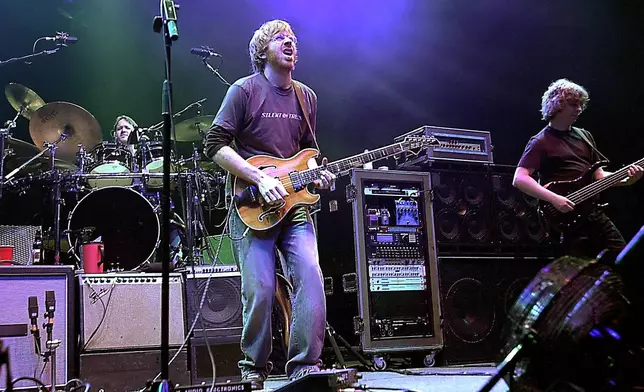
FILE - Phish's Trey Anastasio, left, drummer Jon Fishman, center, and bassist Mike Gordon perform with the band at Keyspan Park in the Brooklyn borough of New York Thursday, June 17, 2004. (AP Photo/Chad Rachman, File)
FILE - Phish's Trey Anastasio, left, drummer Jon Fishman, center, and bassist Mike Gordon perform with the band at Keyspan Park in the Brooklyn borough of New York Thursday, June 17, 2004. (AP Photo/Chad Rachman, File)

FILE - Phish band members Page McConnell, Trey Anastasio, Mike Gordon, from left, performs during their benefit concert at the Champlain Valley Exposition in Essex Junction, Vt, on Wednesday, Sept. 14, 2011. (AP Photo/Alison Redlich, File)
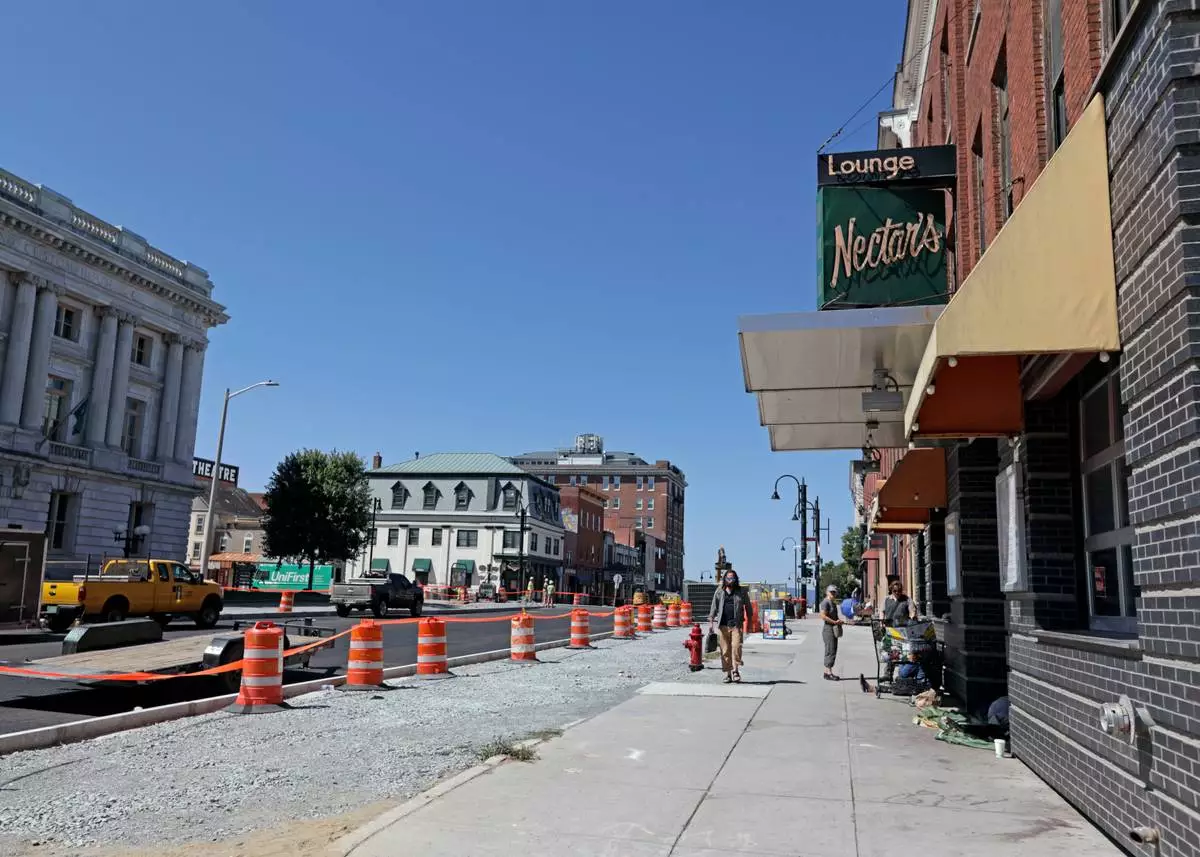
FILE - Phish band members Page McConnell, Trey Anastasio, Mike Gordon, from left, performs during their benefit concert at the Champlain Valley Exposition in Essex Junction, Vt, on Wednesday, Sept. 14, 2011. (AP Photo/Alison Redlich, File)

People walk by Nectar's, the music club where jam band Phish got their start, in downtown Burlington, Vt., Wednesday, July 30, 2025. (AP Photo/Amanda Swinhart)
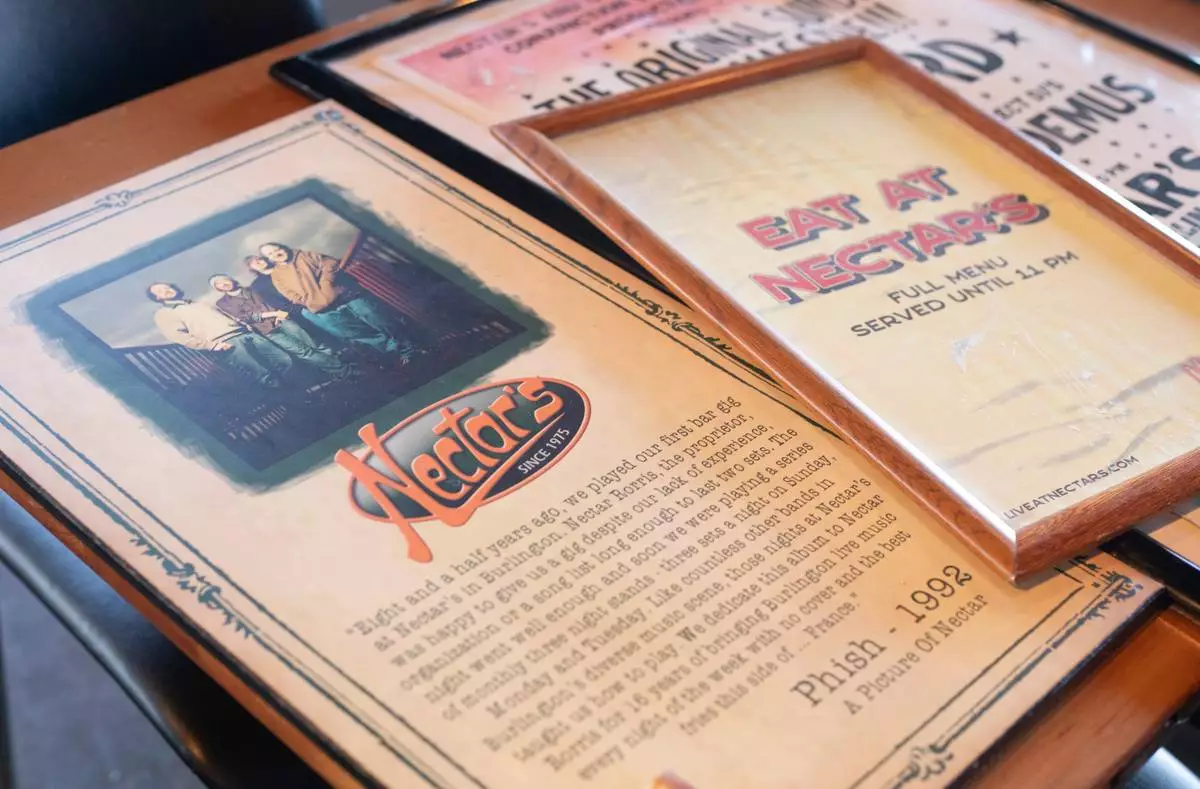
People walk by Nectar's, the music club where jam band Phish got their start, in downtown Burlington, Vt., Wednesday, July 30, 2025. (AP Photo/Amanda Swinhart)

A plaque and posters that used to hang on the walls inside Nectar's music club in Burlington, where the jam band Phish got its start, are displayed in Essex, Vt., Thursday, Oct. 2, 2025. (AP Photo/Amanda Swinhart)

A plaque and posters that used to hang on the walls inside Nectar's music club in Burlington, where the jam band Phish got its start, are displayed in Essex, Vt., Thursday, Oct. 2, 2025. (AP Photo/Amanda Swinhart)

Nectar Rorris, one of the original owners of Nectar's music club in Burlington, Vt., looks at a plaque featuring a photo of the jam band Phish and a message dedicating their 1992 album "A Picture of Nectar" to Rorris and the venue, Thursday, Oct. 2, 2025 in Essex, Vt. (AP Photo/Amanda Swinhart)

Nectar Rorris, one of the original owners of Nectar's music club in Burlington, Vt., looks at a plaque featuring a photo of the jam band Phish and a message dedicating their 1992 album "A Picture of Nectar" to Rorris and the venue, Thursday, Oct. 2, 2025 in Essex, Vt. (AP Photo/Amanda Swinhart)
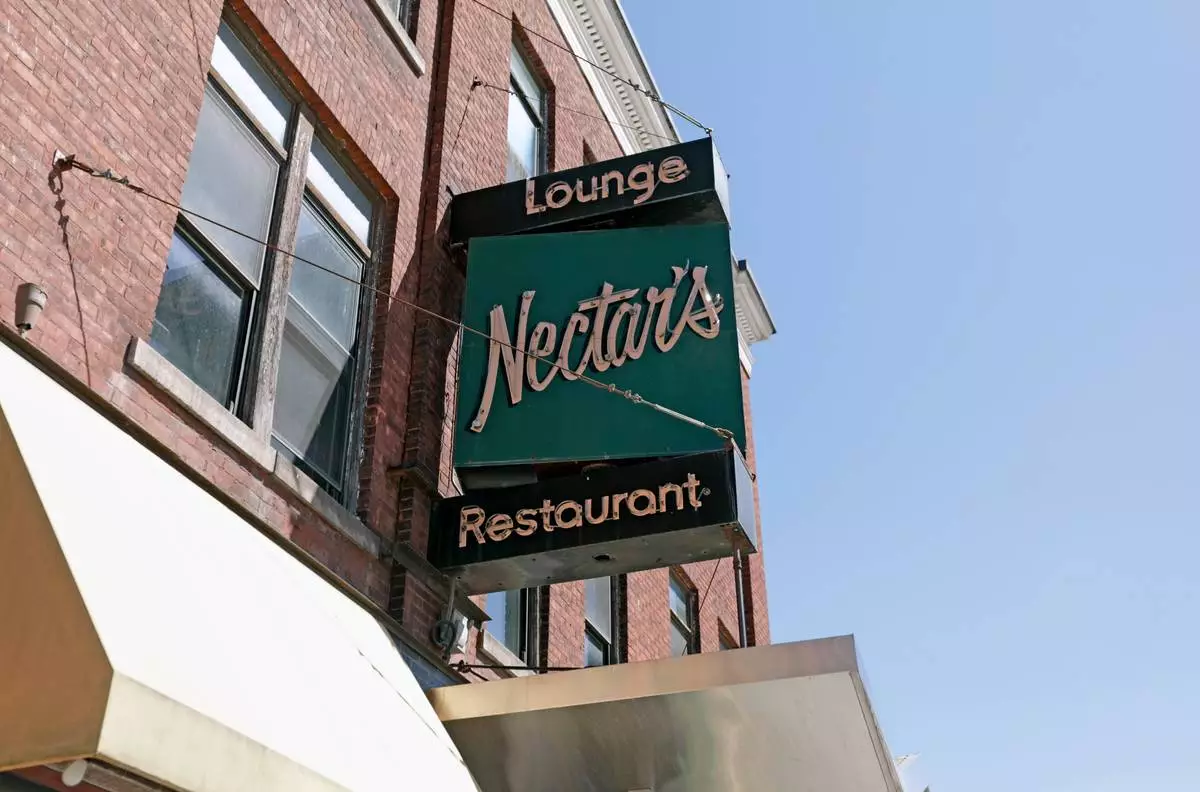
Nectar Rorris, one of the original owners of Nectar's music club in Burlington, Vt., looks at a plaque featuring a photo of the jam band Phish and a message dedicating their 1992 album "A Picture of Nectar" to Rorris and the venue, Thursday, Oct. 2, 2025 in Essex, Vt. (AP Photo/Amanda Swinhart)

Nectar Rorris, one of the original owners of Nectar's music club in Burlington, Vt., looks at a plaque featuring a photo of the jam band Phish and a message dedicating their 1992 album "A Picture of Nectar" to Rorris and the venue, Thursday, Oct. 2, 2025 in Essex, Vt. (AP Photo/Amanda Swinhart)

Nectar's, the music club where jam band Phish got their start, is shown in downtown Burlington, Vt., Wednesday, July 30, 2025. (AP Photo/Amanda Swinhart)

Nectar's, the music club where jam band Phish got their start, is shown in downtown Burlington, Vt., Wednesday, July 30, 2025. (AP Photo/Amanda Swinhart)

FILE - The group Phish, drummer Jon Fishman, guitarist Trey Anastasio, center, and bassist Mike Gordon, perform in this Dec. 31, 2002 file photo at New York's Madison Square Garden. (AP Photo/Stephen Chernin, File)
FILE - The group Phish, drummer Jon Fishman, guitarist Trey Anastasio, center, and bassist Mike Gordon, perform in this Dec. 31, 2002 file photo at New York's Madison Square Garden. (AP Photo/Stephen Chernin, File)

HARRISBURG, Pa. (AP) — The forecasts are eye-popping: utilities saying they'll need two or three times more electricity within a few years to power massive new data centers that are feeding a fast-growing AI economy.

But the challenges — some say the impossibility — of building new power plants to meet that demand so quickly has set off alarm bells for lawmakers, policymakers and regulators who wonder if those utility forecasts can be trusted.

One burning question is whether the forecasts are based on data center projects that may never get built — eliciting concern that regular ratepayers could be stuck with the bill to build unnecessary power plants and grid infrastructure at a cost of billions of dollars.

The scrutiny comes as analysts warn of the risk of an artificial intelligence investment bubble that's ballooned tech stock prices and could burst.

Meanwhile, consumer advocates are finding that ratepayers in some areas — such as the mid-Atlantic electricity grid, which encompasses all or parts of 13 states stretching from New Jersey to Illinois, as well as Washington, D.C. — are already underwriting the cost to supply power to data centers, some of them built, some not.

“There’s speculation in there,” said Joe Bowring, who heads Monitoring Analytics, the independent market watchdog in the mid-Atlantic grid territory. “Nobody really knows. Nobody has been looking carefully enough at the forecast to know what’s speculative, what’s double-counting, what’s real, what’s not.”

There is no standard practice across grids or for utilities to vet such massive projects, and figuring out a solution has become a hot topic, utilities and grid operators say.

Uncertainty around forecasts is typically traced to a couple of things.

One concerns developers seeking a grid connection, but whose plans aren't set in stone or lack the heft — clients, financing or otherwise — to bring the project to completion, industry and regulatory officials say.

Another is data center developers submitting grid connection requests in various separate utility territories, PJM Interconnection, which operates the mid-Atlantic grid, and Texas lawmakers have found.

Often, developers, for competitive reasons, won't tell utilities if or where they've submitted other requests for electricity, PJM said. That means a single project could inflate the energy forecasts of multiple utilities.

The effort to improve forecasts got a high-profile boost in September, when a Federal Energy Regulatory Commission member asked the nation’s grid operators for information on how they determine that a project is not only viable, but will use the electricity it says it needs.

“Better data, better decision-making, better and faster decisions mean we can get all these projects, all this infrastructure built,” the commissioner, David Rosner, said in an interview.

The Edison Electric Institute, a trade association of for-profit electric utilities, said it welcomed efforts to improve demand forecasting.

The Data Center Coalition, which represents tech giants like Google and Meta and data center developers, has urged regulators to request more information from utilities on their forecasts and to develop a set of best practices to determine the commercial viability of a data center project.

The coalition's vice president of energy, Aaron Tinjum, said improving the accuracy and transparency of forecasts is a “fundamental first step of really meeting this moment” of energy growth.

“Wherever we go, the question is, ‘Is the (energy) growth real? How can we be so sure?’” Tinjum said. “And we really view commercial readiness verification as one of those important kind of low-hanging opportunities for us to be adopting at this moment.”

Igal Feibush, the CEO of Pennsylvania Data Center Partners, a data center developer, said utilities are in a “fire drill” as they try to vet a deluge of data center projects all seeking electricity.

The vast majority, he said, will fall off because many project backers are new to the concept and don't know what it takes to get a data center built.

States also are trying to do more to find out what’s in utility forecasts and weed out speculative or duplicative projects.

In Texas, which is attracting large data center projects, lawmakers still haunted by a blackout during a deadly 2021 winter storm were shocked when told in 2024 by the grid operator, the Electric Reliability Council of Texas, that its peak demand could nearly double by 2030.

They found that state utility regulators lacked the tools to determine whether that was realistic.

Texas state Sen. Phil King told a hearing earlier this year that the grid operator, utility regulators and utilities weren’t sure if the power requests “are real or just speculative or somewhere in between.”

Lawmakers passed legislation sponsored by King, now law, that requires data center developers to disclose whether they have requests for electricity elsewhere in Texas and to set standards for developers to show that they have a substantial financial commitment to a site.

PPL Electric Utilities, which delivers power to 1.5 million customers across central and eastern Pennsylvania, projects that data centers will more than triple its peak electricity demand by 2030.

Vincent Sorgi, president and CEO of PPL Corp., told analysts on an earnings call this month that the data center projects “are real, they are coming fast and furious” and that the “near-term risk of overbuilding generation simply does not exist.”

The data center projects counted in the forecast are backed by contracts with financial commitments often reaching tens of millions of dollars, PPL said.

Still, PPL's projections helped spur a state lawmaker, Rep. Danilo Burgos, to introduce a bill to bolster the authority of state utility regulators to inspect how utilities assemble their energy demand forecasts.

Ratepayers in Burgos' Philadelphia district just absorbed an increase in their electricity bills — attributed by the utility, PECO, to the rising cost of wholesale electricity in the mid-Atlantic grid driven primarily by data center demand.

That's why ratepayers need more protection to ensure they are benefiting from the higher cost, Burgos said.

“Once they make their buck, whatever company,” Burgos said, “you don’t see no empathy towards the ratepayers.”

Follow Marc Levy at http://twitter.com/timelywriter.

FILE- An entrance to the Stargate artificial intelligence data center complex in Abilene, Texas on Monday, Sept. 22, 2025. (AP Photo/Matt O'Brien, File)

FILE- An entrance to the Stargate artificial intelligence data center complex in Abilene, Texas on Monday, Sept. 22, 2025. (AP Photo/Matt O'Brien, File)

Recommended Articles