Skip to Content Facebook Feature Image

Brazilians avoid drinking after authorities confirm methanol poisoning cases, including 1 death

News

Brazilians avoid drinking after authorities confirm methanol poisoning cases, including 1 death
News

News

Brazilians avoid drinking after authorities confirm methanol poisoning cases, including 1 death

2025-10-05 01:00 Last Updated At:01:10

SAO PAULO (AP) — Friday night was anything but typical at a bar near Paulista Avenue, one of Sao Paulo’s busiest areas and a popular destination for tourists. Nearly every table was ordering beer, wine or draft beer but no cocktails.

Edilson Trindade, the manager who has worked at the bar since 2018, told The Associated Press the establishment usually sells about 80 caipirinhas — Brazil’s national cocktail made with cachaça, lime, sugar and ice — each night. Last week, he didn’t sell a single one. No other cocktails were ordered, either.

“Clients have been worried, and we’re advising them it’s better not to drink cocktails,” Trindade said.

His concern reflects a nationwide unease over distilled beverages following a surge in methanol poisoning cases that has prompted police investigations, stoked public fear and altered drinking habits in recent days.

The Health Ministry said Friday it had confirmed 11 cases tied to alcoholic beverages and was investigating 116 suspected cases. One death was confirmed through lab tests in Sao Paulo, with eleven others under investigation.

Nearly all the cases have been reported in Sao Paulo, the country's most populous state and the epicenter of the outbreak.

Last week, local media reported deaths and hospitalizations linked to methanol-tainted alcohol. Some patients were admitted to intensive care with severe symptoms, including blindness.

One of them was the rapper Hungria, who has been hospitalized in Brasilia after possibly drinking altered alcohol. On Friday, he posted on his Instagram account that he was feeling better and would soon be discharged.

"Friday has a different energy. If you feel thirsty, find a safe place to have a drink," the singer said.

Health Minister Alexandre Padilha urged Brazilians to avoid drinking, especially distilled beverages, which are more difficult to verify for adulteration. He described the situation as abnormal and noted that Brazil recorded 20 methanol poisoning cases in August and September, equal to its annual average.

“As a physician and health minister, I advise everyone to avoid distilled products, especially colorless ones, unless you’re certain of their origin," Padilha said. "These are not essential items.”

Warnings from authorities and doctors caused panic among many Brazilians.

Some establishments told customers they would temporarily suspend sales of distilled spirits. Customers swapped cocktails, such as the traditional Brazilian caipirinha, for fermented drinks. Other bars have changed their menu and started offering cocktail mixes without distilled beverages.

Jessica Ávila, a 34-year-old cultural producer, was at the bar Trindade manages near Avenida Paulista Friday night, relaxing with friends but still feeling “very worried.”

“With all these cases that keep coming up and more deaths being reported each day, it’s alarming. I’ve even seen well-known people being hospitalized,” she said. “Right now, I can’t bring myself to drink any distilled spirits unless I have some assurance they’re not counterfeit. I’m sticking to beer.”

There are three main types of alcohol: ethanol, methanol, and isopropanol. Ethanol is safe for consumption and is found in spirits. Isopropanol is used in sanitizers and rubbing alcohol. Methanol, also known as wood alcohol, is used in fuel, antifreeze, and solvents.

Methanol poisoning can cause headaches, dizziness, nausea, vomiting, blurred vision, seizures, and even coma, according to the U.S. Centers for Disease Control and Prevention. The CDC advises immediate medical attention if poisoning is suspected.

Authorities have been inspecting bars and distributors suspected of selling contaminated products. “We have determined that methanol contaminated counterfeit alcoholic beverages. So we need to understand how,” Artur Dian, chief of Sao Paulo police, told the AP.

Police still do not know whether the product contamination was intentional or accidental. Individuals who counterfeit spirits typically mix them with other substances to increase volume and profit, which may include methanol, he said. Another possibility is that the bottles were contaminated with the toxic substance.

"While we know that small amounts do not contaminate and are not capable of causing health damage, we don’t know the exact amount that might remain in a bottle, Dian said.

The Brazilian Association of Distilled Beverages said the illicit alcohol market is on the rise. A study by Euromonitor, commissioned by the association, found that adulterated beverages make up 28% of Brazil’s market and are sold at prices 35% lower than legitimate products.

Follow the AP’s coverage of Latin America and the Caribbean at https://apnews.com/hub/latin-america
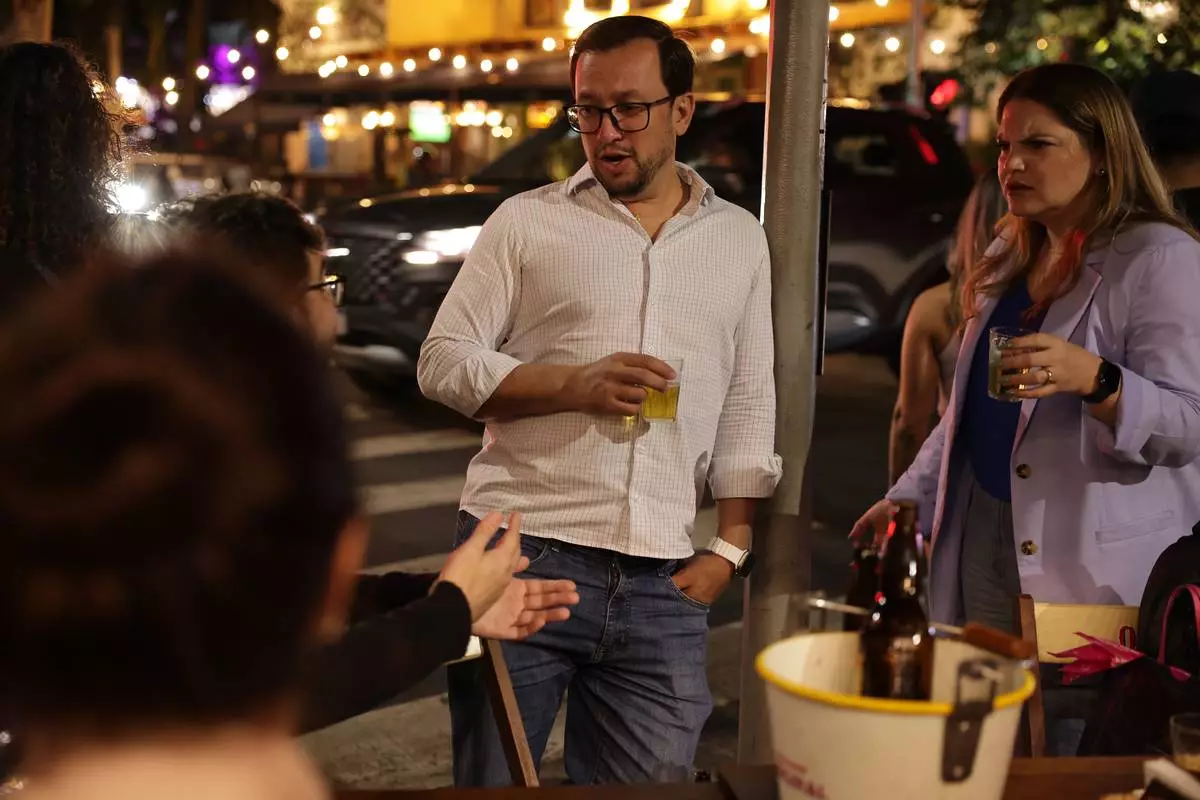
People drink beer at a bar in Sao Paulo, Friday, Oct. 3, 2025. (AP Photo/Ettore Chiereguini)

People drink beer at a bar in Sao Paulo, Friday, Oct. 3, 2025. (AP Photo/Ettore Chiereguini)

People drink beer at a bar in Sao Paulo, Friday, Oct. 3, 2025. (AP Photo/Ettore Chiereguini)

People drink beer at a bar in Sao Paulo, Friday, Oct. 3, 2025. (AP Photo/Ettore Chiereguini)

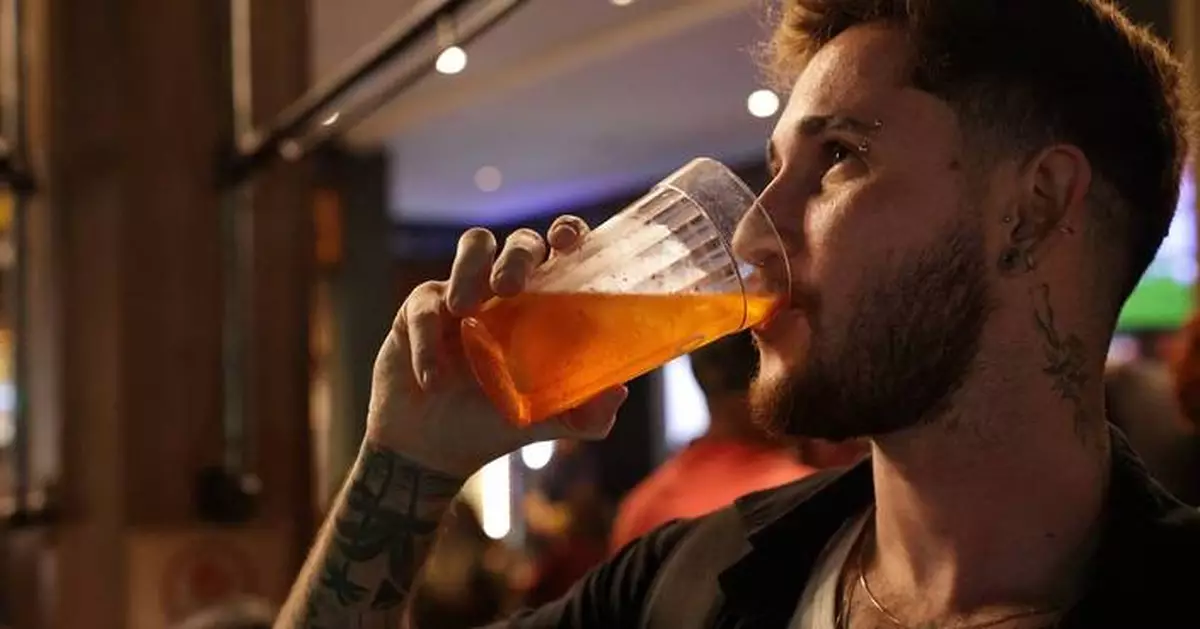
Gustavo Candido drinks liquor at a bar in Sao Paulo, Friday, Oct. 3, 2025. (AP Photo/Ettore Chiereguini)

Gustavo Candido drinks liquor at a bar in Sao Paulo, Friday, Oct. 3, 2025. (AP Photo/Ettore Chiereguini)

HARRISBURG, Pa. (AP) — The forecasts are eye-popping: utilities saying they'll need two or three times more electricity within a few years to power massive new data centers that are feeding a fast-growing AI economy.

But the challenges — some say the impossibility — of building new power plants to meet that demand so quickly has set off alarm bells for lawmakers, policymakers and regulators who wonder if those utility forecasts can be trusted.

One burning question is whether the forecasts are based on data center projects that may never get built — eliciting concern that regular ratepayers could be stuck with the bill to build unnecessary power plants and grid infrastructure at a cost of billions of dollars.

The scrutiny comes as analysts warn of the risk of an artificial intelligence investment bubble that's ballooned tech stock prices and could burst.

Meanwhile, consumer advocates are finding that ratepayers in some areas — such as the mid-Atlantic electricity grid, which encompasses all or parts of 13 states stretching from New Jersey to Illinois, as well as Washington, D.C. — are already underwriting the cost to supply power to data centers, some of them built, some not.

“There’s speculation in there,” said Joe Bowring, who heads Monitoring Analytics, the independent market watchdog in the mid-Atlantic grid territory. “Nobody really knows. Nobody has been looking carefully enough at the forecast to know what’s speculative, what’s double-counting, what’s real, what’s not.”

There is no standard practice across grids or for utilities to vet such massive projects, and figuring out a solution has become a hot topic, utilities and grid operators say.

Uncertainty around forecasts is typically traced to a couple of things.

One concerns developers seeking a grid connection, but whose plans aren't set in stone or lack the heft — clients, financing or otherwise — to bring the project to completion, industry and regulatory officials say.

Another is data center developers submitting grid connection requests in various separate utility territories, PJM Interconnection, which operates the mid-Atlantic grid, and Texas lawmakers have found.

Often, developers, for competitive reasons, won't tell utilities if or where they've submitted other requests for electricity, PJM said. That means a single project could inflate the energy forecasts of multiple utilities.

The effort to improve forecasts got a high-profile boost in September, when a Federal Energy Regulatory Commission member asked the nation’s grid operators for information on how they determine that a project is not only viable, but will use the electricity it says it needs.

“Better data, better decision-making, better and faster decisions mean we can get all these projects, all this infrastructure built,” the commissioner, David Rosner, said in an interview.

The Edison Electric Institute, a trade association of for-profit electric utilities, said it welcomed efforts to improve demand forecasting.

The Data Center Coalition, which represents tech giants like Google and Meta and data center developers, has urged regulators to request more information from utilities on their forecasts and to develop a set of best practices to determine the commercial viability of a data center project.

The coalition's vice president of energy, Aaron Tinjum, said improving the accuracy and transparency of forecasts is a “fundamental first step of really meeting this moment” of energy growth.

“Wherever we go, the question is, ‘Is the (energy) growth real? How can we be so sure?’” Tinjum said. “And we really view commercial readiness verification as one of those important kind of low-hanging opportunities for us to be adopting at this moment.”

Igal Feibush, the CEO of Pennsylvania Data Center Partners, a data center developer, said utilities are in a “fire drill” as they try to vet a deluge of data center projects all seeking electricity.

The vast majority, he said, will fall off because many project backers are new to the concept and don't know what it takes to get a data center built.

States also are trying to do more to find out what’s in utility forecasts and weed out speculative or duplicative projects.

In Texas, which is attracting large data center projects, lawmakers still haunted by a blackout during a deadly 2021 winter storm were shocked when told in 2024 by the grid operator, the Electric Reliability Council of Texas, that its peak demand could nearly double by 2030.

They found that state utility regulators lacked the tools to determine whether that was realistic.

Texas state Sen. Phil King told a hearing earlier this year that the grid operator, utility regulators and utilities weren’t sure if the power requests “are real or just speculative or somewhere in between.”

Lawmakers passed legislation sponsored by King, now law, that requires data center developers to disclose whether they have requests for electricity elsewhere in Texas and to set standards for developers to show that they have a substantial financial commitment to a site.

PPL Electric Utilities, which delivers power to 1.5 million customers across central and eastern Pennsylvania, projects that data centers will more than triple its peak electricity demand by 2030.

Vincent Sorgi, president and CEO of PPL Corp., told analysts on an earnings call this month that the data center projects “are real, they are coming fast and furious” and that the “near-term risk of overbuilding generation simply does not exist.”

The data center projects counted in the forecast are backed by contracts with financial commitments often reaching tens of millions of dollars, PPL said.

Still, PPL's projections helped spur a state lawmaker, Rep. Danilo Burgos, to introduce a bill to bolster the authority of state utility regulators to inspect how utilities assemble their energy demand forecasts.

Ratepayers in Burgos' Philadelphia district just absorbed an increase in their electricity bills — attributed by the utility, PECO, to the rising cost of wholesale electricity in the mid-Atlantic grid driven primarily by data center demand.

That's why ratepayers need more protection to ensure they are benefiting from the higher cost, Burgos said.

“Once they make their buck, whatever company,” Burgos said, “you don’t see no empathy towards the ratepayers.”

Follow Marc Levy at http://twitter.com/timelywriter.

FILE- An entrance to the Stargate artificial intelligence data center complex in Abilene, Texas on Monday, Sept. 22, 2025. (AP Photo/Matt O'Brien, File)

FILE- An entrance to the Stargate artificial intelligence data center complex in Abilene, Texas on Monday, Sept. 22, 2025. (AP Photo/Matt O'Brien, File)

Recommended Articles