Two landmark summits in Astana and Tianjin have propelled China-Kazakhstan ties into a new phase of pragmatic cooperation rooted in mutual respect and shared development goals, said Gulnar Shaimergenova, director of the China Studies Center in Kazakhstan.
In June, the 2nd China-Central Asia Summit was held in Kazakhstan's Astana, where the Astana Declaration was signed. The six countries -- China, Kazakhstan, Kyrgyzstan, Tajikistan, Turkmenistan and Uzbekistan -- voiced their commitment in jointly building a closer China-Central Asia community with a shared future.
Later, leaders from Asia, Europe and Africa gathered in the northern Chinese port city of Tianjin from Aug 31 to Sept 1 for the largest-ever Shanghai Cooperation Organization (SCO) summit in history.
They signed and issued the Tianjin Declaration, advocating a new type of international relations founded on mutual respect, fairness and justice, and win-win cooperation, as well as promoting a shared future for humanity.
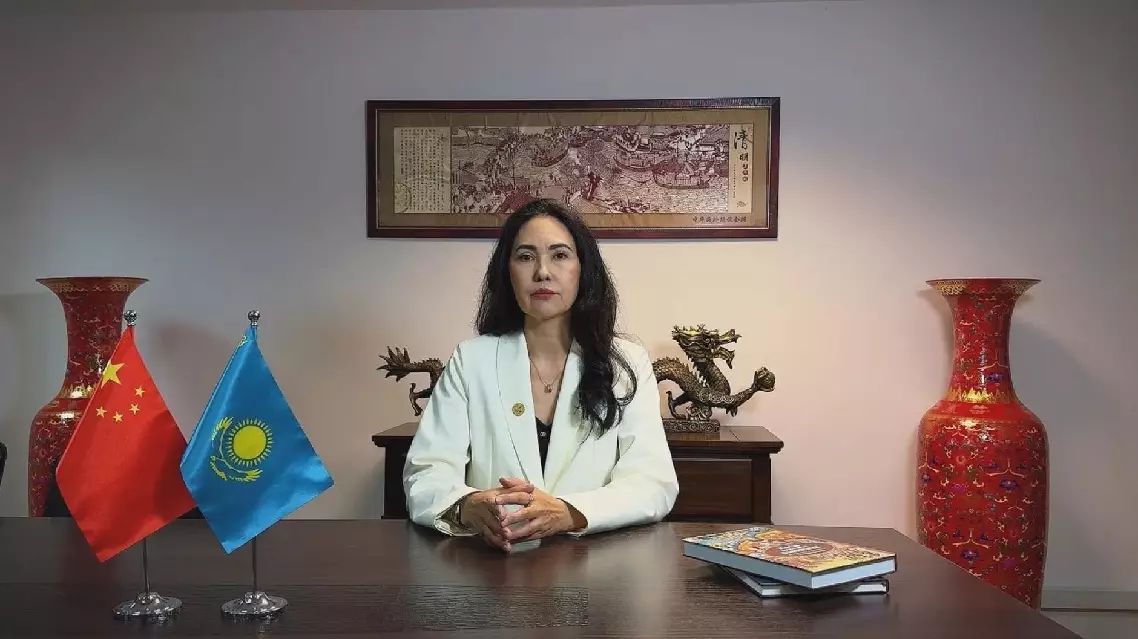
In an interview with China Global Television Network (CGTN) in Astana, Shaimergenova said the Astana and Tianjin summits had a major impact by strengthening Kazakhstan’s regional role, boosting project cooperation, and deepening practical ties with China.
"Together, the two forums produced three linked efforts for Kazakhstan. First, they strengthened Kazakhstan's role as a regional hub and mediator. Second, they expanded the country's organizational tools for carrying out large projects. Third, they deepened Kazakhstan's partnership with China through practical economic cooperation while respecting the sovereignty of all participant states. The Astana Declaration and the Tianjin Declaration not only reflect current regional trends, but also set practical agenda for the coming decade from infrastructure and investment projects to joint work on environment, digitalization and security," she said.
Leaders of China and Kazakhstan stressed the importance of aligning their development strategies to support each other's progress in a mutually beneficial way.
Shaimergenova noted that China's cooperation vision closely matches Kazakhstan's development priorities, with growing collaboration already seen in cultural and educational exchanges. She added that Kazakhstan hopes to expand the partnership into more sectors.
"On people-to-people ties, Kazakhstan steadily strengthens cultural and educational links. Branches of Chinese universities and Luban Workshops have opened. Cultural centers and joint programs have started. And visa facilitating measures have already led to a substantial rise in travel and exchanges. And Kazakhstan will also promote joint research and development in pilot projects in high-tech fields, including artificial intelligence and growing technologies to make cooperation more innovative," said Shaimergenova.
China-Kazakhstan ties deepen as shared development goals drive broader cooperation: expert
China-Kazakhstan ties deepen as shared development goals drive broader cooperation: expert