Over 250 people from both sides of the Taiwan Strait gathered in Fuzhou, capital of Fujian Province, on Saturday to celebrate the upcoming Mid-Autumn Festival, which falls on Oct 6 this year.
The event featured themed zones showcasing festive lanterns, folk customs, and Taiwan-funded enterprises.
Song Tao, head of the Taiwan Work Office of the Communist Party of China Central Committee and the Taiwan Affairs Office of the State Council, attended the gathering, alongside Sean Lien, vice chairman of the Chinese Kuomintang (KMT) party.
"This is my first time to celebrate the Mid-Autumn Festival in Fujian, and it feels quite different. With many close friends here, it truly gives me a sense of family reunion," said Wang Yiwen, a Taiwan compatriot living and working in Fujian.
"I hope that more Taiwan compatriots will share these great opportunities, so that we work together to build Fujian into the best place on the Chinese mainland for development of Taiwan compatriots and enterprises," said Jiang Peiqi, president of Fuzhou Taiwan Investment Enterprise Association.
Song called for efforts to safeguard the overall interests of the Chinese nation, resolutely oppose "Taiwan secession" and external interference, and boost exchanges, cooperation and integrated development across the Strait.
He also urged efforts to promote the peaceful development of cross-Strait relations and advance national reunification.
In his remarks, Lien said the KMT party will continue to strengthen cross-Strait exchanges and cooperation while promoting the peaceful development of cross-Strait relations on the basis of upholding the 1992 Consensus and opposing "Taiwan secession."
The Mid-Autumn Festival is one of the most important festivals in China, which is celebrated annually on the 15th day of the eighth month on the traditional Chinese calendar.
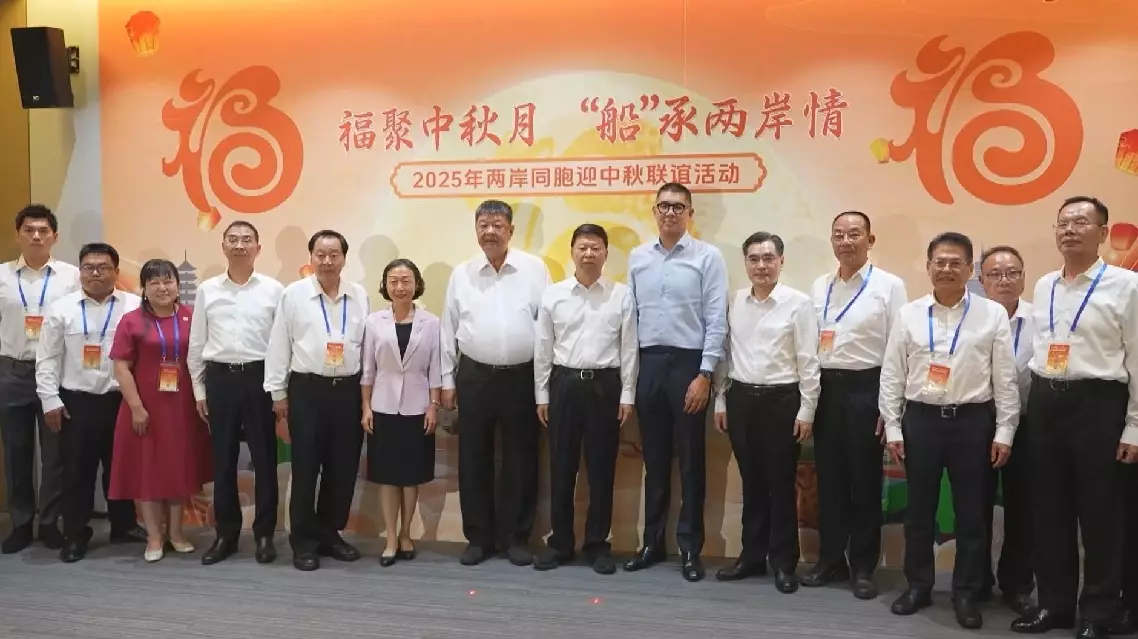
Mid-Autumn Festival event brings together people from both sides of Taiwan Strait
The operational efficiency of Guangzhou Baiyun International Airport in south China's Guangdong Province has greatly improved following the launch of a new terminal and a new runway one month ago.
The airport officially put into operation its Terminal 3 and fifth runway on October 30, making it China's first civil airport to operate five commercial runways.
Terminal 3 features a range of self-service facilities, including check-in kiosks, automated baggage drop systems, and smart security screening equipment, which have greatly streamlined passenger processing.
Since its opening, five airlines have shifted their domestic operations to Terminal 3, which now handles an average of 158 flights and about 26,000 passengers daily.
"Compared with Terminal 1, both the number of staffed counters and self-service kiosks of Terminal 3 have increased significantly, greatly reducing the average check-in time for passengers. For domestic direct flights, the entire check-in process can be completed in a minimum of one minute," said Shi Mengyao, a staffer with the ground service department of the Guangdong branch of China Eastern Airlines.
Beyond efficiency improvements, the terminal also includes an observation deck that offers travelers panoramic views of the airfield.
"Since its opening, the observation deck attracts over 3,000 visitors per day on average, with total visits exceeding 100,000 to date," said Luo Li, deputy general manager of a terminal management company at Baiyun International Airport.
The airport's expansion also marks another step toward building a world-class airport cluster in the Guangdong-Hong Kong-Macao Greater Bay Area.
"The airport's expansion not only consolidates the Greater Bay Area as an aviation hub connecting China with the world, but also helps lower logistics costs within the area, promote the free flow and efficient allocation of economic resources, and enhances the area's capacity for global resource allocation," said Li Jing, chief planner with the Guangdong Provincial Department of Transport.
New terminal, runway boost operational efficiency of airport in Guangzhou