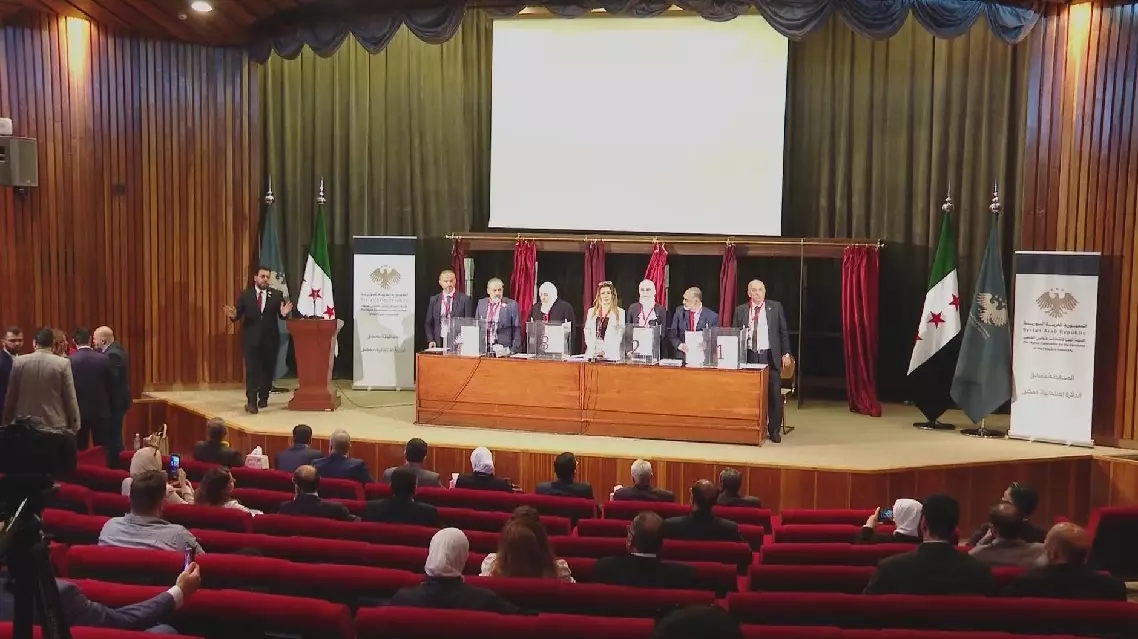
Syria's transitional authorities on Sunday launched the country's first parliamentary elections since the fall of former President Bashar al-Assad's government last December, marking a new stage in the country's post-conflict political transition.
Polling stations opened at 09:00 local time (0600 GMT) Sunday across most provinces for members of local electoral bodies to cast their votes for the 210-seat People's Assembly, according to the Higher Committee for People's Assembly Elections. More than 1,500 candidates, including 14 percent women, are contesting seats across 50 electoral districts.
The final results are expected to be released on Monday.
Committee Spokesman Nawar Najmeh said the elections were conducted under a temporary system that stipulates two-thirds of the parliament's members are elected, while the remaining one-third are appointed by Syrian leader Ahmed al-Sharaa. Officials say this approach aims to ensure fair representation for all regions and social groups during Syria's transition.
Najmeh explained that instead of being decided by a direct public vote, the elections were conducted through local electoral bodies composed of community representatives. These bodies, elected earlier this year, are responsible for both organizing the vote and choosing members of parliament from among themselves.
"We are seeking those with expertise in various sectors who can represent the people in the parliament. As business and engineering professionals, we are ready to be here with our suggestions," said Mohammad Maulavi, a member of the Higher Committee for People's Assembly Elections.
Voting has been postponed in most parts of Raqqa and Hasakah, and failed to take place in Sweida, as all three provinces are currently not under the control of the administration in Damascus.
Syria holds first parliamentary elections since Assad's fall
The Pakistani media has hailed the space cooperation between China and Pakistan as Muhammad Zeeshan Ali from Pakistan is set to board China's space station as first foreign astronaut.
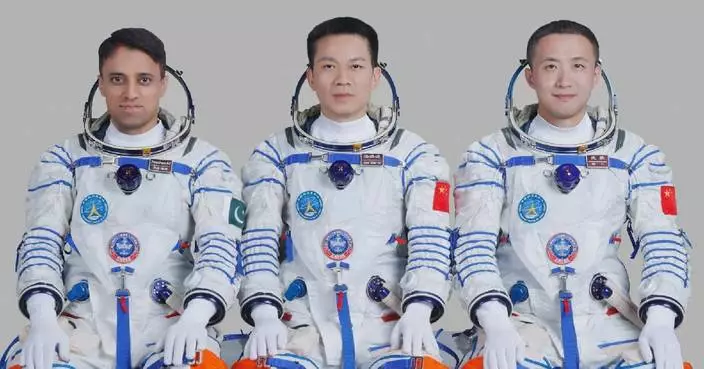
The China Manned Space Agency said on Tuesday that Pakistani astronaut Muhammad Zeeshan Ali, selected as a payload specialist to join the Shenzhou-24 spaceflight mission, will become the first foreign astronaut to board China's Tiangong space station.
Pakistan's The Express Tribune reviewed the history of space cooperation between the two countries. In 1990, Pakistan's first scientific experiment satellite went into space aboard a Chinese rocket. The cooperation has since been extended step by step to communications satellites, remote sensing satellites and lunar exploration.
The Express Tribune also noted a special detail that the logo for China's Shenzhou-24 crewed spaceflight mission incorporates the jasmine,the national flower of Pakistan. A spokesperson for Pakistan's Space and Upper Atmosphere Research Commission said the design symbolizes the long-standing friendship and strategic partnership between the two countries, and shows that China-Pakistan cooperation is extending from the ground into space.
Pakistan's The Nation reported that China, in cooperation with the United Nations Office for Outer Space Affairs, is opening scientific experiment opportunities on its space station to international research institutions. The first round of international cooperation projects has selected nine research projects, involving 23 research institutions from 17 UN member states.
The mechanism gives more countries a platform to take part in space science research, and helps them build research experience and strengthen their own space capabilities.
Pakistan's The Friday Times reported that China has continued to provide satellite launch services, astronaut training and satellite navigation support, giving Pakistan a more stable and reliable way to access space resources, and pushing cooperation between the two sides beyond satellite launches into broader fields such as crewed spaceflight and satellite navigation.
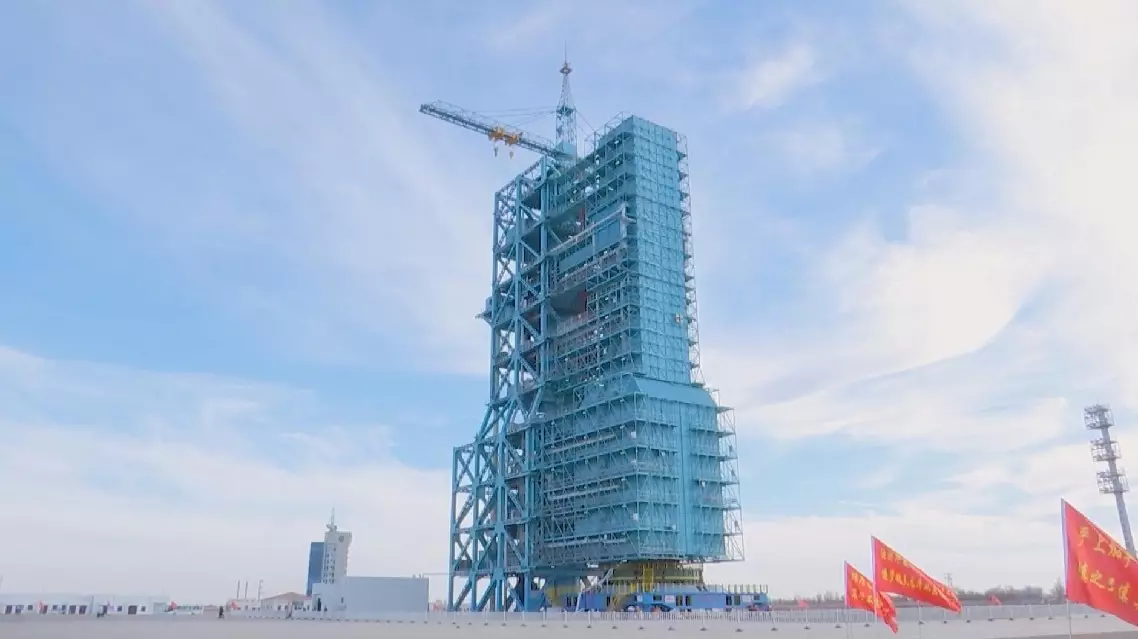
Pakistani media hails first Pakistani astronaut on China's space station mission