KIGALI, Rwanda, Oct. 6, 2025 /PRNewswire/ -- Huawei and Rwanda's Ministry of Education announced the completion of the first phase of the Smart Education Project and the launch of a new Huawei TECH4ALL DigiTruck project at Kagarama High School in Kigali on October 3.
The two projects represent Rwanda's commitment to the digital transformation of the education sector and upskilling of the Rwandan population with digital skills.
"Today's joint celebration is more than just a ceremonial occasion; it is a testament to Rwanda's unwavering commitment to inclusive, technology-driven education. These initiatives strengthen international cooperation, promote digital equity, and advance sustainable national development," said Joseph Nsengimana, Minister of Education in Rwanda
The Smart Education Project has connected 1,500 schools to high-speed Internet, deployed two cutting-edge data centers, and laid the foundation for a dedicated education network to support digital teaching and learning nationwide.
Aligned with Rwanda's Vision 2050 and the National Strategy for Transformation, this project is designed to support Rwanda's transition into a globally competitive knowledge-based economy. In the near future, the benefits of this project will be expanded to further bridge the digital divide and continue to empower teachers and students with cutting-edge technology.
The milestone means nearly 1.5 million students across Rwanda — in Kigali as well as remote, rural communities — can now access high-quality education resources on an equal basis.
"A student in Kigali can now share knowledge remotely with peers in Rusizi. These are the real impacts of digital inclusion: bridging distances, breaking barriers, and giving every child the chance to dream bigger," said Jin Jiqing, Managing Director of Huawei Technologies Rwanda.
Alongside the Smart Education Project, Huawei and the government's Ministry of ICT & Innovation and Ministry of Education have launched the DigiTruck project to deliver free and tailored digital skills training to underserved communities, with a focus on out-of-school youth, girls, and farmers. Equipped with laptops, Internet access, and digital learning devices, the DigiTruck is a mobile, solar-powered classroom that can be driven to remote communities, with expert trainers on hand to provide training even in areas that lack Internet access or a power supply.
"Initiatives like the DigiTruck represent more than technology, they are a gateway to opportunity, empowerment, and Rwanda's future as a knowledge-driven economy," said Eraste Rurangwa, the Permanent Secretary of Ministry of ICT and Innovation in Rwanda.
Aligned with the NST2 goal of training 1 million citizens in digital skills, the DigiTruck will travel across all 30 districts of Rwanda with the goal of training 5,000 Rwandans over a period of three years.
To date, Huawei TECH4ALL DigiTrucks have provided training for more than 17,000 people in 7 countries in digital skills such as using devices and office software, applying for jobs online, starting an online business, and coding and robotics.
** The press release content is from PR Newswire. Bastille Post is not involved in its creation. **

Rwanda Celebrates Completion of Smart Education Project and DigiTruck Launch
National competition in Shapingba District draws more than 100 teams developing robotics technologies for real-world deployment
CHONGQING, China, Sept. 18, 2026 /PRNewswire/ -- A national robotics competition held this month in Chongqing offered a look at China's efforts to move embodied artificial intelligence out of research laboratories and into commercial use.
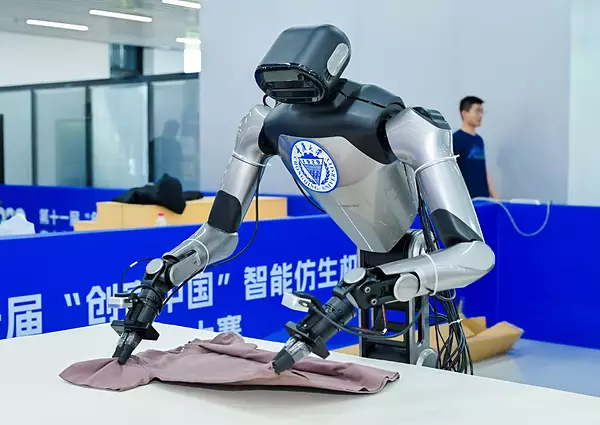
The finals of the 11th "Maker in China" SME Innovation and Entrepreneurship Contest for Intelligent Biomimetic Robots concluded Sept. 11 in Chongqing's Shapingba District. The three-day national competition drew more than 100 teams from across China, with projects spanning biomimetic robotics, industrial automation and AI systems designed to perceive and interact with the physical world.
Alongside the competition, organizers arranged meetings involving companies, universities and research institutions, as well as discussions aimed at technology transfer, financing and local deployment. The event formed part of a national program intended to support innovative SMEs with specialized technologies. Its theme was "Pushing Tech Frontiers, Unleashing Creativity."
The competition comprised 13 tracks, covering work ranging from foundational research to systems approaching commercial deployment. Teams in the startup category competed in three broad areas: cutting-edge technologies, core enabling technologies and specialized applications. Their projects focused in part on the hardware, software and control systems underpinning the next generation of robots.
Teams in the enterprise category, by contrast, tested systems designed for real-world use in the electric power, healthcare and service sectors. The emphasis was on whether the technologies could perform reliably in operating environments and be scaled for broader deployment.
Many of the entries targeted technical bottlenecks that have limited the wider deployment of robotic systems. Projects included multi-robot coordination and task-scheduling systems for warehouses; assistive exoskeletons for older adults and rehabilitation patients; biomimetic robots for inspecting electric power infrastructure; miniature hummingbird-inspired flapping-wing drones; and robots capable of folding clothing autonomously. Together, the projects illustrated the range of engineering approaches Chinese developers are pursuing as they seek practical applications for embodied AI.
The competition also served as a venue for financing and business-development discussions, and several participating projects announced plans to establish operations in Shapingba. At the closing ceremony, the Shapingba District government signed letters of intent with SIASUN Robot & Automation Co., Ltd. and Chentu Technology, among other companies. ZTE also signed letters of intent with teams from Zhejiang University and Xi'an Jiaotong University.
Shapingba is seeking to establish itself as a center for embodied AI within Chongqing's broader robotics supply chain. The value of the district's robotics output rose 233% from a year earlier during the first seven months of 2026, according to local government data.
** This press release is distributed by PR Newswire through automated distribution system, for which the client assumes full responsibility. **
Xinhua Finance: Robotics Contest Highlights Chongqing District's Push Into Embodied AI