Skip to Content Facebook Feature Image

These numbers show how 2 years of war have devastated Palestinian lives in Gaza

News

These numbers show how 2 years of war have devastated Palestinian lives in Gaza
News

News

These numbers show how 2 years of war have devastated Palestinian lives in Gaza

2025-10-09 09:32 Last Updated At:09:41

JERUSALEM (AP) — Numbers alone cannot capture the toll the Israel-Hamas war has taken on the Gaza Strip.

But they can help us understand how thoroughly the conflict has upended the lives of 2.1 million Palestinians living in the territory and decimated the territory’s 365 square kilometers (140 square miles).

Out of every 10 people, one has been killed or injured in an Israeli strike. Nine are displaced. At least three have not eaten for days. Out of every 100 children, four have lost either one or both parents. Out of every 10 buildings that stood in Gaza prewar, eight are either damaged or flattened. Out of every 10 homes, nine are wrecked. Out of every 10 acres of cropland, eight are razed (more than three out of every four hectares).

The war began when Hamas militants launched a surprise attack on Israel on Oct. 7, 2023, killing some 1,200 people, mainly civilians, and taking 251 hostages back to Gaza.

In response, Israeli leaders promised a punishing offensive on the strip to annihilate Hamas and free the hostages.

Here’s a closer look at the devastation that followed, by the numbers.

Cemeteries are overflowing. Mass graves dot the strip. Israeli airstrikes have killed entire families in their homes. More than 2,500 people seeking food have been killed, according to Gaza's Health Ministry. In some cases Israel has acknowledged firing warning shots at chaotic crowds attempting to obtain desperately needed aid.

Israeli attacks on health care facilities and limitations on the entry of medical supplies have left overwhelmed doctors to treat advanced burn victims with rudimentary equipment. Israel says it strikes hospitals because Hamas operates in them and uses them as command centers, though it has offered limited evidence. Hamas security personnel have been seen in hospitals and have kept some areas inaccessible. Israel has said restrictions on imports are needed to prevent Hamas from obtaining arms.

The war is the deadliest conflict for journalists, health workers and U.N. aid workers in history, according to the Committee to Protect Journalists and the U.N. The British Medical Journal says the prevalence of patients with injuries from explosives in Gaza compares to data on injured U.S. combat forces in Iraq and Afghanistan.

Experts commissioned by a U.N. body and major rights groups have accused Israel of genocide, charges it vehemently denies.

In all, Israel’s campaign has killed more than 67,000 Palestinians and wounded nearly 170,000, according to Gaza’s Health Ministry. More than 40,000 of those wounded have life-altering injuries, according to the World Health Organization.

The death toll does not include the thousands of people believed buried under the rubble. The ministry — part of the Hamas-run government and staffed by medical professionals — does not distinguish between civilians and combatants in its count. Its figures are seen as a reliable estimate by the U.N. and many independent experts.

Israel blames Hamas for the high civilian toll, saying the group’s presence in residential areas has turned the population into human shields. Still, its strikes often hit homes, killing many inside with no word of who the target was.

Countless Palestinian families have fled the length of Gaza and back, forced to move every few months to dodge successive Israeli offensives. Many have been displaced multiple times, moving between apartments and makeshift tent camps as they try to survive. Squalid tent cities now sprawl across much of Gaza’s south.

Displacements have separated families. Heavy bombardment has left thousands buried under the rubble. Troops round up and detain men, from dozens to several hundreds at a time, searching for any they suspect of Hamas ties. The result is families split apart.

Israel’s military has gained control of the vast majority of Gaza, pushing most of the Palestinian population to a small zone along the southern coast. Under Israeli control, Gaza’s land has been transformed. Forces have flattened or bulldozed entire neighborhoods of Gaza City and small agricultural towns dotting the border, carved new roads across the territory and built up new military posts.

Bombardment has carpeted the Gaza Strip in a blanket of rubble roughly 12 times the size of the Great Pyramid of Giza. Using imagery of Gaza from space, the U.N.’s Satellite Center says that at least 102,067 buildings have been destroyed. In the wreckage lie the ruins of grade schools and universities, medical clinics and mosques, greenhouses and family homes.

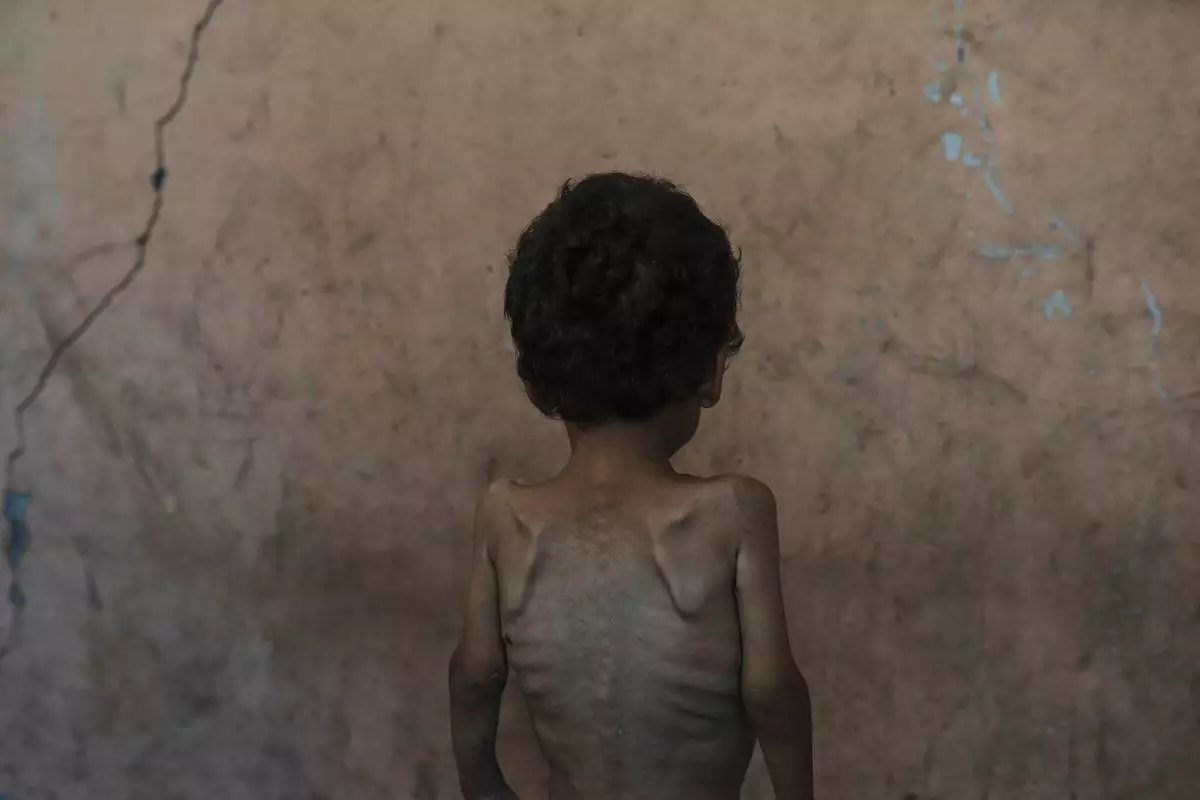
Hundreds of Palestinians crowd charity kitchens jostling for a bowl of lentils. Babies are so emaciated they weigh less than at birth. According to Gaza’s Health Ministry and the World Health Organization, more than 400 people, including over 100 children, have died from complications of malnutrition, most of them this year.

After months of warnings from aid groups, the world’s leading authority on food crises said in August that Gaza City had fallen into famine. Israel disputes the determination.

Towns scattered across the strip, where Palestinian farmers used to plant strawberries and watermelons, wheat and cereals, are now emptied and flattened. Between May and October 2025, Israeli bombardment and demolitions virtually erased the town of Khuzaa, whose rows of wheat and other cereals made it a breadbasket for the city of Khan Younis.

With the war entering its third year, Israel has launched an offensive to take over Gaza City and kill the Hamas militants it says are hiding there.

Israel says it also aims to free the 48 hostages who remain in Gaza, about 20 of whom the government believes are alive. Since the war began, 465 Israeli soldiers have been killed in Gaza.

A new American peace plan is on the table, even as Israeli tanks and ground troops threaten the heart of Gaza City.

A graphic with this story has been corrected to show that some 6,000 people have been reported by relatives to be under the rubble in Gaza, according to the Health Ministry, not more than 10,000. Another graphic has been corrected to show that data from Israel’s prison service provided to the Hamoked rights group shows that 2,662 Palestinians from Gaza are in Israeli prisons who have been processed since the start of the war, not 2,762.

Follow AP’s war coverage at https://apnews.com/hub/israel-hamas-war
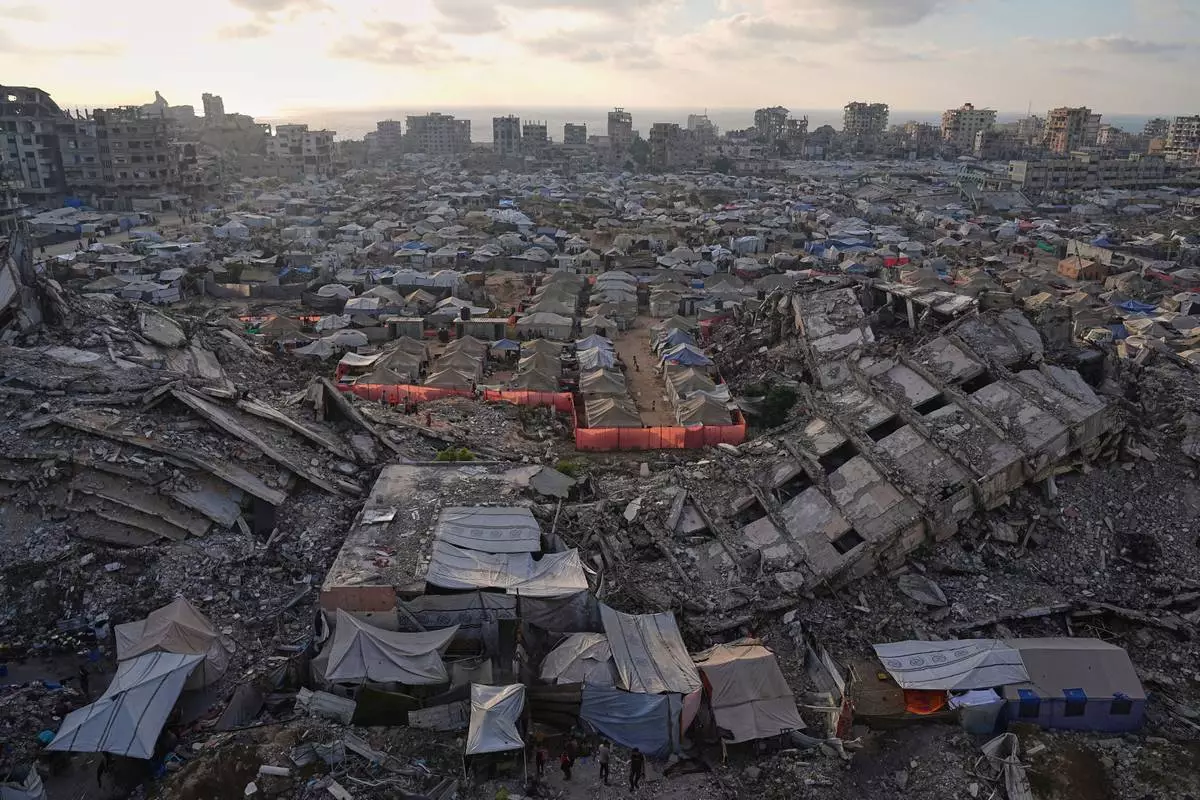
FILE.- A tent camp for displaced Palestinians stretches among the ruins of buildings destroyed by Israeli bombardments in west Gaza City, Saturday, June 21, 2025. (AP Photo/Jehad Alshrafi, File)
FILE.- A tent camp for displaced Palestinians stretches among the ruins of buildings destroyed by Israeli bombardments in west Gaza City, Saturday, June 21, 2025. (AP Photo/Jehad Alshrafi, File)

FILE.- Yazan Abu Ful, a 2-year-old malnourished child, poses for a photo at his family home in the Shati refugee camp, in Gaza City on Wednesday, July 23, 2025. (AP Photo/Jehad Alshrafi,File)
FILE.- Yazan Abu Ful, a 2-year-old malnourished child, poses for a photo at his family home in the Shati refugee camp, in Gaza City on Wednesday, July 23, 2025. (AP Photo/Jehad Alshrafi,File)

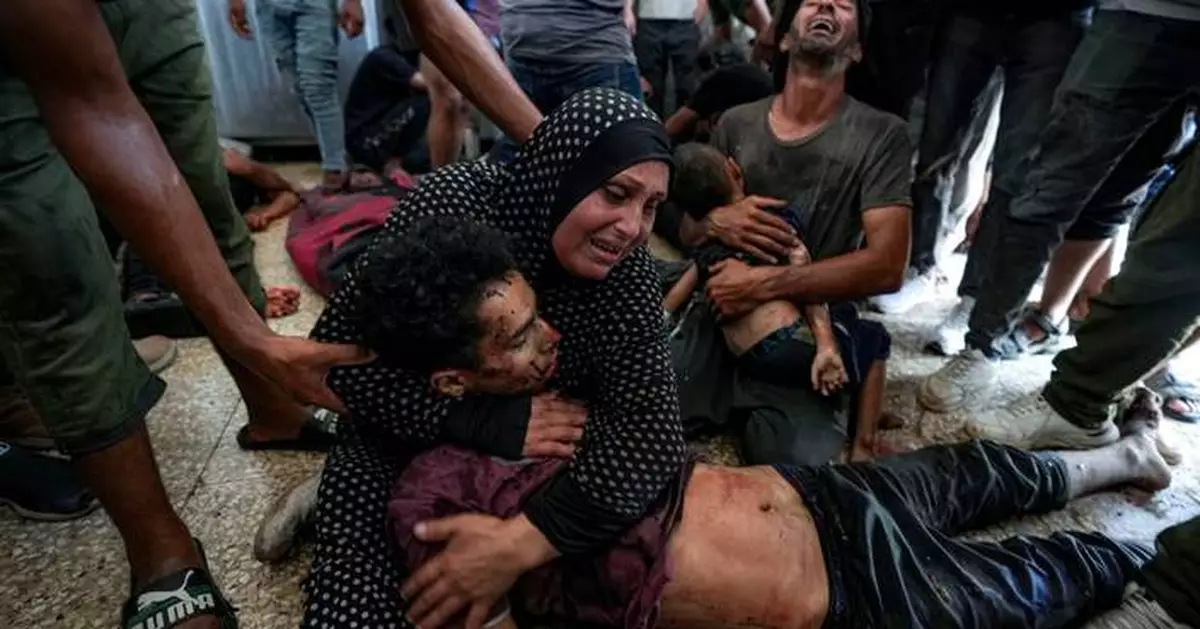
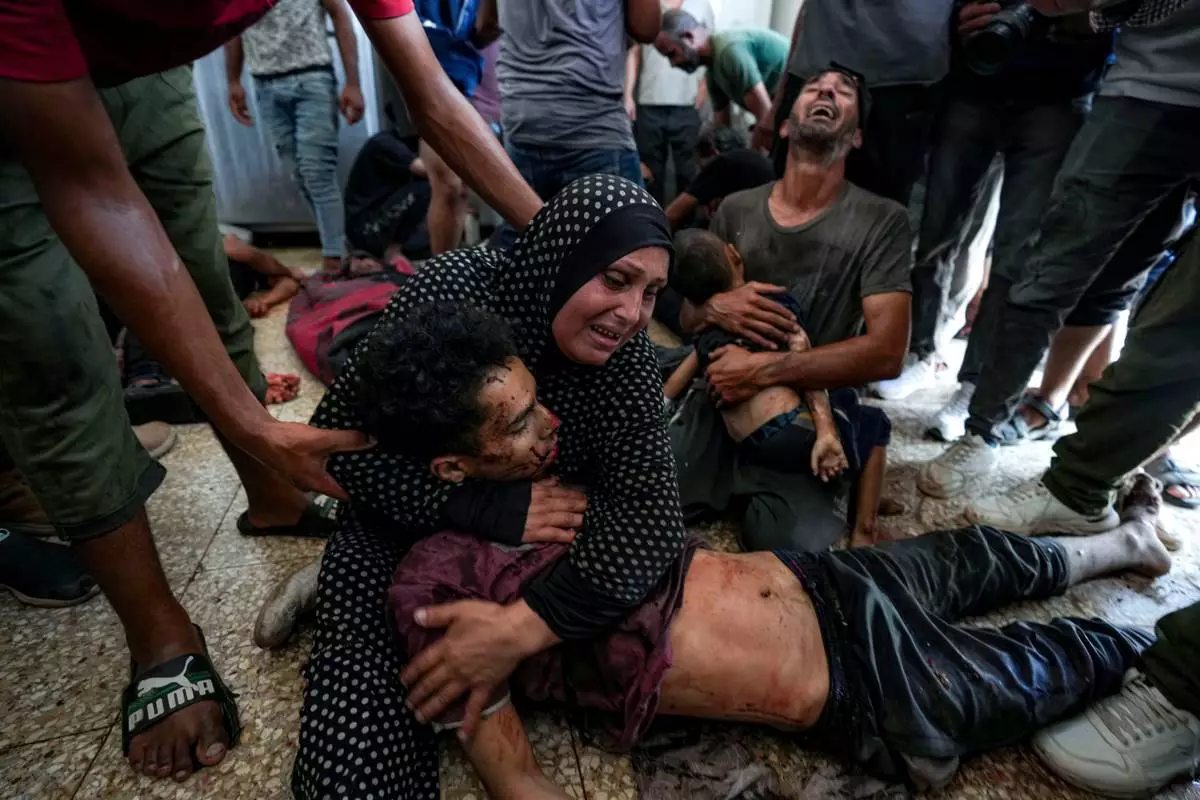
FILE.- Faten Mreish holds her son's body at a hospital morgue in Deir al-Balah, Gaza Strip, Aug. 28, 2024, after he and others were killed in an Israeli bombardment. (AP Photo/Abdel Kareem Hana,File)
FILE.- Faten Mreish holds her son's body at a hospital morgue in Deir al-Balah, Gaza Strip, Aug. 28, 2024, after he and others were killed in an Israeli bombardment. (AP Photo/Abdel Kareem Hana,File)
DUBAI, United Arab Emirates (AP) — U.S. President Donald Trump threatened Iran on Saturday after the funeral of Supreme Leader Ayatollah Ali Khamenei saw open calls for his killing, further underlining the tensions gripping the Mideast as an interim deal to end the war buckles under repeated crossfire in the region.

Trump made the comments on his Truth Social after senior U.S. officials demanded that Iran make a public statement saying the Strait of Hormuz is open and that ships crossing the vital corridor won’t be attacked any longer.

So far, Tehran has not done so, instead insisting the route remain under its control and that it be allowed to charge ships moving through it, upending decades of precedence considering the strait an international waterway.

There had been multiple days of U.S. airstrikes targeting Iran, as well as Iranian retaliatory fire targeting nations across the Mideast. Those strikes had been sparked by Iran attacking three ships in the strait earlier this week.

“1000 Missiles are Locked and Loaded and aimed at the Islamic Republic of Iran, with thousands of more to immediately follow, should the Iranian Government act on its threat,” Trump wrote on his website.

The U.S. president described his threat as coming over threats “to assassinate, or attempt to assassinate” him. During Khamenei's funeral, mourners repeatedly held posters or banners calling for him to be killed along with Israeli Prime Minister Benjamin Netanyahu.

The Iran war's opening moments on Feb. 28 saw an airstrike that killed Khamenei, 86. Iran only buried Khamenei this week in a dayslong funeral ceremony that saw his body taken to cities in both Iran and Iraq.

Trump added in his post that the U.S. military would “completely decimate and destroy all areas of Iran - PRAISE BE TO ALLAH!”

Trump repeatedly during the war and its uneasy ceasefire has invoked the name of God in Arabic, as well as threatened to destroy Iran's very civilization. The Council on American-Islamic Relations, a nationwide advocacy group, in the past has criticized Trump’s “deranged mocking of Islam.”

The U.S. officials, who spoke on condition of anonymity to describe to reporters the state of play with Iran, said the resumption of strikes this week came after what they described as a rogue faction of Iranian hard-liners trying to sabotage the ceasefire between Tehran and Washington.

However, Iran has insisted its theocracy is unified after the war under the country's new supreme leader, Ayatollah Mojtaba Khamenei.

The U.S. officials said Friday that Trump is giving U.S. negotiators limited time to reach a deal with Iran, but, in a sign of the challenges ahead, they underscored that the president had a wide range of options if talks fall apart.

Moments before the U.S. officials spoke, however, Tehran’s diplomat at the United Nations told reporters that any activity in the Strait of Hormuz, including its opening or demining operations, “rests exclusively with Iran.”

Iran has said the strait must now be under its sole control and that vessels should begin to pay fees to Tehran — even though the world for decades has considered it an international waterway. About a fifth of all traded oil and natural gas passed through the strait before the war began.

Iran’s grip on the strait during the conflict led to a global energy crisis, though oil prices have sharply dropped since wartime highs of $120 a barrel.

After the U.S. wrapped up its latest strikes on Thursday, more attacks reportedly hit Iran, leaving questions about who else may be targeting the Islamic Republic. Israel didn't claim them, meaning the Gulf Arab states may have launched them, likely as a means to deter Iran from attacking them again. Iran on Thursday retaliated for U.S. strikes by targeting Bahrain, Jordan, Kuwait and Qatar.

Iranian Foreign Minister Abbas Araghchi plans to discuss the strait with his Omani counterpart at a meeting Saturday in Oman, Iran’s state-run IRNA news agency said. Turkish Foreign Minister Hakan Fidan told his country’s state broadcaster TRT that he believed “a solution can be reached” this weekend between Iran and Oman, which lie on opposite sides of the narrow waterway.

However, Araghchi on Saturday accused the U.S. of violating the interim deal by ending waivers allowing Iran to sell crude oil on the open market in U.S. dollars. Washington did that in response to the attacks on ships in the strait.

“Reality check: There can only be mutual compliance,” Araghchi wrote on X.

The U.S. continues to urge mariners to travel on a southern route through Oman’s territorial waters to avoid Iranian waters and the commands of its paramilitary Revolutionary Guard. That has angered Tehran and sparked the attacks in the strait.

The U.S. officials also told journalists that any deal on Iran’s nuclear program would require Tehran to turn over its stockpile of highly enriched uranium. That's something Iran has repeatedly refused.

If the U.S. does not reach a deal with Iran to turn over its nuclear material, it has military options to ensure that it remains buried underground forever, the officials said. They did not detail those options.

The uranium, enriched to near weapons-grade levels, is believed to be at nuclear sites the U.S. bombed in 2025. Iran long has insisted its nuclear program is peaceful, despite the International Atomic Energy Agency saying the Islamic Republic is the only country in the world to enrich uranium so highly without a weapons program.

The officials also insisted that they would never reach a nuclear deal with Iran if it would not first stop its attacks on ships in the Strait of Hormuz.

Price and Weissert reported from Washington.

Mostafa Khamenei, center, brother of Iran's new Supreme Leader Mojtaba Khamenei, leads a prayer over the coffin of his late father, Iranian Supreme Leader Ayatollah Ali Khamenei before his burial at the Imam Reza Shrine in Mashhad, northeastern Iran, Thursday, July 9, 2026. (Office of the Iranian Supreme Leader via AP)

Mostafa Khamenei, center, brother of Iran's new Supreme Leader Mojtaba Khamenei, leads a prayer over the coffin of his late father, Iranian Supreme Leader Ayatollah Ali Khamenei before his burial at the Imam Reza Shrine in Mashhad, northeastern Iran, Thursday, July 9, 2026. (Office of the Iranian Supreme Leader via AP)

In this photo released by Iran's Supreme Leader's office, mourners chant and raise their fists during the final funeral ceremony for the late Iranian Supreme Leader Ayatollah Ali Khamenei at the Imam Reza Shrine before his burial in Mashhad, northeastern Iran, Thursday, July 9, 2026. (Office of the Iranian Supreme Leader via AP)

In this photo released by Iran's Supreme Leader's office, mourners chant and raise their fists during the final funeral ceremony for the late Iranian Supreme Leader Ayatollah Ali Khamenei at the Imam Reza Shrine before his burial in Mashhad, northeastern Iran, Thursday, July 9, 2026. (Office of the Iranian Supreme Leader via AP)

In this photo released by Iran's Supreme Leader's office, mourners carry the coffin of the late Iranian Supreme Leader Ayatollah Ali Khamenei above the crowd for the final prayer before his burial at the Imam Reza Shrine in Mashhad, northeastern Iran, Thursday, July 9, 2026. (Office of the Iranian Supreme Leader via AP)

In this photo released by Iran's Supreme Leader's office, mourners carry the coffin of the late Iranian Supreme Leader Ayatollah Ali Khamenei above the crowd for the final prayer before his burial at the Imam Reza Shrine in Mashhad, northeastern Iran, Thursday, July 9, 2026. (Office of the Iranian Supreme Leader via AP)

Recommended Articles