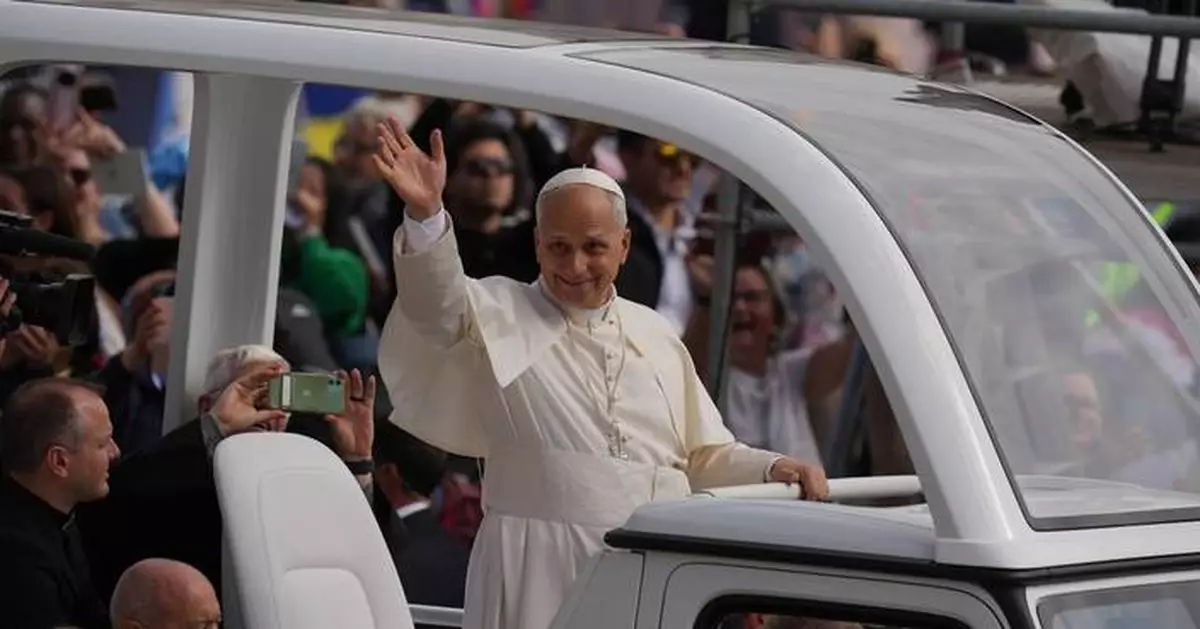
CASTEL GANDOLFO, Italy (AP) — Pope Leo XIV said Tuesday his first foreign trip, to Turkey and Lebanon next month, would provide a historic opportunity to promote Christian unity while bringing a message of peace and hope to Lebanon's long-suffering people and the broader Middle East.
Leo outlined the trip, announced by the Vatican Tuesday on the anniversary of the Oct. 7 Hamas attacks in southern Israel, during an encounter with reporters as he left the papal country estate south of Rome.
Click to Gallery
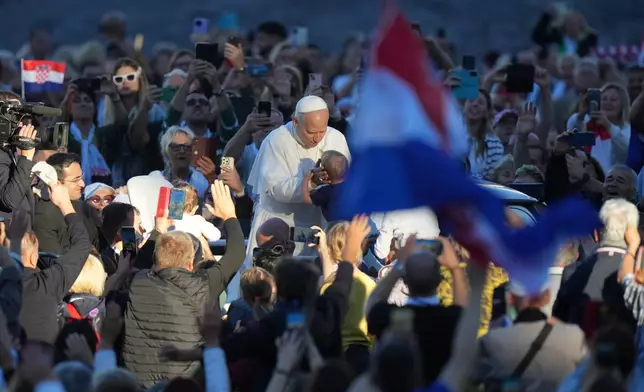
Pope Leo XIV greets pilgrims from Croatia in St. Peter's Square at the Vatican, Tuesday, Oct. 7, 2025. (AP Photo/Andrew Medichini)
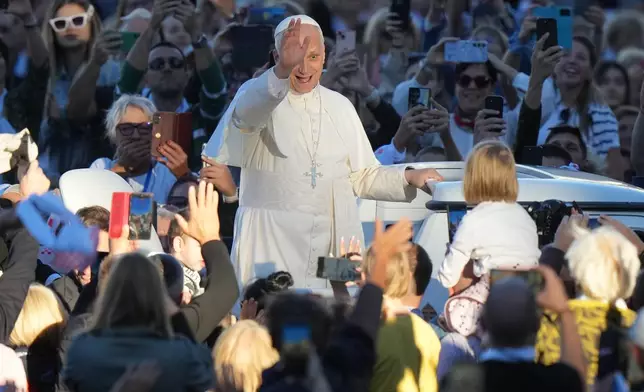
Pope Leo XIV greets pilgrims from Croatia in St. Peter's Square at the Vatican, Tuesday, Oct. 7, 2025. (AP Photo/Andrew Medichini)
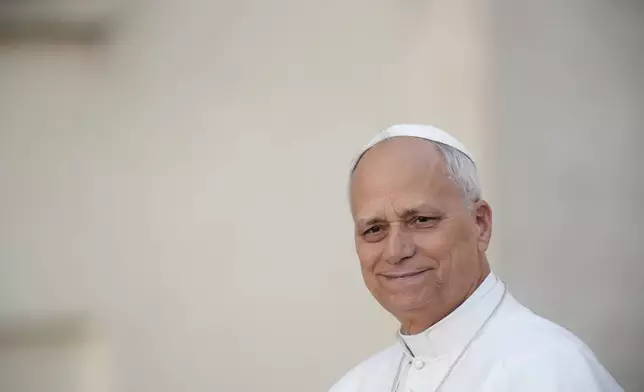
Pope Leo XIV greets pilgrims from Croatia in St. Peter's Square at the Vatican, Tuesday, Oct. 7, 2025. (AP Photo/Andrew Medichini)
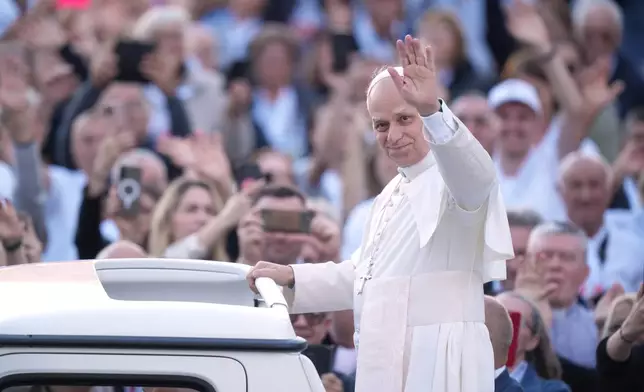
Pope Leo XIV greets pilgrims from Croatia in St. Peter's Square at the Vatican, Tuesday, Oct. 7, 2025. (AP Photo/Andrew Medichini)
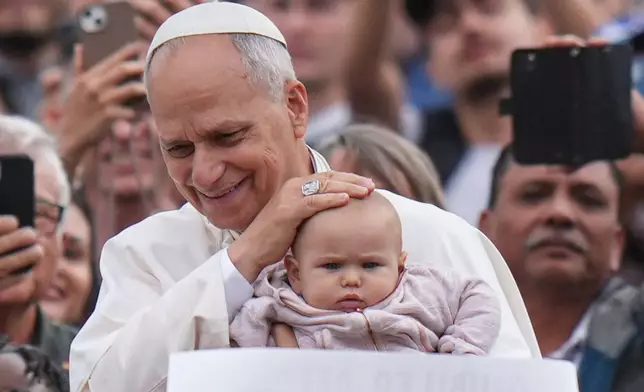
Pope Leo XIV blesses a child at the end of a Mass for the Jubilee of Migrants and Missionaries in St. Peter's Square at the Vatican, Sunday, Oct. 5, 2025. (AP Photo/Alessandra Tarantino)
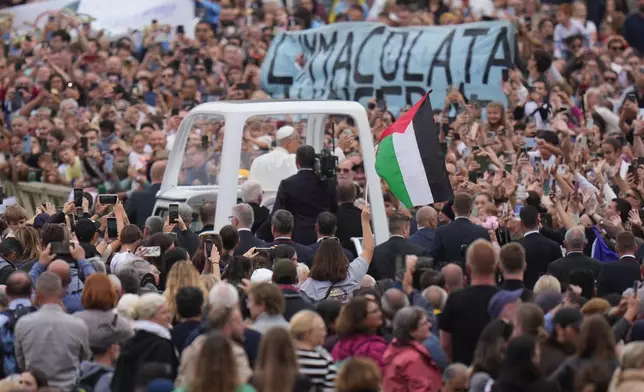
Pope Leo XIV rides on his popemobile next to a Palestinian flag at the end of a Mass for the Jubilee of Migrants and Missionaries in St. Peter's Square at the Vatican, Sunday, Oct. 5, 2025. (AP Photo/Alessandra Tarantino)

Pope Leo XIV waves from his popemobile at the end of a Mass for the Jubilee of Migrants and Missionaries in St. Peter's Square at the Vatican, Sunday, Oct. 5, 2025. (AP Photo/Alessandra Tarantino)
Leo will travel first to Turkey from Nov. 27-30, then Lebanon from Nov. 30 to Dec. 2. The trip to Turkey will include a pilgrimage to Iznik to mark the 1,700th anniversary of the Council of Nicea, Christianity's first ecumenical council.
The anniversary is an important moment in Catholic-Orthodox relations, since the 325 A.D. Nicea meeting predates the schisms that divided Christianity’s East from West and is accepted by Catholic and Orthodox churches alike.
Leo told reporters as he left the papal retreat in Castel Gandolfo on Tuesday that the anniversary offered “a moment of authentic unity in the faith” with Orthodox Christians, “a historic moment not to look back but to look forward.”
Francis had planned to mark it with his own trip to Turkey in May at the invitation of Patriarch Bartholomew I, the spiritual leader of the world’s Orthodox Christians. Francis died in April, and Leo said from the start of his pontificate that he intended to fulfill Francis' plans.
The trip will give the first American pope a chance to speak in broad terms about peace in the Middle East and the plight of Christians there.
Leo told reporters he was also fulfilling a wish of Francis to go to Lebanon to embrace its people and bring a message of hope and “peace in the Middle East, and in a country that has suffered so much.”
Francis had long hoped to visit Lebanon, but the country’s political and economic instability prevented a visit during his lifetime. The Mediterranean nation of around 6 million, including more than 1 million Syrian and Palestinian refugees, has the largest percentage of Christians in the Middle East and is the only Arab country with a Christian head of state.
However, the Vatican fears the country’s instability has been particularly dangerous for the continued presence of its Christian community, a bulwark for the church in the Mideast.
Lebanon is currently struggling to recover after years of economic crisis and a bruising war between Israel and the Lebanese militant group Hezbollah that ended with a U.S. and France-brokered ceasefire in November. Formation of a new, reformist government ended a two-year political vacuum and brought hopes of recovery but the situation remains tense.
Israel has continued to occupy five strategic points on the Lebanese side of the border and carry out near-daily airstrikes that it says aim to stop Hezbollah from regrouping. Hezbollah is under increasing domestic and international pressure to give up its remaining arsenal but has refused to do so until Israel withdraws and halts its strikes. There are fears of civil conflict if Lebanese authorities attempt to forcibly disarm the group.
Patriarch Bechara Boutros Raï, leader of Lebanon’s Maronite Church, said Lebanon awaited the pope's visit with “great joy and renewed hope.”
“We hope that this apostolic visit to Lebanon will bring peace and stability and be a sign of unity for all Lebanese, Christians and Muslims alike, at this critical stage in our nation’s history,” he said in a statement.
The last pope to visit Lebanon was Pope Benedict XVI in September 2012 on what was the last foreign trip of his papacy.
About one-third of Lebanon’s population is believed to be Christian, though there is no official number since there hasn’t been an official census since 1932. The Maronites are the largest and most powerful sect and, by convention, Lebanon’s president is always a Maronite Christian.
The pope's trip was announced as Israel marked the anniversary of the Oct. 7 attacks and criticized the Vatican for what it considered to be problematic comments about the anniversary by the Vatican’s top diplomat.
In an interview with Vatican Media, Cardinal Pietro Parolin had condemned the “inhuman massacre” of innocent people in Israel by Hamas and the rise of antisemitism. But he also said Israel’s razing of Gaza was itself a disproportionate massacre, and called on countries to stop supplying Israel weapons to wage the war.
In a statement Tuesday on X, the Israeli Embassy to the Holy See said Parolin’s interview, “though surely well-intentioned, risks undermining efforts to both end the war in Gaza and counter rising antisemitism.”
It criticized his “problematic use of moral equivalence” by referring to massacres on both sides.
Leo declined to enter into the dispute on Tuesday. He has consistently called for peace and dialogue in the Middle East, especially as Israel’s offensive rages on in Gaza, and repeated that on Tuesday. He condemned the Oct. 7 attacks as “terrorism” and said terrorist groups were unacceptable.
But he also cited the 67,000 Palestinians killed in Israel's war in Gaza as evidence of “how much hatred exists in the world."
“It makes you think about how much violence and evil humans are capable of," he said. "We must reduce hatred, we must return to the ability to dialogue, to seek peaceful solutions.”
Winfield contributed from Rome.
Associated Press religion coverage receives support through the AP’s collaboration with The Conversation US, with funding from Lilly Endowment Inc. The AP is solely responsible for this content.
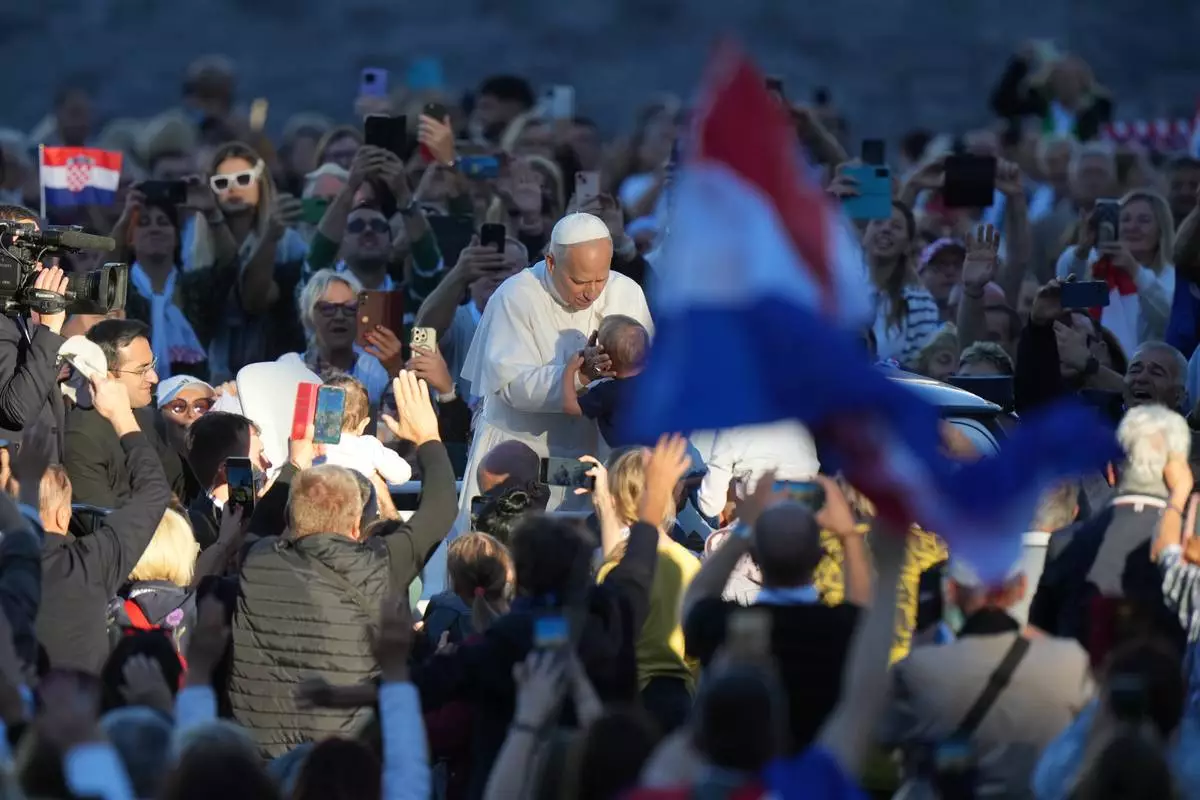
Pope Leo XIV greets pilgrims from Croatia in St. Peter's Square at the Vatican, Tuesday, Oct. 7, 2025. (AP Photo/Andrew Medichini)
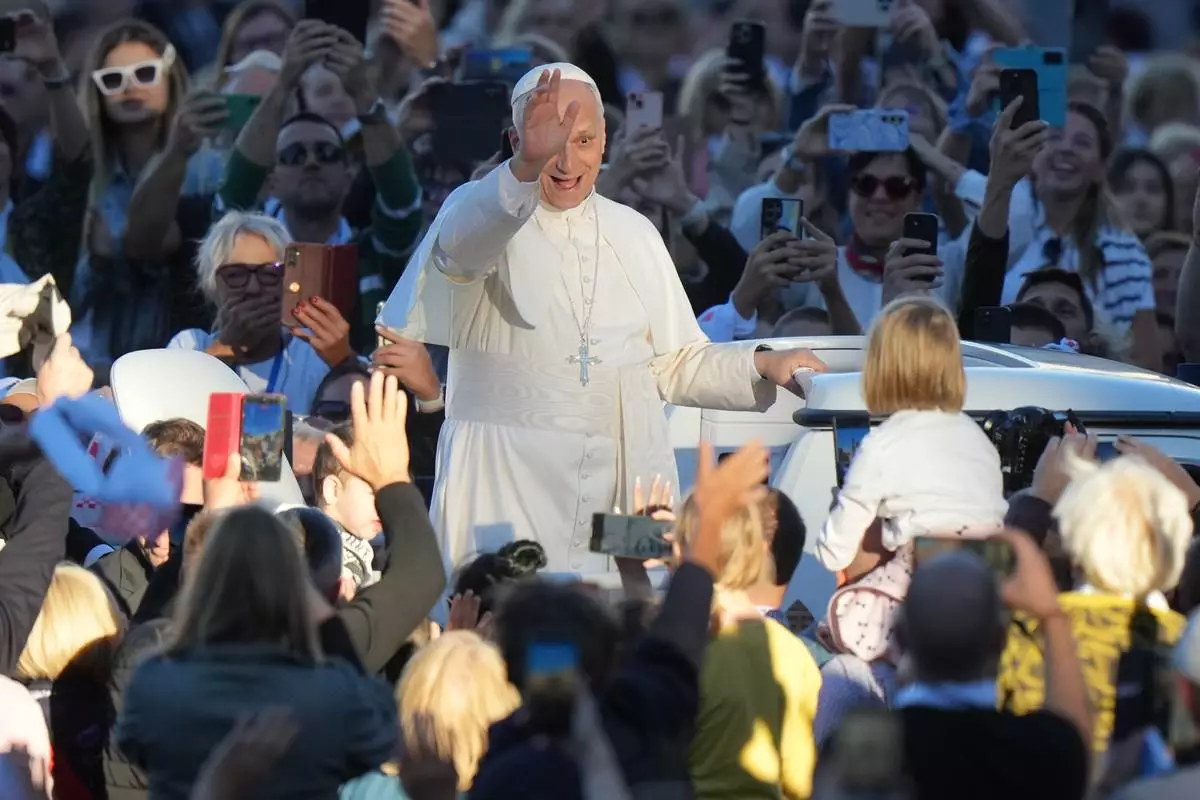
Pope Leo XIV greets pilgrims from Croatia in St. Peter's Square at the Vatican, Tuesday, Oct. 7, 2025. (AP Photo/Andrew Medichini)
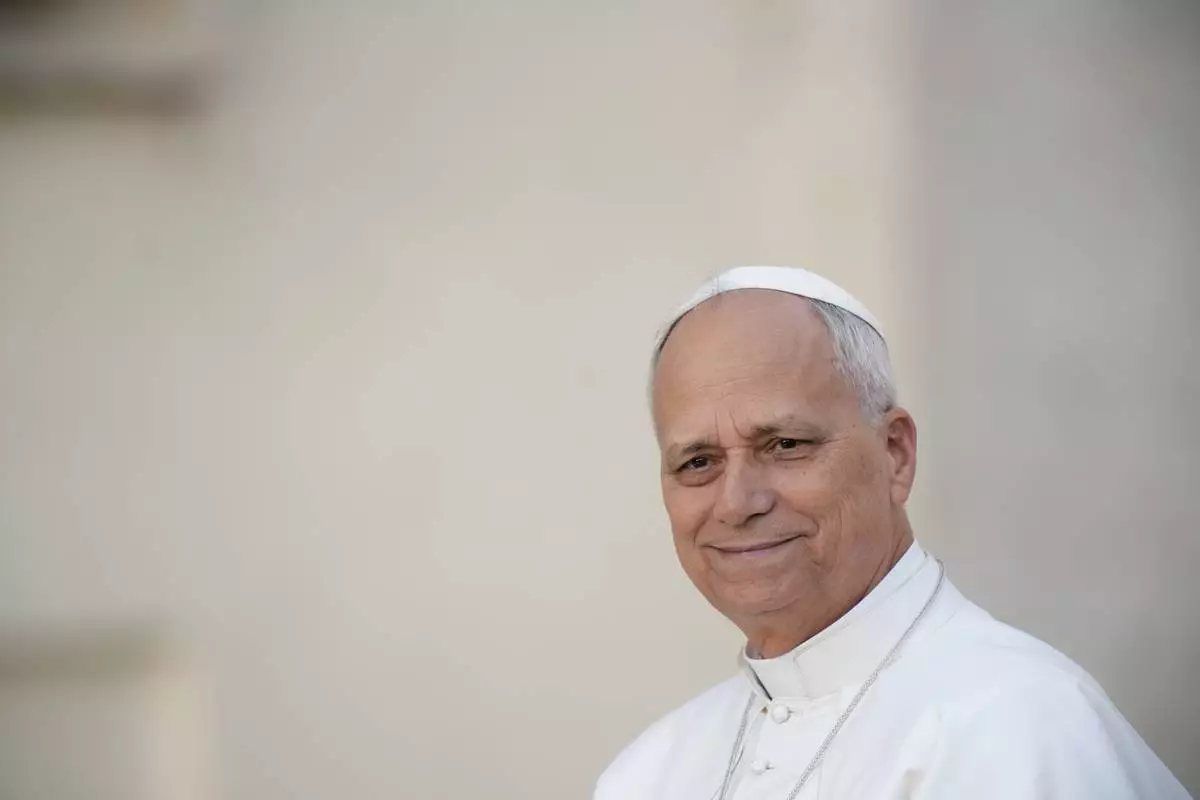
Pope Leo XIV greets pilgrims from Croatia in St. Peter's Square at the Vatican, Tuesday, Oct. 7, 2025. (AP Photo/Andrew Medichini)
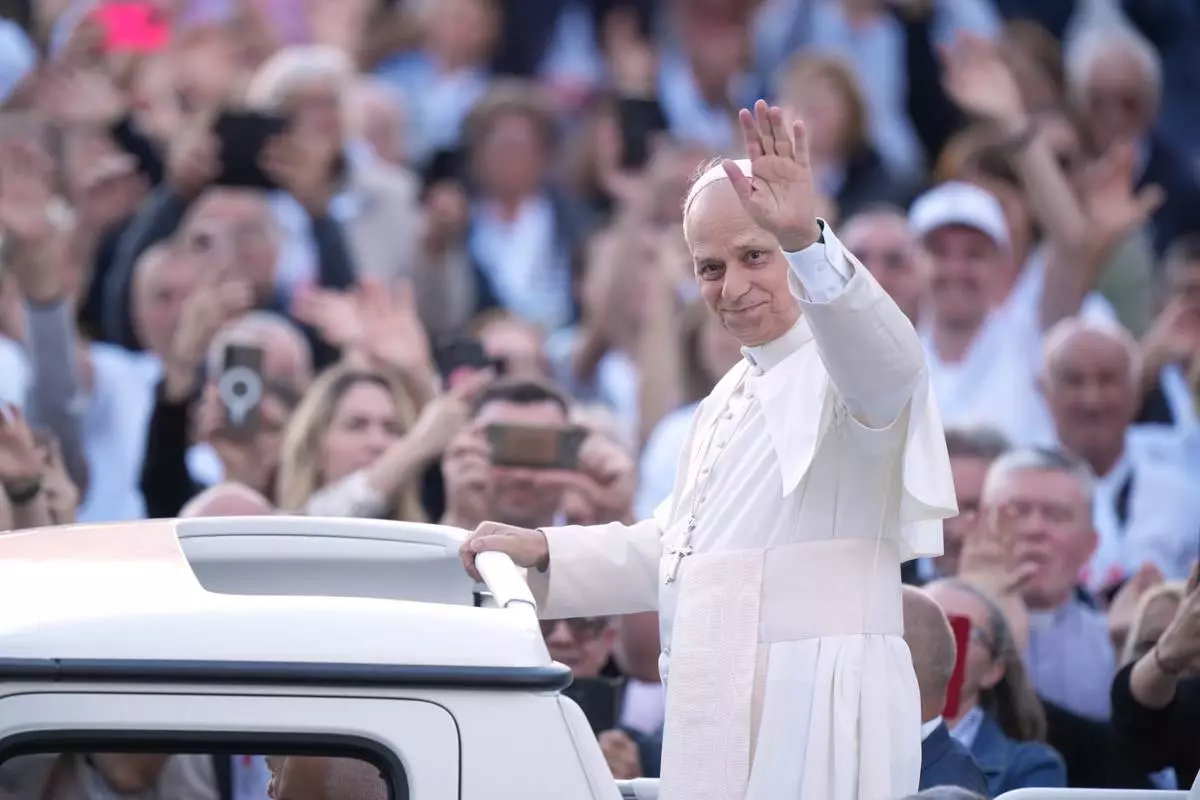
Pope Leo XIV greets pilgrims from Croatia in St. Peter's Square at the Vatican, Tuesday, Oct. 7, 2025. (AP Photo/Andrew Medichini)
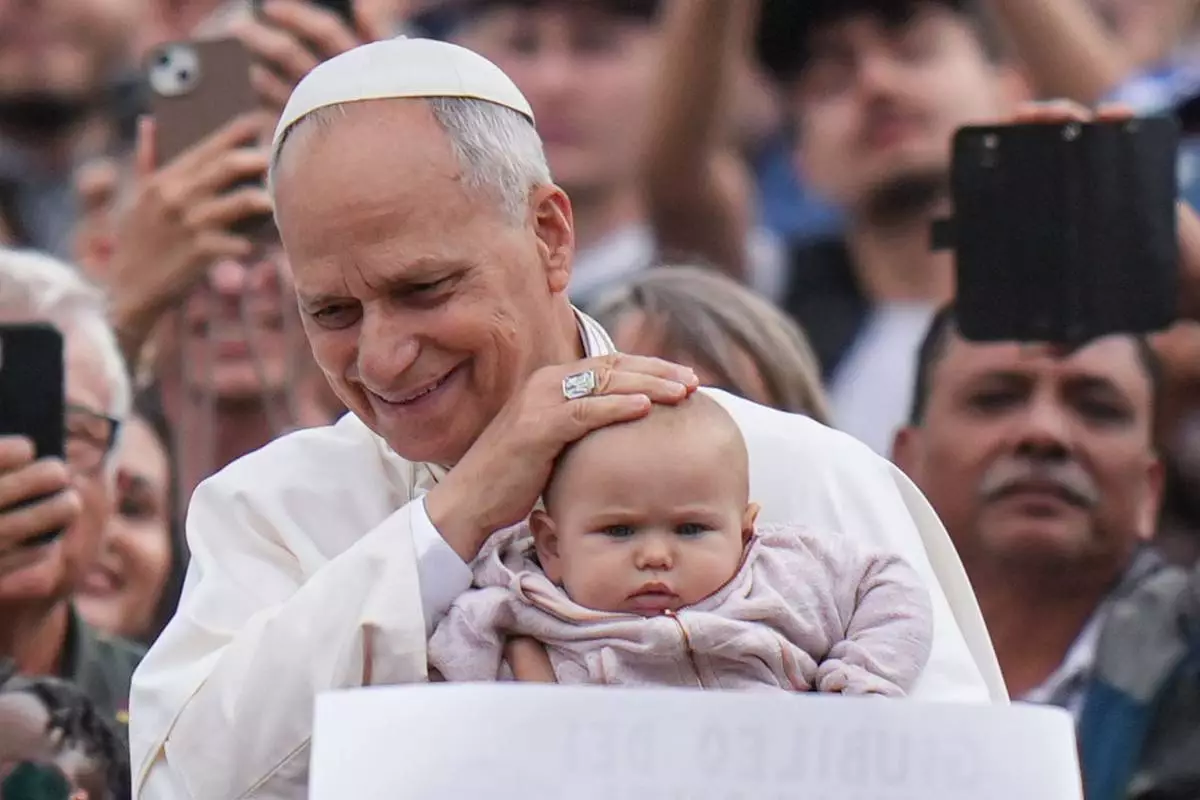
Pope Leo XIV blesses a child at the end of a Mass for the Jubilee of Migrants and Missionaries in St. Peter's Square at the Vatican, Sunday, Oct. 5, 2025. (AP Photo/Alessandra Tarantino)
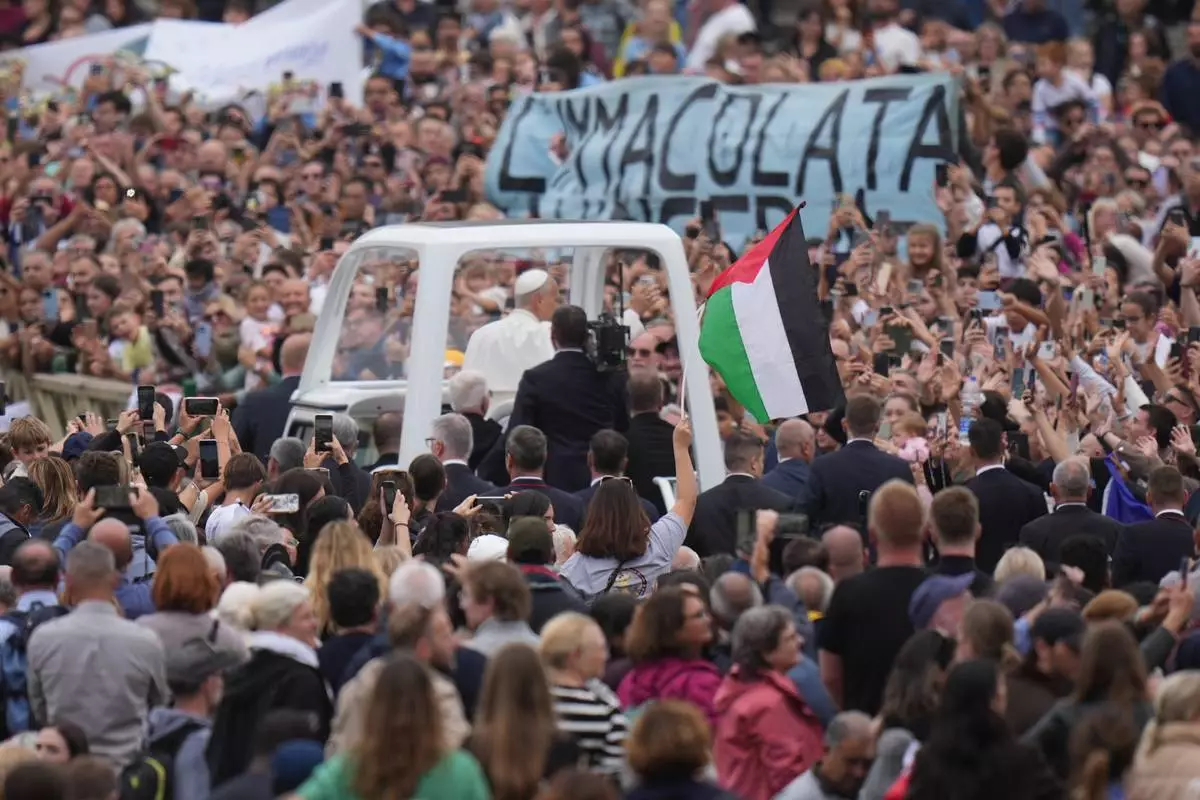
Pope Leo XIV rides on his popemobile next to a Palestinian flag at the end of a Mass for the Jubilee of Migrants and Missionaries in St. Peter's Square at the Vatican, Sunday, Oct. 5, 2025. (AP Photo/Alessandra Tarantino)
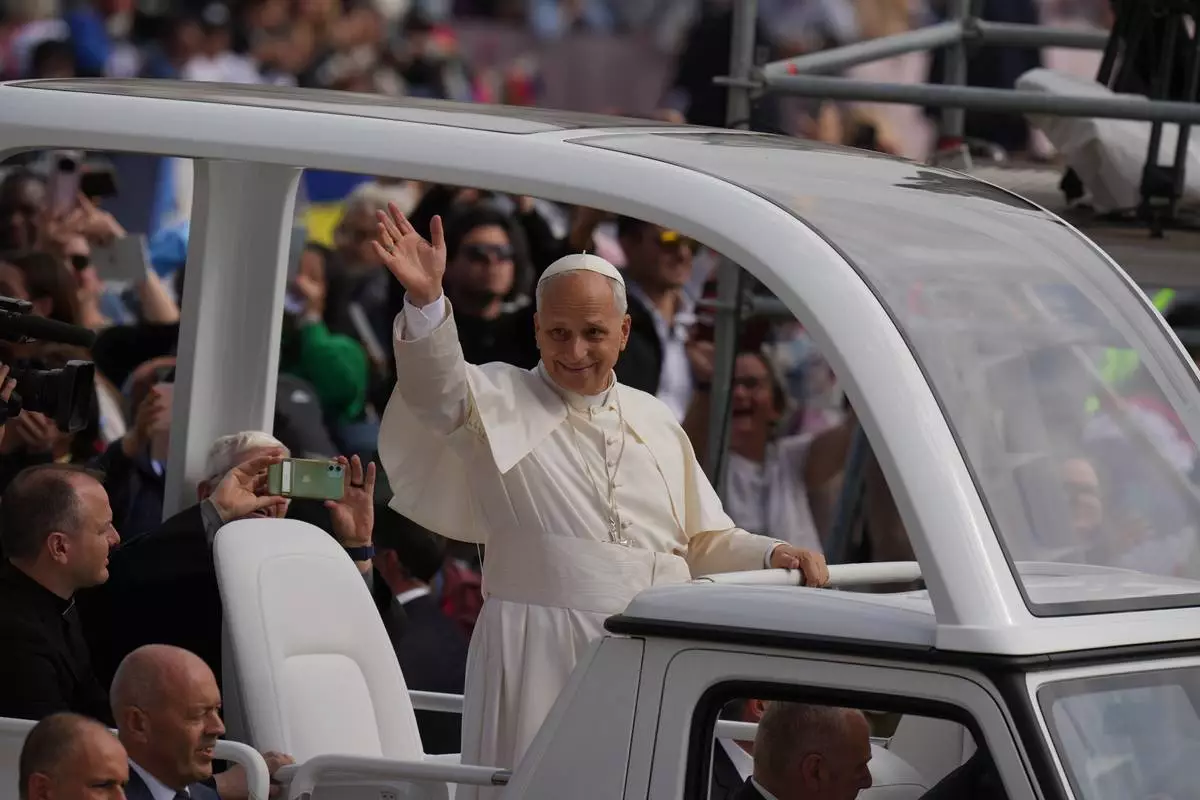
Pope Leo XIV waves from his popemobile at the end of a Mass for the Jubilee of Migrants and Missionaries in St. Peter's Square at the Vatican, Sunday, Oct. 5, 2025. (AP Photo/Alessandra Tarantino)