More than 67,000 Palestinians have been killed in Gaza in the two years since fighting erupted on Oct 7, 2023, when Hamas launched a surprise attack on Israel, killing more than 1,200 people and taking over 250 hostages.
Israel's military response to the attacks has devastated the Gaza Strip.
Statistics alone cannot capture the human suffering, but they reveal the scale of catastrophe in the densely populated coastal territory.
Data released on Tuesday by Gaza's health authorities shows that Israeli military operations over the past two years have killed 67,173 Palestinians, including 20,179 children, 10,427 women, and 4,813 elderly people. This is the first time the authorities have published an overall death toll broken down by age and gender.
Before the conflict, Gaza's population was estimated at 2.3 million. This means roughly one in every 33 residents, or about 3 percent of the pre-war population, has been killed. With over 20,000 children among the dead, the figures suggest an average of 28 children have died every day during the past two years.
The health authorities reported that more than 169,000 Palestinians have been injured over the two-year period, equivalent to roughly one in every 14 residents. A World Health Organization assessment released on October 2 found nearly 42,000 people in Gaza living with life-altering injuries, with children accounting for around a quarter of those.
The report said more than 5,000 individuals have undergone amputations. Other severe injuries include limb damage, spinal cord injuries, traumatic brain injuries, and extensive burns.
Gaza's health authorities said on Tuesday that Israeli attacks on medical facilities have forced 25 of the enclave's 38 hospitals out of service. The remaining 13 are only partially operational under dire conditions. Out of 157 primary health centers, 103 have been destroyed, with the remaining 54 operating only partially.
By the end of September, hospital bed occupancy had reached 225 percent, with admissions continuing to rise. The health authorities also reported that 1,701 medical staff have been killed.
A UN report released in August estimated that over 500,000 people in Gaza were facing famine, particularly in Gaza City and surrounding areas in northern Gaza, with famine conditions spreading to central and southern Gaza.
Gaza's health authorities said that over the past two years, 460 people have died from hunger or malnutrition, including 154 children. A total of 51,196 children under five are currently suffering from acute malnutrition.
The health situation for local residents is equally concerning, as the shortage of daily necessities has led to the spread of diseases, along with scarce drinking water resources and limited food.
The child vaccination rate has dropped to 80 percent, and the suspension of the fourth-round polio vaccination -- a key stage in a campaign that began last year -- risks undoing the progress of prior stages and increasing disease transmission.
The UN estimates that approximately 92 percent of all residential buildings in Gaza -- around 436,000 homes -- have been damaged or destroyed since the start of the conflict.
According to the UN, at least 1.9 million people across the Gaza Strip have been displaced during the war. Many have been displaced repeatedly, some 10 times or more.
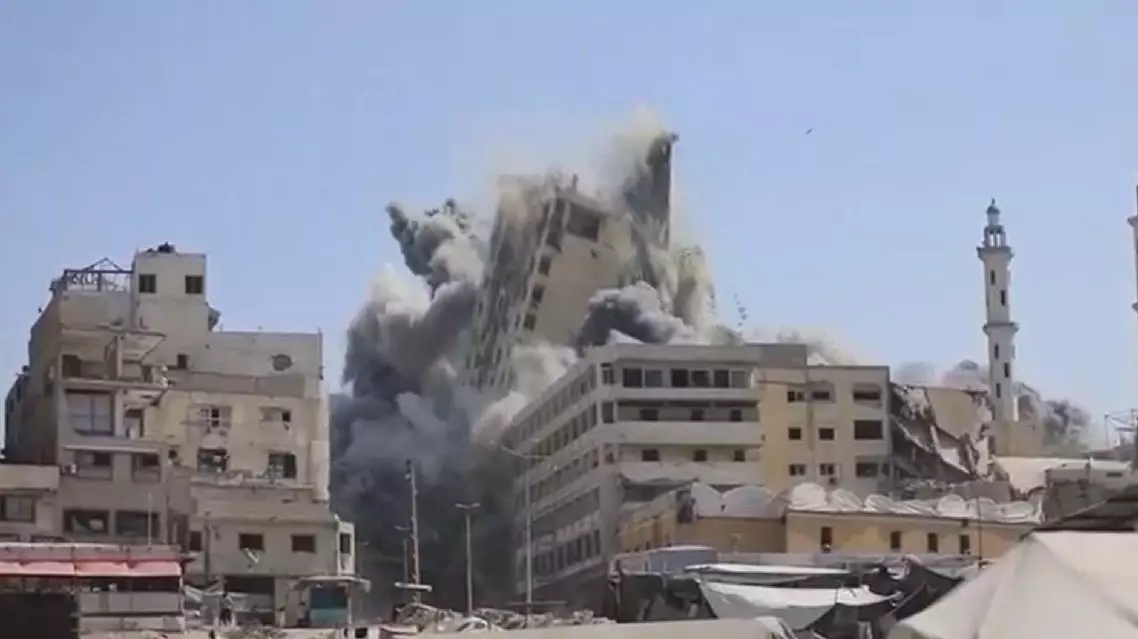
Two years on from October 7 attacks, Palestinian death toll in Gaza tops 67,000
Two years on from October 7 attacks, Palestinian death toll in Gaza tops 67,000