Smaller cities across China emerged as favored destinations during the eight-day National Day and Mid-Autumn Festival holiday that concluded on Wednesday, as cultural tourism continued to thrive and urban consumption saw robust growth.
According to the Wutong Big Data platform provided by telecoms giant China Mobile, 61 percent of all tourist visits nationwide from October 1 to 7 took place in third-tier cities and below, up 4 percent compared with the same period last year.
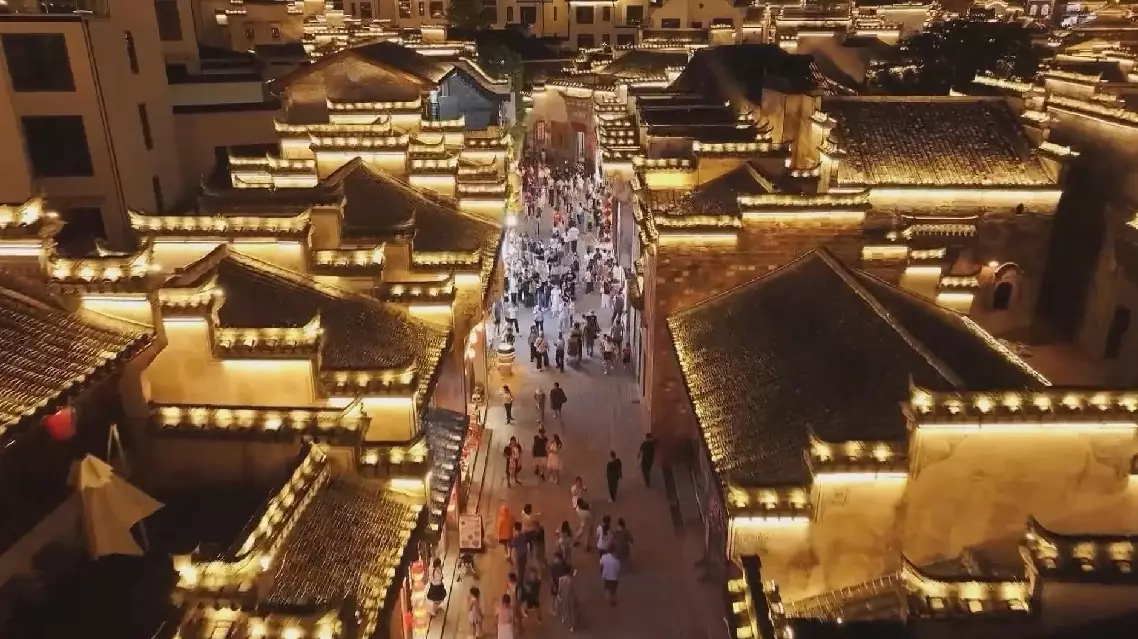
Distinctive destinations like Pingtan in south China's Fujian Province, Arxan in north China's Inner Mongolia Region, Auji in east China's Zhejiang Province, and Wuyuan in east China's Jiangxi Province saw visitor numbers surge over 19 percent.
Cultural tourism also gained significant momentum. The Palace Museum and the National Museum of China in Beijing, as well as the Emperor Qinshihuang's Mausoleum Site Museum in northwest China's Shaanxi Province, were the most popular during the holiday.
The number of visitors to the Xi'an Museum in Shaanxi, the Dalian Natural History Museum in northeast China's Liaoning Province, and the Henan Museum in central China's Henan Province increased by more than 30 percent year-on-year, according to Wutong Big Data.
In the country's large cities, shopping districts across the country saw a 13 percent year-on-year increase in foot traffic, with Shanghai, Shenzhen, Chengdu, Chongqing and Guangzhou being the top five cities in this respect. Cities like Lijiang in southwest China's Yunnan Province, Jinzhong in north China's Shanxi Province, Jingdezhen in Jiangxi Province, and Yanbian in northeast China's Jilin Province experienced over 120 percent growth in commercial area visits.
Domestic and international tourists both injected new vitality into urban consumption.
"According to the analysis of China Mobile's Wutong Big Data, the proportion of nonlocal visitors in business districts during the holiday reached 34 percent, an increase of 18 percentage points from non-peak period. In some business districts in Shanghai and Beijing, the proportion of foreign tourists increased to 8 percent, indicating that the 'China Travel' trend has been driving the boom of the inbound consumption market," said Chen Zhuo, deputy general manager of the Big Data Product Research and Development Center under the Digital Intelligence Department of China Mobile.
Smaller cities drive China's holiday tourism surge as cultural, commercial visits soar