Skip to Content Facebook Feature Image

Peru’s Congress removes President Boluarte as a crime wave grips the country

News

Peru’s Congress removes President Boluarte as a crime wave grips the country
News

News

Peru’s Congress removes President Boluarte as a crime wave grips the country

2025-10-10 14:56 Last Updated At:15:01

LIMA, Peru (AP) — Peru’s Congress voted early Friday to remove deeply unpopular President Dina Boluarte from office as a crime wave grips the South American nation and quickly replaced her with 38-year-old lawyer José Jerí, the legislative body's leader.

Lawmakers had set up a debate and impeachment trial late Thursday in the 130-member unicameral Congress after voting to accept four requests for a vote to remove Boluarte from office over what they said was her government's inability to stem crime.

They requested that Boluarte come before them shortly before midnight to defend herself, but when she did not appear they immediately voted to oust her. In short order, 124 lawmakers voted just past midnight to impeach Boluarte. There were no votes against the effort.

The shocking turn of events came just hours after a shooting at a concert in the capital inflamed anger over crime roiling the country.

Unlike eight previous attempts to remove Boluarte, almost all legislative factions expressed support for the latest requests.

Boluarte, Peru’s first female president, took office in December 2022 after Parliament used the same mechanism to impeach her predecessor.

After Friday's vote, Boluarte spoke on national television, recounting her administration’s achievements.

“I have not thought of myself, but rather of Peruvians,” she said.

Minutes into her speech, the broadcast was interrupted to show Jerí’s swearing in.

Jerí, the president of the Congress, was sworn in early Friday as the interim president to serve out Boluarte's term. Elections are scheduled for next April and Boluarte's term was to end July 28, 2026.

Jerí said he would defend Peru's sovereignty and hand over power to the winner of the April election.

Boluarte was Peru's sixth leader in just under a decade. A normal presidential term is five years.

She assumed power in Peru in 2022 to complete the term of then-President Pedro Castillo, who was removed from office just two years into his five-year term after attempting to dissolve the legislature to avoid his own removal. She had served as Castillo’s vice president before becoming president.

There were more than 500 protests demanding her resignation in the first three months of her presidency.

Plagued by scandals, her administration’s inability to address Peru’s incessant crime proved to be her undoing.

On Wednesday, she partially blamed the situation on immigrants living in the country illegally.

“This crime has been brewing for decades and has been strengthened by illegal immigration, which past administrations haven’t defeated," she said during a military ceremony. “Instead, they’ve opened the doors of our borders and allowed criminals to enter everywhere... without any restrictions.”

Official figures show that 6,041 people were killed between January and mid-August, the highest number during the same period since 2017. Meanwhile, extortion complaints totaled 15,989 between January and July, a 28% increase compared to the same period in 2024.

The country’s latest presidential crisis erupted after a man opened fire and injured five people Wednesday during a concert of Peru’s most popular cumbia groups, Agua Marina.

Prime Minister Eduardo Arana on Thursday defended Boluarte during a crime-focused hearing before Parliament, but it was not enough to dissuade lawmakers from pursuing the motions to see the president out of office.

“Parliament’s concerns are not resolved by addressing a request for impeachment, much less by approving it,” Arana told lawmakers. “We are not clinging to our positions. We are here, and we knew from the beginning that our first day here could also be our last day in office.”
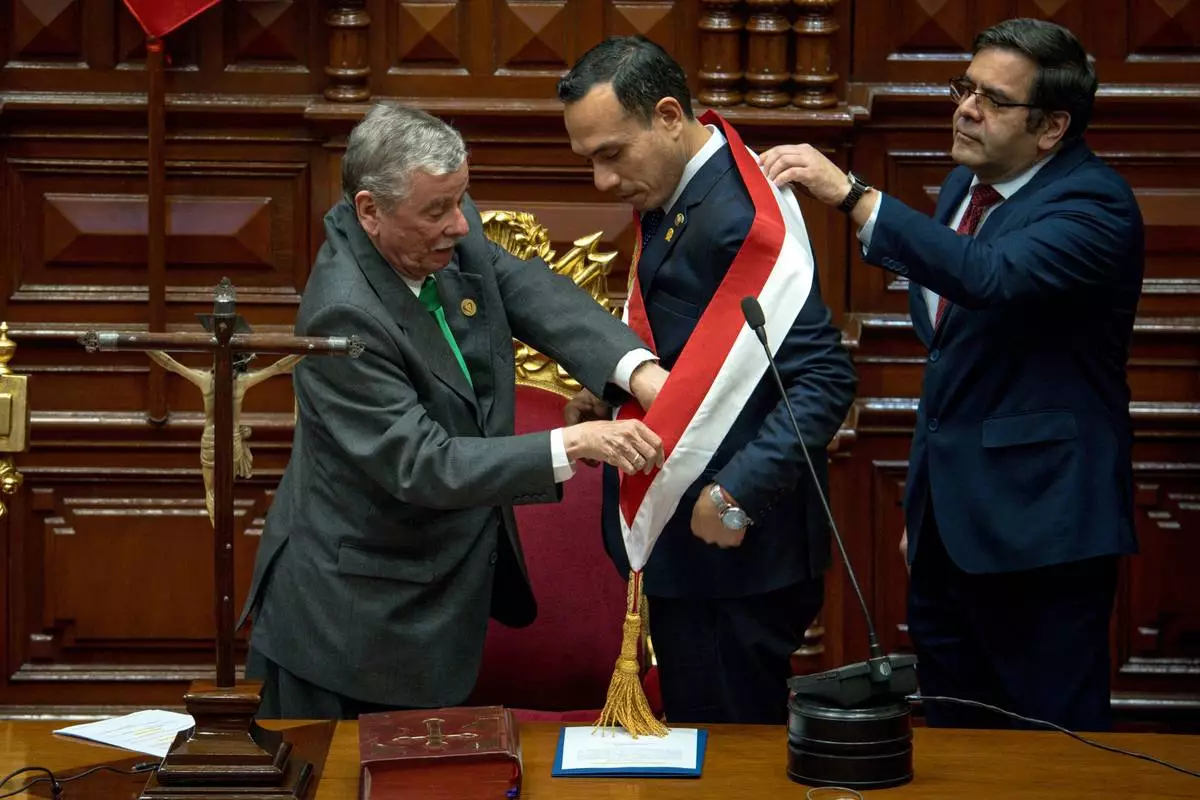
Peru's former president of the Congress Jose Jeri, center, receives the presidential sash from congressman Fernando Rospigliosi, left, as he is sworn-in as the interim president in Lima, Peru, Friday, Oct. 10, 2025. (AP Photo/John Reyes)
Peru's former president of the Congress Jose Jeri, center, receives the presidential sash from congressman Fernando Rospigliosi, left, as he is sworn-in as the interim president in Lima, Peru, Friday, Oct. 10, 2025. (AP Photo/John Reyes)

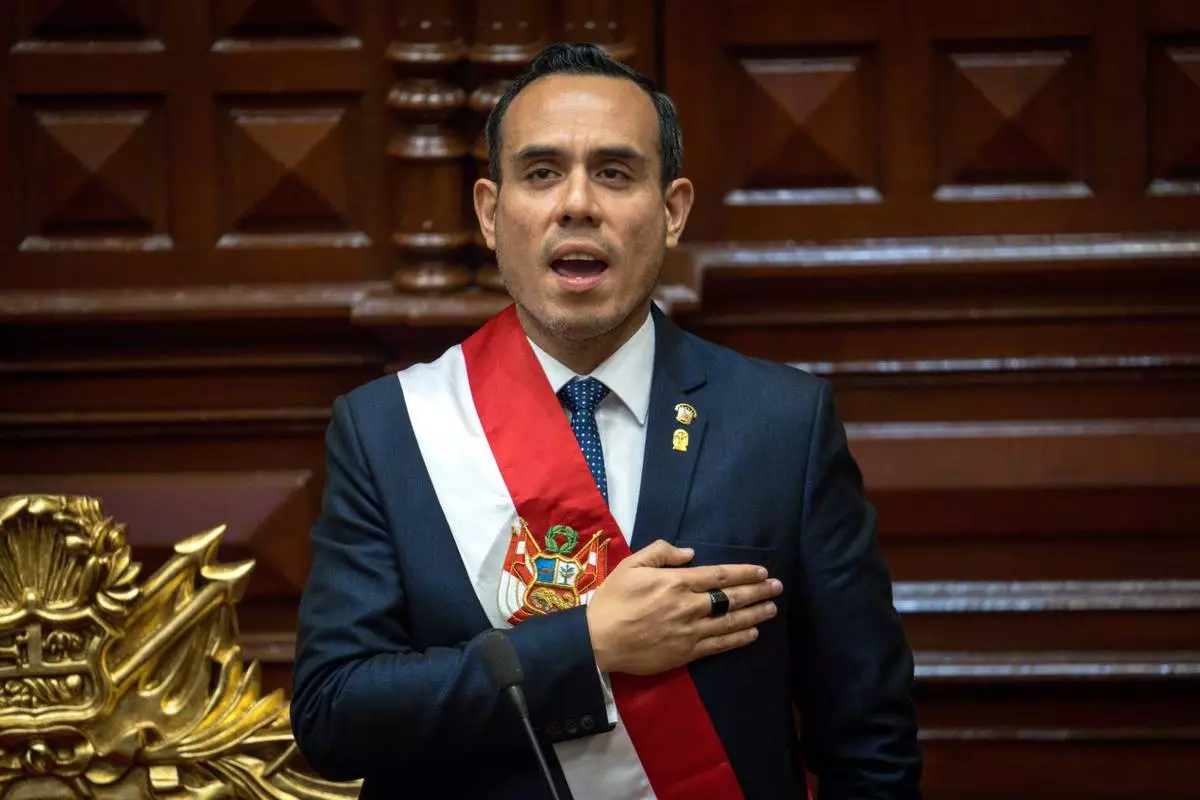
Peru's former president of the Congress Jose Jeri, sings the national anthem after being sworn-in as the interim president in Lima, Peru, Friday, Oct. 10, 2025. (AP Photo/John Reyes)
Peru's former president of the Congress Jose Jeri, sings the national anthem after being sworn-in as the interim president in Lima, Peru, Friday, Oct. 10, 2025. (AP Photo/John Reyes)

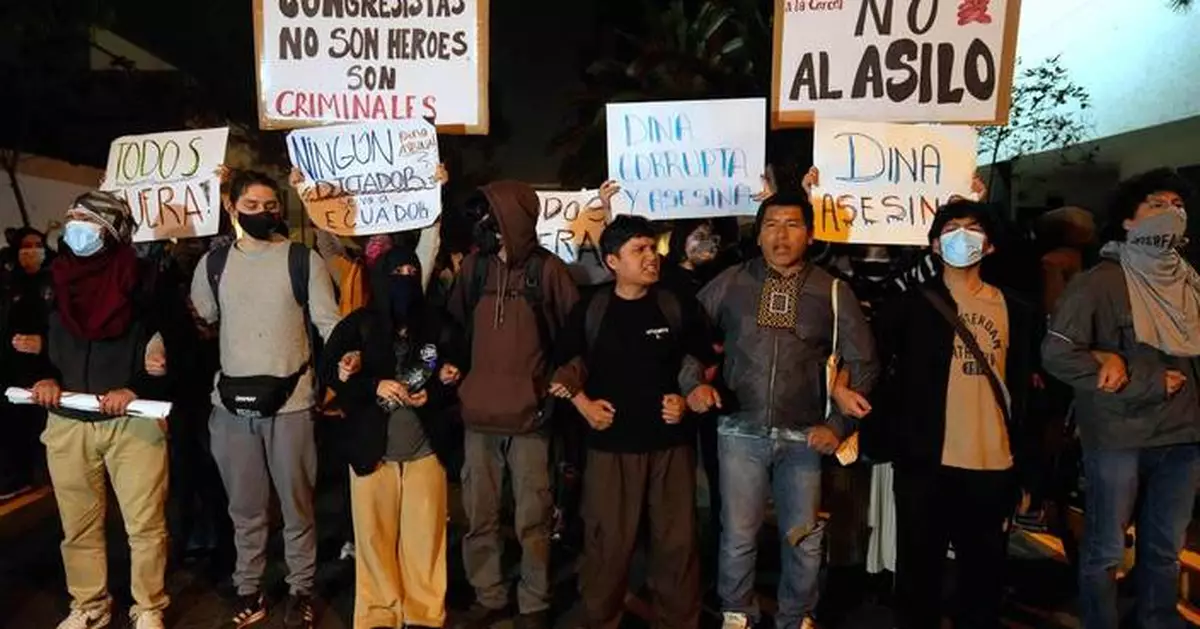
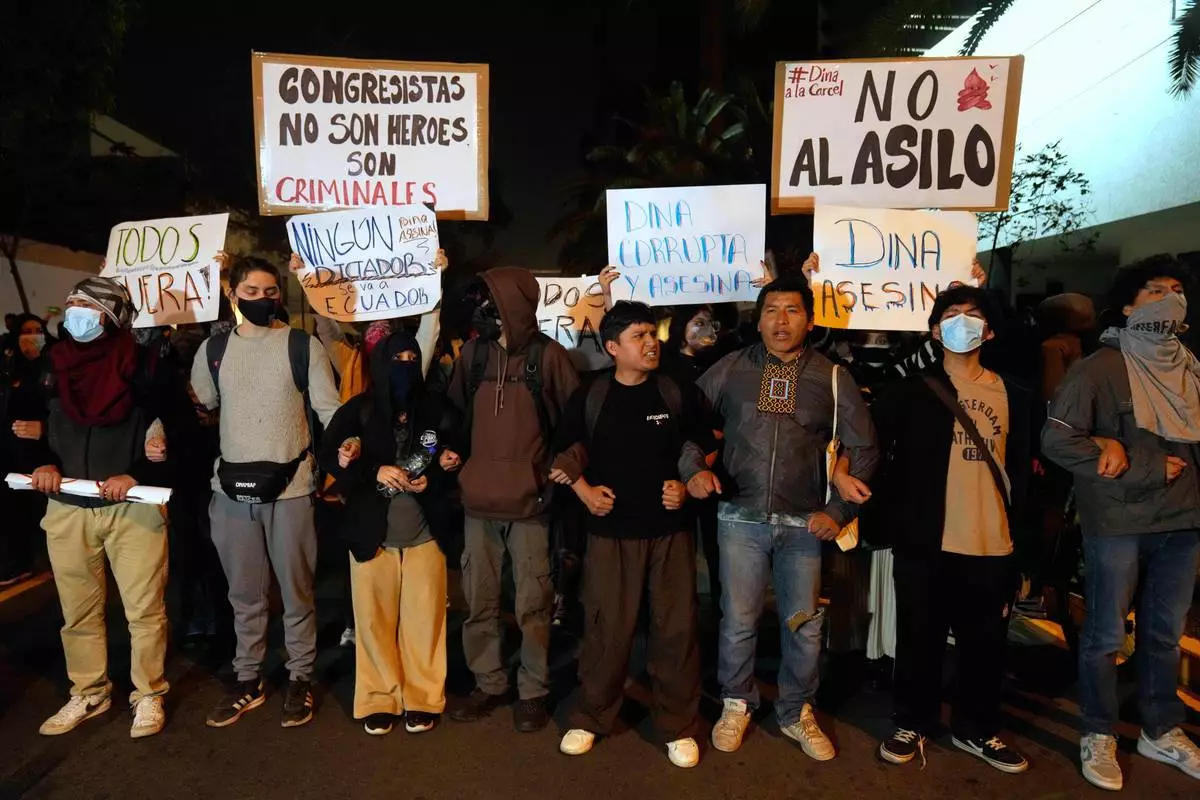
Opponents of Peruvian President Dina Boluarte protest outside of the Ecuadorian Embassy in Lima, Peru, Thursday, Oct. 9, 2025. (AP Photo/Martin Mejia)
Opponents of Peruvian President Dina Boluarte protest outside of the Ecuadorian Embassy in Lima, Peru, Thursday, Oct. 9, 2025. (AP Photo/Martin Mejia)
CARACAS, Venezuela (AP) — President Donald Trump is set to meet Thursday at the White House with Venezuelan opposition leader María Corina Machado, whose political party is widely considered to have won 2024 elections rejected by then-President Nicolás Maduro before the United States captured him in an audacious military raid this month.

Less than two weeks after U.S. forces seized Maduro and his wife at a heavily guarded compound in Caracas and brought them to New York to stand trial on drug trafficking charges, Trump will host the Nobel Peace Prize laureate Machado, having already dismissed her credibility to run Venezuela and raised doubts about his stated commitment to backing democratic rule in the country.

“She’s a very nice woman,” Trump told Reuters in an interview about Machado. “I’ve seen her on television. I think we’re just going to talk basics.”

The meeting comes as Trump and his top advisers have signaled their willingness to work with acting President Delcy Rodríguez, who was Maduro’s vice president and along with others in the deposed leader's inner circle remain in charge of day-to-day governmental operations.

Rodríguez herself has adopted a less strident position toward Trump and his “America First” policies toward the Western Hemisphere, saying she plans to continue releasing prisoners detained under Maduro — a move reportedly made at the behest of the Trump administration. Venezuela released several Americans this week.

Trump, a Republican, said Wednesday that he had a “great conversation” with Rodríguez, their first since Maduro was ousted.

“We had a call, a long call. We discussed a lot of things,” Trump told reporters. “And I think we’re getting along very well with Venezuela.”

In endorsing Rodríguez, Trump has sidelined Machado, who has long been a face of resistance in Venezuela. She had sought to cultivate relationships with Trump and key advisers like Secretary of State Marco Rubio among the American right wing in a political gamble to ally herself with the U.S. government. She also intends to have a meeting in the Senate on Thursday afternoon.

Despite her alliance with Republicans, Trump was quick to snub her following Maduro’s capture. Just hours afterward, Trump said of Machado that “it would be very tough for her to be the leader. She doesn’t have the support within or the respect within the country. She’s a very nice woman, but she doesn’t have the respect.”

Machado has steered a careful course to avoid offending Trump, notably after winning last year’s Nobel Peace Prize, which Trump coveted. She has since thanked Trump and offered to share the prize with him, a move that has been rejected by the Nobel Institute.

Machado’s whereabouts have been largely unknown since she went into hiding early last year after being briefly detained in Caracas. She briefly reappeared in Oslo, Norway, in December after her daughter received the Nobel Peace Prize on her behalf.

The industrial engineer and daughter of a steel magnate began challenging the ruling party in 2004, when the nongovernmental organization she co-founded, Súmate, promoted a referendum to recall then-President Hugo Chávez. The initiative failed, and Machado and other Súmate executives were charged with conspiracy.

A year later, she drew the anger of Chávez and his allies again for traveling to Washington to meet President George W. Bush. A photo showing her shaking hands with Bush in the Oval Office lives in the collective memory. Chávez considered Bush an adversary.

Almost two decades later, she marshaled millions of Venezuelans to reject Chávez’s successor, Maduro, for another term in the 2024 election. But ruling party-loyal electoral authorities declared him the winner despite ample credible evidence to the contrary. Ensuing anti-government protests ended in a brutal crackdown by state security forces.

Janetsky reported from Mexico City. AP Diplomatic Writer Matthew Lee in Washington contributed to this report.

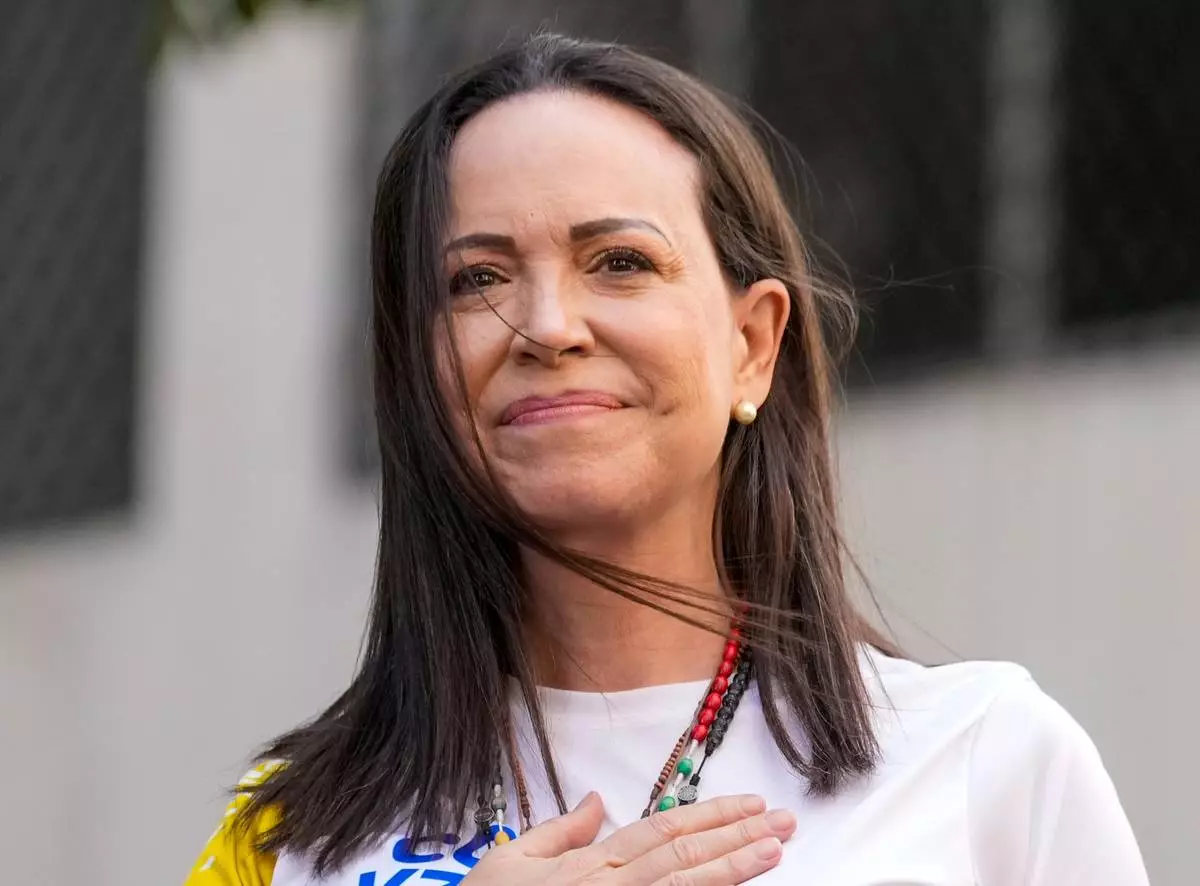
FILE - Opposition leader Maria Corina Machado gestures to supporters during a protest against President Nicolas Maduro the day before his inauguration for a third term, in Caracas, Venezuela, Thursday, Jan. 9, 2025. (AP Photo/Ariana Cubillos, file)

FILE - Opposition leader Maria Corina Machado gestures to supporters during a protest against President Nicolas Maduro the day before his inauguration for a third term, in Caracas, Venezuela, Thursday, Jan. 9, 2025. (AP Photo/Ariana Cubillos, file)

Recommended Articles