RABAT, Morocco (AP) — King Mohammed VI on Friday urged elected officials to stop wasting time and fix social injustices, framing similar issues to those raised by Morocco’s youth-led protesters as questions of governance, rather than of the country’s broader vision.
The king’s short but charged address mirrored some of the grievances raised by Gen Z 212 protesters about regional inequalities and uneven development but did not address the movement directly.
Click to Gallery
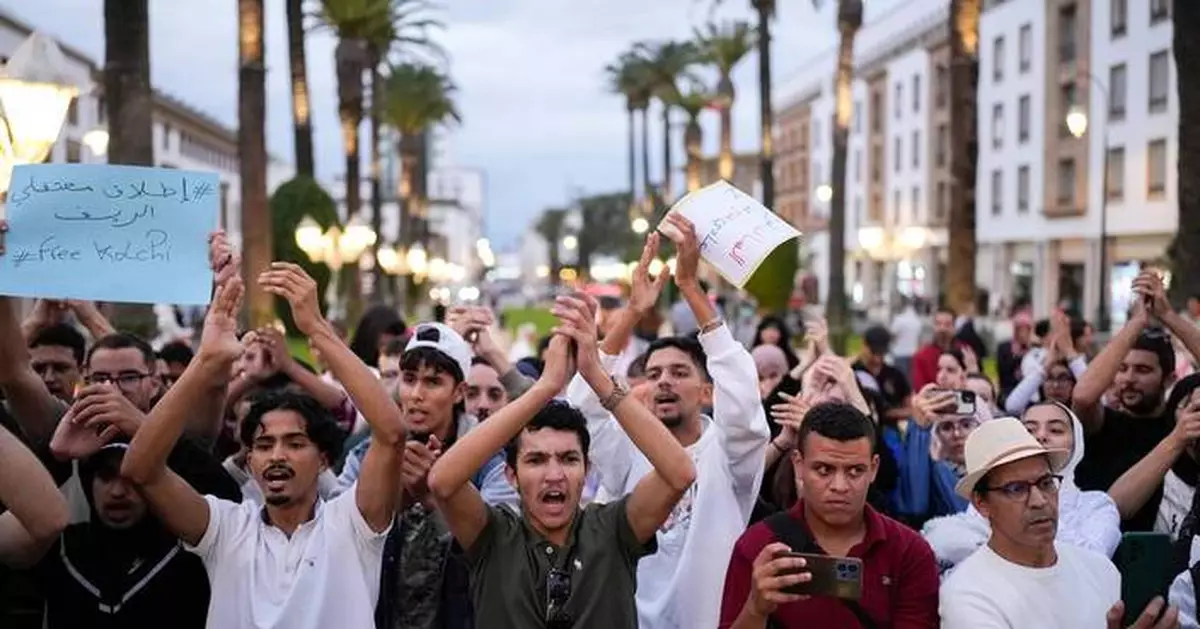
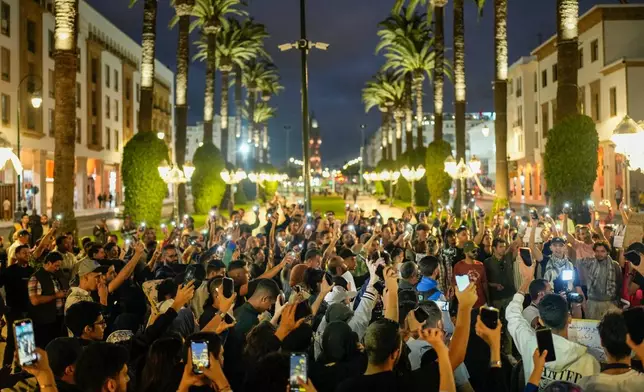
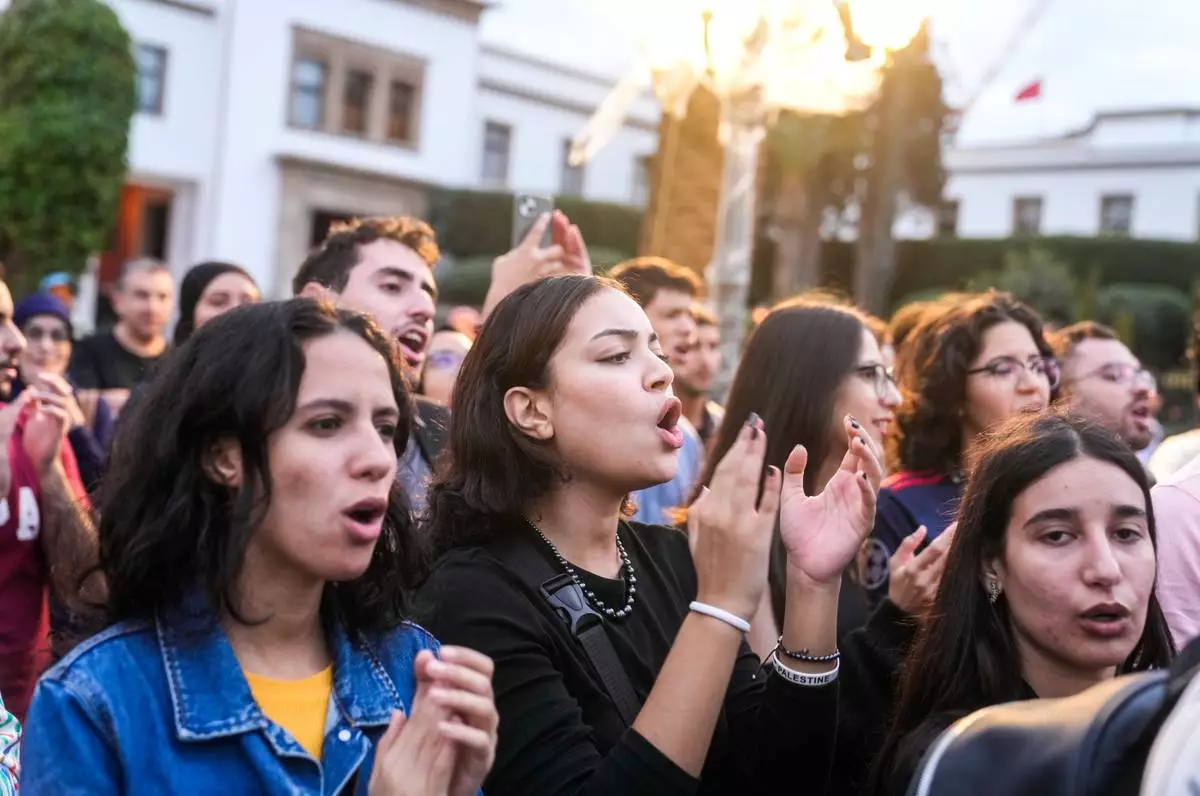
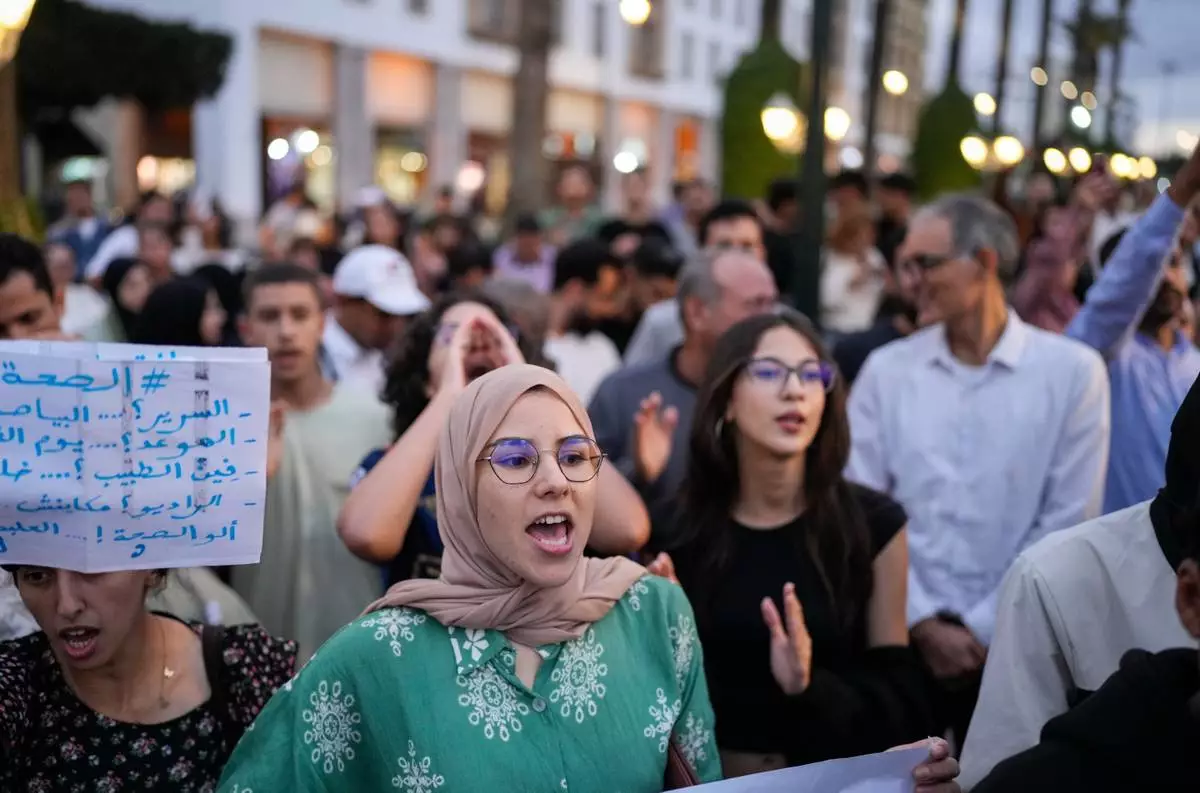
People take part in a youth-led protest against corruption and calling for education and healthcare reforms, in Rabat, Morocco, Thursday, Oct. 9, 2025. (AP Photo/Mosa'ab Elshamy)
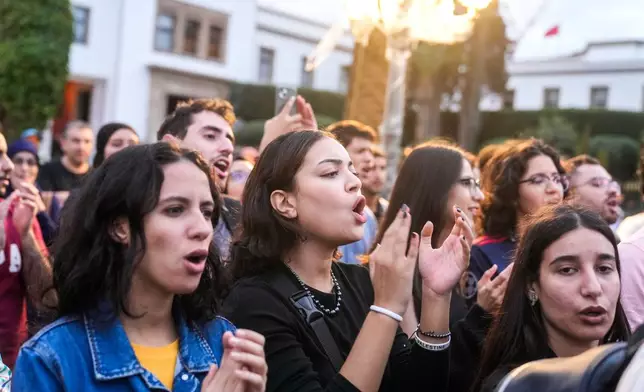
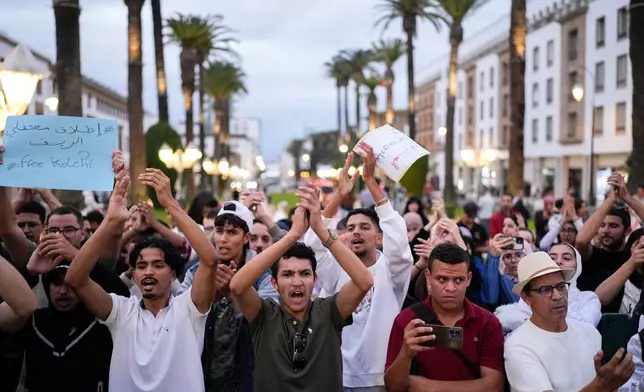
People take part in a youth-led protest against corruption and calling for education and healthcare reforms, in Rabat, Morocco, Thursday, Oct. 9, 2025. (AP Photo/Mosa'ab Elshamy)
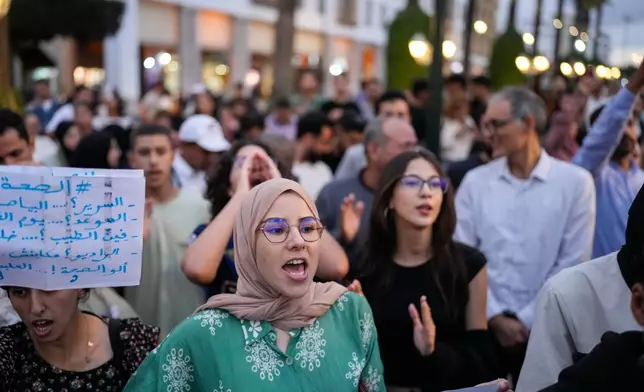
People take part in a youth-led protest against corruption and calling for education and healthcare reforms, in Rabat, Morocco, Thursday, Oct. 9, 2025. (AP Photo/Mosa'ab Elshamy)
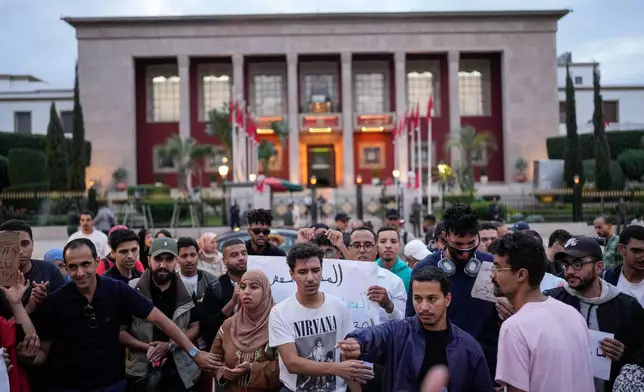
People take part in a youth-led protest against corruption and calling for education and healthcare reforms, in Rabat, Morocco, Thursday, Oct. 9, 2025. (AP Photo/Mosa'ab Elshamy)
People take part in a youth-led protest against corruption and calling for education and healthcare reforms, in Rabat, Morocco, Thursday, Oct. 9, 2025. (AP Photo/Mosa'ab Elshamy)
Morocco has been swept by demonstrations for almost two weeks, as young people have taken to the streets to demand better public services and increased spending on health and education.
The 62-year-old monarch — walking into parliament without the help of a cane he used for part of last year — implored its members to defend the country and tackle some of the grievances raised at the protests with a spirit of seriousness and responsibility.
“Social justice is not a temporary priority,” the King, Morocco’s highest authority, said in his speech before lawmakers dressed in traditional white djellaba robes.
“It’s a strategic direction to which every one must adhere, and a crucial challenge that should govern our various development policies,” he added.
He did not touch on the contrast near the heart of anger seen in the streets: stadiums related to the 2030 FIFA World Cup. Protesters have chanted slogans to decry them taking priority over investments that raise Morocco’s living standards.
The King said projects big and small were both designed to move Morocco forward.
“There should be no contradiction or competition between major national projects and social programs, as both share the same goal: developing the country and improving the living conditions of citizens wherever they may be,” Mohammed VI said.
His address was highly anticipated after Gen Z 212 — the leaderless collective that organized many of the protests online — wrote a letter to him directly, urging him to intervene against corrupt officials and push reforms.
The speech offered no indication that protesters’ demands for Prime Minister Aziz Akhannouch’s resignation and new corruption investigations would be met. After Gen Z 212 livestreamed the speech to thousands of its channel’s followers on the app Discord, many there said they were underwhelmed.
Yet others identified with the regional inequities and rural poverty given voice.
The issues have been central to some of the most heated protests in Morocco’s east and south. Demonstrators in cities like Oujda and the suburbs of Agadir have clashed violently with security forces, leading to numerous injuries and three deaths.
The King has addressed similar themes in prior speeches, both to open parliamentary proceedings and to commemorate his ascendance to Morocco’s throne. When protests convulsed northern Morocco in 2017, he similarly blasted politicians for not doing their jobs and communicating policies effectively. In July, he warned that Morocco could not become a “two speed country.”
Yet to many protesters, that’s what it has become.
Across Morocco, joblessness for those ages 15 to 24 is stubbornly high. Classrooms are packed. And hospitals are stretched thin, including one in Agadir where a woman passed away this week, months after eight others died giving birth. The conditions at the public hospitals where they died were among the sparks to ignite protests in September.
Gen Z 212 has gradually sharpened their demands and on Thursday published their most specific to date, urging officials to move fast to hire more health workers and boost spending, citing the government’s own reports warning of severe staffing and funding shortages.
Their letter pressed for an end to the growing privatization of Morocco’s education system and for the release of who they called “opinion detainees,” arrested for taking part in the Gen Z protests.
Local news outlets reported that more than 400 people have been arrested for vandalism linked to the protests. Some of them were held in custody. Activists have for decades criticized Morocco’s goal to have 20% of students educated in private schools for deepening inequality as wealthier families often send their children to private institutions, while public ones remain overcrowded and underfunded.
For both Mohammed VI and the protesters who convened in the parliament one night earlier, the message is clear: elected officials have no time to waste.
“We call on everyone to combat all practices that waste time, effort and resources,” the King said.
— Metz reported from Jerusalem.
People take part in a youth-led protest against corruption and calling for education and healthcare reforms, in Rabat, Morocco, Thursday, Oct. 9, 2025. (AP Photo/Mosa'ab Elshamy)
People take part in a youth-led protest against corruption and calling for education and healthcare reforms, in Rabat, Morocco, Thursday, Oct. 9, 2025. (AP Photo/Mosa'ab Elshamy)
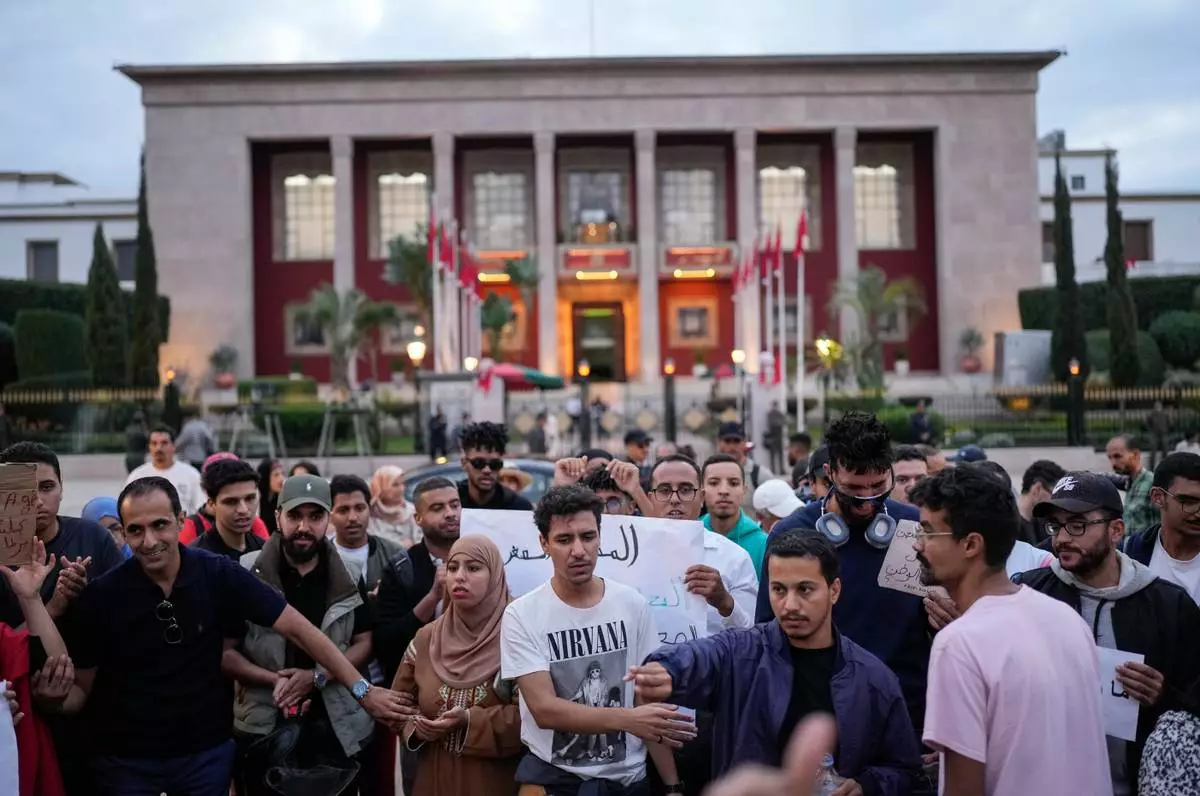
People take part in a youth-led protest against corruption and calling for education and healthcare reforms, in Rabat, Morocco, Thursday, Oct. 9, 2025. (AP Photo/Mosa'ab Elshamy)
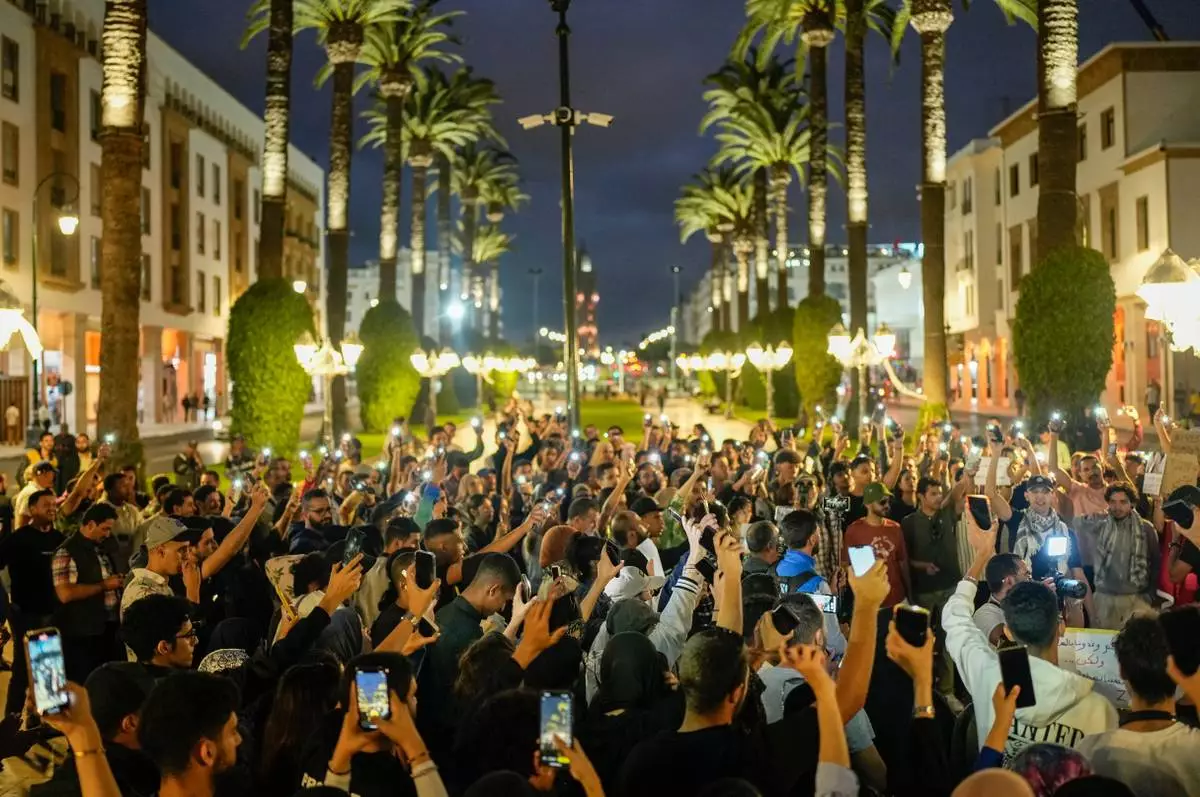
People take part in a youth-led protest against corruption and calling for education and healthcare reforms, in Rabat, Morocco, Thursday, Oct. 9, 2025. (AP Photo/Mosa'ab Elshamy)
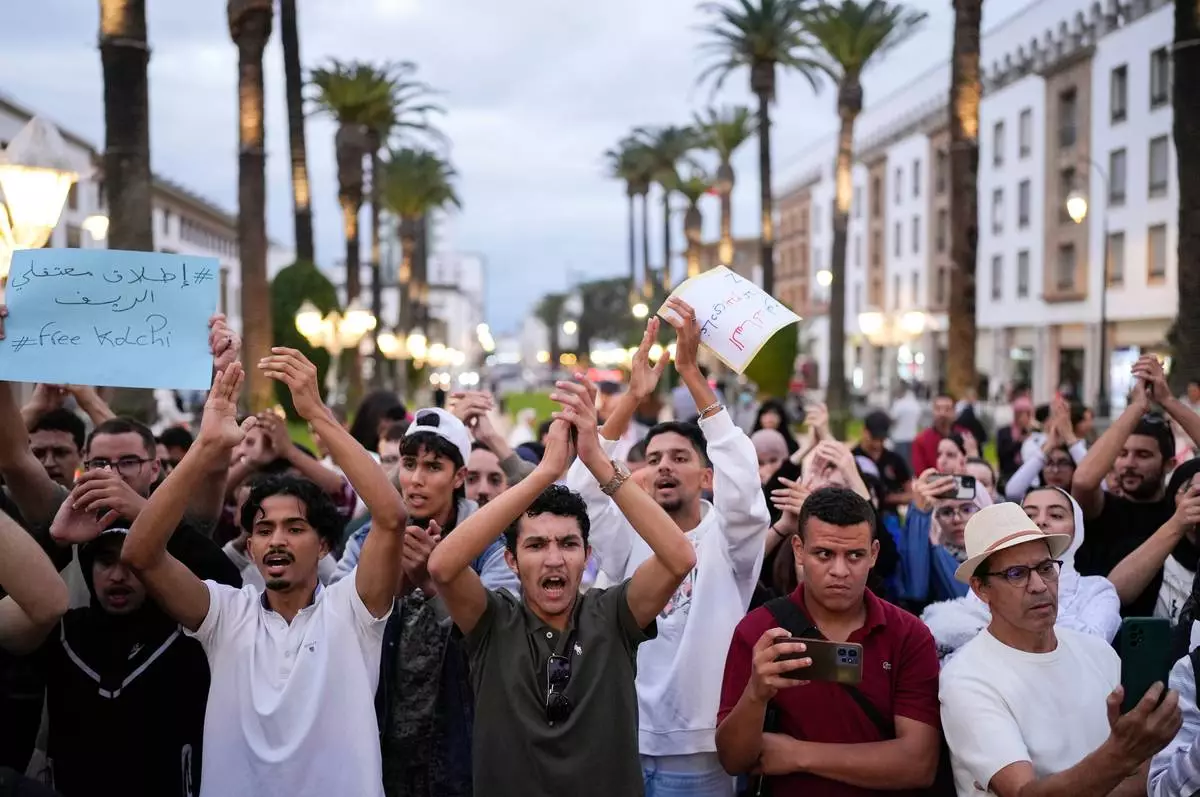
People take part in a youth-led protest against corruption and calling for education and healthcare reforms, in Rabat, Morocco, Thursday, Oct. 9, 2025. (AP Photo/Mosa'ab Elshamy)
BERLIN (AP) — Standing on an open truck making its way through Berlin, Anahita Safarnejad turned to the crowd of Iranian protesters marching behind her and took the microphone.
“No more dictatorship in Iran, the mullahs must go!” she shouted. Hundreds of voices echoed her slogan with the same sense of urgency and desperation.
Across Europe, thousands of exiled Iranians have taken to the streets to shout out their rage at the government of the Islamic Republic which has cracked down on protests in their homeland, reportedly killing thousands of people.
Women have taken a prominent role in organizing the protests abroad, raising their voices against the theocratic government that discriminates against them.
But beyond the anger, there’s also a sense of fear and paralysis. Iran's government has been shutting down the internet and limiting phone calls for days, making it nearly impossible for Iranians in the diaspora to find out if their families back home are safe.
Safarnejad, 34, fled Iran seven years ago. She came to Berlin to study theater but now works in a bar when she's not attending one of the almost-daily protests in the German capital.
Since the demonstrations broke out in Iran in late December, Safarnejad said she's been living in two different realities that are almost impossible to combine. The easygoing hipster life of her new hometown is a jarring contrast to the bloody protests in Iran that she's been following every minute she doesn't have to work, glued to her phone for the latest updates.
While she was initially almost euphoric that the current uprising would finally bring freedom to Iran and she'd be able to go back home, her sense of hope has turned into horror.
Safarnejad hasn't spoken to her brother, also a protester, since communications with Iran were cut off. She's been scouring video on social media showing piles of dead bodies to see if he's among the corpses.
“I'm desperate and don't know how to keep going anymore,” she cried, tears rolling down her cheeks, as she spoke to The Associated Press during Wednesday's Berlin protest.
“I can’t really switch off. I can’t really stop reading the news either," she added, her voice breaking. “Because I’m waiting all the time for the internet to be available so I can get some answers from my family.”
The young woman's horror is felt by many of the more than 300,000 Iranians living in Germany — one of the biggest exile communities in Europe and similar in numbers to France and Britain. Many of them still have family ties to their homeland, even if they left decades ago.
Mehregan Maroufi's Persian cafe and bookstore in Berlin has become a place of solace for Iranians to share their grief without many words — because they know they are all living through the same nightmare.
Maroufi, the daughter of the late Iranian author Abbas Maroufi, welcomes Iranians and everyone else at the Hedayat Cafe, where she serves Persian tea with sweets such as chocolate cake topped with barberries. She lends an ear to anyone who has to get worries off their chest.
“For some, the emotions are still too high and too strong, so to speak, and it’s impossible to talk," the 44-year-old says, adding that she, too, had to force herself to open the cafe on some mornings because the violent images coming out of Iran sucked away all her energy.
“But at least you can find compatriots here. You can talk to a little, and that helps,” she said.
She says she's been listening to and learning from the convictions her fellow Iranians express when they talk about their dreams of an Iran after Supreme Leader Ayatollah Ali Khamenei that — due to the uprising — now seems closer that ever before.
While most in the diaspora agree that the theocracy has to be toppled, ideas of what a new Iran should look like differ widely.
Adeleh Tavakoli, 62, joined a demonstration outside Britain’s Parliament in London earlier this week. She hasn't been back to Iran in 17 years but has spent decades protesting from afar against the Islamic Republic.
But with the latest wave of protests, she hopes that the Iran’s exiled Crown Prince Reza Pahlavi, the son of the shah ousted by the Islamic Revolution in 1979, will return to power. If he does, she said, she has her bag packed and is ready to get on the first flight.
“For 47 years, our country has been captured by a terrorist regime,” she said. “We’ve been the voice of Iran. All we want is our freedom and to get rid of this horrible dictatorship.”
For Maral Salmassi, who came to Germany as a child in the 1980s, history explains the calls by exiled Iranians for Pahlavi to lead the country.
“As an Iranian, as someone who comes from this culture and knows its culture and history, I can only say that we have had kings and queens for thousands of years. It is our culture," said Salmassi. She is the chairwoman and founder of the Zera Institute think tank in Berlin, which researches democracy, radicalization and extremism.
She added that Iranians make up a multi-ethnic country and "to bring them all together again, we need a constitutional monarchy that symbolically and traditionally represents our identity and reunites everyone ... and then a democratic, federal parliament where everyone is represented equally.”
However, not everyone is convinced by Pahlavi. Maryam Nejatipur, 32, who also joined the protest in Berlin, thinks her country should avoid a cult of personality.
“We don’t need something like Khamenei again. We don’t need one person,” to lead us, she said, as she burnt a portrait of the Ayatollah and used the flames to light a cigarette — an act that's become a symbol of Iranian resistance.
Safarnejad, who led the recent Berlin protest, agrees.
“I don’t belong to the left, I’m not a liberal, I’m not a monarchist,” she stressed. “I’ve been there for women’s rights, I’m for human rights, I’m for freedom.”
Fanny Brodersen and Ebrahim Noroozi, in Berlin, and Brian Melley in London contributed reporting.
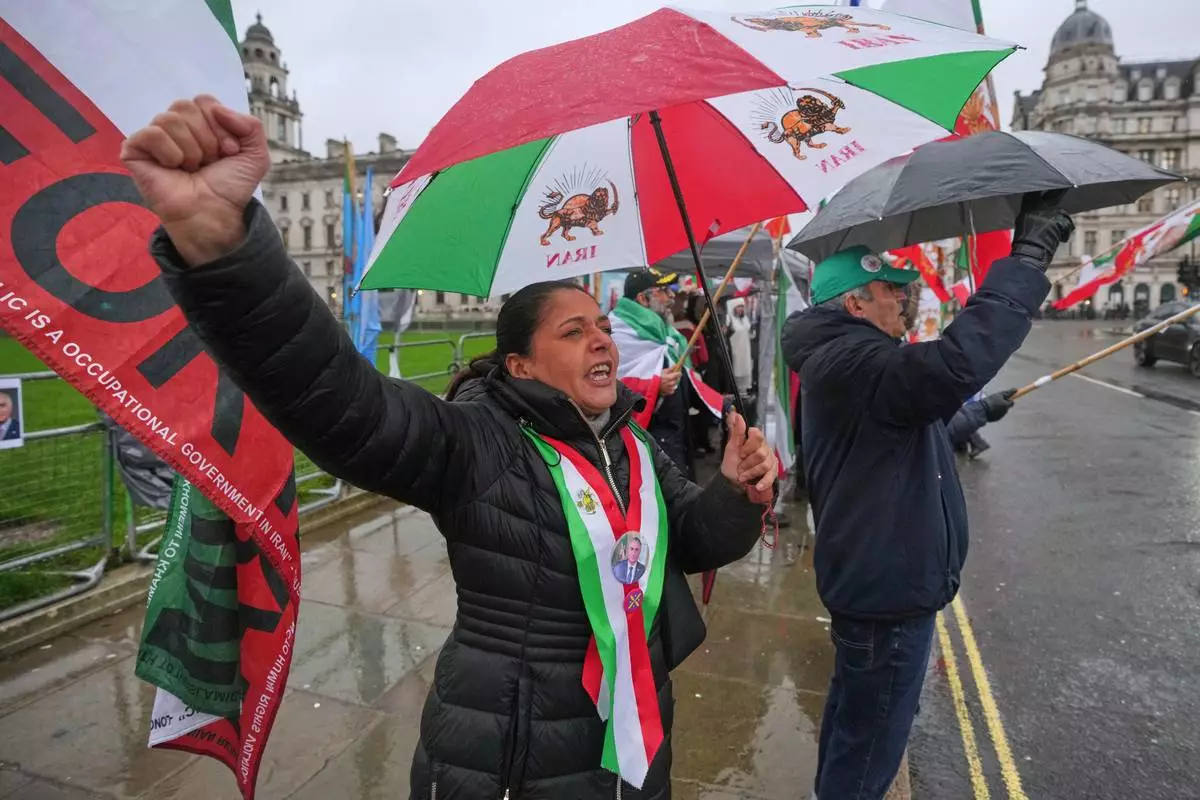
Protester Adeleh Tavakoli, left, demonstrates outside the House of Parliament, in London, Tuesday, Jan. 13, 2026. (AP Photo/Kin Cheung)
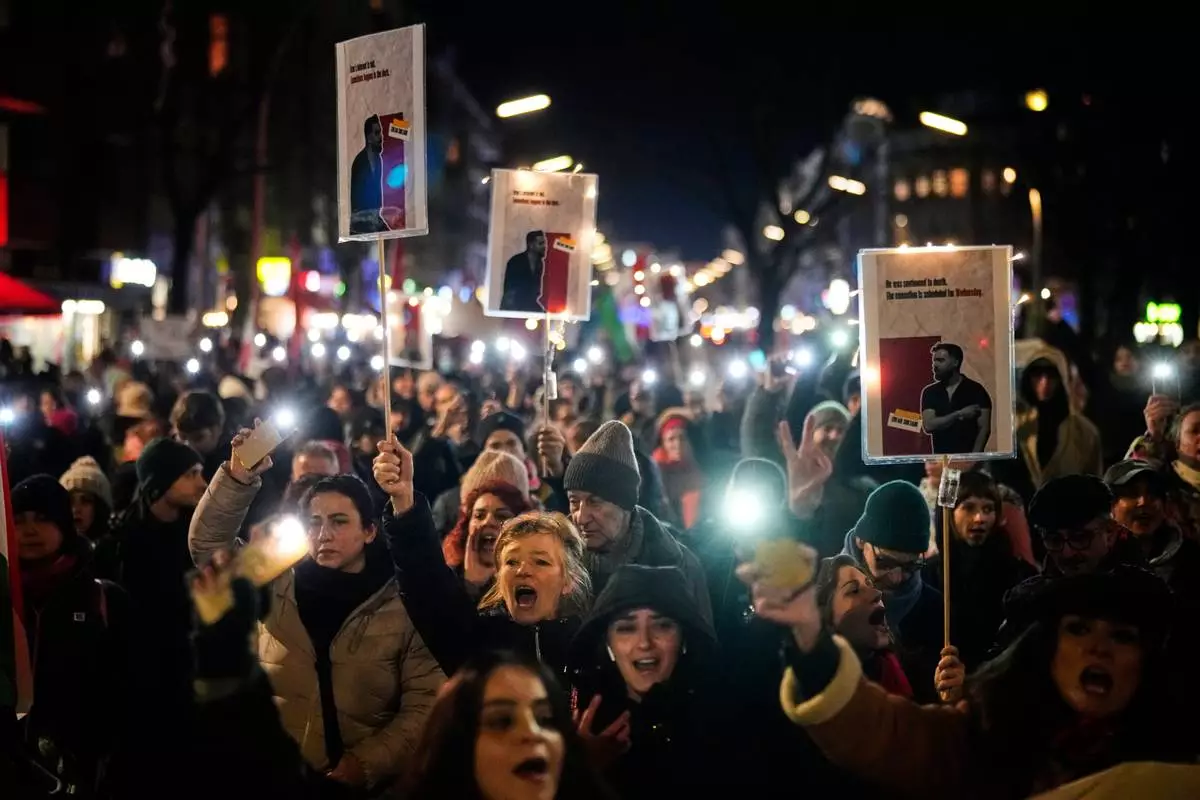
People take part in a rally in support of anti-government protests in Iran, Berlin Germany, Wednesday, June 14, 2026. (AP Photo/Ebrahim Noroozi)
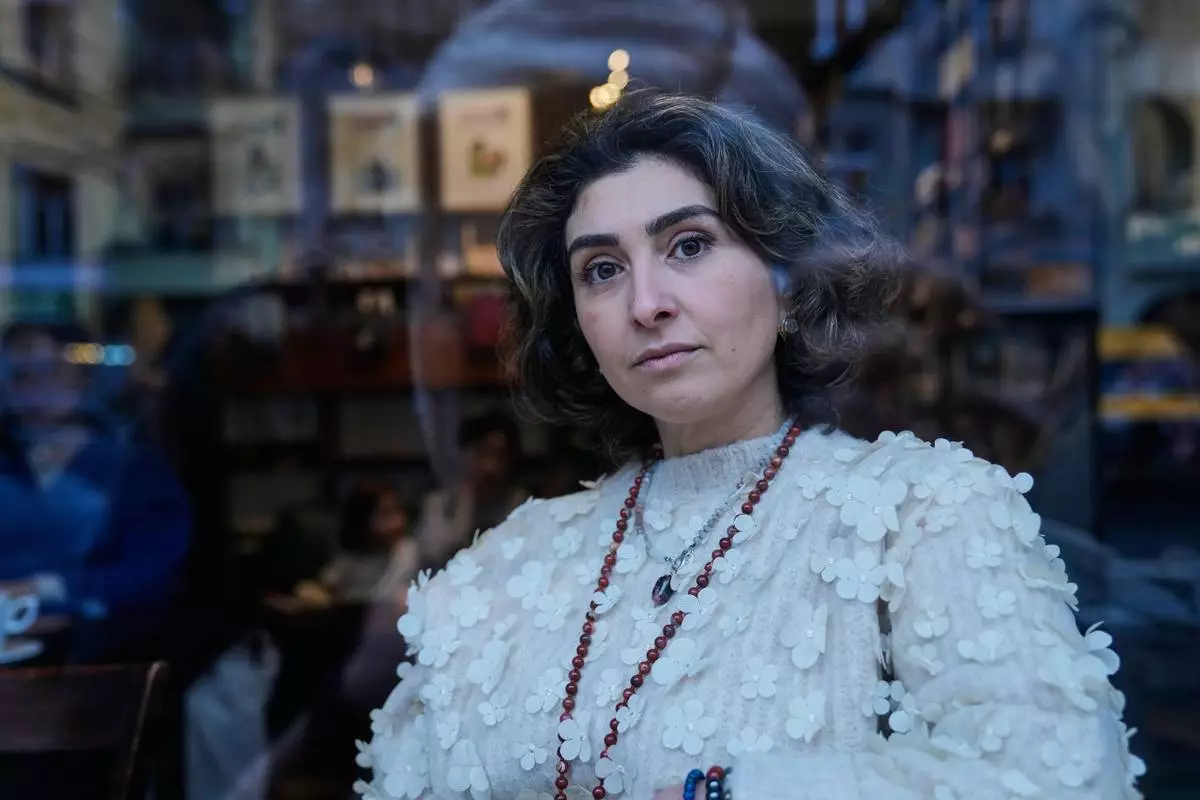
Iranian Mehregan Maroufi poses for a photo before an interview with the Associated Press in her cafe in Berlin, Germany, Thursday, Jan. 15, 2026. (AP Photo/Ebrahim Noroozi)
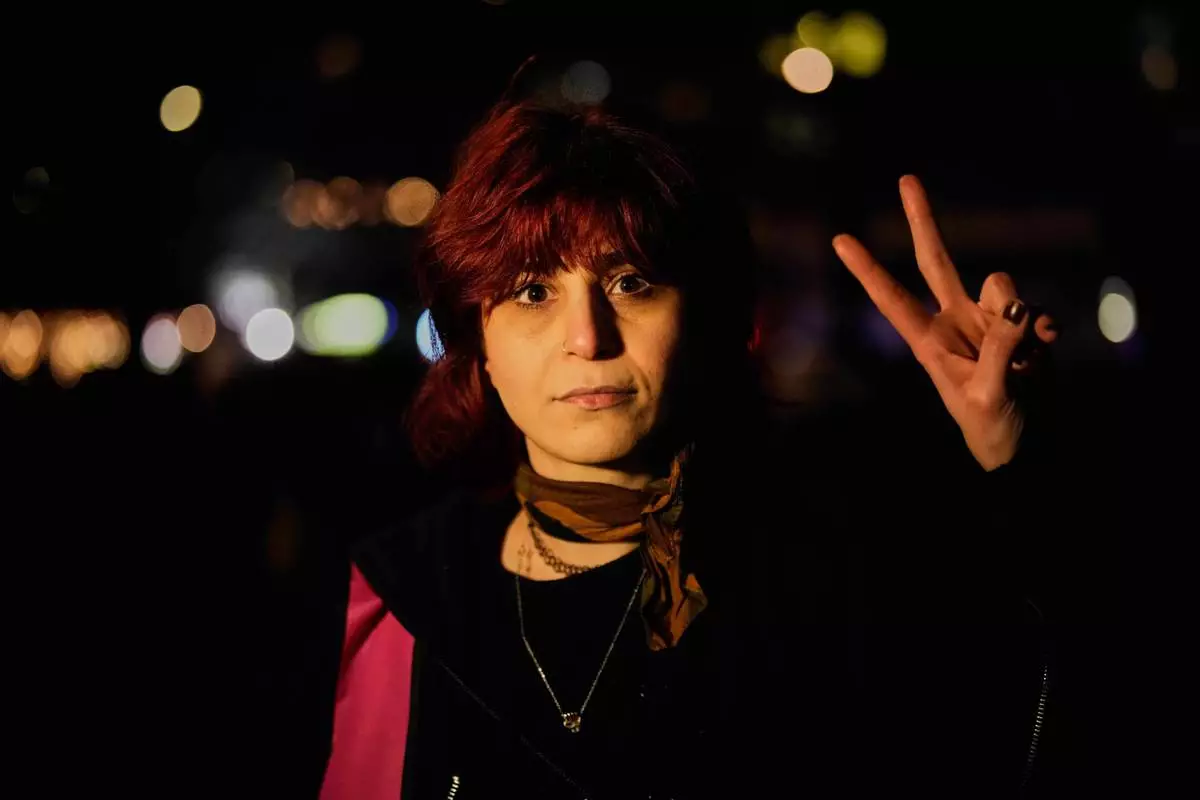
Iranian Maryam Nejatipur 32, poses for a photo after a demonstration in support of the nationwide mass protests in Iran against the government, in Berlin, Germany, Wednesday, Jan. 14, 2026. (AP Photo/Ebrahim Noroozi)
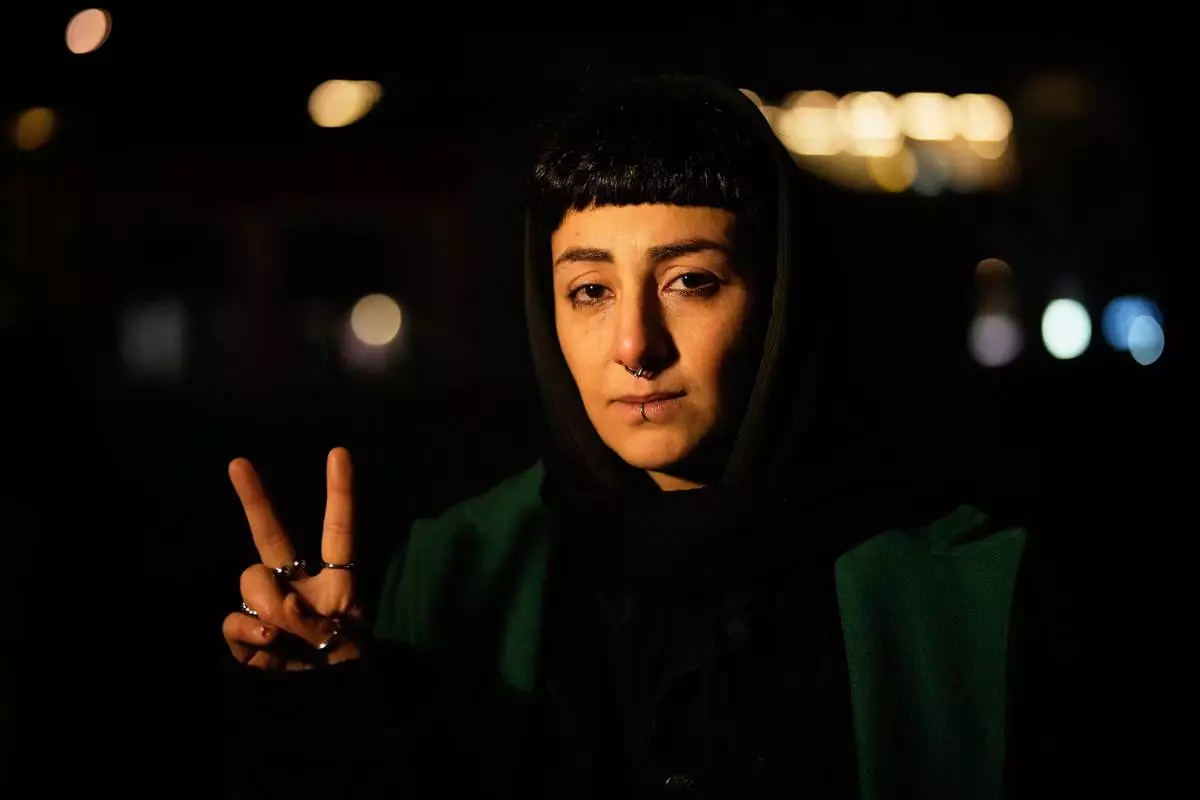
Iranian Anahita Safarnejad, 34, poses for a photo after a demonstration in support of the nationwide mass protests in Iran against the government, in Berlin, Germany, Wednesday, Jan. 14, 2026. (AP Photo/Ebrahim Noroozi)