DH urges positive emotional management to echo World Mental Health Day 2025
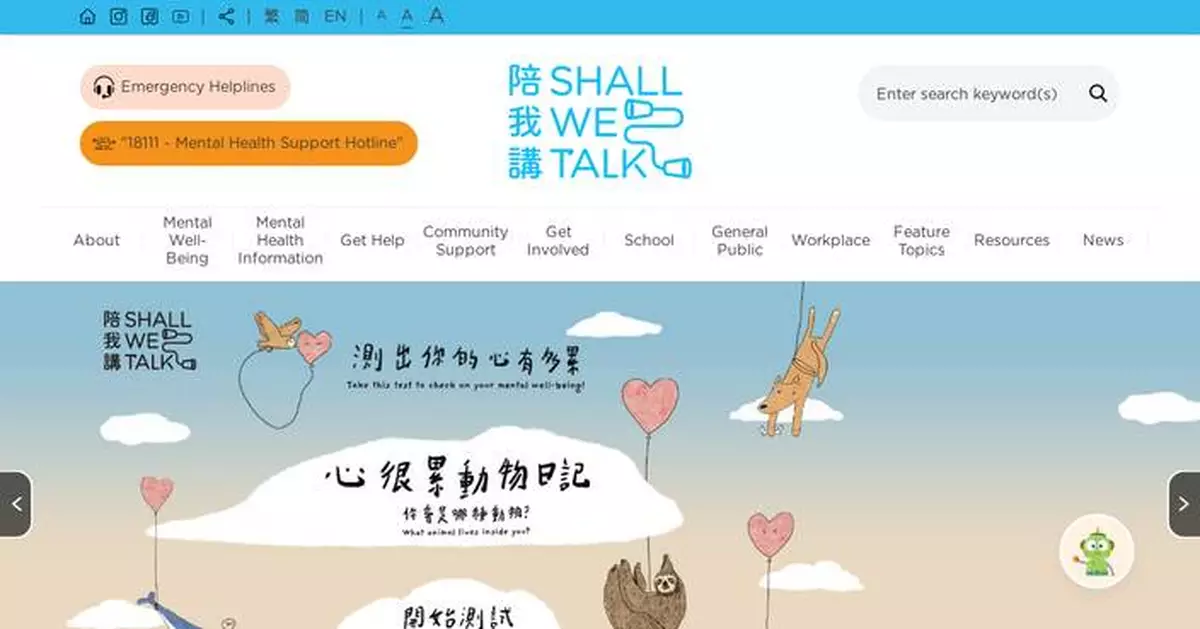
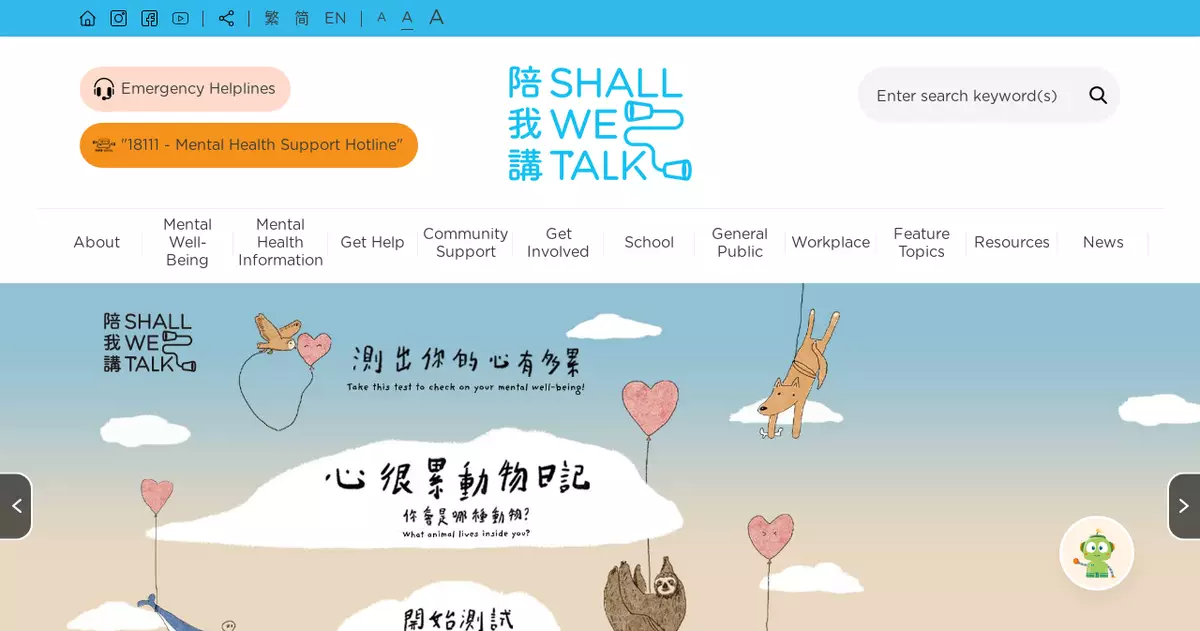
To echo World Mental Health Day 2025, the Department of Health (DH) today (October 10) is appealing to the public to pay attention to their own mental well-being and that of their close ones, adopt positive emotional management practices, build a caring and supportive community, and encourage those in need to seek professional help at an early stage. The Government launched the "18111 - Mental Health Support Hotline" in 2023, providing 24-hour one-stop support for individuals experiencing emotional distress. Since its launch up to the end of last month, more than 200 000 calls have been received. The Government's one-stop thematic website "Shall We Talk" (shallwetalk.hk) also consolidates various mental health hotlines and support services for easy access by people in need.
The World Federation for Mental Health (WFMH) designates October 10 every year as World Mental Health Day to raise global awareness of mental health and to mobilise societal support. This year’s theme is "Access to Mental Health Services in Catastrophes and Emergencies".
The Hong Kong Special Administrative Region Government attaches great importance to public mental health. In the event of catastrophes and emergencies, the Hong Kong Red Cross stands ready to provide immediate mental health support services. On the other hand, the Government has long been providing mental health services to the public through an integrated and multidisciplinary approach, with an aim to enhance the public's mental well-being.
On the promotion and prevention front, the DH and the Advisory Committee on Mental Health jointly implemented the "Shall We Talk" mental health promotion and public education initiative through a one-stop thematic website (shallwetalk.hk), social media pages, television and radio programmes, as well as roving outreach programmes in tertiary institutions and the community to promote mental health messages. To facilitate early identification and provide timely interventions and treatment, the Government has launched the Healthy Mind Pilot Project at three District Health Centres (DHC)/Expresses (DHCE) to provide free mental-health assessments and follow-up services. The Government will extend the project in 2026 to cover six more DHCs (i.e. a total of nine DHCs), with follow-up services to be provided by practitioners with an academic background and training in fields such as psychology or counselling. Additionally, to support the mental well-being of ethnic minorities (EMs), the Government announced in the 2025 Policy Address that it would extend the pilot project to provide emotional support and counselling services for EMs for two years.
To cater for the needs of different groups, the Government has also formulated different targeted strategies:
Students
-----------
The Government will regularise the implementation of the Three-tier Emergency Mechanism in secondary schools and extend it on a trial basis to Primary Four to Six students to strengthen support for students in need. Moreover, the DH also promotes mental health at schools through the Whole School Health Programme, with guidelines and checklists provided to participating schools. Health reports will be compiled for each participating school to recommend targeted school-based measures to promote physical activity, healthy eating, mental health and social well-being to improve the physical and psychological health of students. The DH conducts annual health assessments for all primary and secondary day-school students, including psychosocial evaluations via clinical assessments or questionnaires. Students found to have psychosocial or behavioural problems will receive an immediate risk assessment and support, as well as referrals to clinical psychologists of the Student Health Service or other organisations for further assessment and treatment.
Elderly people
-------------------
The DH works with relevant departments and non-governmental organisations (NGOs) to deliver health talks, workshops, and training for elderly people, their carers, and volunteers to promote mental well-being among the elderly and address their common mental issues, such as depression, anxiety and dementia, while raising public awareness through various media on elderly mental health, including the prevention of elderly suicide. The Elderly Health Centres under the DH also provide health assessments for members using internationally recognised health tools adapted for local elderly, aiming to detect and prevent depression and suicidal risks early among the elderly.
Working population
-------------------------
The DH collaborates with the Labour Department and Occupational Safety and Health Council to execute the Mental Health Workplace Charter to encourage employers to provide mental health-friendly workplaces and commend schools and organisations that can arrange a specific number of staff members to receive mental health training, such as mental health first aid.
The Government encourages individuals in need to seek early professional help or call the Mental Health Support Hotline to obtain immediate assistance. Of the over 200 000 calls received, 509 calls were referred to the Social Welfare Department's Integrated Community Centres for Mental Wellness and designated hotline for carer support, the Hospital Authority's mental health hotlines, or NGOs for follow up.
The Government will continue to adopt a multipronged strategy to foster close collaboration among government departments and NGOs, fully utilising community resources, experience, and networks to develop a multidisciplinary tiered framework. The "Stepped Care Model for Mental Health" is expected to be finalised by the end of this year to better address mental health challenges, and build a caring and harmonious society.
Source: AI-found images