China's Palace Museum has opened the gate to its hidden treasure, the Qianlong Garden, also known as the Garden of Tranquil Longevity or the Ningshou Gong Garden, in celebration of the museum's centennial anniversary this year.
Commonly known as the Forbidden City and constructed between 1406 and 1420, the complex that now operates as a museum once served as the imperial palace for the Ming (1368-1644) and the Qing (1644-1912) dynasties. It is a UNESCO inscribed World Cultural Heritage and has one of the world's largest and most intact ancient wooden structures.
The Palace Museum was established in 1925 on the base of the former imperial compound. Historically off-limits as an imperial residence, the Forbidden City now is one of the most-visited museums in China.
Hailed as the most lavish and exquisite garden within the Palace Museum, the Qianlong Garden has remained a mystery for over a century.
Comprising four distinct courtyards, the garden initially opens its first and second sections. The first courtyard has an ingenious layout, blending with rockeries and pavilions inspired by traditional gardens in southern China.
The style of the second courtyard, by contrast, embodies a simple and orderly setting. Liu Mengyu, associate researcher with the Department of Heritage Architecture at the Palace Museum, said the courtyard's layout reflects the intentions of Emperor Qianlong (1711-1799) of the Qing Dynasty.
"Emperor Qianlong specifically named the main hall of this second courtyard, 'Suichu Tang (Hall of Wish Fulfillment),' which aligns perfectly with a place like this. It embodies his yearning for a return to a more ordinary life," said Liu.
Unfortunately, the courtyard did not retain its original furnishings after a major renovation during Emperor Guangxu (1875–1908)'s reign. The courtyard has now been transformed into an exhibition hall. With the help of technology, curators are now using the hall to narrate the history of the Qianlong Garden through advanced visual display. Among these is a scaled model of the entire garden that offers visitors a complete overview of the delicate and ingenious layout.
The restoration of the Qianlong Garden has been a painstaking process for staff members working at the Palace Museum, as it involves the techniques of traditional architectural crafts, such as double-sided embroidery. While performing this meticulous work, staff members happened to find fragments of a painting on the wall.
"After removing all the layers of later wallpaper, we were surprised and delighted to find remnants of a panoramic painting during Qianlong's reign underneath. As the archival records indicated this wall originally featured a full panoramic painting that [we didn't find at the first hand], but [now] we can still see tiny fragments in the corners," said Li.
At present, the Palace Museum has preserved the whole wall and restored the painting through rendering technology.
In addition to the garden's public opening, a symposium marking the 100th anniversary of the founding of the Palace Museum was held Friday in Beijing.
Li Shulei, member of the Political Bureau of the Communist Party of China (CPC) Central Committee and head of the Publicity Department of the CPC Central Committee, attended the symposium and delivered a speech.
More than 100 participants, including officials from the Publicity Department of the CPC Central Committee, the Ministry of Culture and Tourism, and the National Cultural Heritage Administration, took part in the symposium.
Participants said at the symposium that the Palace Museum stands as a unique symbol of ancient China and an important symbol of Chinese civilization, stressing that the Palace Museum, born amid the great tide of social changes in modern China, has advanced in step with the country's national rejuvenation.
Over the past century, the Palace Museum has upheld a spirit of reverence and dedication, and carried forward a legacy of masterful craftsmanship, which from the perspective of the participants, represents an enduring achievement in both Chinese cultural history and the history of human civilization.
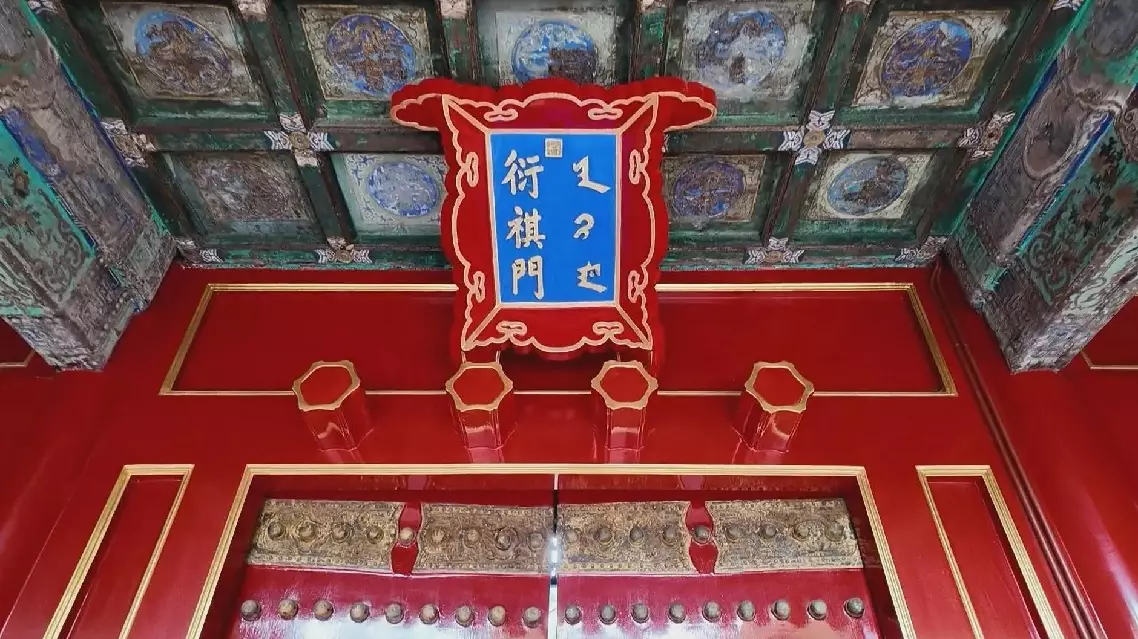
China's Palace Museum opens long-hidden imperial garden in celebration of centennial anniversary