NEW YORK (AP) — Two jurors who voted in June to convict Harvey Weinstein of sexual assault said they regret the decision and only did so because others on the panel bullied them, the former movie mogul’s lawyers said in a newly public court filing.
Weinstein's lawyers are seeking to overturn his conviction for first-degree criminal sex act, arguing in papers unsealed Thursday that the guilty verdict was marred by “threats, intimidation, and extraneous bias,” and that the judge failed to properly deal with it at the time.
In sworn affidavits included with the filing, two jurors said they felt overwhelmed and intimidated by jurors who wanted to convict Weinstein on the charge, which accused him of forcing oral sex on TV and film production assistant and producer Miriam Haley in 2006.
One juror said she was screamed at in the jury room and told, “we have to get rid of you.” The other juror said anyone who doubted Weinstein’s guilt was grilled by other jurors and that if he could have voted by secret ballot, "I would have returned a not guilty verdict on all three charges.”
“I regret the verdict,” that juror said. “Without the intimidation from other jurors, I believe that the jury would have hung on the Miriam Haley charge.”
Weinstein, 73, was acquitted on a second criminal sex act charge involving a different woman, Polish psychotherapist and former model Kaja Sokola. The judge declared a mistrial on the final charge, alleging Weinstein raped former actor Jessica Mann, after the jury foreperson declined to deliberate further.
It was the second time the Oscar-winning producer was tried on some of the charges. His 2020 conviction, a watershed moment for the # MeToo movement, was overturned last year. Now his defense team, led by attorney Arthur Aidala, is fighting to eliminate his retrial conviction and head off another retrial on the undecided count.
Judge Curtis Farber gave Manhattan prosecutors until Nov. 10 to conduct its own investigation and file a written response before he rules on Dec. 22. That means a decision and a possible retrial or sentencing won’t come until after Manhattan District Attorney Alvin Bragg is up for reelection on Nov. 4.
In the affidavits, which blacked out juror names and identifying numbers, the two jurors said they feared for their safety and the foreperson’s safety. They said that when the foreperson asked for civility, another juror got in his face, pointed a finger and told him: “You don't know me. I'll catch you outside.”
One of the jurors said deliberations were poisoned by a belief among some jurors that a member of the panel had been paid off by Weinstein or his lawyers. That claim, which has not been supported by any evidence, shifted the jury of seven women and five men “from an even 6-6 spit to a sudden unanimous verdict," the juror said.
Some of what was said in the affidavits echoed acrimony that spilled into public view during deliberations. As jurors weighed charges for five days, one juror asked to be excused because he felt another was being treated unfairly.
Later, the foreperson complained that other jurors were pushing people to change their minds and that a juror yelled at him for sticking to his opinion and suggested the foreperson would “see me outside.”
After the jury returned a verdict on two of the three charges, Farber asked the foreperson whether he was willing to deliberate further. The man said no, triggering a mistrial on the rape count.
After the trial, two jurors disputed the foreperson’s account. One said no one mistreated him. The other said deliberations were contentious, but respectful.
When jurors came forward with concerns, Farber was strict about respecting the sanctity of deliberations and cautioned them not to discuss the content or tenor of jury room discussions, transcripts show. In their affidavits, the two jurors said they didn’t feel the judge was willing to listen to their concerns.
When jurors were asked if they agreed with the guilty verdict, one of the jurors noted in her affidavit that she paused “to try and indicate my discomfort in the verdict.” Afterward, when Farber spoke with jurors, she said she told him “the deliberations were unprofessional.”
Weinstein denies all the charges. The first-degree criminal sex act conviction carries the potential for up to 25 years in prison, while the unresolved third-degree rape charge is punishable by up to four years — less than he already has served.
He has been behind bars since his initial conviction in 2020, and he later also was sentenced to prison in a separate California case, which he is appealing.
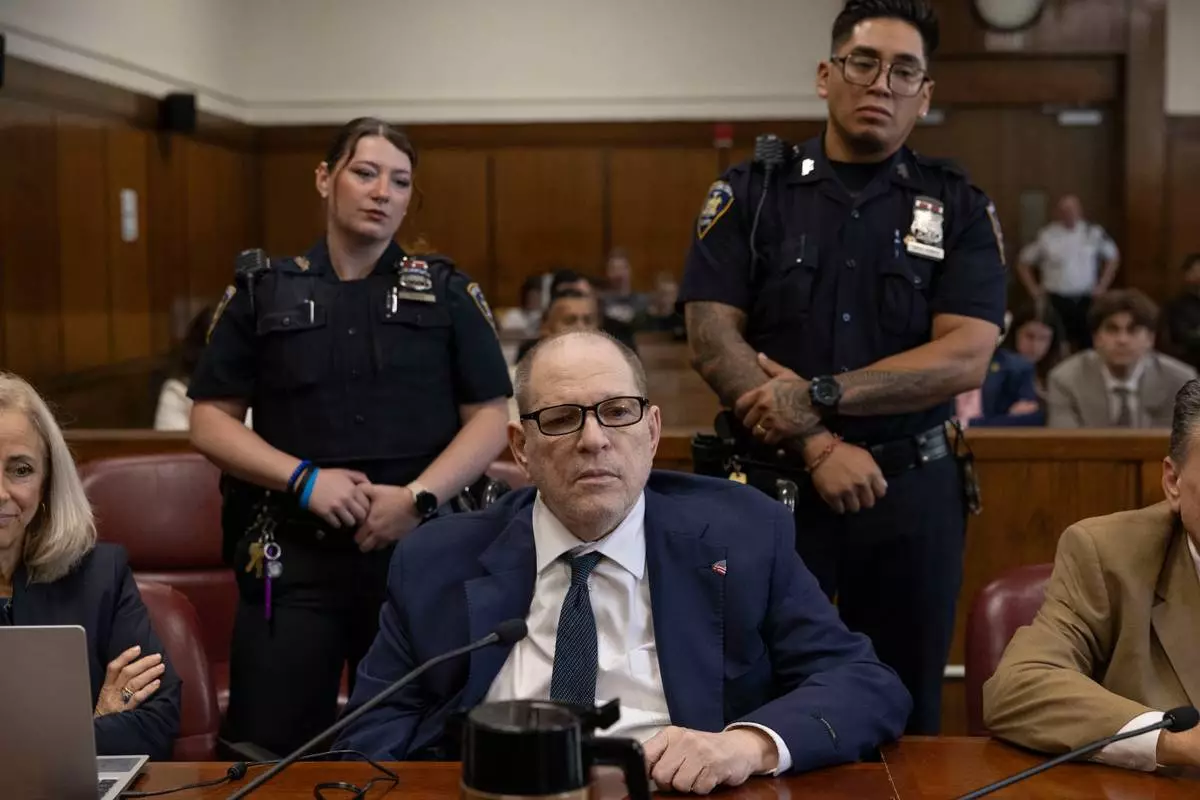
FILE - Harvey Weinstein appears in state court in Manhattan as jurors return to deliberations on a remaining charge in his retrial on June 12, 2025, in New York. (Christian Monterrosa/Pool Photo via AP, File)