Skip to Content Facebook Feature Image

A long-lost ancient Roman artifact reappears in a New Orleans backyard

News

A long-lost ancient Roman artifact reappears in a New Orleans backyard
News

News

A long-lost ancient Roman artifact reappears in a New Orleans backyard

2025-10-12 03:03 Last Updated At:03:10

NEW ORLEANS (AP) — A New Orleans family cleaning up their overgrown backyard made an extremely unusual find: Under the weeds was a mysterious marble tablet with Latin characters that included the phrase “spirits of the dead."

“The fact that it was in Latin that really just gave us pause, right?” said Daniella Santoro, a Tulane University anthropologist. “I mean, you see something like that and you say, ‘Okay, this is not an ordinary thing.’”

Intrigued and slightly alarmed, Santoro reached out to her classical archaeologist colleague Susann Lusnia, who quickly realized that the slab was the 1,900-year-old grave marker of a Roman sailor named Sextus Congenius Verus.

“When I first saw the image that Daniella sent me, it really did send a shiver up my spine because I was just floored,” Lusnia said.

Further sleuthing by Lusnia revealed the tablet had been missing from an Italian museum for decades.

Sextus Congenius Verus had died at age 42, of unknown causes, after serving for more than two decades in the imperial navy on a ship named for the Greco-Roman god of medicine, Asclepius. The gravestone calls the sailor “well deserving" and was commissioned by two people described as his “heirs," who were likely shipmates since Roman military could not be married at the time, Lusnia said.

The tablet had been in an ancient cemetery of around 20 graves of military personnel, found in the 1860s in Civitavecchia, a seaside in northwest Italy about 30 miles (48 kilometers) from Rome. Its text had been recorded in 1910 and included in a catalog of Latin inscriptions, which noted the tablet’s whereabouts were unknown.

The tablet was later documented at the National Archeological Museum in Civitavecchia prior to World War II. But the museum had been “pretty much destroyed” during Allied bombing and took several decades to rebuild, Lusnia said. Museum staff confirmed to Lusnia the tablet had been missing for decades. Its recorded measurements — 1 square foot (0.09 square meters) and 1 inch (2.5 centimeters) thick — matched the size of the tablet found in Santoro’s backyard.

“You can’t have better DNA than that,” Lusnia said.

She said the FBI is in talks with Italian authorities to repatriate the tablet. An FBI spokesperson said the agency could not respond to requests for comment during the government shutdown.

A final twist to the story suggests how the tablet made its way to New Orleans.

As media reports of the find began circulating this week, Erin Scott O’Brien says her ex-husband called her and told her to watch the news. She immediately recognized the hunk of marble, which she had always seen as a “cool-ass piece of art.” They had used as a garden decoration and then forgot about it before selling the home to Santoro in 2018.

“None of us knew what it was,” O’Brien said. “We were watching the video, just like in shock.”

O’Brien said she received the tablet from her grandparents — an Italian woman and a New Orleans native who was stationed in the country during World War II.

Perhaps no one would be more thrilled by the tablet’s rediscovery than Sextus himself. Grave markers were important in Roman culture to uphold legacies, even of everyday citizens, Lusnia said.

“Now Sextus Congenius Verus is being talked about so much,” Lusnia said. “If there’s an afterlife and he’s in it and he knows, he’s very happy because this is what a Roman wants — to be remembered forever.”

Brook is a corps member for The Associated Press/Report for America Statehouse News Initiative. Report for America is a nonprofit national service program that places journalists in local newsrooms to report on undercovered issues.
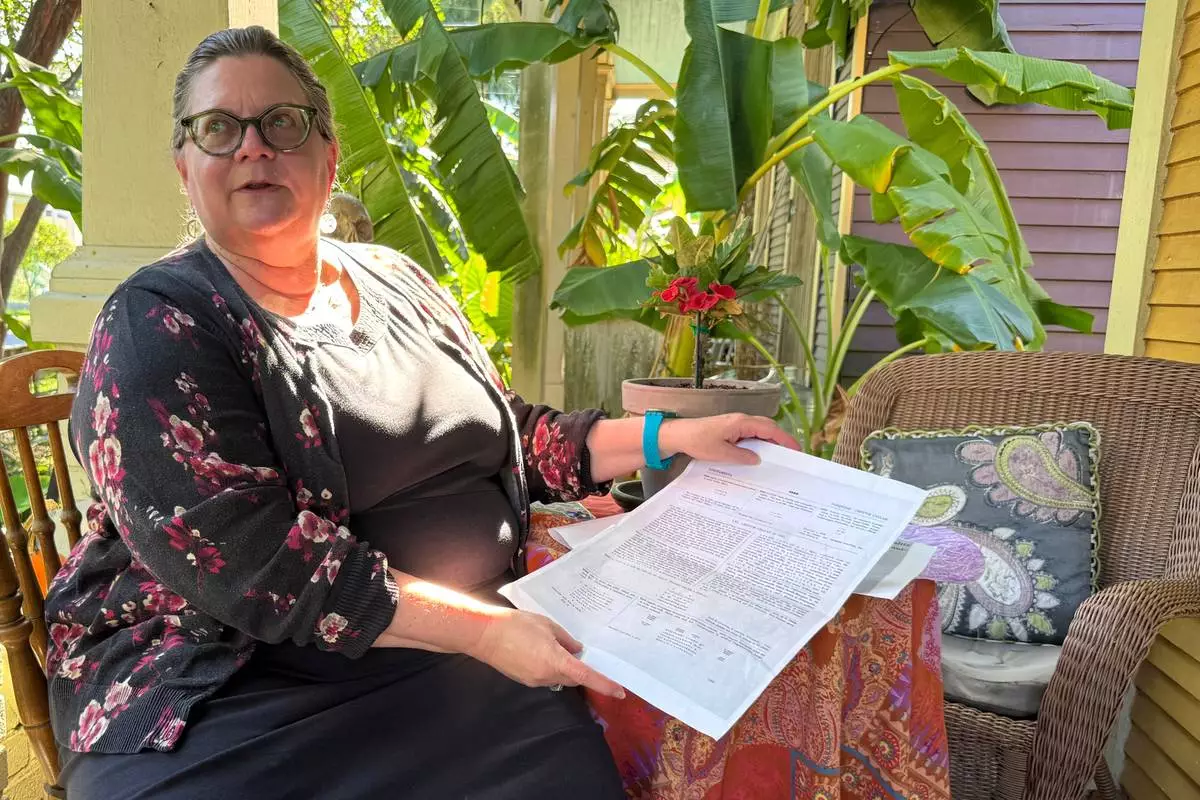
Tulane University classical archeologist Susann Lusnia explains her investigation into the backstory of the 1,900-year-old gravestone for a Roman sailor which had been missing for decades from an Italian museum, on Thursday, Oct. 9, 2025. (AP Photo/Jack Brook)
Tulane University classical archeologist Susann Lusnia explains her investigation into the backstory of the 1,900-year-old gravestone for a Roman sailor which had been missing for decades from an Italian museum, on Thursday, Oct. 9, 2025. (AP Photo/Jack Brook)

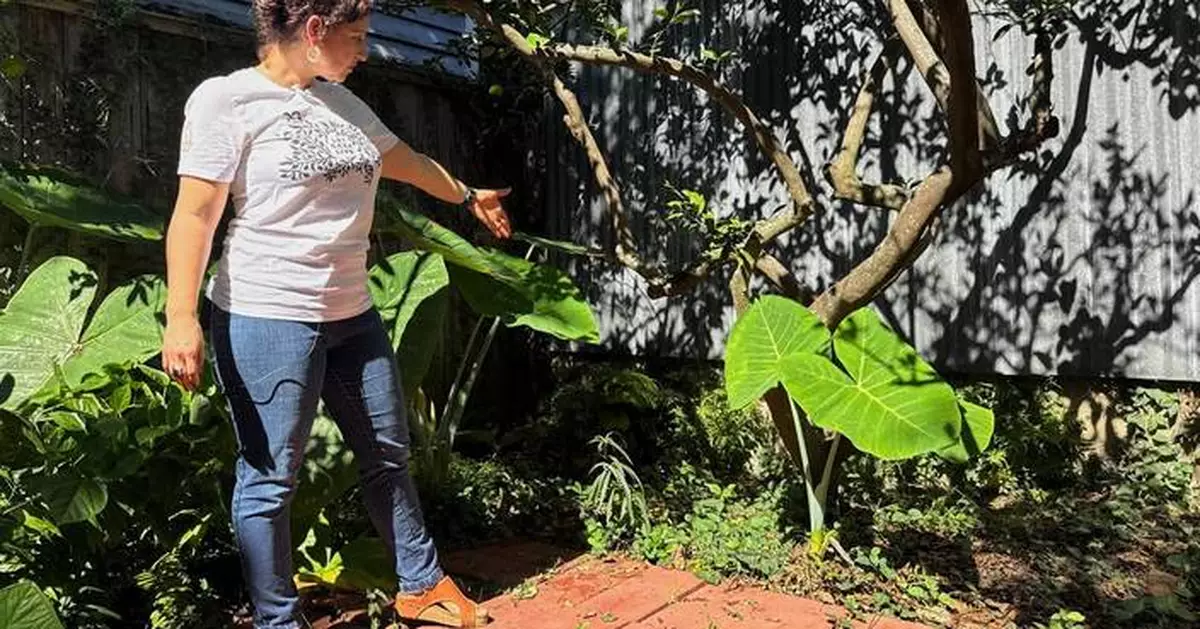
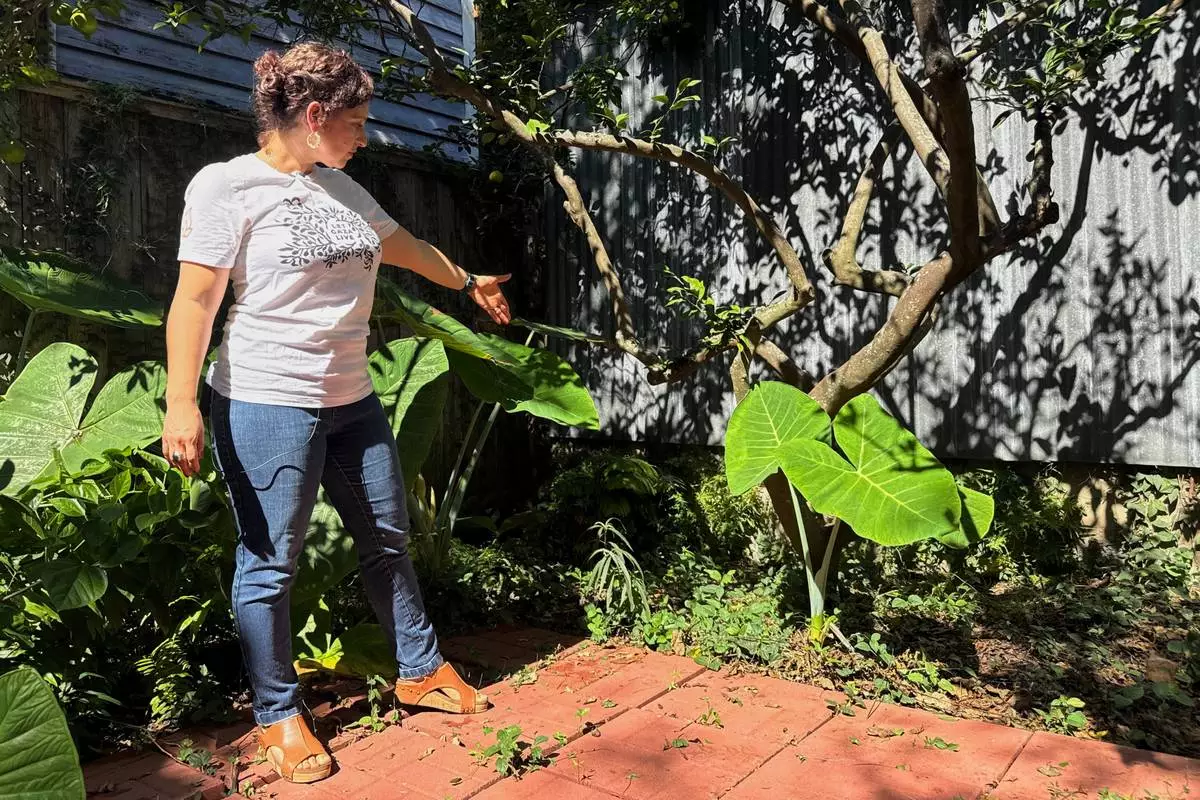
New Orleans resident Daniella Santoro points out the spot in her backyard where her family discovered a 1,900-year-old gravestone for a Roman sailor that had been missing for decades from an Italian museum, on Thursday, Oct. 9, 2025. (AP Photo/Jack Brook)

New Orleans resident Daniella Santoro points out the spot in her backyard where her family discovered a 1,900-year-old gravestone for a Roman sailor that had been missing for decades from an Italian museum, on Thursday, Oct. 9, 2025. (AP Photo/Jack Brook)
DHAKA, Bangladesh (AP) — Huge crowds flocked to the area outside Bangladesh’s national parliament building in the capital Wednesday to attend the funeral prayers for former Prime Minister Khaleda Zia , who died a day earlier at the age of 80 after a prolonged illness.

Waves of people from Dhaka and elsewhere had been streaming in toward the venue on Manik Mia Avenue, outside the parliament building, since early morning. Witnesses said many cried, calling Zia their “mother” as they arrived at the venue, with some traveling overnight from rural areas to join the prayers. In neighborhoods kilometers (miles) away, crowds also spilled into major streets to pray.

Zia’s funerals were expected to draw hundreds of thousands of her supporters and people from across the country while dignitaries from India, Pakistan, Sri Lanka and Nepal also arrived in Dhaka, with local media saying foreign envoys and representatives from 32 countries joined the funeral ceremony. She will be buried beside the grave of her husband, a former president who was assassinated in a military coup in 1981, in a park outside the parliament building later Wednesday.

Zia came to politics after her husband’s death and rose to prominence as an opposition leader during a nine-year movement against a former military dictator who was ousted in a mass uprising in 1990. Zia became prime minister for the first time in 1991, with a landslide victory in a democratically held national election as the country introduced parliamentary democracy. She was the leader of her Bangladesh Nationalist Party till her death.

Zia, who was known for having a calm demeanor, maintained a strong political rivalry with her archrival and former Prime Minister Sheikh Hasina. Hasina, who heads the Bangladesh Awami League party, ruled the country for 15 years before she was ousted in 2024 in a mass uprising.

Zia's coffin, draped in Bangladesh’s national flag, was carried in a van escorted by security officials and party supporters from the hospital to her residence and then to the funeral venue.

Authorities said about 10,000 security officials including soldiers would be deployed around the venue to maintain order on Wednesday.

Bangladesh’s interim government headed by Nobel Peace Prize laureate Muhammad Yunus announced a three-day mourning and declared Wednesday a public holiday to facilitate the funerals. Flags were kept at half-staff Wednesday across the country to show respect to Zia, the country’s first female prime minister who served two full terms and another brief term.

Zia’s eldest son, Tarique Rahman, is the acting head of her Bangladesh Nationalist Party, which is the front-runner in the nation’s next elections in February.

Hasina, who has been in exile in India since Aug. 5, 2024, was sentenced to death in November on charges of crimes against humanity involving last year’s uprising.

FILE - Bangladesh's main opposition Bangladesh Nationalist Party chief and former Prime Minister Khaleda Zia looks upwards as she attends a rally of her supporters outside their party headquarters in Dhaka, Bangladesh, Monday, March 12, 2012. (AP Photo/Aijaz Rahi, File)

FILE - Bangladesh's main opposition Bangladesh Nationalist Party chief and former Prime Minister Khaleda Zia looks upwards as she attends a rally of her supporters outside their party headquarters in Dhaka, Bangladesh, Monday, March 12, 2012. (AP Photo/Aijaz Rahi, File)

FILE - Khaleda Zia takes an oath of office as the prime minister in Dhaka, Bangladesh, Oct. 10, 2001. (AP Photo/Pavel Rahman, File)

FILE - Khaleda Zia takes an oath of office as the prime minister in Dhaka, Bangladesh, Oct. 10, 2001. (AP Photo/Pavel Rahman, File)

FILE - Bangladesh's former prime minister and Bangladesh Nationalist Party leader Khaleda Zia, center, leaves court after a hearing in Dhaka, Bangladesh, Aug. 10, 2016. (AP Photo, File)

FILE - Bangladesh's former prime minister and Bangladesh Nationalist Party leader Khaleda Zia, center, leaves court after a hearing in Dhaka, Bangladesh, Aug. 10, 2016. (AP Photo, File)

Recommended Articles