A free trade zone (FTZ) in south China's Guangxi, a border autonomous region with strong ties with Southeast Asia, has given full play to its strength in attracting foreign investment and driving local economic development.
In the first eight months of this year, the Guangxi Pilot Free Trade Zone saw its paid-in foreign investment total 2.24 billion yuan (nearly 314 million U.S. dollars), nearly tripling the figure of the same period last year, leading China's free trade zones in the growth in attracting foreign investment. As a coastal and border pilot free trade zone which connects the Greater Bay Area and has strong trade and investment ties with the Association of Southeast Asian Nations (ASEAN), it is working to transform its geographical advantages into the potential for attracting investment.
At the Qinzhou Port Area of the Guangxi Pilot Free Trade Zone, a foreign-funded enterprise in new energy manufacturing is optimistic about Guangxi's unique location and industrial chain advantages. After investing over 300 million U.S. dollars in building a battery-grade lithium hydroxide project, it has increased more investment this year, focusing on upgrading and expanding production lines.
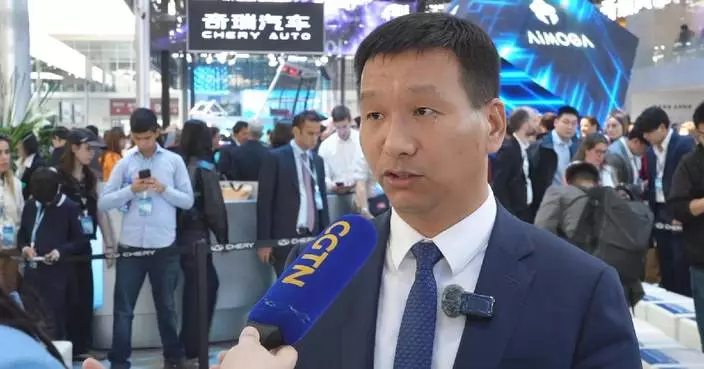
"To meet our production and operational needs, we have recently increased our registered capital by 160 million U.S. dollars for technological upgrades. Currently, we are implementing a technical transformation project to enable flexible conversion between lithium hydroxide and lithium carbonate production, with the first phase scheduled for completion and trial operation by the end of 2025," said Zhu Zhongqiu, general manager of Guangxi Albemarle Lithium Co., Ltd.
Recently, Guangxi rolled out an action plan to stabilize foreign investment, with a key emphasis on encouraging foreign capital to flow into competitive industries such as new energy vehicles. To this end, the Guangxi Pilot Free Trade Zone has fully utilized its open platform advantages, innovatively expanded channels for attracting investment, and established fast-track service channels for major projects, with a key focus on solutions for issues like production factor guarantees.
"We regularly host roundtable meetings for foreign-invested enterprises and have established a dedicated service mechanism for major projects to promptly assist companies in resolving their difficulties. Moving forward, we will comprehensively align with high-standard international economic and trade rules, tap into our strong trade and investment cooperation with ASEAN, and boldly explore areas such as artificial intelligence, digital economy, and service trade. This will promote high-quality investment through institutional opening-up," said Wang Xinhong, deputy director of the Office of the Guangxi Pilot Free Trade Zone.
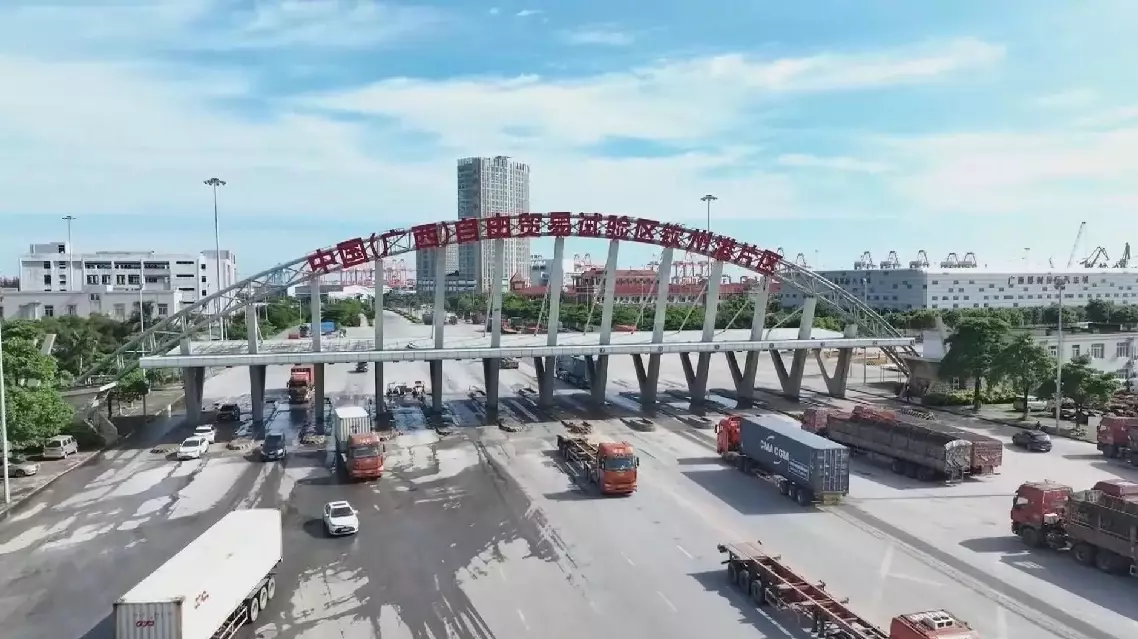
South China FTZ beefs up efforts to draw foreign investment
The continuing conflict between Israel and Lebanon has not only displaced people from their homes, but also pushed farmers off the land they depend on in the south of the country, as an estimated 80 percent have stopped working due to damaged fields, unsafe roads, and fears of contamination.
Despite Israel and Lebanon agreeing last Thursday to a three-week extension of an original 10-day ceasefire deal which began between in mid-April, deadly Israeli strikes have continued to hit southern parts of Lebanon, resulting in numerous deaths and widespread damage.
Controversy has also arisen over the Israeli military's efforts to extend the territories it occupies in southern Lebanon as part of what it terms as a "security buffer zone" along the border.
Lebanese residents have been warned against returning to their homes within this area, with Israel announcing that anyone who approaches this so-called "Yellow Line" will be considered a threat.
However, in spite of these difficulties, some farmers in the southern city of Tyre are trying to keep their connection to the soil alive.
A group of women have been bravely planting on borrowed land, because their own is now too dangerous to reach. Here, there are growing herbs such as basil, sage, rosemary, mint and thyme in neat rows.
For displaced local farmer Zainab, who hails from the border town of Naqoura, this field is not home, but it is where she has found a way to keep going amid times of crisis.
"I was displaced from my own land. I'm a farmer. I used to farm my land in Naqoura, so I started farming here, too. As you know, most of us from the south are farmers. Agriculture is the main thing we do," she said.
Across southern Lebanon, roughly 80 percent of local farmers have stopped working either because they are unable to reach their land or they fear it is no longer safe.
More than 17,000 farmers have been affected, with their fields damaged by shelling, fires, bulldozing, and contamination.
Officials have condemned the Israeli attacks on the region which have put the livelihood of ordinary people at risk and have cost some innocent civilian their lives.
"Under the recent acts of aggression, there was difficulty for the farmers to get to their lands. Most of the times they would even be targeted. I know some farms owners who hired workers to harvest the crops -- as a result, unfortunately, some of them were killed," said Alwan Charafeddine, the Deputy Mayor of Tyre City.
Agriculture is a key part of the Lebanese economy, but also the backbone of daily life in the south of the country. The region produces staples like olives, citrus, tobacco and vegetables, and when farmers are forced off their land, the consequences are felt across the country.
"I left the land. I left the crops I had planted, which, according to the season, were cabbage, cauliflower, fava beans and peas. More than leaving the land, I left my whole life behind, and now I'm here," said Zainab.
"After the targeting of the bridge that connected Tyre with Sidon, it became hard to get many of the supplies we used to get through there, which has caused the prices of agricultural products to rise," said the deputy mayor.
But amid these hard times, a glimmer of hope remains. On land belonging to local authorities, the Seeds of Tyre project is giving displaced women work, a source of income, and an outlet which allows them to pass on their skills.
Using donated seeds of aromatic herbs, they are producing basil and rose water and orange blossom, generating a small economy which is taking root in the middle of a much larger loss.
For Zainab, working the soil here offers some stability at a time of conflict, with this temporary field helping farmers tick over as they wait for safe access to their own land.
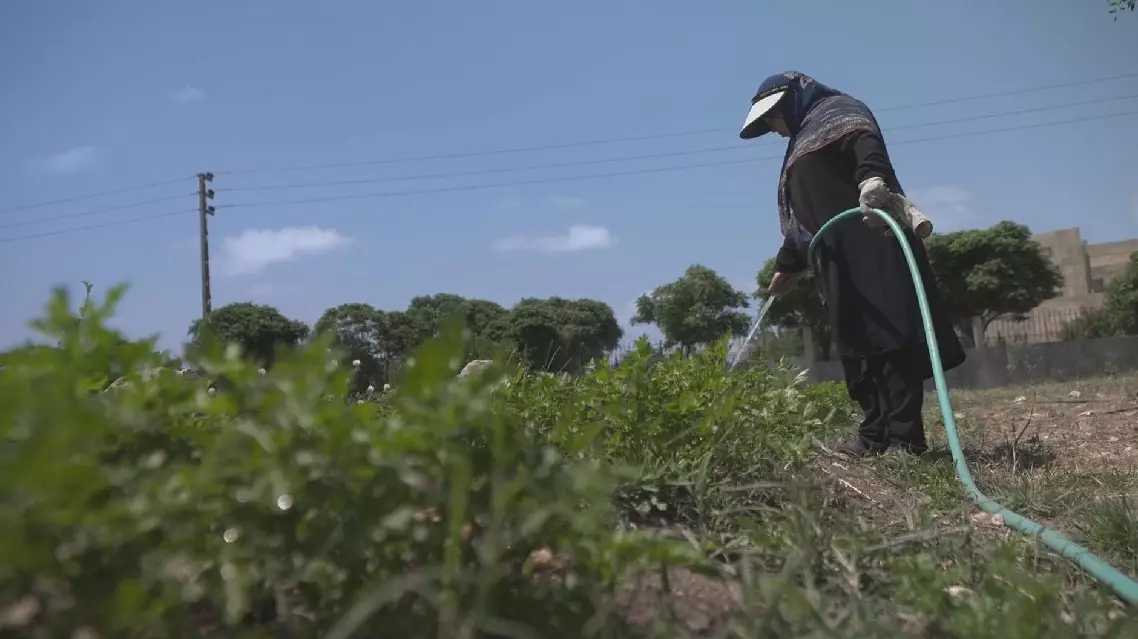
Farmers turn to temporary fields as swathes of land destroyed in southern Lebanon