BRISBANE, Australia (AP) — Carter Gordon has been rushed into Australia’s touring squad for tests in Japan and Europe within hours of returning to eligibility for the Wallabies by leaving the National Rugby League.
The 24-year-old Gordon was added to the Wallabies squad in the absence of flyhalves Tom Lynagh, who started against the British and Irish Lions, and Noah Lolesio, who hasn’t played since sustaining an injury in the opening win over Fiji.
Gordon had been lured back from NRL club Gold Coast Titans and his signing with the Queensland Reds and Rugby Australia was announced Monday, hours before Wallabies head coach Joe Schmidt unveiled a 34-man squad for the five-test northern tour.
“Carter Gordon will get the opportunity to integrate back into the Wallabies environment,” Schmidt said. “We’ve taken a long-term view with Tom Lynagh, who is still just 22. He has had a few injury frustrations since the third test versus the Lions in early August and will follow an individualized program, guided by both Wallabies and Queensland staff, which will allow him to recover to full fitness.”
Gordon made his debut for the Wallabies in 2023 and played eight tests before switching to rugby league, where he had limited game time in the top-flight and decided to return to the 15-a-side code.
Schmidt stuck with the bulk of the Wallabies squad involved in the Rugby Championship. He didn’t select foreign-based players, including veteran flyhalf James O’Connor, but was considering options to add players when the tests fall inside the World Rugby international window.
Outside backs Dylan Pietsch and Andrew Kellaway were picked after recovering from injuries.
Ex-All Blacks prop Aidan Ross and scrumhalf Kalani Thomas are the only uncapped players in the squad.
The Wallabies will play Japan in Tokyo on Oct. 24, followed by tests against England in London on Nov. 2, Italy in Udine on Nov. 9, Ireland in Dublin on Nov. 16 and France in Paris on Nov. 23.
Squad:
Backs: Filipo Daugunu, Tane Edmed, Josh Flook, Carter Gordon, Jake Gordon, Max Jorgensen, Andrew Kellaway, Ryan Lonergan, Hunter Paisami, Dylan Pietsch, Harry Potter, Hamish Stewart, Joseph-Aukuso Sua'ali'i, Kalani Thomas, Corey Toole.
Forwards: Allan Ala'alatoa, Angus Bell, Josh Canham, Nick Champion De Crespigny, Matt Faessler, Nick Frost, Fraser McReight, Josh Nasser, Zane Nonggorr, Billy Pollard, Tom Robertson, Aidan Ross, Lukhan Salakaia-Loto, Pete Samu, Carlo Tizzano, Taniela Tupou, Rob Valetini, Jeremy Williams, Harry Wilson.
AP rugby: https://apnews.com/hub/rugby

Australia's Joseph-Aukuso Suaalii runs at the defence during the Bledisloe Cup rugby test between the All Blacks and the Wallabies in Perth, Australia, Saturday, Oct 4, 2025. (AP Photo/Gary Day)

Australia's Josh Flook is checked by medical staff during the Bledisloe Cup rugby test between the All Blacks and the Wallabies in Perth, Australia, Saturday, Oct 4, 2025. (AP Photo/Gary Day)

Australia's Harry Potter gestures as he leaves the field during the Bledisloe Cup rugby test between the All Blacks and the Wallabies in Perth, Australia, Saturday, Oct 4, 2025. (AP Photo/Gary Day)
BUENOS AIRES, Argentina (AP) — Argentina’s once thriving wine industry is facing its worst crisis in more than 15 years, with record-low domestic consumption, dwindling exports and low-yielding crops.
Against this sobering reality, hundreds of wine enthusiasts still gathered last week in Mendoza, the heart of Argentina's wine region, to celebrate the annual National Wine Harvest Festival. Attendees watched dance performances, enjoyed live music and voted for the new queen of the Vend Imia festival.
The festival was marking its 90th year as domestic wine consumption in Argentina plummeted to an all-time low of 15.7 liters (4.1 gallons) per person in 2025, according to the National Institute of Viticulture, or INV. Compare that to 1970, when Argentines consumed as much as 90 liters (24 gallons) per person annually.
Furthermore, 1,100 vineyards have shut down across the country and 3,276 hectares (8095 acres) of grape production have vanished.
Fabián Ruggieri, president of the Argentine Wine Corp trade group, attributes the drop largely to a “sharp decline in purchasing power” that began in 2023. This trend, he said, is most acute among middle- and low-income consumers who traditionally consumed wine on a daily basis.
For Federico Gambetta, director of the Altos Las Hormigas winery, a medium-sized winery in Mendoza, the crisis is exacerbated by a shift in consumption patterns.
“People no longer consume wine en masse,” said Gambetta, noting that consumers now seek “coherence” and a sense of purpose behind their purchase.
While older generations favored high-alcohol, full-bodied wines, younger consumers prioritize other attributes, such as “approachability, freshness and lightness” — qualities typically found in white wines and rosés.
One of Gambetta’s red wines — Malbec Los Amantes 2022 — was recently ranked 41st among the world's 100 best wines. Yet, he notes that starting in 2010 his winery began to modify its wine — once defined by a traditional, heavier profile — to appeal to a new generation of consumers seeking lighter styles.
“Everything has mutated,” Gambetta said. “If you're not dynamic, you're lost.”
The U.S. is experiencing a similar shift as the older wine-focused demographic ages out and younger adults fail to fill the gap. A report by Silicon Valley Bank found that millennial and Gen Z drinkers are spread across more categories and drinking less overall, particularly those under 29.
The international market offers little relief. As the world’s 11th largest wine exporter, Argentina saw its exports fall to 193 million liters (51 million gallons) in 2025 — a 6.8% year-on-year decline and the lowest volume since 2004, according to INV.
Ruggieri notes that exports are being hampered by financing issues, high logistics costs and a lack of competitiveness resulting from external tariffs. While its neighbor and wine competitor Chile enjoys free trade agreements with over 60 economies — often reaching markets like China with tariff rates close to zero — Argentina faces tariffs between 10% and 20% in most markets.
Local producers like Gabriel Dvoskin, owner of the 10-hectare Canopus winery that produces approximately 50,000 bottles of wine each year, also struggles with inflation.
Dvoskin, who exports to 15 countries, with the U.S. as his main market, acknowledges that Argentina’s high production costs and rampant inflation place his wines at a disadvantage compared with international competitors.
“Our inflation makes us a bit expensive,” Dvoskin said. “My equivalent in France has a much lower cost for dry inputs — bottles, corks, etc. — than I do.”
For Gambetta, the current crisis reinforces a key lesson for the industry: product quality is non-negotiable.
“Right now, everything is very delicate, and one wrong step can bankrupt you,” Gambetta said.
Follow AP’s coverage of Latin America and the Caribbean at https://apnews.com/hub/latin-america
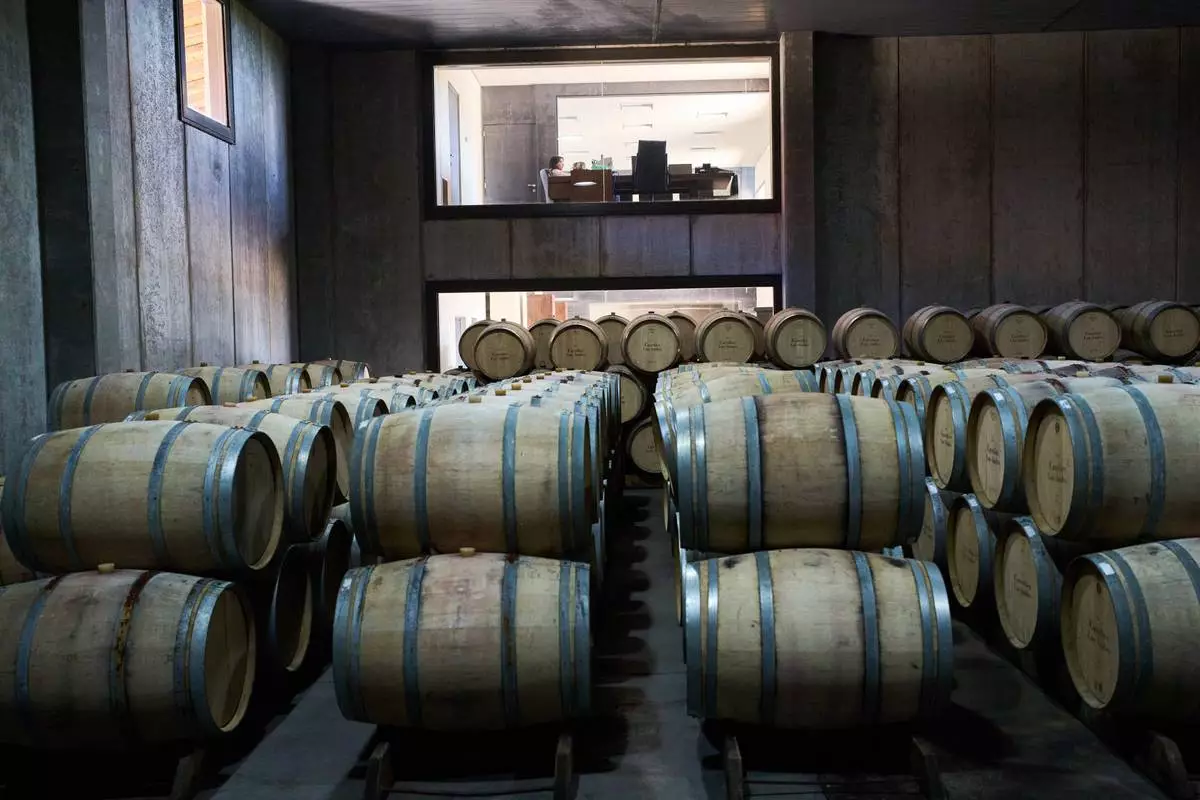
An employee works in an office above the barrel room at Cuvelier Los Andes winery in Vista Flores, Mendoza province, Argentina, Monday, March 9, 2026. (AP Photo/Rodrigo Abd)
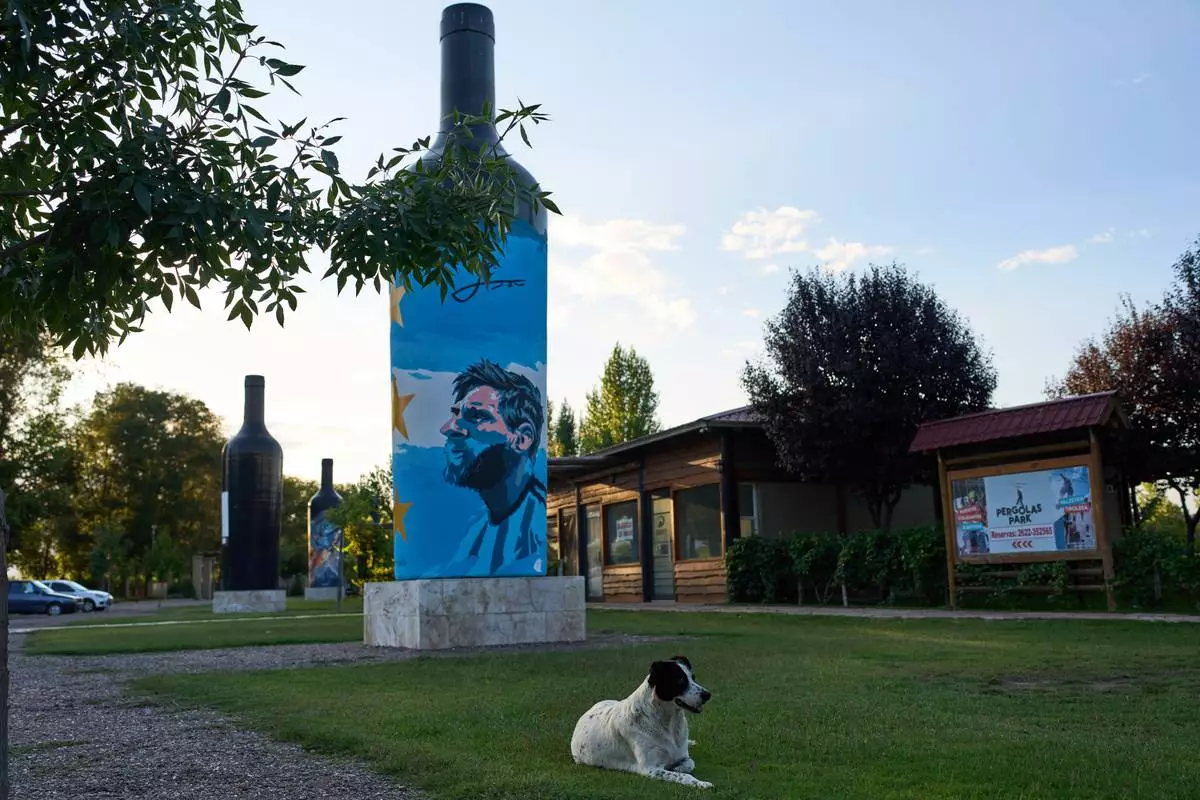
A dog rests next to wine-shaped structures in the Uco Valley, near Mendoza, Argentina, Monday, March 9, 2026. (AP Photo/Rodrigo Abd)
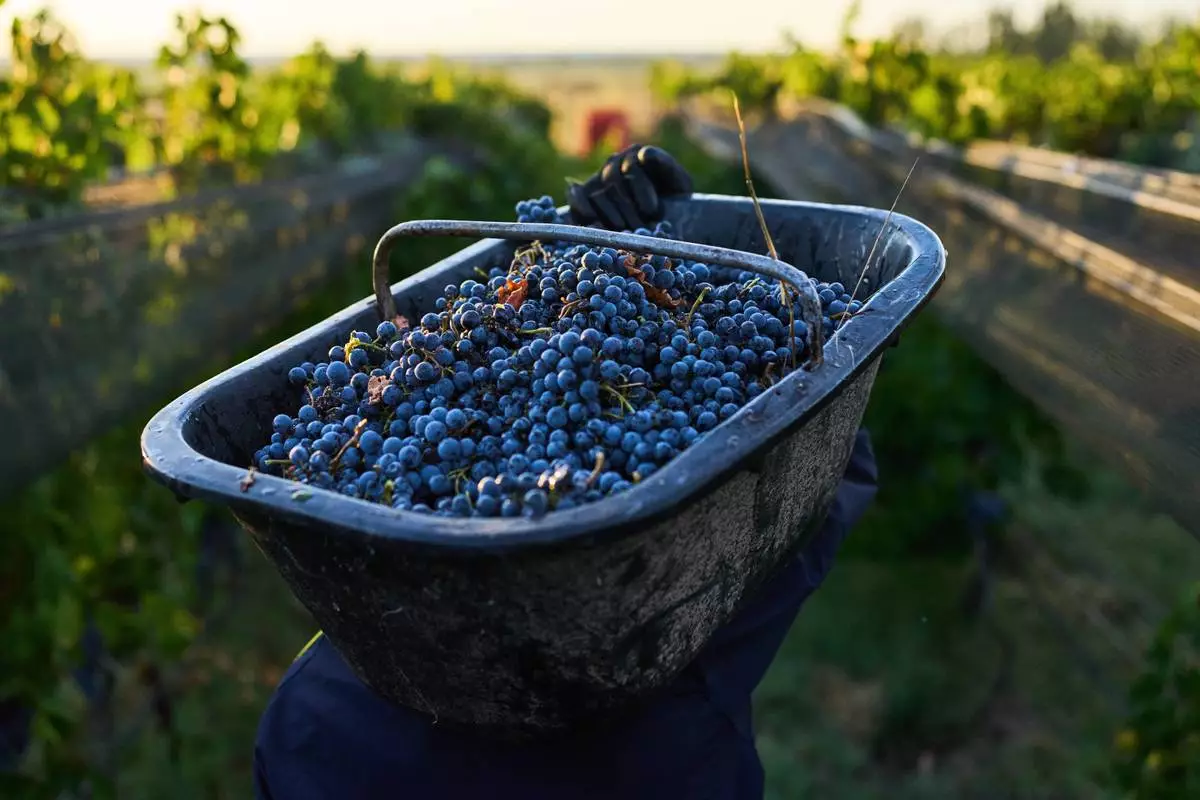
A worker carries a crate of harvested grapes at the Canopus Farm in El Cepillo, Mendoza province, Argentina, Tuesday, March 10, 2026. (AP Photo/Rodrigo Abd)
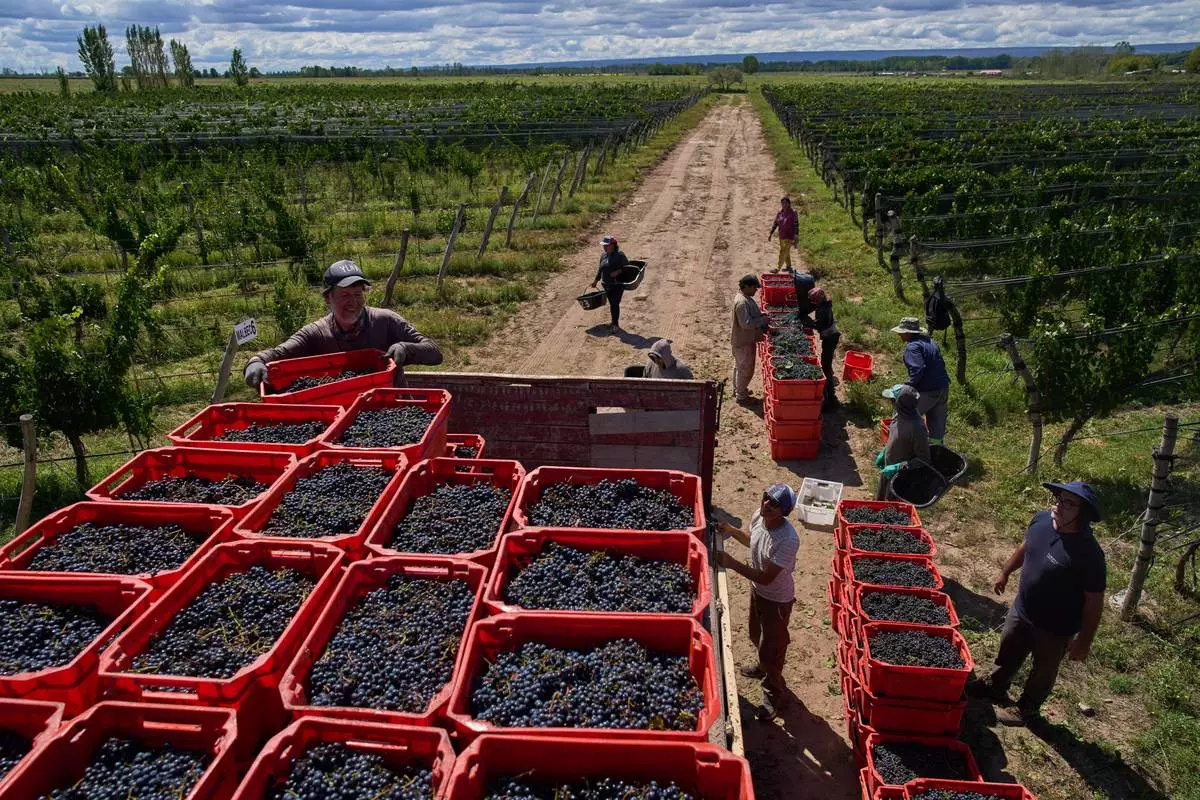
Worker load crates of grapes onto a truck at the Canopus Farm in El Cepillo, Mendoza province, Argentina, Tuesday, March 10, 2026. (AP Photo/Rodrigo Abd)
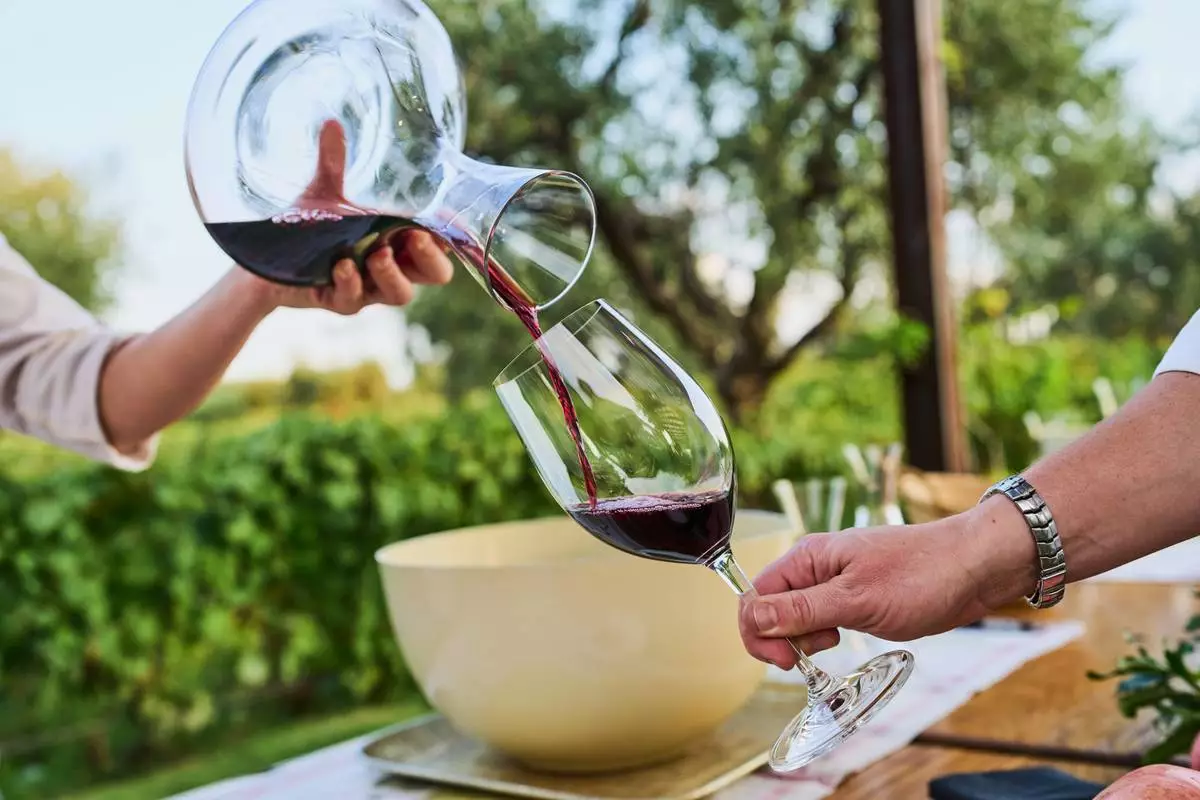
A worker serves red wine to tourists during a tasting at the Lagarde Winery in Mendoza, Argentina, Thursday, March 12, 2026. (AP Photo/Rodrigo Abd)