China's advances in women's development are reshaping the national landscape, as strengthened legal protections empower millions of women to thrive in education, health, and employment.
China has made women's development a national priority -- its five-year plans include sections on women's and children's welfare and the government regularly issues National Programs for Women's Development that outline concrete goals and strategies.
This emphasis echoes the Communist Party of China's decades-old slogan on women's liberation -- "women hold up half the sky." That conviction has long guided efforts to expand women's roles in public life, the workforce and education, ensuring they share equally in shaping China's future.
"Women equally exercise democratic rights in accordance with the law, equally participate in economic and social development, and equally access to the fruits of reform and development. Women's development in China has achieved inspiring outcomes," said Tai Liehong, head of the Women's Development Department at the All-China Women's Federation.
Peng Xiufang works as an embroiderer in southwest China's Guizhou Province. Like many other women in her country, she now leads a much better life thanks to a steady income.
"More and more customers reached to me for customized clothing, and I am living a better life. I can take care of my children while doing embroidery and support my family," said Peng.
China's modernization has delivered broader, more equitable benefits to women, with 690 million women becoming well-off. Women's average life expectancy now exceeds 80 years, placing China among the world's top 10 performers in maternal and child health.
Meanwhile, educational equity continues to advance, with female students comprising 50.76 percent of higher education enrollments, and the gender gap in basic education essentially eliminated.
The "Spring Bud Project - Dreaming of the Future" national initiative continues to deliver benefits, having provided educational assistance to 4.36 million girls by 2024.
"It was thanks to the support of the 'Spring Bud Project' that I had the chance to return to school. It inspired me to carry forward the kindness. I chose to become a teacher myself, bringing the 'Spring Bud spirit' of perseverance, kindness, and the pursuit of beauty into my teaching, to light up more dreams and possibilities," said Yan Wenhui, a primary school teacher in east China's Jiangxi Province.
Furthermore, China has enacted its first Civil Code including the marriage and family section, the Anti-Domestic Violence Law, comprehensively revised the Law on the Protection of Women's Rights and Interests, and further improved related laws including the Criminal Law and the Law on the Contracting of Rural Land, establishing a legal framework comprising over 100 laws and regulations that comprehensively safeguard women's rights.
At present, more than 40 percent of China's employed population are women. Women entrepreneurs account for over half of the total in the internet sector, and female workers account for 45.8 percent of the entire workforce in the science and technology field.
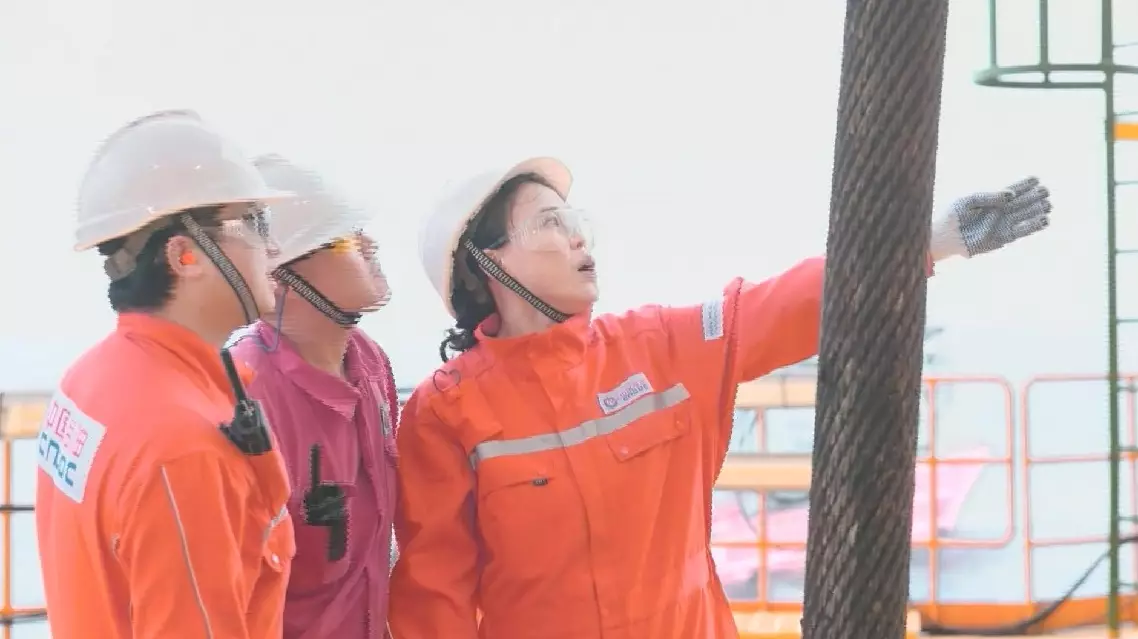
China's modernization drive bring equitable gains for women in various sectors