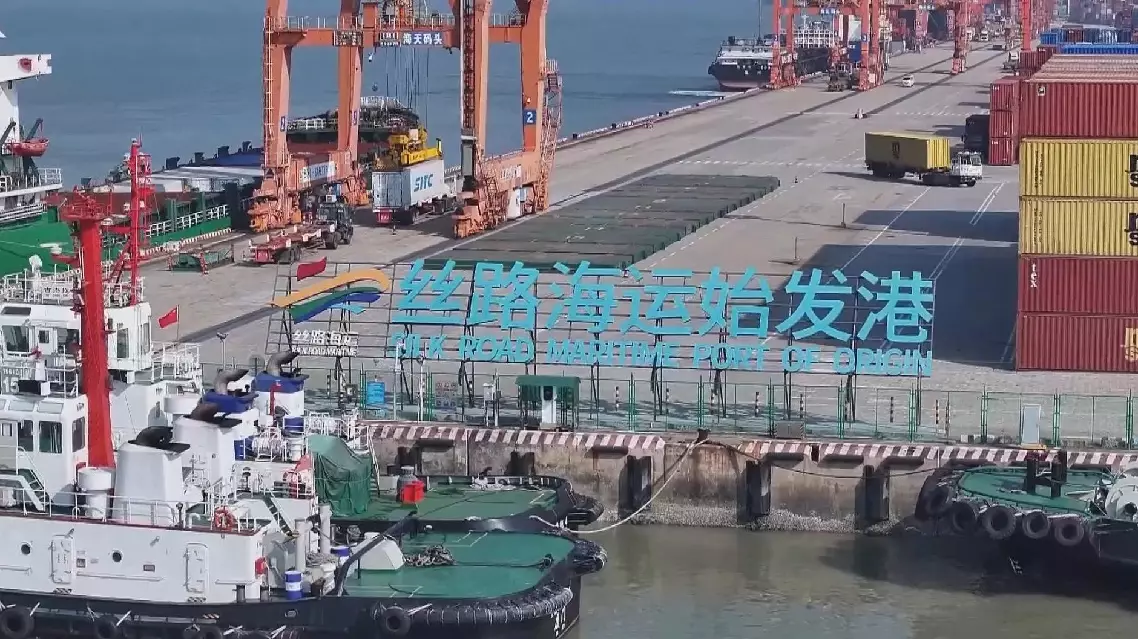
China's imports and exports with Belt and Road countries grew 6.2 percent year-on-year in the first three quarters, 2.2 percentage points higher than China's overall trade growth rate over the period, according to the General Administration of Customs (GAC).
Imports and exports with Belt and Road Initiative (BRI) partner countries totaled 17.37 trillion yuan (about 2.44 trillion U.S. dollars) in the first nine months, Wang Jun, deputy head of the GAC, said Monday at a press conference on China's trade figures for the first three quarters of 2025.
"On the import side, 64.6 percent of China's bulk-commodity import volumes and 69.1 percent of its agricultural product import values came from BRI partner countries. On the export side, shipments to BRI partner countries rose 16.6 percent for electronic and information products, 37 percent for high-end equipment, and 58 percent for wind-turbine sets," Wang said.
The official also revealed that according to the latest results, the Trade Index of China and BRI Partner Countries rose from the base value of 100 in 2013 to 198 in 2024.
China's trade with Belt and Road partners up 6.2 pct in first 9 months: official
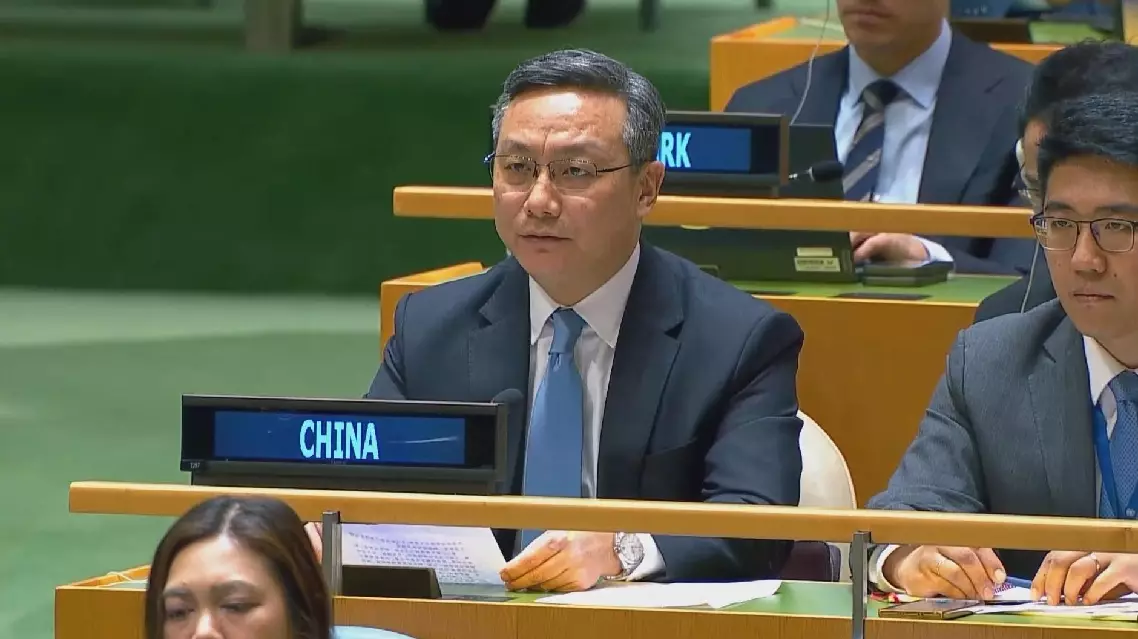
The UN must resolutely defend the victorious outcomes of World War II and reject any attempt to revive militarism, said China's Deputy Permanent Representative to the United Nations Sun Lei on Thursday.
Sun made the remarks to the UN General Assembly (UNGA), following UN Secretary-General Antonio Guterres who addressed the meeting on priorities for 2026.
Guterres emphasized the three principles that guide the world body's work in 2026: adherence to the UN Charter, peace with justice -- peace between nations and peace with nature, and unity in an age of division.
All nations must resolutely uphold the purposes and principles of the UN Charter, said Sun.
"The UN must resolutely defend the victorious outcomes of World War II and uphold the post-war international order, firmly oppose unilateralism and hegemony, and reject any attempt to revive militarism," he said.
The Chinese envoy said countries must advance the three pillars in a balanced manner.
"Peace and security, development, and human rights are mutually reinforcing, and none should be neglected," he said.
He also stressed reforming and improving global governance.
"China will work with all parties to firmly support multilateralism and the international system with the UN at its core, maintain peace, promote development, and advance the building of a community with a shared future for humanity," said Sun.
UN must resolutely defend victorious outcomes of World War II: Chinese envoy