China has robustly boosted its emergency grain supply capacity during the 14th Five-Year Plan period (2021-2025), said an official at a press conference in Beijing on Tuesday.
During the period, China has strengthened its emergency grain response plan system.
Currently, a four-tier emergency response framework has been established at the national, provincial, municipal, and county levels.
At the same time, China has intensified efforts in building a collaborative emergency grain response system.
The country has set up seven regional grain emergency response centers in the Beijing-Tianjin-Hebei region, the Yangtze River Delta, the Guangdong-Hong Kong-Macao Greater Bay Area, the Chengdu-Chongqing region, central China, northwest China, and northeast China.
The four-tiered structure of regional, provincial, municipal, and county-level grain emergency response centers is gradually taking shape.
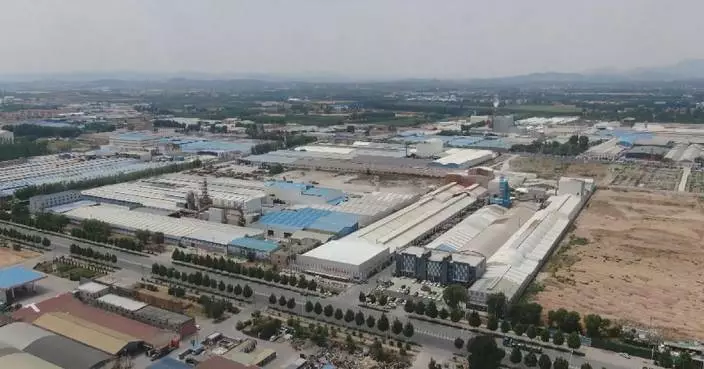
In addition, a number of large grain and oil processing and logistics distribution enterprises have been designated as national grain emergency response enterprises, with corresponding enterprises also identified at the provincial level.
This initiative aims to ensure that grain emergency response enterprises can respond swiftly, operate efficiently, and provide robust support.
"Overall, China's grain emergency response capacity has continuously improved during the 14th Five-Year Plan period. Thirty six large and medium-sized cities have maintained finished grain and oil reserves sufficient to sustain market supply for over 15 days, and other cities have also held certain reserves of finished grain and oil products. Beyond finished grain products, our current stockpiles of raw grain are very ample, and we can also process it on demand to ensure supply," said Liu Huanxin, director of the National Food and Strategic Reserves Administration.
During the 14th Five-Year Plan period, the number of emergency grain processing enterprises at all levels has increased from 5,448 to 6,872, a growth of 26 percent, Liu said.
In the same period, the daily emergency processing capacity for grain and oil has risen from 1.2 million tonnes to 1.78 million tonnes, a 48-percent increase, with daily processing sufficient to meet two days' consumption, the official said.
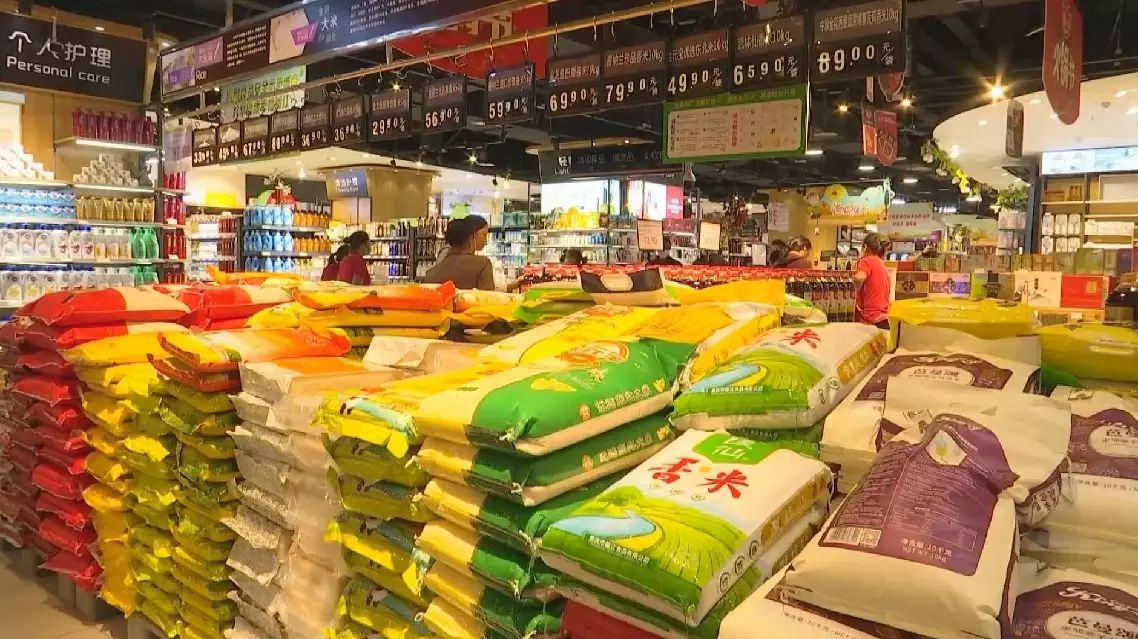
The number of emergency grain supply outlets has expanded from 43,000 to 59,000, a 37-percent rise. Leveraging these outlets, the daily emergency supply capacity for finished grain and oil products has shot up from 1.06 million tonnes to 1.67 million tonnes, a growth of 57 percent, Liu added.
China enhances emergency grain supply capacity in past five years: official