Skip to Content Facebook Feature Image

French prime minister will suspend a pension reform to avoid government collapse

News

French prime minister will suspend a pension reform to avoid government collapse
News

News

French prime minister will suspend a pension reform to avoid government collapse

2025-10-15 00:23 Last Updated At:00:30

PARIS (AP) — French Prime Minister Sébastien Lecornu on Tuesday announced he would suspend a much-debated plan to raise the retirement age from 62 to 64, in a move aimed at preventing his fragile minority government from being toppled.

After a week of political turmoil, the newly reappointed Lecornu said in a policy speech at the National Assembly that the law, a flagship initiative of President Emmanuel Macron, would be put on hold until after the next presidential election in 2027.

More Images
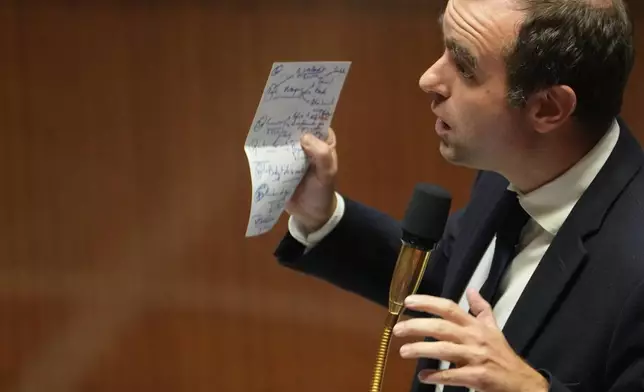
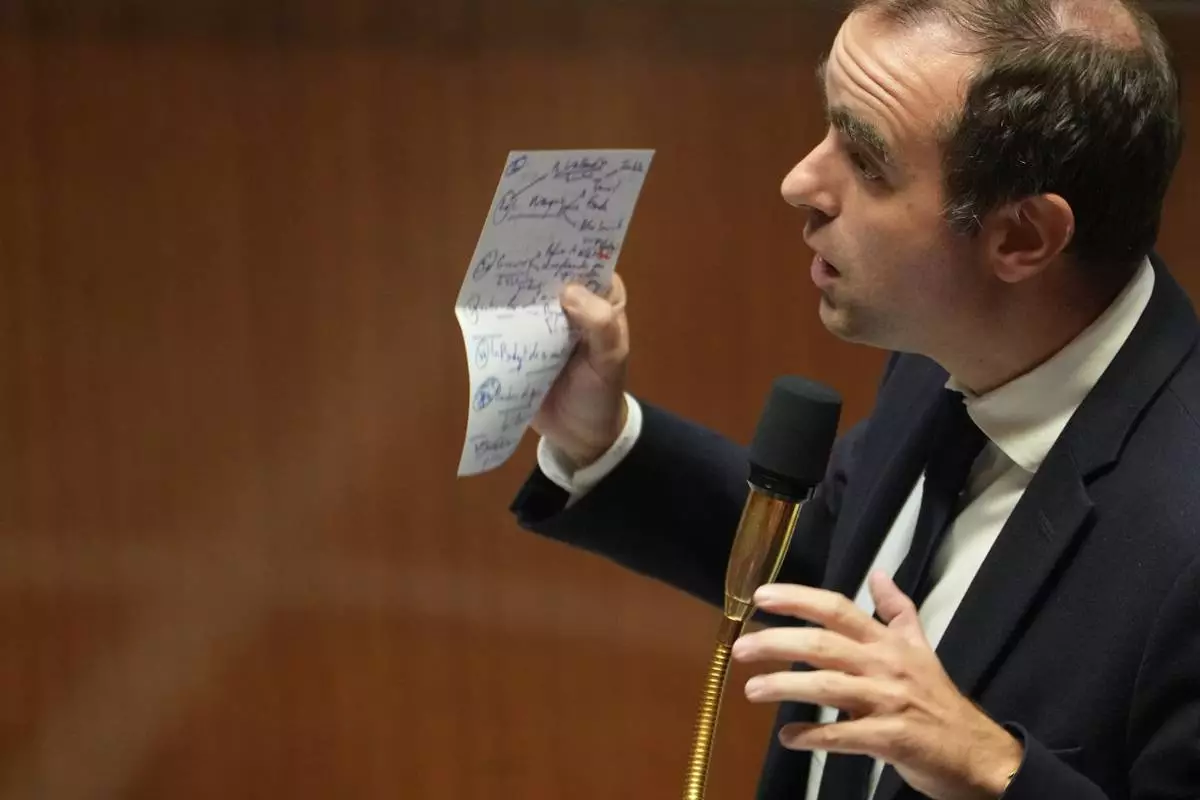
French Prime Minister Sebastien Lecornu answers lawmakers after his policy speech at the National Assembly, Tuesday, Oct. 14, 2025 in Paris. (AP Photo/Thibault Camus)
French Prime Minister Sebastien Lecornu answers lawmakers after his policy speech at the National Assembly, Tuesday, Oct. 14, 2025 in Paris. (AP Photo/Thibault Camus)
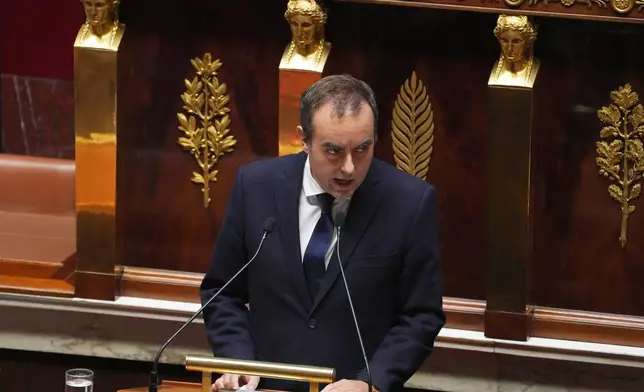
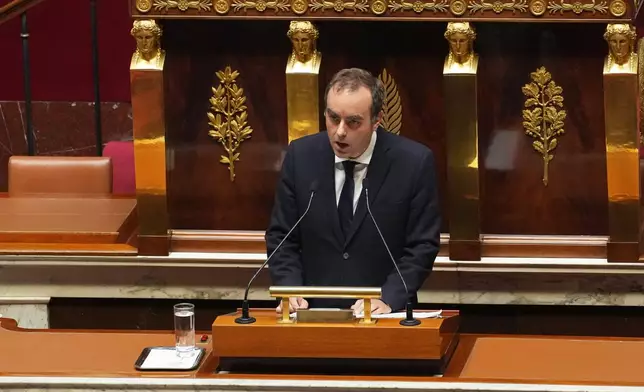
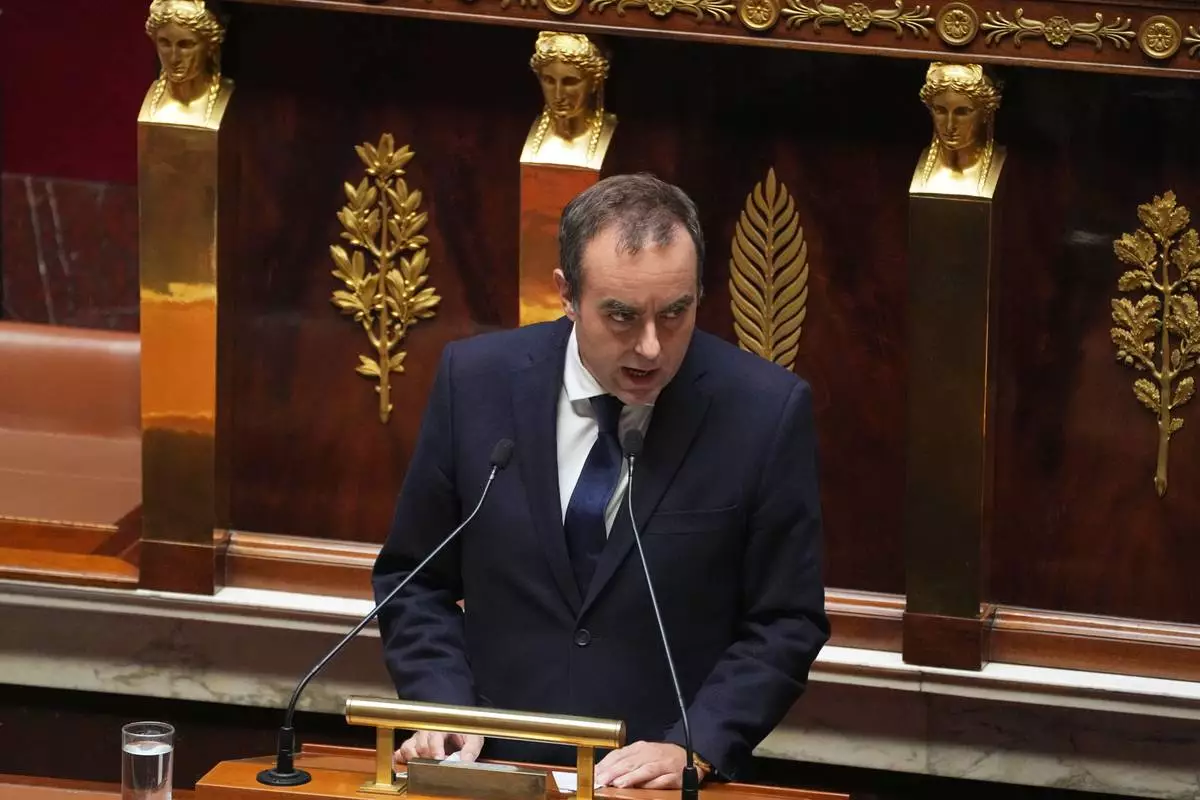
French Prime Minister Sebastien Lecornu delivers his policy speech at the National Assembly, Tuesday, Oct. 14, 2025 in Paris. (AP Photo/Thibault Camus)
French Prime Minister Sebastien Lecornu delivers his policy speech at the National Assembly, Tuesday, Oct. 14, 2025 in Paris. (AP Photo/Thibault Camus)
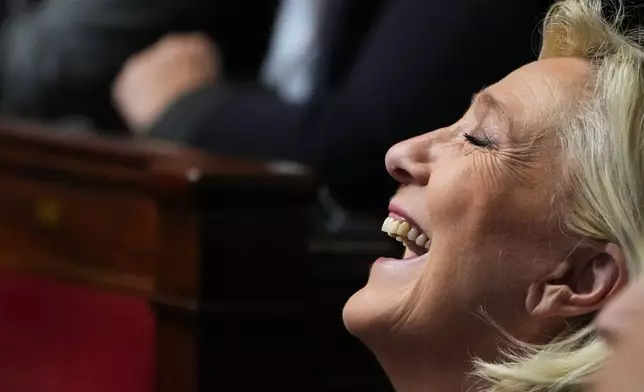
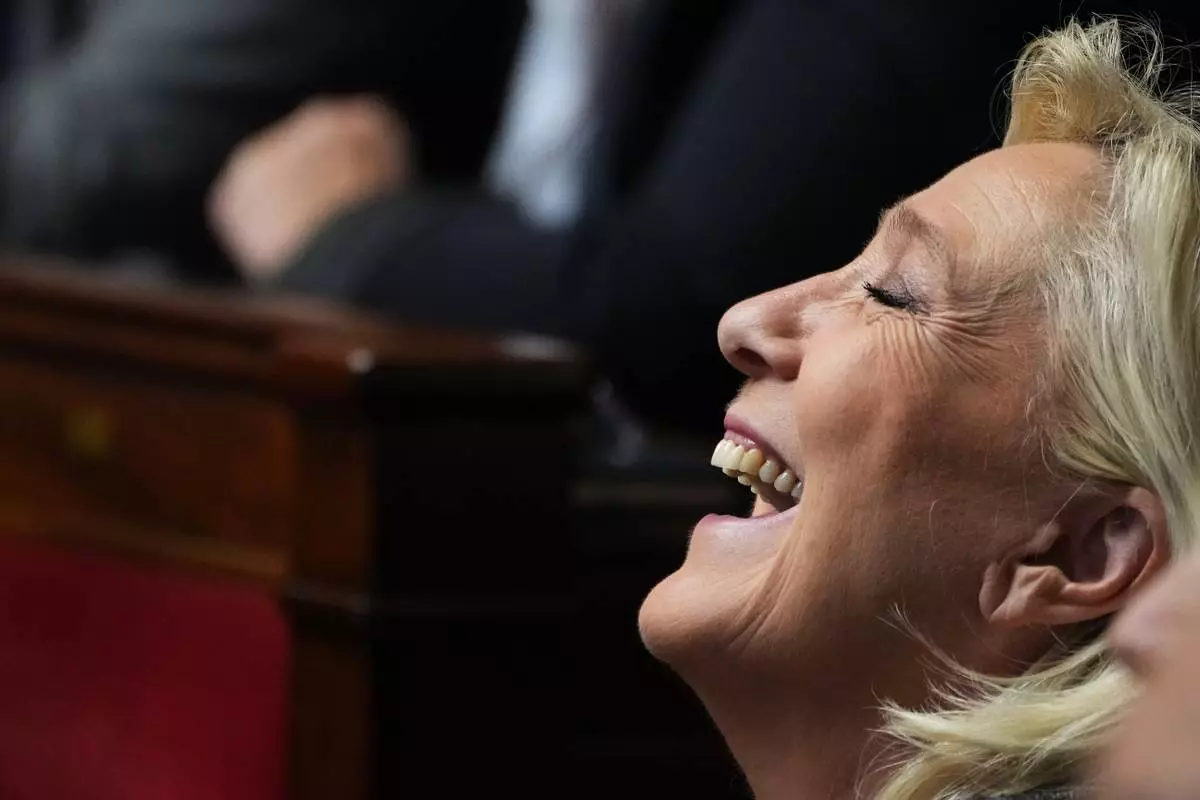
French far-right leader Marine Le Pen reacts as French Prime Minister Sebastien Lecornu delivers his policy speech at the National Assembly, Tuesday, Oct. 14, 2025 in Paris. (AP Photo/Thibault Camus)
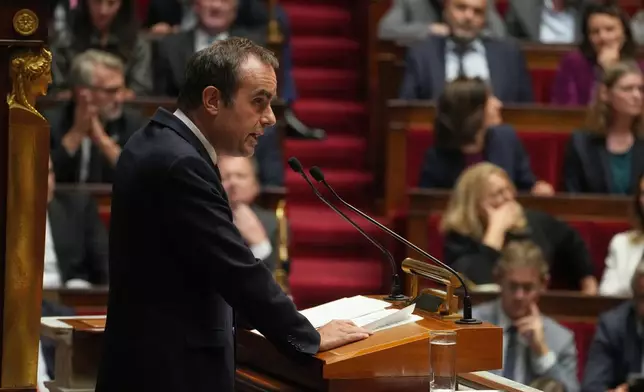
French far-right leader Marine Le Pen reacts as French Prime Minister Sebastien Lecornu delivers his policy speech at the National Assembly, Tuesday, Oct. 14, 2025 in Paris. (AP Photo/Thibault Camus)
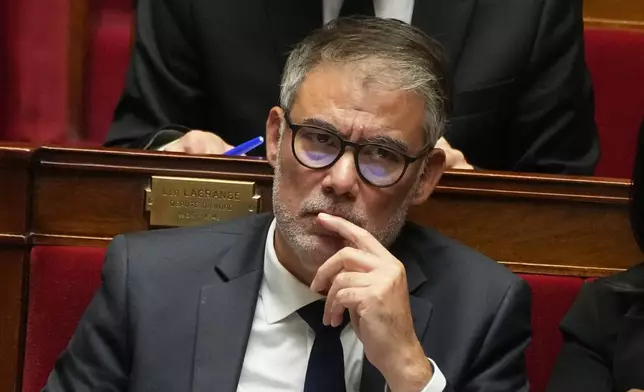
Secretary general of the French Socialist Party listens to French Prime Minister Sebastien Lecornu's policy speech at the National Assembly, Tuesday, Oct. 14, 2025 in Paris. (AP Photo/Thibault Camus)

Secretary general of the French Socialist Party listens to French Prime Minister Sebastien Lecornu's policy speech at the National Assembly, Tuesday, Oct. 14, 2025 in Paris. (AP Photo/Thibault Camus)

French Prime Minister Sebastien Lecornu delivers his policy speech at the National Assembly, Tuesday, Oct. 14, 2025 in Paris. (AP Photo/Thibault Camus)

French Prime Minister Sebastien Lecornu delivers his policy speech at the National Assembly, Tuesday, Oct. 14, 2025 in Paris. (AP Photo/Thibault Camus)

French Prime Minister Sebastien Lecornu delivers his policy speech at the National Assembly, Tuesday, Oct. 14, 2025 in Paris. (AP Photo/Thibault Camus)

French Prime Minister Sebastien Lecornu delivers his policy speech at the National Assembly, Tuesday, Oct. 14, 2025 in Paris. (AP Photo/Thibault Camus)

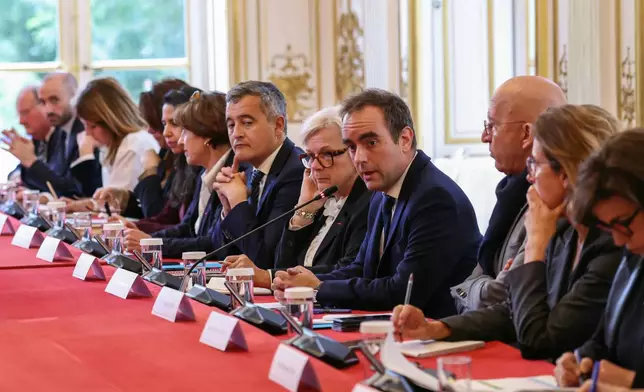
France's reappointed Prime Minister Sebastien Lecornu, fourth right, delivers a speech next to France's Defense Catherine Vautrin, fifth right, and Justice Minister Gerald Darmanin, sixth right, as he welcomes the newly-appointed members of his cabinet in Paris, Monday, Oct. 13, 2025. (Alain Jocard, Pool photo via AP)
France's reappointed Prime Minister Sebastien Lecornu, fourth right, delivers a speech next to France's Defense Catherine Vautrin, fifth right, and Justice Minister Gerald Darmanin, sixth right, as he welcomes the newly-appointed members of his cabinet in Paris, Monday, Oct. 13, 2025. (Alain Jocard, Pool photo via AP)

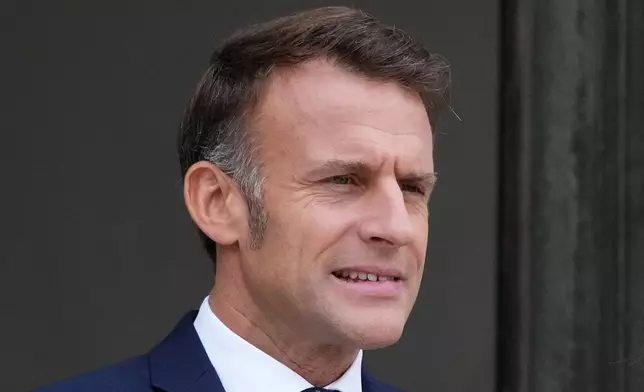
French President Emmanuel Macron waits for Jordan's Crown Prince Hussein at the presidential Elysee Palace, Wednesday, Oct. 8, 2025 in Paris. (AP Photo/Michel Euler)
French President Emmanuel Macron waits for Jordan's Crown Prince Hussein at the presidential Elysee Palace, Wednesday, Oct. 8, 2025 in Paris. (AP Photo/Michel Euler)

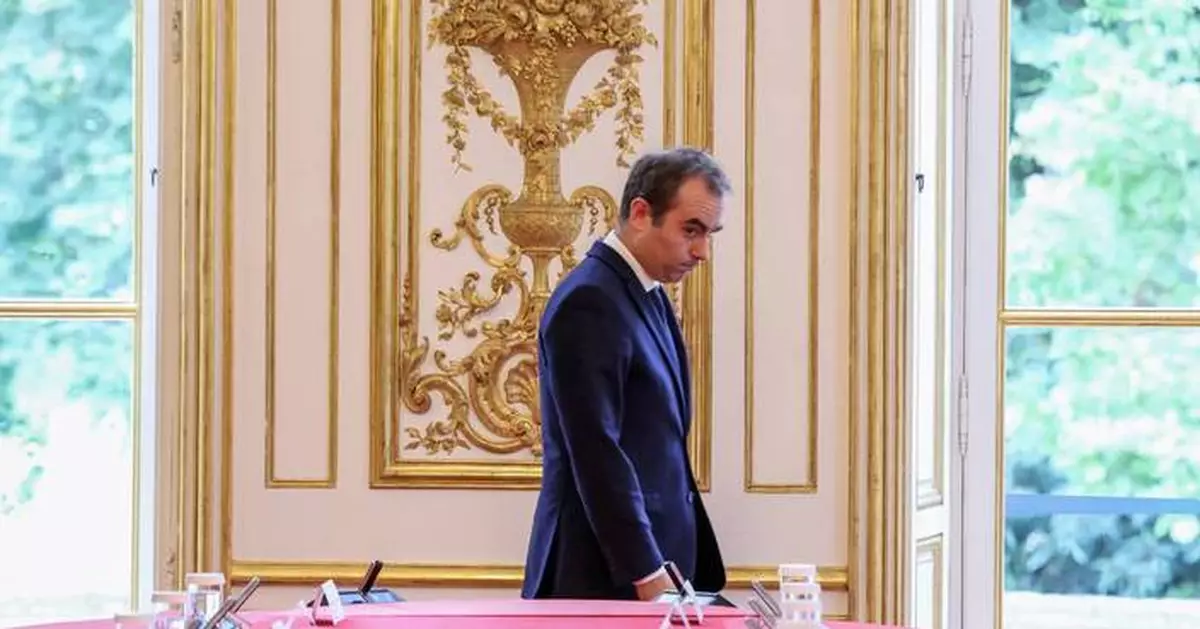
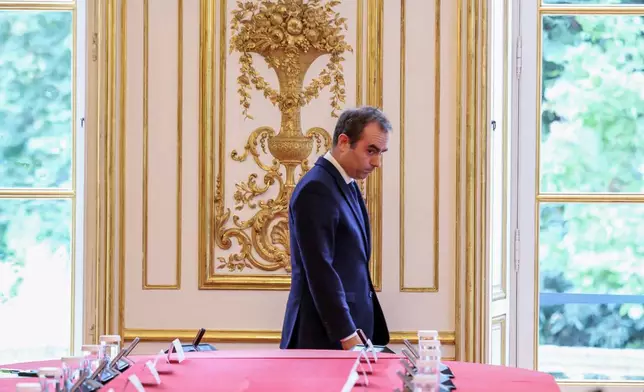
France's reappointed Prime Minister Sebastien Lecornu walks past a meeting table as he welcomes the newly-appointed members of his cabinet in Paris, Monday, Oct. 13, 2025. (Alain Jocard, Pool photo via AP)

France's reappointed Prime Minister Sebastien Lecornu walks past a meeting table as he welcomes the newly-appointed members of his cabinet in Paris, Monday, Oct. 13, 2025. (Alain Jocard, Pool photo via AP)

On Thursday, Lecornu will face two no-confidence motions, one from the hard-left France Unbowed and the other from the far-right National Rally. The two parties do not hold enough seats to topple Lecornu’s government on their own, but the prime minister could be ousted if the Socialists and others on the left join forces with them.

The Socialist Party, which is not part of the governing coalition, had demanded the law be repealed.

Boris Vallaud, president of the Socialist group in the National Assembly, said his colleagues were ready to take a “gamble,” making clear they would not vote the no-confidence motions. Vallaud called the suspension a “first step” toward scrapping the law.

Lecornu said the suspension would cost 400 million euros ($463 million) in 2026, and 1.8 billion euros in 2027. He said it will benefit 3.5 million French citizens.

“It will therefore have to be financially compensated, including through cost-saving measures. It cannot be carried out at the expense of an increased deficit,” he said.

France’s deficit hit 5.8% of gross domestic product last year, way above the official EU target of 3%. France is also facing a massive debt crisis. At the end of the first quarter of 2025, France’s public debt stood at 3.346 trillion euros, or 114% of GDP.

Earlier on Tuesday, Lecornu met with his cabinet to discuss the 2026 budget, which must be approved by year’s end. He said the main objective would be to bring the deficit below 5% of GDP to safeguard France’s sovereignty, stressing the need for fiscal discipline and structural savings.

Among the measures under consideration are cutting red tape, fighting social and tax fraud, targeted tax cuts for small and medium-sized businesses, and exceptional contributions from large corporations.

Lecornu also confirmed that he would not use a special constitutional power to force the budget through parliament without a vote, and would instead seek a compromise with lawmakers.

The so-called “49.3” article allows the government to pass a bill without a vote at the National Assembly, the lower house of parliament. Lecornu’s predecessor, François Bayrou, used it to pass this year’s budget.

"The government will make proposals, we will debate, and you will vote,” Lecornu told lawmakers.

With his government hanging by a thread, France’s newly reappointed prime minister must make concessions to his political opponents.

The opposite sides of the political spectrum have slammed Macron’s decision to reappoint Lecornu, France’s former defense minister and fourth prime minister in barely a year.

With less than two years before the next presidential election, National Rally is urging Macron to call another early parliamentary vote, while France Unbowed wants Macron to step down.

Rammed through parliament without a vote in 2023 despite mass protests, the pension change gradually raises the retirement age from 62 to 64. Opposition parties want it scrapped.

Those calling for the law to be suspended have gained a high-profile ally. Nobel Prize-winning economist Philippe Aghion told broadcaster France 2 that it should be suspended until 2027.

“I think we need to stop the clock now until the presidential election,” Aghion said, arguing that doing so would be “the way to calm things down” and “it doesn’t cost very much to pause it.”

Communist party leader Fabien Roussel called the suspension of the pension reform “a first victory,” while the Greens were unconvinced and announced they would vote to topple Lecornu's government.

Lecornu's reappointment is widely seen as Macron’s last chance to reinvigorate his second term. His centrist camp lacks a majority in the National Assembly and he is facing increasing criticism even within its ranks.

Macron’s surprise decision last year to dissolve the National Assembly resulted in a hung parliament and political paralysis.

Over the past year, Macron’s minority governments have collapsed in quick succession, leaving France mired in deadlock while confronting a rising poverty rate and a mounting debt crisis that has alarmed markets and EU partners.
French Prime Minister Sebastien Lecornu answers lawmakers after his policy speech at the National Assembly, Tuesday, Oct. 14, 2025 in Paris. (AP Photo/Thibault Camus)
French Prime Minister Sebastien Lecornu answers lawmakers after his policy speech at the National Assembly, Tuesday, Oct. 14, 2025 in Paris. (AP Photo/Thibault Camus)
French Prime Minister Sebastien Lecornu delivers his policy speech at the National Assembly, Tuesday, Oct. 14, 2025 in Paris. (AP Photo/Thibault Camus)
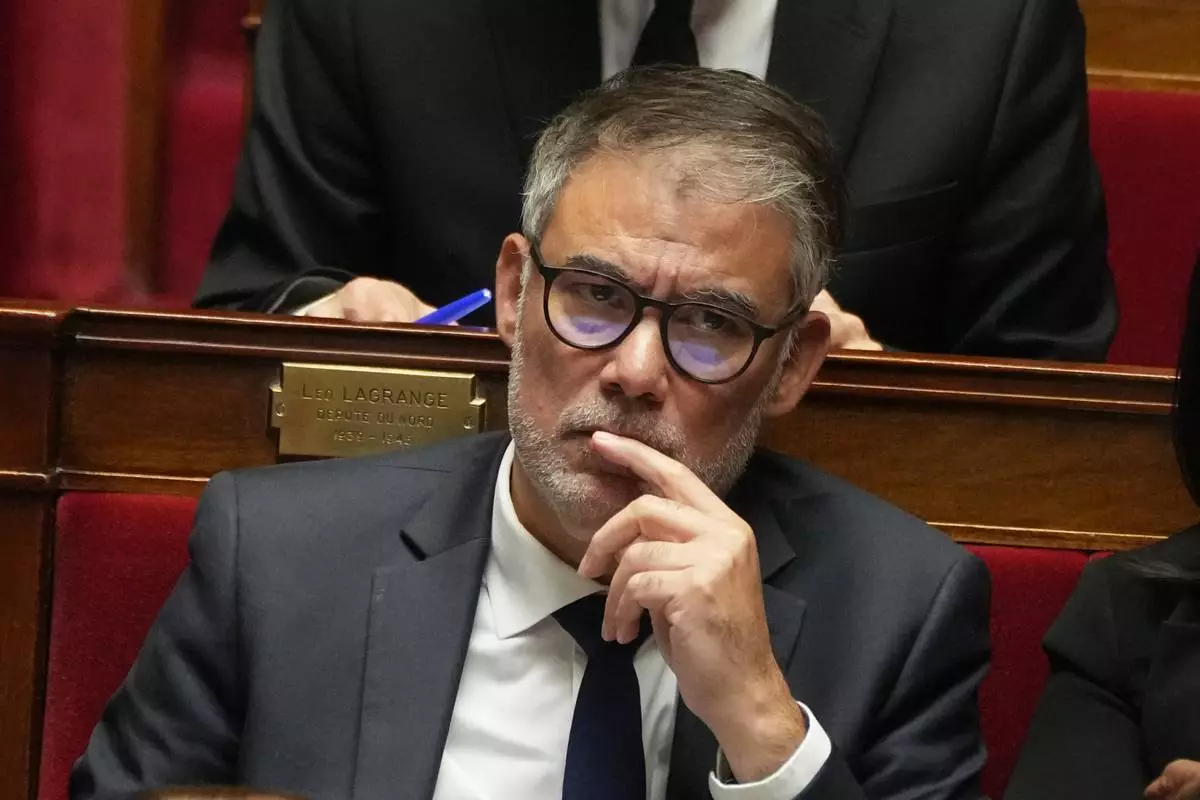
French Prime Minister Sebastien Lecornu delivers his policy speech at the National Assembly, Tuesday, Oct. 14, 2025 in Paris. (AP Photo/Thibault Camus)
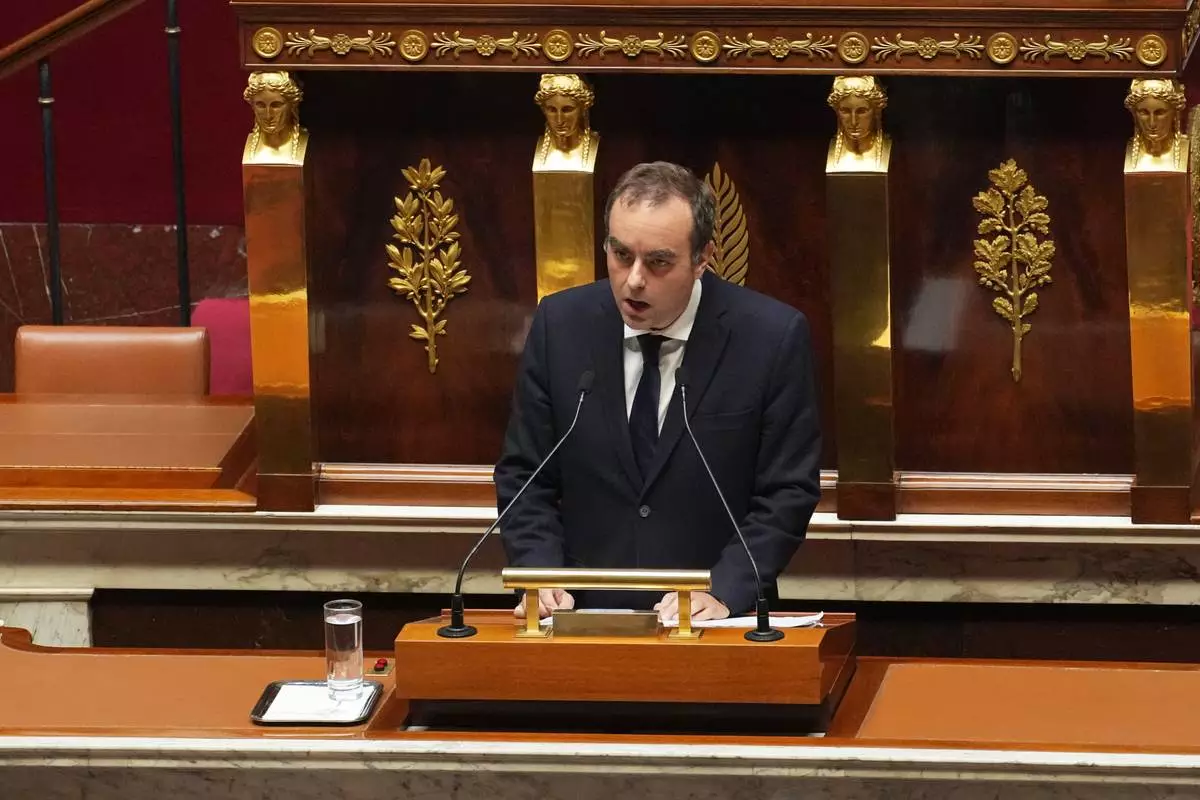
French far-right leader Marine Le Pen reacts as French Prime Minister Sebastien Lecornu delivers his policy speech at the National Assembly, Tuesday, Oct. 14, 2025 in Paris. (AP Photo/Thibault Camus)
French far-right leader Marine Le Pen reacts as French Prime Minister Sebastien Lecornu delivers his policy speech at the National Assembly, Tuesday, Oct. 14, 2025 in Paris. (AP Photo/Thibault Camus)
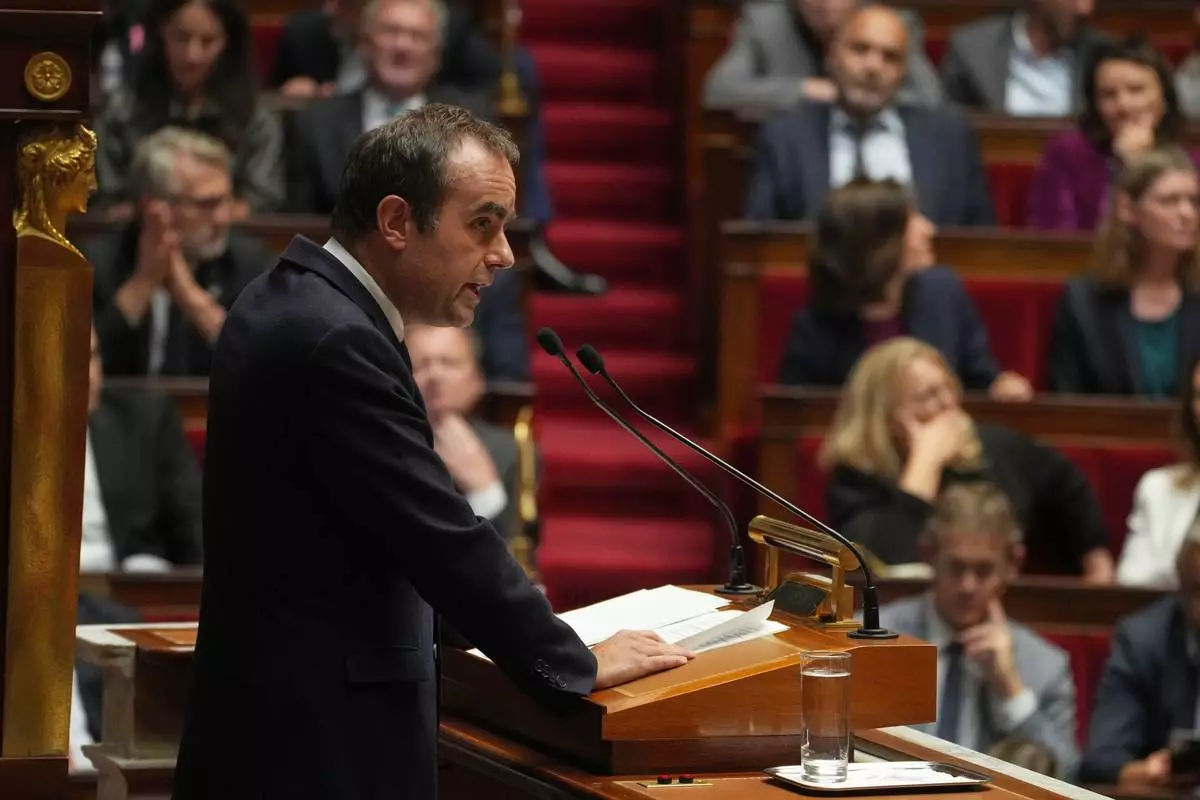
Secretary general of the French Socialist Party listens to French Prime Minister Sebastien Lecornu's policy speech at the National Assembly, Tuesday, Oct. 14, 2025 in Paris. (AP Photo/Thibault Camus)

Secretary general of the French Socialist Party listens to French Prime Minister Sebastien Lecornu's policy speech at the National Assembly, Tuesday, Oct. 14, 2025 in Paris. (AP Photo/Thibault Camus)

French Prime Minister Sebastien Lecornu delivers his policy speech at the National Assembly, Tuesday, Oct. 14, 2025 in Paris. (AP Photo/Thibault Camus)

French Prime Minister Sebastien Lecornu delivers his policy speech at the National Assembly, Tuesday, Oct. 14, 2025 in Paris. (AP Photo/Thibault Camus)

French Prime Minister Sebastien Lecornu delivers his policy speech at the National Assembly, Tuesday, Oct. 14, 2025 in Paris. (AP Photo/Thibault Camus)

French Prime Minister Sebastien Lecornu delivers his policy speech at the National Assembly, Tuesday, Oct. 14, 2025 in Paris. (AP Photo/Thibault Camus)

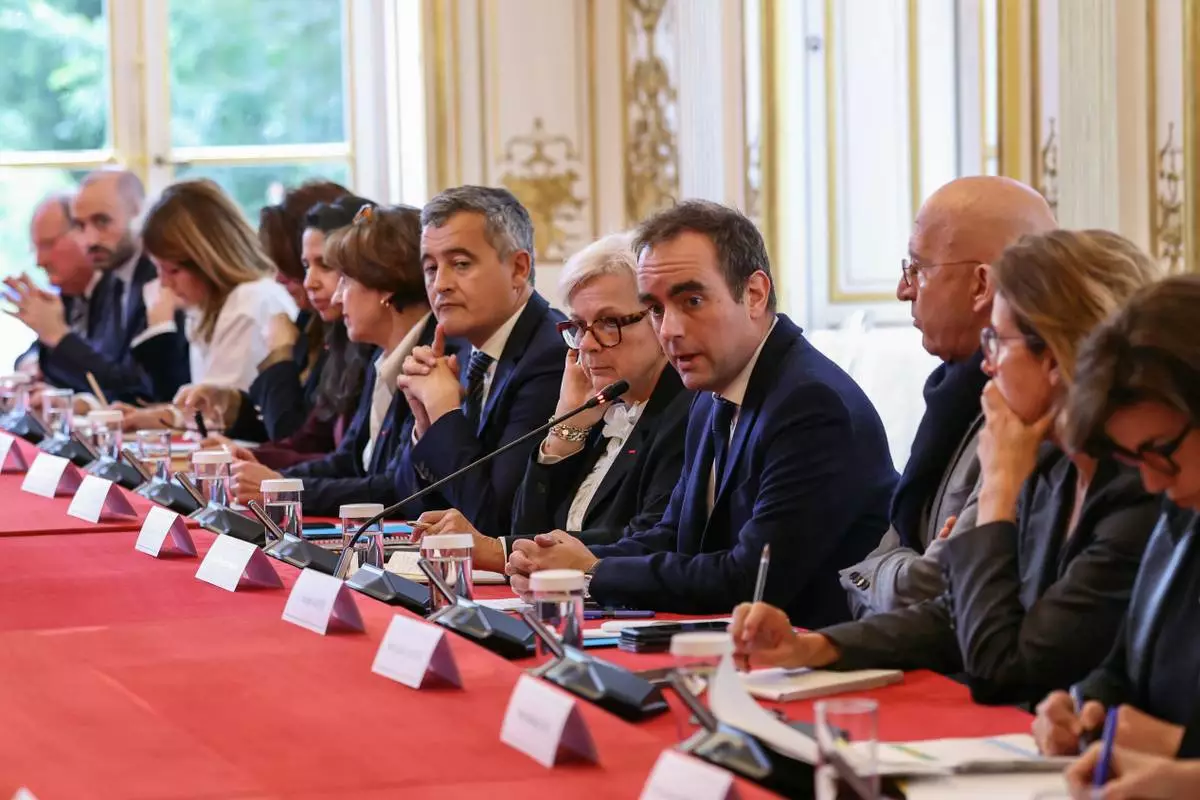
France's reappointed Prime Minister Sebastien Lecornu, fourth right, delivers a speech next to France's Defense Catherine Vautrin, fifth right, and Justice Minister Gerald Darmanin, sixth right, as he welcomes the newly-appointed members of his cabinet in Paris, Monday, Oct. 13, 2025. (Alain Jocard, Pool photo via AP)
France's reappointed Prime Minister Sebastien Lecornu, fourth right, delivers a speech next to France's Defense Catherine Vautrin, fifth right, and Justice Minister Gerald Darmanin, sixth right, as he welcomes the newly-appointed members of his cabinet in Paris, Monday, Oct. 13, 2025. (Alain Jocard, Pool photo via AP)

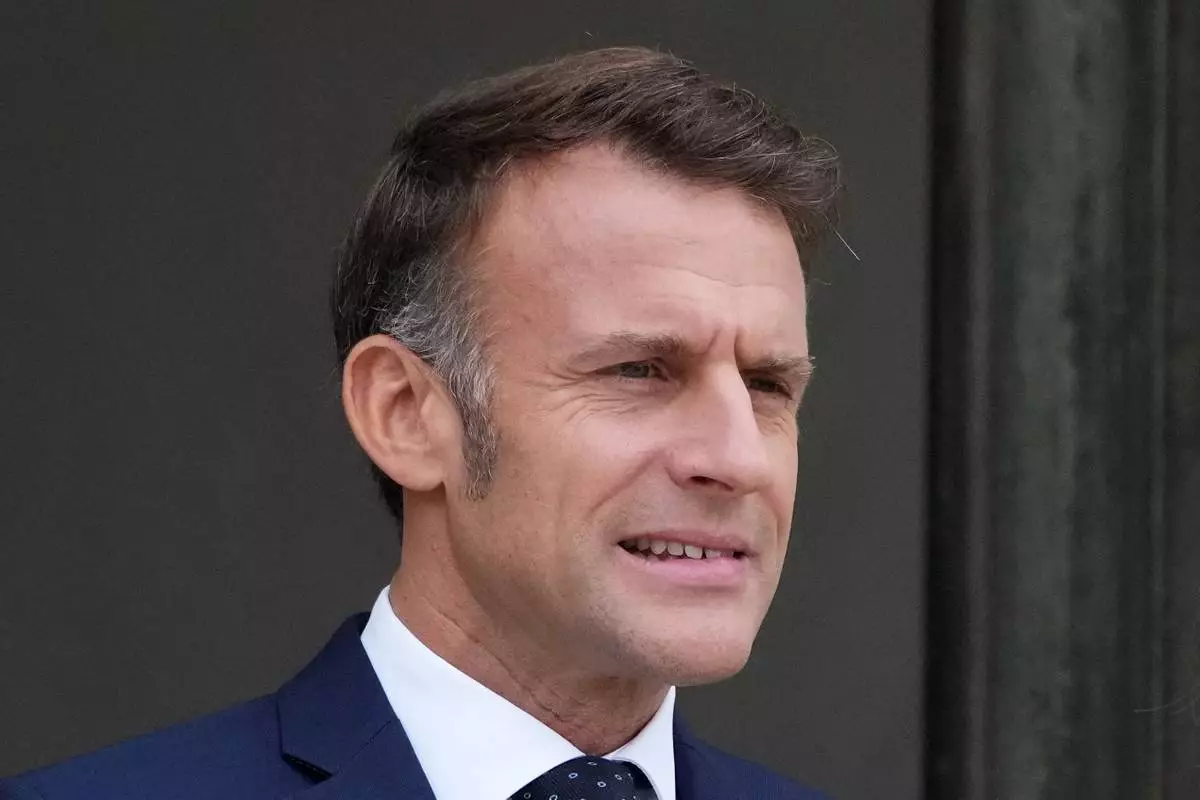
French President Emmanuel Macron waits for Jordan's Crown Prince Hussein at the presidential Elysee Palace, Wednesday, Oct. 8, 2025 in Paris. (AP Photo/Michel Euler)
French President Emmanuel Macron waits for Jordan's Crown Prince Hussein at the presidential Elysee Palace, Wednesday, Oct. 8, 2025 in Paris. (AP Photo/Michel Euler)

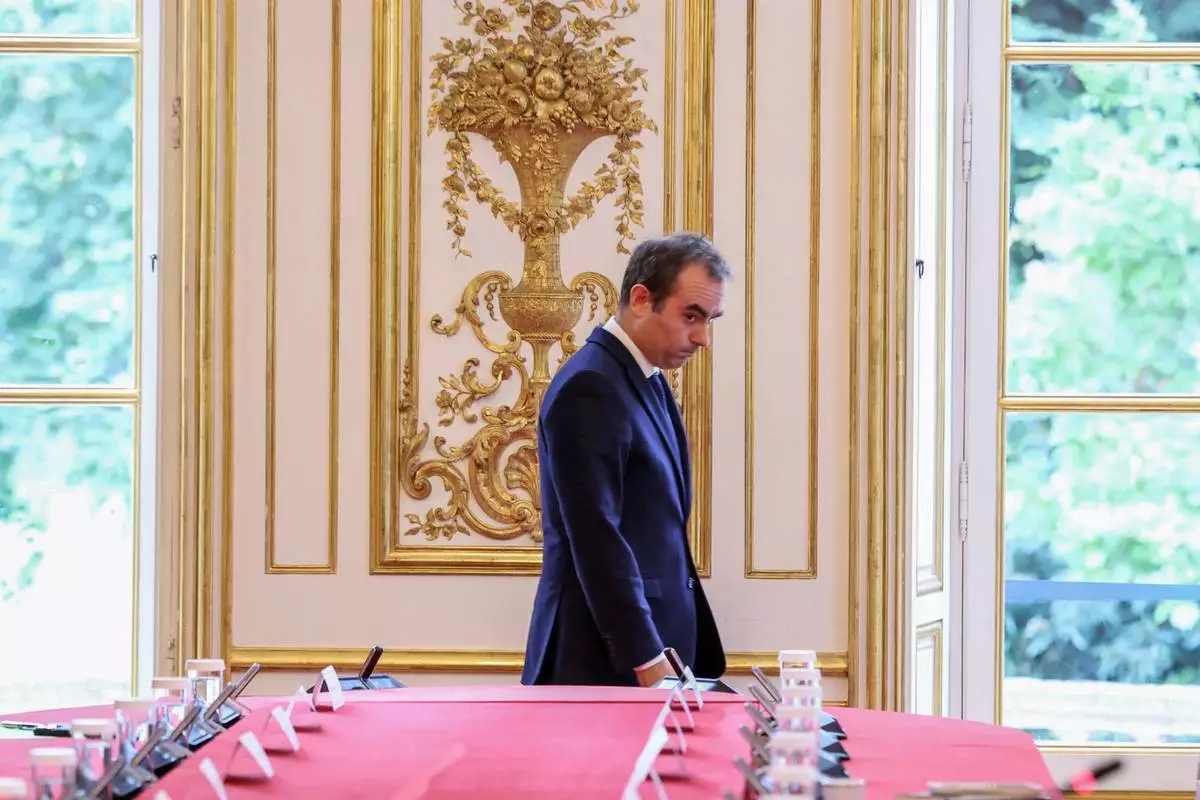
France's reappointed Prime Minister Sebastien Lecornu walks past a meeting table as he welcomes the newly-appointed members of his cabinet in Paris, Monday, Oct. 13, 2025. (Alain Jocard, Pool photo via AP)
France's reappointed Prime Minister Sebastien Lecornu walks past a meeting table as he welcomes the newly-appointed members of his cabinet in Paris, Monday, Oct. 13, 2025. (Alain Jocard, Pool photo via AP)
NEW YORK (AP) — Stocks rushed higher worldwide, and oil prices eased Wednesday as hopes built that the war with Iran could end soon. That’s even though some of the signals investors saw as hopeful are already under dispute, and several earlier bouts of optimism in financial markets quickly got undercut by continued, fierce fighting in the war.

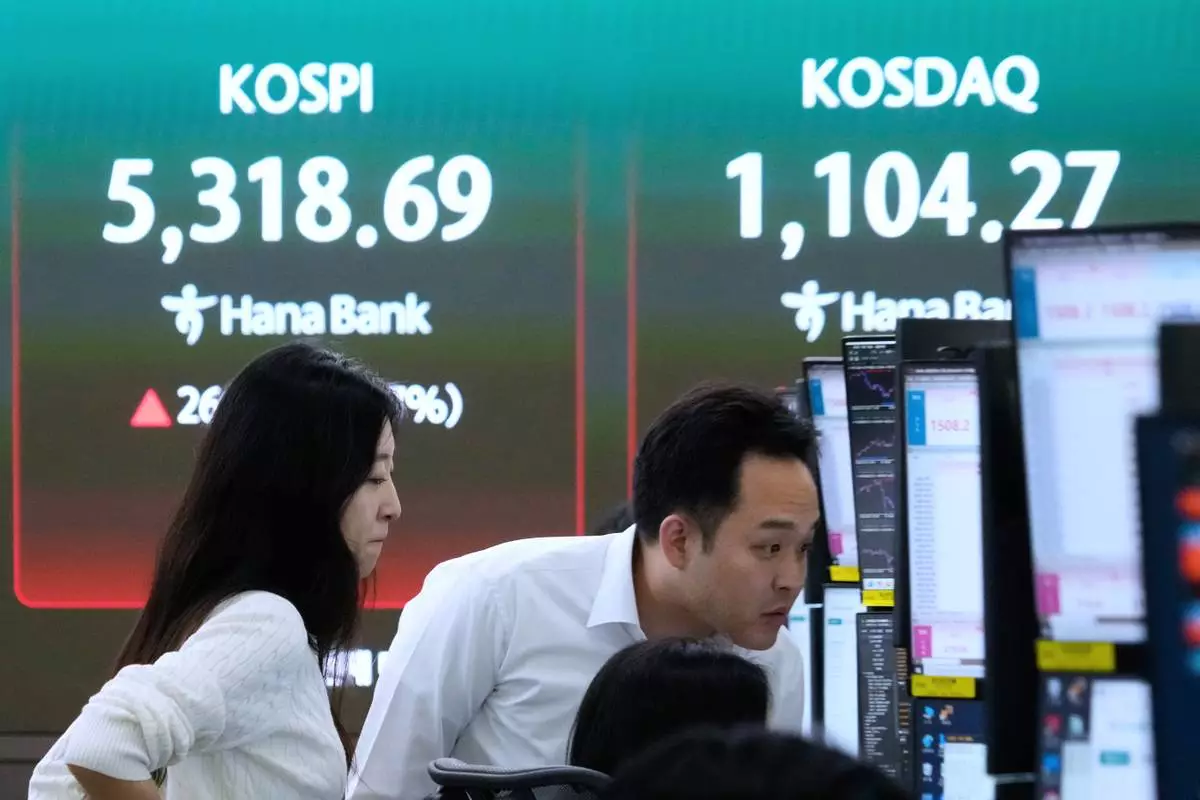
The S&P 500 rose 0.7% and added to its leap from the day before, which was its best since last spring. That followed even bigger gains for stock markets across Europe and Asia, including an 8.4% surge in South Korea, which were catching up to Wall Street’s rally from Tuesday.

The Dow Jones Industrial Average climbed 224 points, or 0.5%, and the Nasdaq composite rallied 1.2%.

Oil prices also fell back toward $100 per barrel after President Donald Trump said late Tuesday that the U.S. military could end its offensive in two to three weeks.

That added to optimism following a couple tenuous signals of hope from earlier Tuesday that Wall Street latched onto, including a news report quoting Iran’s president as saying that it has “the necessary will to end the war” as long as certain requirements are met, including “guarantees to prevent a recurrence of aggression.”

The worry on Wall Street has been that the war may last a long time and keep oil and natural gas from the Persian Gulf out of global markets, which could create a brutal blast of inflation.

But hope has been quick to reverse to doubt on Wall Street, triggering manic swings back and forth for financial markets since the war with Iran began. Trump has also made statements that lifted markets, only to see the gains quickly disappear after increasing his military threats.

Shortly before Wall Street began trading on Wednesday, Trump claimed in a post on his social media network that Iran “has just asked the United States of America for a CEASEFIRE!”

“We will consider when Hormuz Strait is open, free, and clear. Until then, we are blasting Iran into oblivion or, as they say, back to the Stone Ages!!!”

But Iran’s Foreign Ministry spokesman, Esmail Baghaei, quickly called that claim “false and baseless,” according to a report on Iranian state television.

Oil prices also remain high, even if they’ve eased recently. The price for a barrel of Brent crude oil, the international standard, was sitting around $101 following its declines, which is still up from roughly $70 before the war began.

U.S. gasoline prices rose again overnight to a national average of $4.06 per gallon, according to the auto club AAA.

Iran, meanwhile, hit an oil tanker off the coast of Qatar and Kuwait’s airport on Wednesday while airstrikes battered Tehran as the fighting continued. Iran also continues to hold a grip on the Strait of Hormuz, where a fifth of the world’s traded oil passes during peacetime.

“De-escalation hopes have given markets a lift, but we think the effects of the war would, in many cases, persist even if the war did end soon,” Thomas Mathews, head of markets, Asia Pacific at Capital Economics, said in a research note Wednesday.

“It’s worth thinking through how markets might fare if the war were to end ‘very soon,’” he wrote. “Do markets have further to recover if sentiment continues to improve? The answer is almost certainly yes.”

The White House said Trump will deliver a public address Wednesday evening on the Iran war.

On Wall Street, three out of every five stocks within the S&P 500 rose as Big Tech powered the move higher. Gains of 3.4% for Alphabet and 0.8% for Nvidia were two of the strongest forces lifting the S&P 500.

Eli Lilly rallied 3.8% after U.S. regulators approved its GLP-1 pill for weight loss.

Such gains have pulled the S&P 500, which sits at the heart of many 401(k) accounts, back to within 5.8% of its all-time high set early this year. Just on Monday, the index briefly neared a 10% drop from its record, a steep-enough fall that professional investors have a name for it: a “correction.”

Nike sank 15.5% even though it reported a stronger profit for the latest quarter than expected. Analysts said it gave some lackluster financial forecasts.

Oil companies also fell with the price of crude. Exxon Mobil slumped 5.2%, and Chevron dropped 4.6%.

All told, the S&P 500 rose 46.80 points to 6,575.32. The Dow Jones Industrial Average added 224.23 to 46,565.74, and the Nasdaq composite climbed 250.32 to 21,840.95.

In stock markets abroad, indexes leaped more than 2% in France and Germany. Asian markets had even bigger gains.

Tokyo’s Nikkei 225 jumped 5.2% after a survey showed business sentiment for major Japanese manufacturers improved despite worries about the Iran war.

In the bond market, Treasury yields held relatively steady after a report said U.S. retailers made more money in February than economists expected. A separate report said U.S. manufacturing growth last month was slightly faster than economists expected.

The 10-year Treasury yield rose to 4.32% from 4.30% late Tuesday.

AP Business Writers Chan Ho-him and Matt Ott contributed.

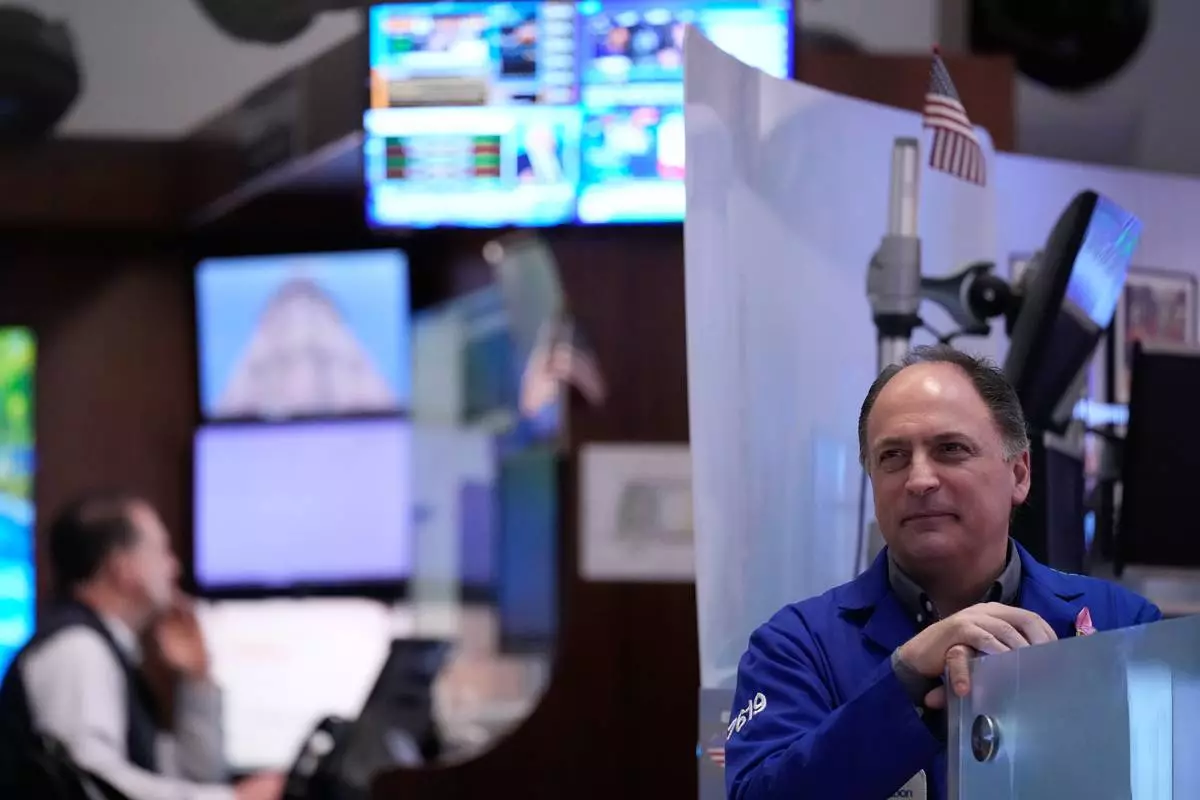
James Conti works on the floor at the New York Stock Exchange in New York, Tuesday, March 31, 2026. (AP Photo/Seth Wenig)

James Conti works on the floor at the New York Stock Exchange in New York, Tuesday, March 31, 2026. (AP Photo/Seth Wenig)

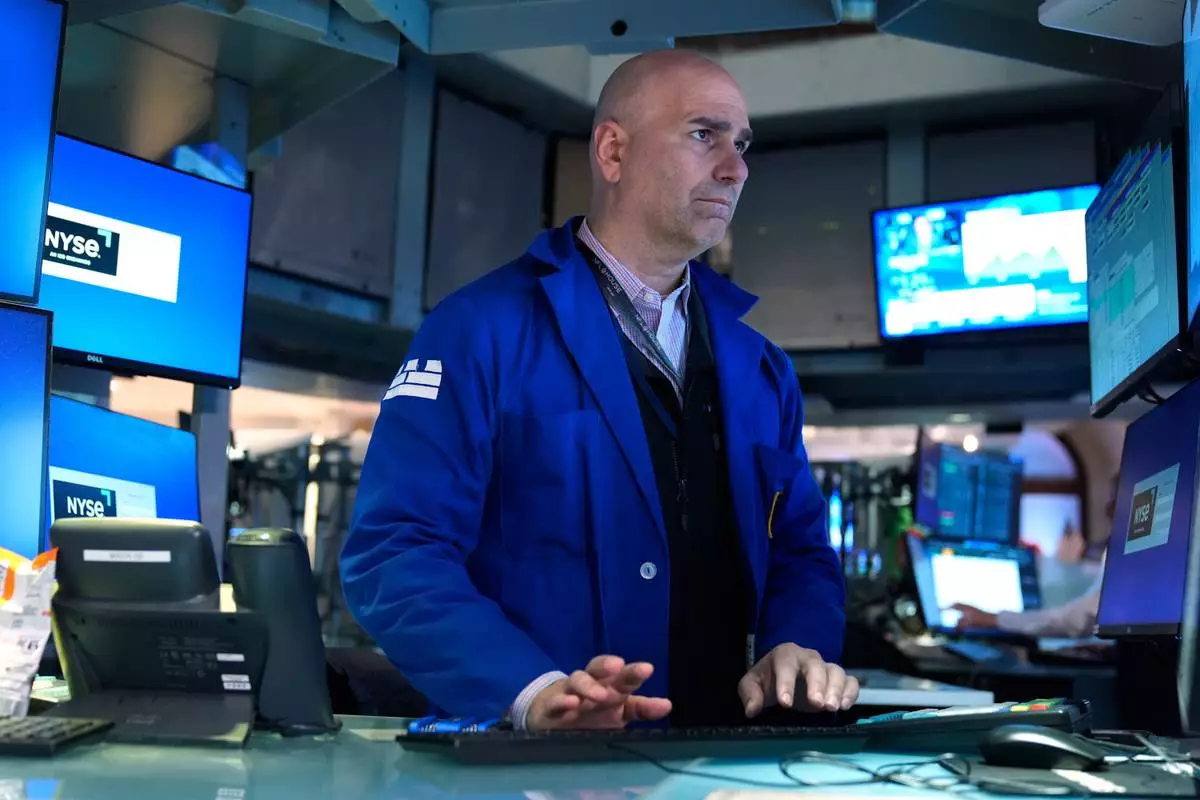
Philip Finale works on the floor at the New York Stock Exchange in New York, Tuesday, March 31, 2026. (AP Photo/Seth Wenig)

Philip Finale works on the floor at the New York Stock Exchange in New York, Tuesday, March 31, 2026. (AP Photo/Seth Wenig)

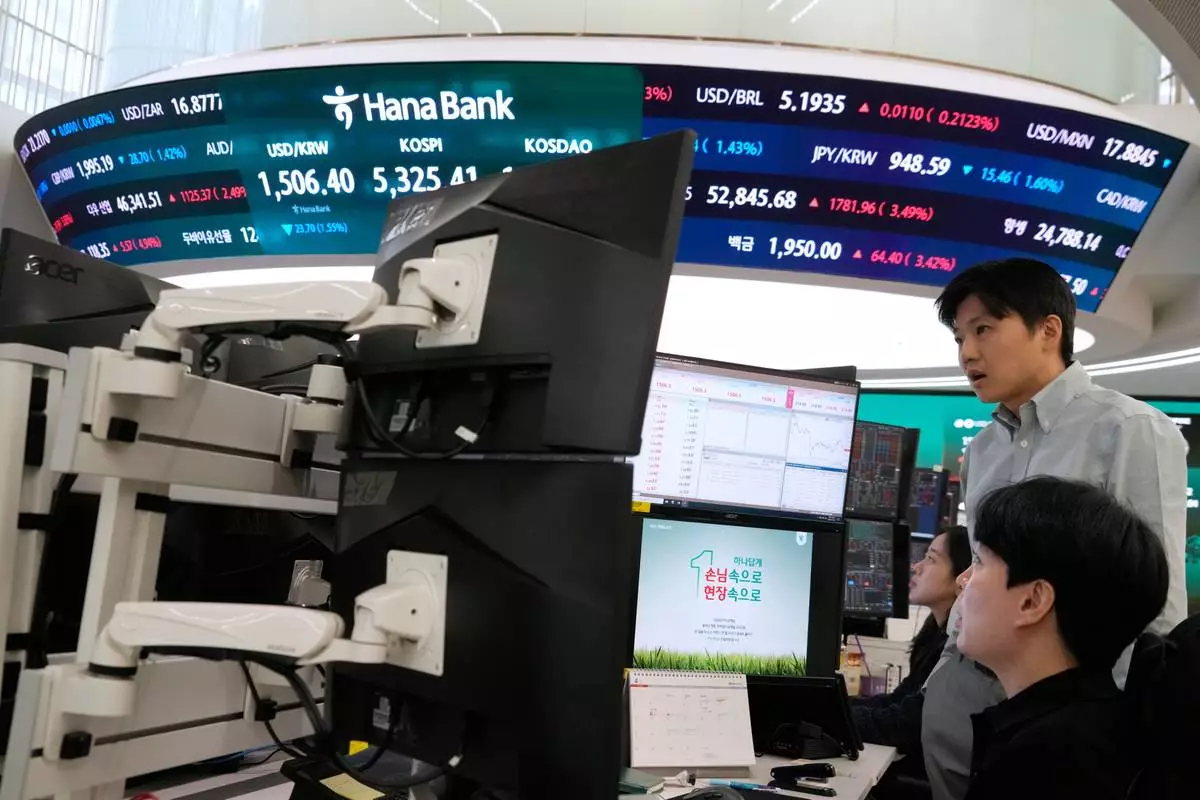
Currency traders watch monitors near a screen showing the Korea Composite Stock Price Index (KOSPI), left, at the foreign exchange dealing room of the Hana Bank headquarters in Seoul, South Korea, Wednesday, April 1, 2026. (AP Photo/Ahn Young-joon)

Currency traders watch monitors near a screen showing the Korea Composite Stock Price Index (KOSPI), left, at the foreign exchange dealing room of the Hana Bank headquarters in Seoul, South Korea, Wednesday, April 1, 2026. (AP Photo/Ahn Young-joon)

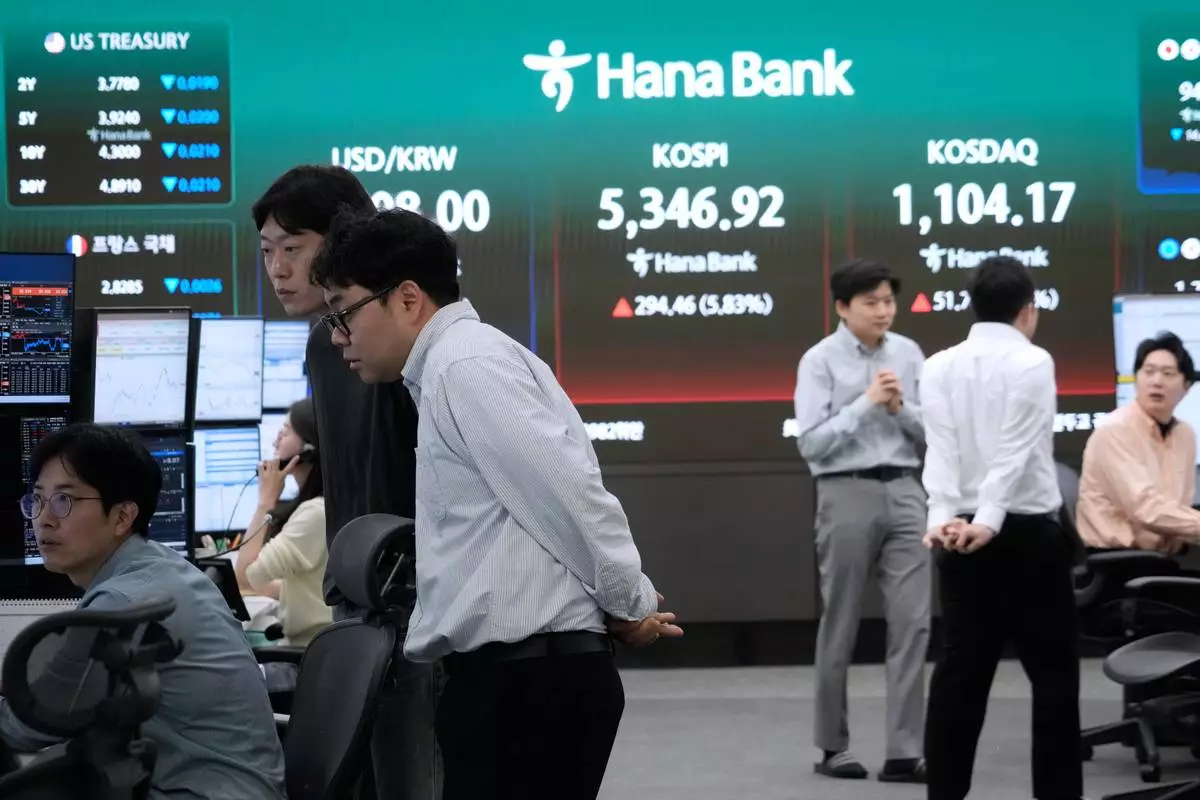
Currency traders watch monitors near a screen showing the Korea Composite Stock Price Index (KOSPI), top center, and the foreign exchange rate between U.S. dollar and South Korean won, top center left, at the foreign exchange dealing room of the Hana Bank headquarters in Seoul, South Korea, Wednesday, April 1, 2026. (AP Photo/Ahn Young-joon)

Currency traders watch monitors near a screen showing the Korea Composite Stock Price Index (KOSPI), top center, and the foreign exchange rate between U.S. dollar and South Korean won, top center left, at the foreign exchange dealing room of the Hana Bank headquarters in Seoul, South Korea, Wednesday, April 1, 2026. (AP Photo/Ahn Young-joon)

Currency traders work at the foreign exchange dealing room of the Hana Bank headquarters in Seoul, South Korea, Wednesday, April 1, 2026. (AP Photo/Ahn Young-joon)

Currency traders work at the foreign exchange dealing room of the Hana Bank headquarters in Seoul, South Korea, Wednesday, April 1, 2026. (AP Photo/Ahn Young-joon)

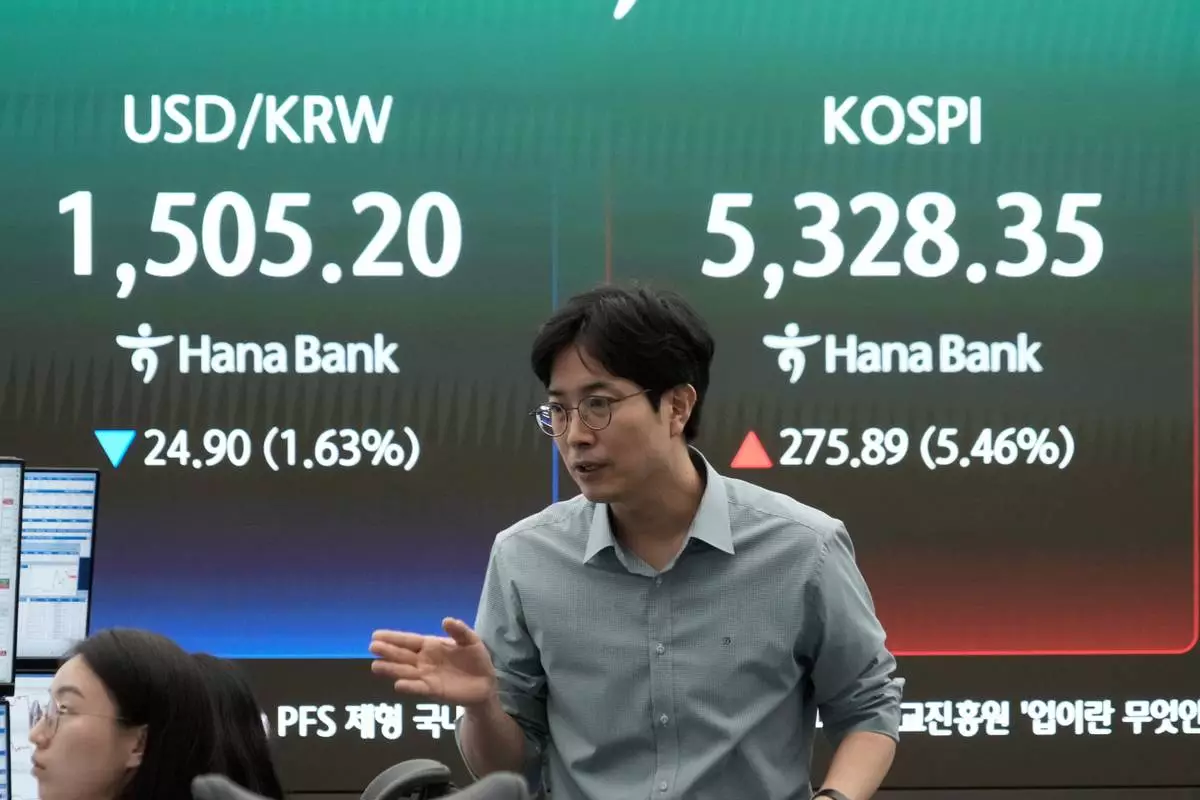
A currency trader reacts near a screen showing the Korea Composite Stock Price Index (KOSPI), right, and the foreign exchange rate between U.S. dollar and South Korean won at the foreign exchange dealing room of the Hana Bank headquarters in Seoul, South Korea, Wednesday, April 1, 2026. (AP Photo/Ahn Young-joon)

A currency trader reacts near a screen showing the Korea Composite Stock Price Index (KOSPI), right, and the foreign exchange rate between U.S. dollar and South Korean won at the foreign exchange dealing room of the Hana Bank headquarters in Seoul, South Korea, Wednesday, April 1, 2026. (AP Photo/Ahn Young-joon)

A screen displays financial information on the floor at the New York Stock Exchange in New York, Tuesday, March 31, 2026. (AP Photo/Seth Wenig)

A screen displays financial information on the floor at the New York Stock Exchange in New York, Tuesday, March 31, 2026. (AP Photo/Seth Wenig)

Recommended Articles