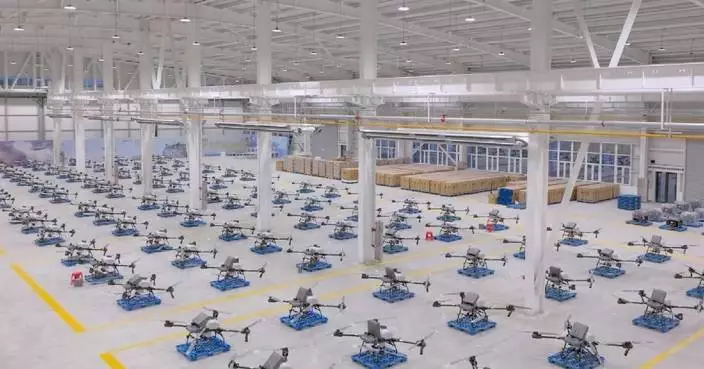
A series of smart technologies have been integrated into wildlife biodiversity conservation efforts at the Foping National Nature Reserve in northwest China's Shaanxi Province, home to the world's largest wild panda population.
In the Qinling Mountains, a range that forms a natural boundary between north and south China, infrared cameras provide constant monitoring of the diverse wildlife.
Over 300 cameras have been installed in the Foping National Nature Reserve, which lies withing the mountains, covering 41 grids. Each year, they capture hundreds of thousands of images, providing invaluable firsthand data for species conservation.
"Currently, the number of wild giant pandas monitored through infrared cameras is steadily increasing, and we have also recorded the frequent activities of accompanying animals, such as pandas with their cubs, black bears mating, and leopards appearing together," said Jia Qi, deputy director of the nature reserve's Yueba Station.
At the same time, drones equipped with high-definition cameras and thermal imaging devices act as flexible "aerial guards." They can monitor forest fire prevention, track animal migration patterns in winter, and extend to forest pest and disease monitoring, thereby enhancing ecological protection efficiency in a comprehensive manner.
"Drone patrols can cover remote mountainous areas that are difficult for humans to access. In recent years, these patrols have revealed that the bamboo forests are thriving, providing a stable habitat for the reproduction and survival of giant pandas," said Zhou Gang, senior forestry engineer at the Shaanxi Foping National Nature Reserve Administration.
In addition, the reserve's intelligent management platform serves as the "central nervous system," capable of analyzing species populations and activity patterns while allowing for one-click updates of monitoring information.
This platform also integrates multi-dimensional data, including meteorological, soil, and species information, and displays the real-time tracking and safety status of patrolling personnel.
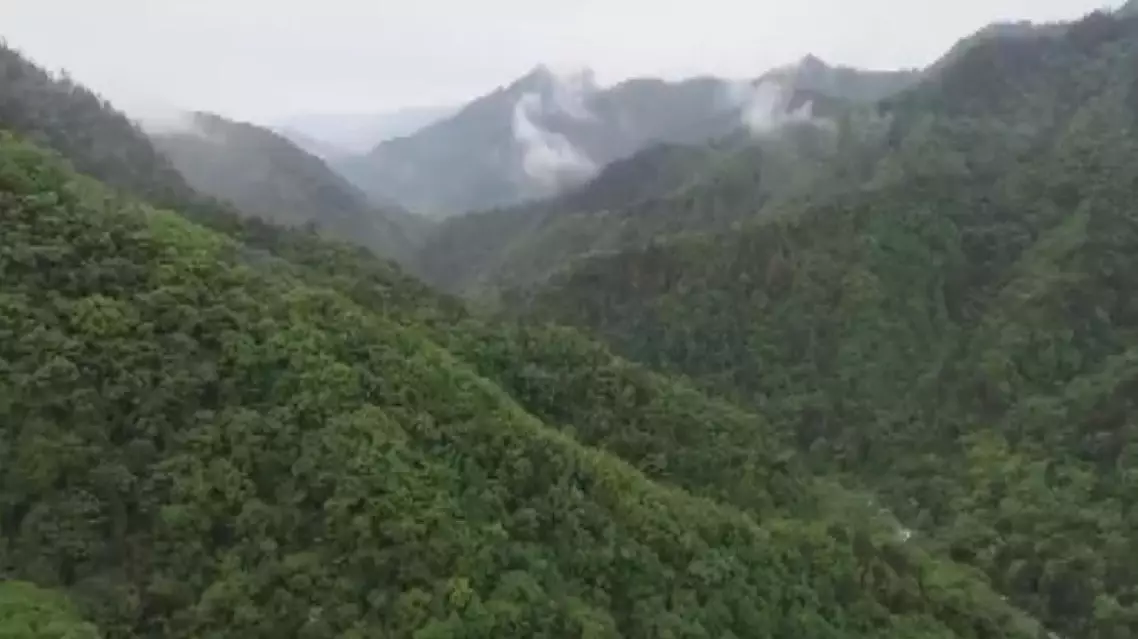
Northwest China reserve integrates smart technologies into biodiversity conservation
Northwest China reserve integrates smart technologies into biodiversity conservation
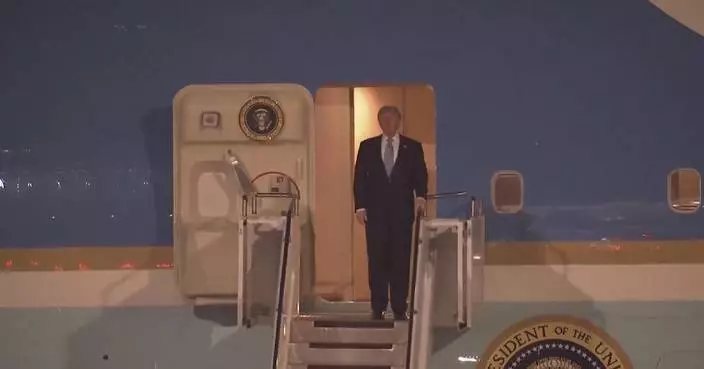
As anticipation builds for the upcoming meeting between Chinese President Xi Jinping and U.S. President Donald Trump, international figures worldwide have expressed hope that the exchange will chart a course for stable China-U.S. relations and deliver positive ripple effects for global peace and prosperity.
At the invitation of Xi, Trump will pay a state visit to China from Wednesday to Friday.
The trip marks the first visit to China by a U.S. president in nine years, since Trump visited during his first term in office back in 2017.
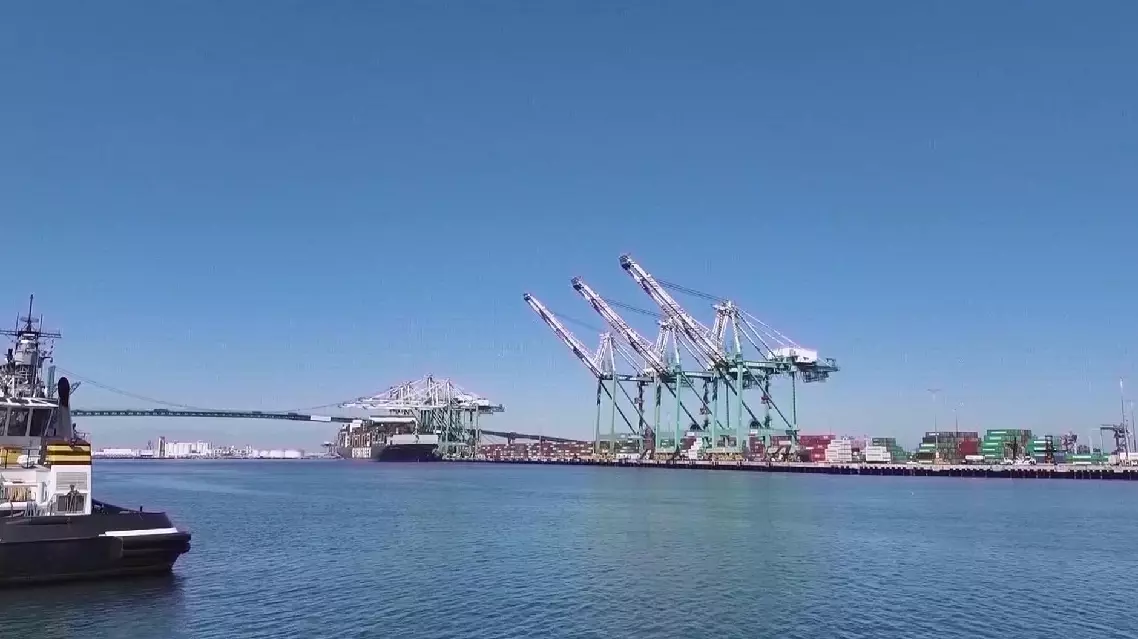
In an interview with China Media Group, Eugene Seroka, executive director of the Port of Los Angeles, emphasized the vast cooperation opportunities between the United States and China, as well as the critical importance of sustained dialogue.
"The two largest economies in the world have much trade, cultural exchange and education opportunities. We, at the Port of Los Angeles, we'd like to see that continue to grow to new heights. At the Port of Los Angeles, 40 percent of our business portfolio is trade with China, so very important. When those policies were loosened and both sides started talking more, we saw cargo volume pick up again, so important to the American consumers, to American jobs and to bolster Sino-U.S. relations," said Seroka.
The sentiment is echoed far beyond American shores. Fernando Huanacuni, former foreign minister of Bolivia, described the upcoming leaders' meeting as "an important milestone" and "a watershed moment".
"The upcoming meeting between Chinese and U.S. presidents is an important milestone and a watershed moment. The agenda of this summit will focus not only on bilateral issues of mutual concern, but also on major international topics. As the world seeks balance across the global economy, technology, trade, and geopolitics, China is undoubtedly playing a crucial role. For this reason, the meeting has aroused widespread anticipation," said Huanacuni.
In Europe, Janusz Piechocinski, former deputy prime minister of Poland, underscored the necessity and significance of the presidential engagement, pointing to the tangible impact of last October's summit between the two leaders in Busan of the Republic of Korea.
"The U.S. president's visit to China and his upcoming meeting with President Xi Jinping are both highly significant and greatly necessary. Last year's summit between the two leaders effectively eased trade frictions, injected greater confidence into the world, and helped stabilize bilateral relations. We look forward to this meeting yielding positive outcomes and bringing greater stability and certainty to the world," said Piechocinski.
Int'l figures anticipate Xi-Trump meeting to be catalyst for stable relations, global prosperity