Richard Linklater likes to joke that if he and Ethan Hawke didn’t know each other so well, Hawke probably would have punched him during the making of “Blue Moon.”
The two Texans have been friends and collaborators for over 30 years. They had made eight films together when they started “Blue Moon,” about the lyricist Lorenz Hart set over one night at Sardi’s restaurant. It’s a project they’d been talking about for over a decade.
One might assume that it would be all old hat between them. And yet this was a film, in select theaters Friday, that would require a vastly different dynamic.
“I was nagging. I was riding his (expletive). It’s not the way I work usually,” Linklater said in a recent interview with The Associated Press. “The film’s small in scale. It seems minimalistic. But what was incumbent on Ethan was pretty massive.”
That punching thing, Hawke said in a separate interview, was completely true. He came to realize that Linklater was channeling his inner Sidney Lumet — a great actors’ director, but a tough one.
“It was shocking to me. He didn’t want us to take the work for granted, or that we were friends,” Hawke said. “He’s been listening to me talk about acting for 30 years and he wanted to give me a chance to really do it. To stop talking about it and do it.”
Hawke has never shied away from a challenge. When they were making “Before Sunrise” in Vienna in 1994, Linklater remembered Hawke looking at the script and saying “this probably won’t work” but diving into it anyway. That’s when he was sure he had found a kindred spirit, someone who ran towards the impossible.
“You’ve got to be in that territory if you want to do anything that’s different, something someone hasn’t seen before,” Linklater said. “You’ve got to feel like you’re out on some limb going, ‘We’re risking a huge whopping failure.’”
But Lorenz Hart was not Jesse the writer in the “Before” movies. Here was a man who was both small in stature (the most generous reports say he was 5-foot-2-inches), balding, extremely self-conscious about his appearance and the biggest personality and wit in the room. He was a genius and an alcoholic who had made himself unemployable. And amid all of this, the times were changing, and he was being left behind.
Every couple of years over the last decade, they would get together and do a reading of the script. Hawke loved the character and felt deeply that he was the right person to do it, but when it came time to take it out of the theoretical, he said, “it got very scary.” During the first couple of days of rehearsal, Hawke got terribly sick.
“It’s like my body knew this was about to be something really stressful,” he said. “The event of the movie is Lorenz Hart and everybody’s actually supporting this portrait.”
That included himself and his ego. “Blue Moon” would require a deconstruction, and disappearance of the movie star that is Ethan Hawke.
The script from author Robert Kaplow takes audiences inside the famed Broadway theater district restaurant Sardi’s on the opening night of “Oklahoma!” in 1943. Hart is holding court with a bartender (Bobby Cannavale) waiting for his old collaborator Richard Rodgers (Andrew Scott) to come to the party.
For over 20 years Rodgers and Hart were a prolific and successful songwriting team, behind musical hits and hundreds of classic songs, including “My Funny Valentine,” “Isn’t It Romantic?” “The Lady is a Tramp” and “Blue Moon.” It’s one of the great artistic partnerships of all time. This film is about that breakup.
With “Oklahoma!” Rodgers had found a new lyricist in Oscar Hammerstein II, and the two would go on to make hit after hit — “South Pacific,” “Carousel,” “The King and I” and “The Sound of Music” included. Hart, meanwhile, would die eight months after the “Oklahoma!” opening, at age 48.
“The country is changing, and the jazz era is ending and a new era is beginning and one of these people is going to continue on to lead and the other is going to be completely left behind,” Hawke said. “And the fact that he’s so funny in the face of tragedy? That’s where the screenplay really shines: The duality of this man. He’s both absurdly jealous and simultaneously very supportive and loving. He’s wickedly funny and suicidal. He’s a homosexual in love with a woman. The correlation of opposites, that is Larry Hart.”
The production used old school Hollywood tricks to make the 5-foot-10-inch Hawke look tiny on a micro budget. He shaved his head to get that balding look. And they built a Sardi’s set in Ireland.
“I always describe it as this little howl into the night of an artist being left behind. It’s to live through your own extinction,” Linklater said. “I hope people respond to it the way you would a beautiful Rodgers and Hart song. It’s lyrical, it’s beautiful in a way, but it leaves you kind of devastated.”
Making a life in the arts requires immense sacrifice no matter how you look at it. And there’s always the possibility that the culture will pass you by. Hawke, for one, said he’s had three distinct moments in his career where he was pretty sure he was washed up.
“There’s no way you could do this for over 30 years and not feel it,” Hawke said. “They come on like waves and you have to try to survive.”
The experience made him think of a lot of the people he came up with, who mentored him when he was starting out in the theater in the 1980s. Many of them, like Hart, were closeted, and they viewed their vocation not as a job but as a kind of spiritual calling. One stage actor he was thinking a lot about was the late Richard Easton, who he did a few plays with before he passed.
“When I was young, he said to me, ‘One lifetime is not enough. It’s not enough time to learn what you need to learn to be the kind of actor that you dream of being,’” Hawke said. “It’s a great attitude. It creates a perpetual sense of learning and an ongoing process, and this part really did require everything that I’d learned up until now.”
“Blue Moon” is actually one of two Linklater movies about artists that will be in theaters this month. “Novelle Vague” (out Oct. 31), about the making of Jean-Luc Godard’s “Breathless,” is about the beginnings of a career. “Blue Moon” is about the end of one.
“There’s a poignancy to art careers,” Linklater said. “I think we all think we’re just going to run the table and do this until the day we die. But things get in the way.”
One thing we don’t have to worry about (yet) is a creative breakup between Linklater and Hawke. Linklater might have given his friend some tough love, but they never argued, and in the end it was worth it. Hawke lived up to the challenge and no one got punched.
This story has been updated to correct the spelling of Richard Linklater’s last name in the headline.
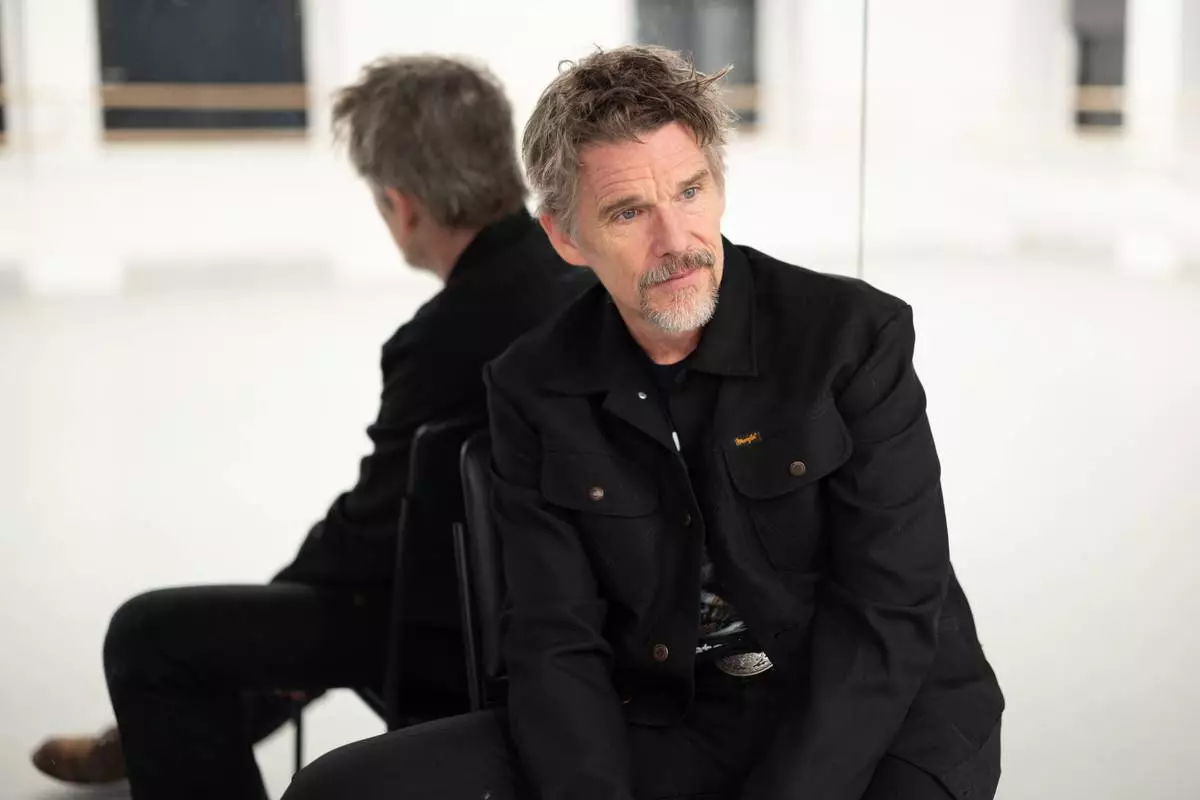
Ethan Hawke poses for a portrait on Monday, Oct. 13, 2025, in New York. (Photo by Matt Licari/Invision/AP)
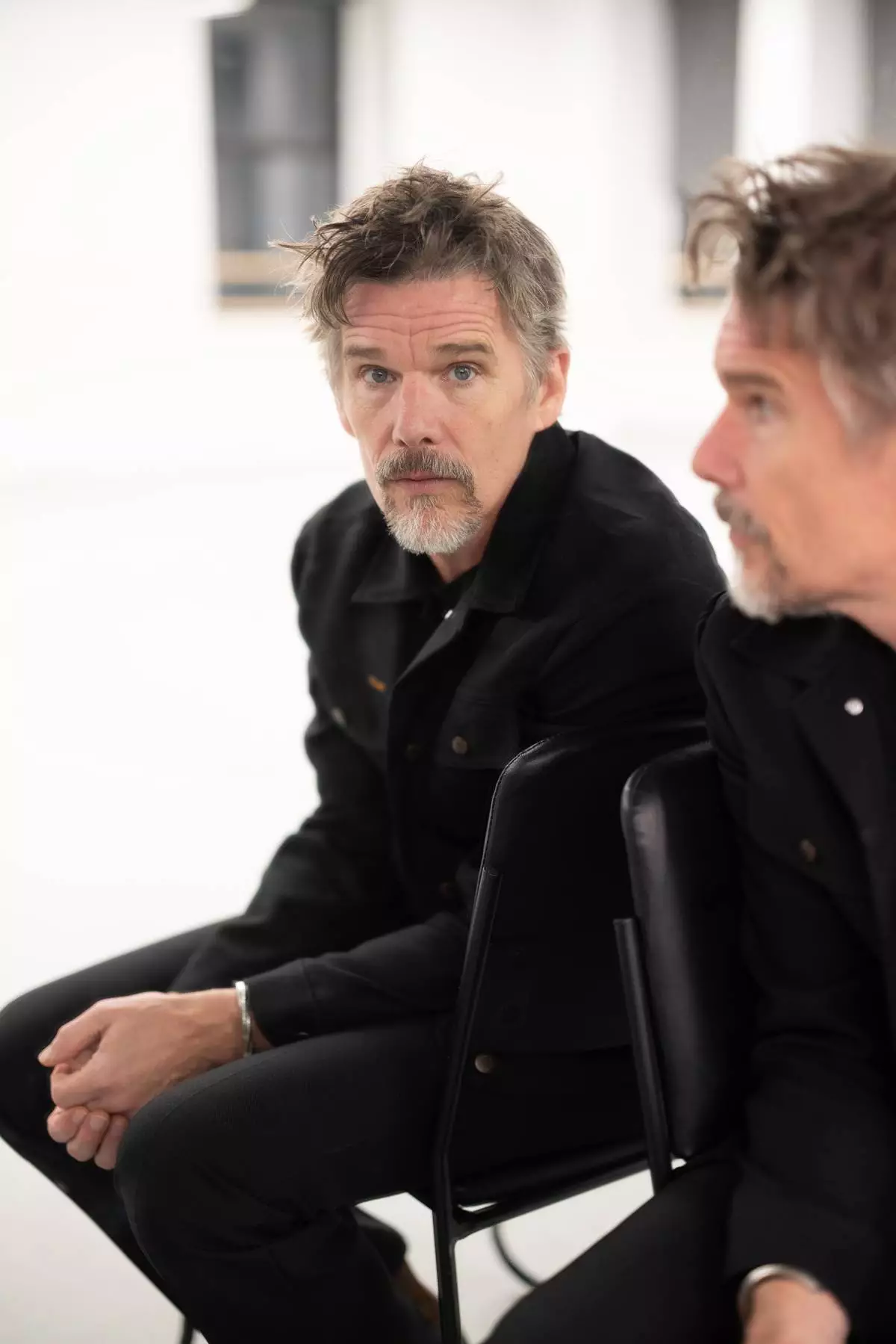
Ethan Hawke poses for a portrait on Monday, Oct. 13, 2025, in New York. (Photo by Matt Licari/Invision/AP)
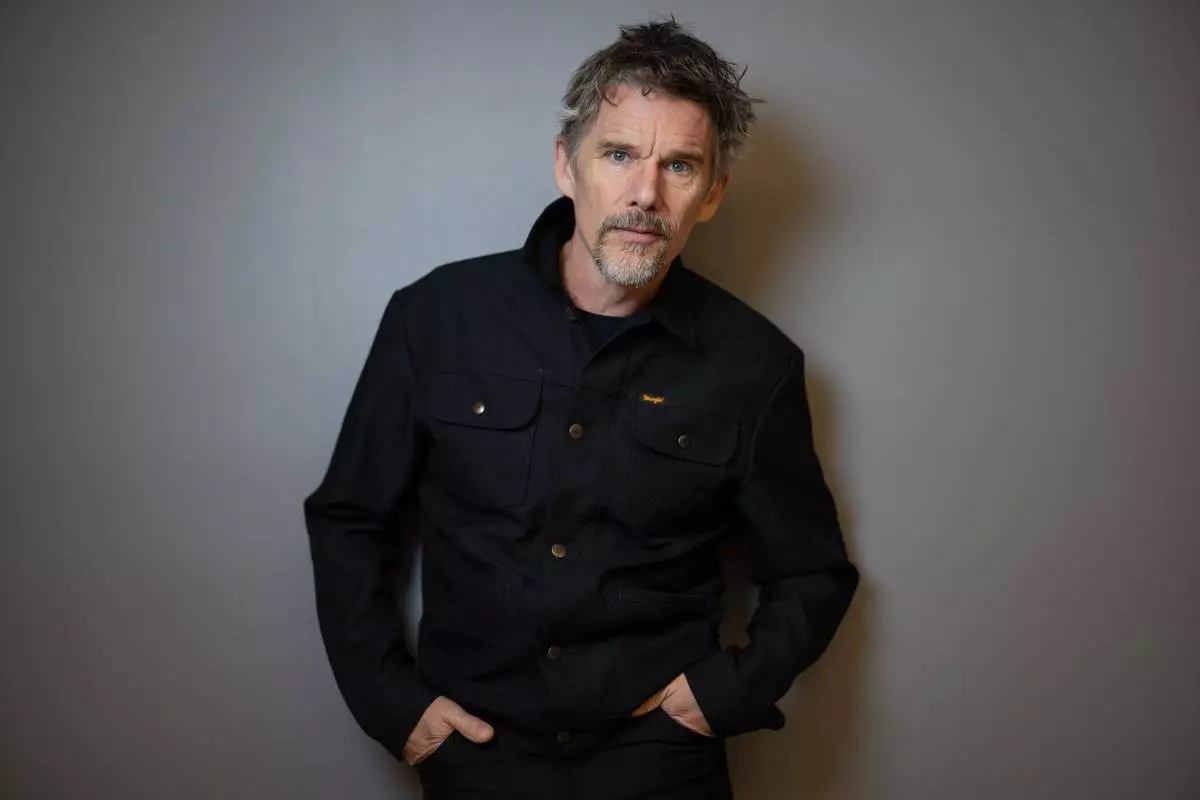
Ethan Hawke poses for a portrait on Monday, Oct. 13, 2025, in New York. (Photo by Matt Licari/Invision/AP)