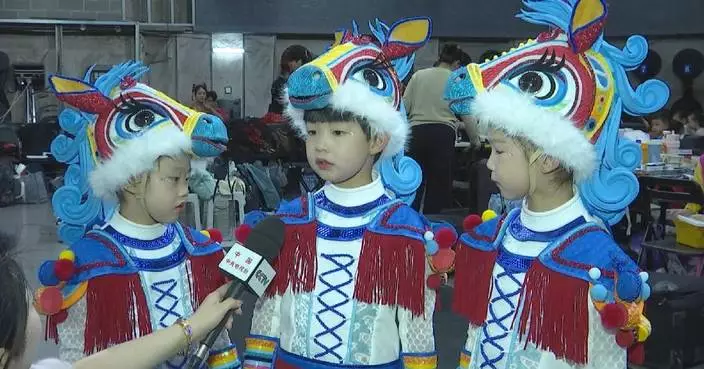
Four major toy fairs all opened in Shanghai on Wednesday, demonstrating how the business of playtime is tapping into culture and creativity to drive China's consumption growth.
Exhibitors and visitors attending the 2025 China Licensing Expo and China Toy Expo have filled the Shanghai New International Expo Center with vibrant energy. Both events are being held from Oct 15 to 17, gathering more than 2,600 intellectual property resources from China and abroad to showcase the latest trends in the Chinese toy industry and facilitate matchmaking cross-industry cooperation.
Model toys designed based on China's J-20 stealth fighter jet and Y-20 transport aircraft, as well as trading cards featuring the logo of a popular beverage brand and emojis, have showcased the creativity of the IP-authorized products.
"IP merchandise can be developed across multiple categories and diverse content formats - films, live performances, events, and competitions. We launch several new products weekly, with rapid restocking. Last year's growth rate exceeded 50 percent compared to the previous year. Our revenue for 2024 reached 10 billion yuan (about 1.4 billion U.S. dollars)," said a representative for Kayou, a Chinese entertainment licensing company.
The range of products that can be developed from a single IP continues to expand. A cartoon duck can be made into a collectible figurine, printed on a badminton racket, or even turned into a glutinous rice ball.
Even the likeness of celebrity giant pandas can be licensed. Panda He Hua, who resides in the Chengdu Research Base of Giant Panda Breeding in southwest China, is appearing on bubble tea cups, refrigerator magnets, and even a L'Oreal skin care cream.
"We have formed an industrial chain around (the panda). The GMV (Gross Merchandise Volume) we have generated through IP licensing has already exceeded 2 billion yuan (about 280.6 million U.S. dollars)," said an exhibitor.
Museums are becoming key players in the IP licensing business. The Xi'an Museum has transformed the painted terracotta female figurines from the Tang Dynasty (618-907) into blind boxes. Meanwhile, the Sanxingdui Museum has ventured into the gaming industry by collaborating with Honor of Kings, one of China's best-known MOBA games, to launch character skins.
"We have integrated elements such as bronze masks, gold masks, sacred tree, and the Golden Sun Bird into the characters' costumes and facial accessories," said a representative for the game.
The China Licensing and China Toy events opened alongside the China Kids expo and China Preschool Expo in the city, showcasing industry trends in childcare, childhood entertainment, and education.
Data show that the total retail sales of licensed goods in the Chinese market exceeded 155 billion yuan, or approximately 21.75 billion U.S. dollars, last year, marking a year-on-year increase of 10.7 percent and achieving growth for seven consecutive years.
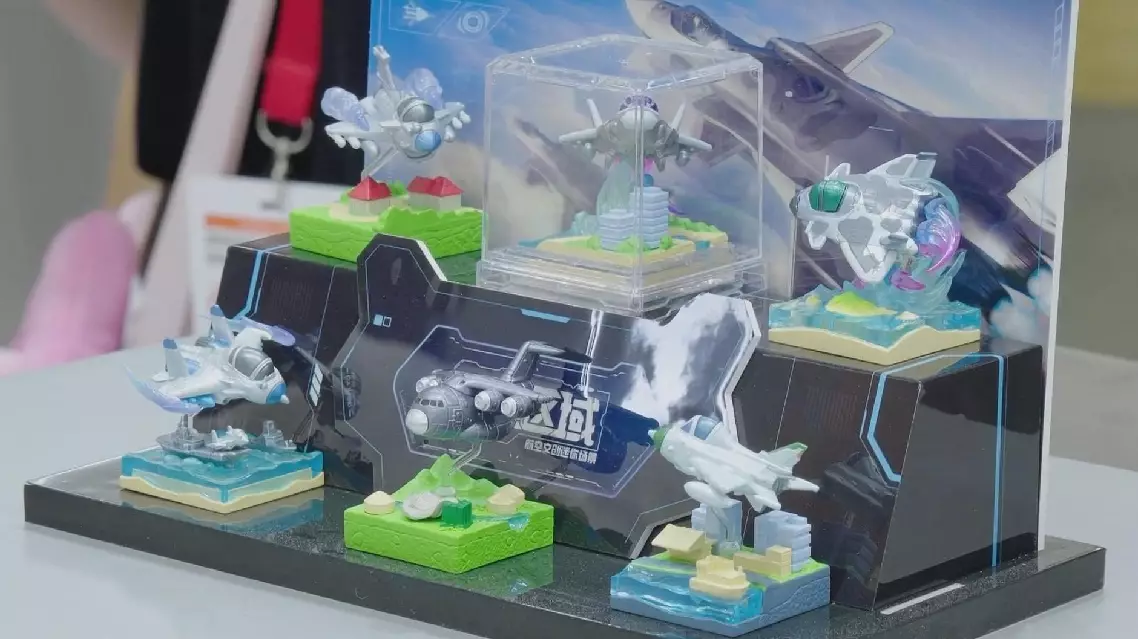
Shanghai toy fairs showcase China's booming IP licensing industry