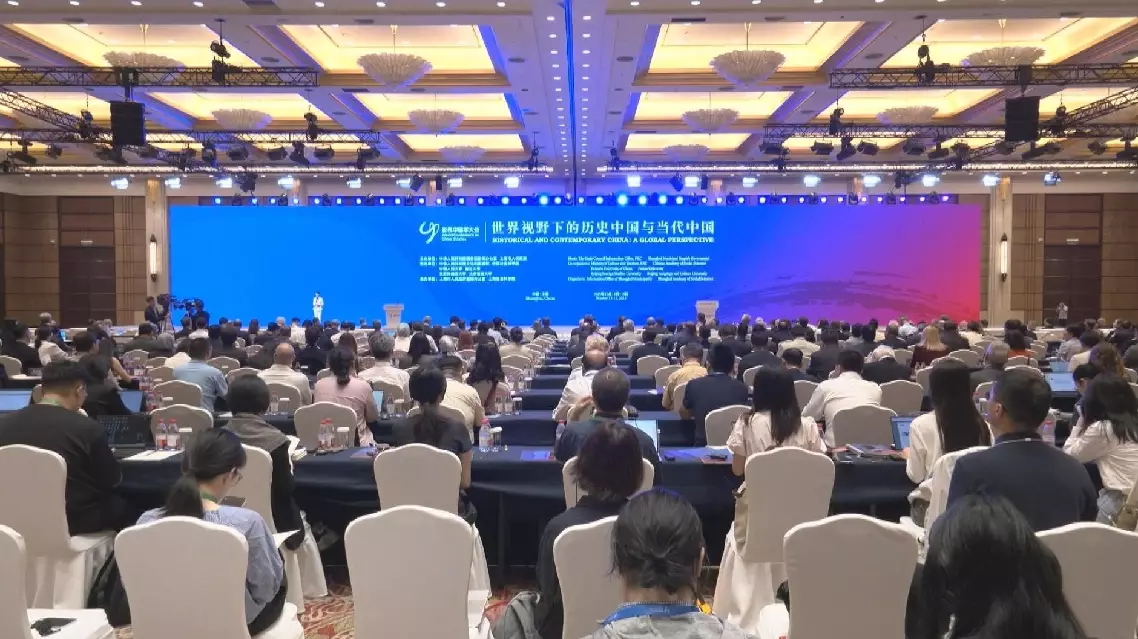
The second World Conference on China Studies was held in Shanghai on Tuesday with the theme "Historical and Contemporary China: A Global Perspective."
The conference was sponsored by the State Council Information Office and the Shanghai Municipal government, in cooperation with other government agencies and academic institutions.
Approximately 500 renowned experts and scholars from over 50 countries and regions participated in in-depth discussions. Five sub-forums of the conference addressed topics ranging from Chinese modernization, China studies in the era of digital intelligence, to the role of youth in the future of China studies.
At one of the sub-forums, "China Studies in the Era of Digital Intelligence: Opportunities and Challenges," attendees explored global perspectives and China's experience in the digital era, digital infrastructure and new history studies, and interdisciplinary humanistic intelligence.
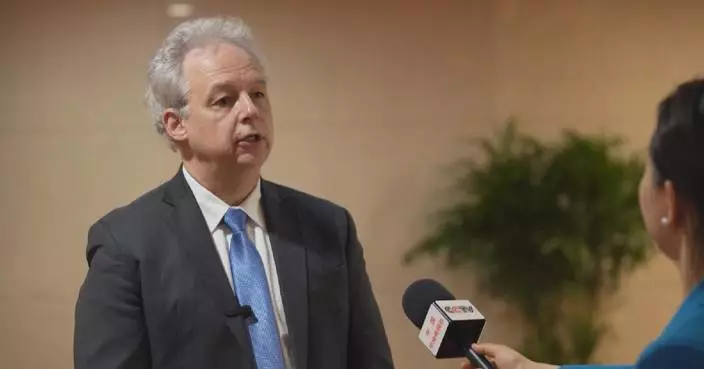
"In Chinese history, for example, we have huge bodies of material, so millions and millions of words of text, far more than any single human could ever read. One of the promises, I think, of large language models and of AI generally is that we can use that to kind of help us work with the other less well studied materials and maybe surface some things that people haven't looked at in as much detail," said Donald Sturgeon, assistant professor of the Department of Computer Science at the Durham University in United Kingdom.
Some attendees expressed that the sub-forums have served as a vital platform for cooperation and exchanges between the East and the West, and offered a precious chance to get insights into the latest trend across various academic disciplines.
They also noted that China is advanced in the development of artificial intelligence and digital finance, which has in turn opened up numerous possibilities for international cooperation.
"China is leading entire world in developing the AI and including those AI into the fintech, financial intelligence, financial services. My interest is to study from this Chinese development in the digital finance and financial inclusion and gets some lessons to my own country," said Bal Ram Duwal, director of the Confucius Institute at the Tribhuvan University of Nepal.
"I believe that culture and especially historical grounding is very, very important. So, it's not that artificial intelligence is going to ruin our humanity, just reshaping. But in order to understand the direction we are going, we need also to look where we are from," said Nicola Liberati, associate professor of the School of Humanities at the Shanghai Jiao Tong University.
China Studies Conference sub-forum focuses on digital age