International Monetary Fund (IMF) Managing Director Kristalina Georgieva said Thursday that artificial intelligence (AI) could boost productivity, but it could also be a source of divergence within countries and across countries.
Noting that the AI investment boom is bringing "incredible optimism," Georgieva told a press briefing during the 2025 Annual Meetings of the World Bank Group and the IMF that AI will contribute to global growth somewhere between 0.1 percent and 0.8 percent, which is "significant."
In its latest World Economic Outlook released Tuesday, the IMF slightly raised its global economic growth projection for 2025 to 3.2 percent, while pointing out that the tariff shock is further dimming growth prospects. Global growth is projected to fall to 3.1 percent in 2026.
"We are stuck in this around 3 percent growth right now. And if we were to extract that kind of boost of growth (from AI), that would be very significant for the world," said Georgieva.
She noted that the IMF has developed the AI preparedness index, which ranks countries on four criteria: digital infrastructure, labor market skills, innovation, and how it penetrates.
The IMF chief also highlighted "a very big distribution from the best to the laggers" in terms of AI adoption.
"So, the risk we see is that we may end up in a world in which there is an increase in productivity, but it is also a source of divergence within countries and across countries," Georgieva said, adding that this is why preparedness really matters.

AI could be source of divergence within, across countries: IMF chief

AI could be source of divergence within, across countries: IMF chief
Only 24 registered survivors of the Nanjing Massacre remain alive today, as China observes another memorial day for the victims of the Nanjing Massacre on Saturday.
This Saturday marks the 12th national memorial day for the Nanjing Massacre victims, which was formally established on Feb 27, 2014, by the Standing Committee of the 12th National People's Congress, designating Dec 13 as an annual day of remembrance through legislative procedure.
The Nanjing Massacre occurred after Japanese forces captured Nanjing, then the Chinese capital, on Dec 13, 1937, initiating six weeks of slaughter that claimed the lives of more than 300,000 Chinese civilians and unarmed soldiers.
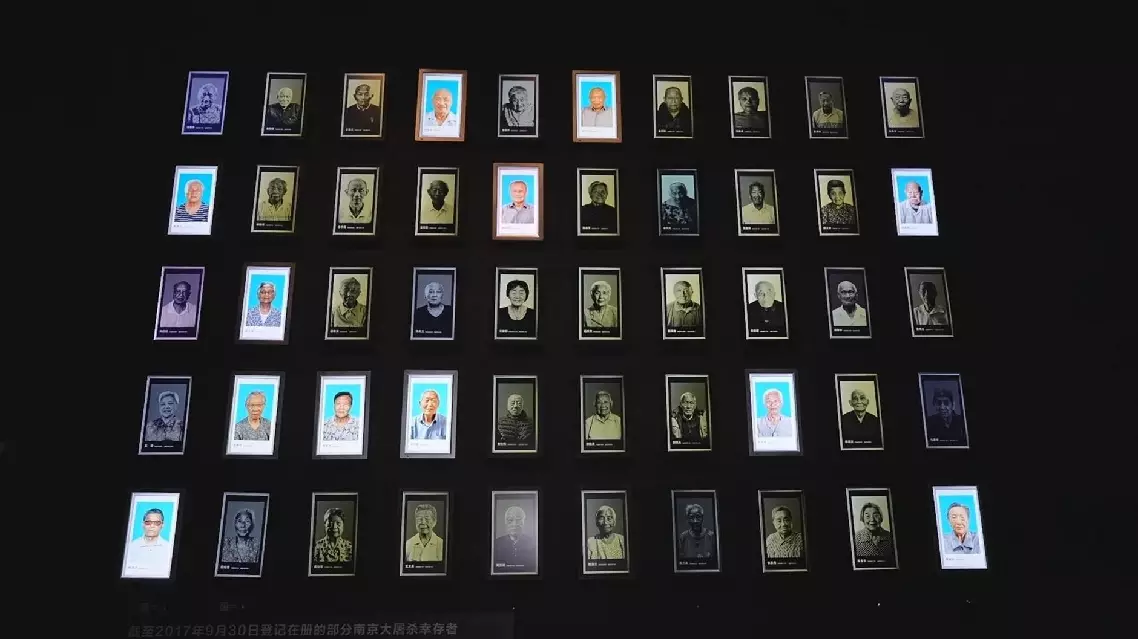
At the Memorial Hall of the Victims in Nanjing Massacre by Japanese Invaders in east China's Jiangsu Province, a wall displays photographs of 100 elderly individuals who represent some of the registered survivors of the Nanjing Massacre as of September 30, 2017.
Whenever a survivor passes away, a light on the wall is extinguished.
Now, only 24 lights remain illuminated on the wall, as eight survivors have passed away since the beginning of this year.
"Currently, only 24 registered survivors remain alive, with an average age of 95, and the oldest being 102. We provide one-on-one care for each survivor, maintaining individual files to support their daily lives. We have also mobilized hospitals, neighborhoods, and communities to assist them," said Zhou Feng, director of the memorial hall.
Xia Shuqin, one of the registered survivors, is now 96 years old but remains sharp-minded and articulate.
In 1937, during the Nanjing Massacre, seven members of her family were brutally murdered by Japanese troops.
Only she, then eight years old, and her four-year-old sister survived.
Xia was stabbed three times.
Standing before the memorial wall listing the victims' names, her eyes filled with tears as she gazed at the names with profound sorrow.
"I was only eight years old then, and my younger sister was four. I was covered in blood. When I came to consciousness, my sister was crying out, but later we couldn't find anyone," she said.
Despite her advanced age, Xia has remained steadfast on the front lines of spreading historical truth over the years.
She has participated in the national memorial ceremony many times for the victims of the Nanjing Massacre and family memorial services, sharing her personal experiences.
She has also traveled to Japan to recount the history of that era to local Japanese residents.
She hopes that her efforts will help people cherish peace.
"Our nation is prosperous and strong. I am living well now. I hope the next generation will have peace, eternal peace," said Xia.
Only 24 survivors of Nanjing Massacre remain alive today