The world's largest clean energy corridor, comprising six mega hydropower stations on China's Yangtze River, has generated more than 4 trillion kilowatt-hours of electricity, according to data released by the China Three Gorges Corporation on Friday.
In the first three quarters of this year alone, the corridor produced more than 235.1 billion kilowatt-hours of electricity.
Stretching 1,800 kilometers, the clean energy corridor consists of Wudongde, Baihetan, Xiluodu, Xiangjiaba, Three Gorges, and Gezhouba hydropower stations.
With a total installed capacity of nearly 71.7 million kilowatts, the six hydropower stations transmit electricity from the resource-rich western region to energy-consuming eastern areas. They generate an average of 300 billion kilowatt-hours of electricity a year.
By the end of July this year, China's installed capacity of renewable energy, primarily from hydropower, wind power, and solar power, has reached 2.17 billion kilowatts, ranking first in the world.
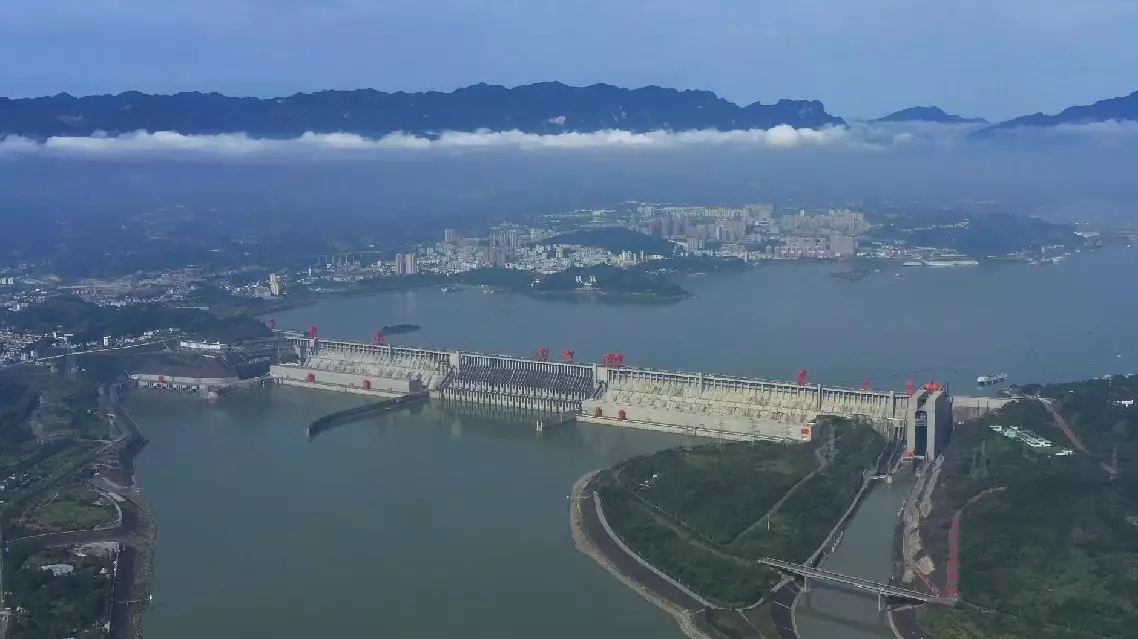
World's largest clean energy corridor in western China generates over 4 tln kWh of electricity

A cold front has brought snowfall and freezing temperatures across many parts of China, disrupting transportation and prompting emergency responses. On Sunday morning, many places in Handan City of north China's Hebei Province have experienced snowfall.
The province on Sunday activated a Level-IV emergency response for major meteorological disasters in preparation for incoming heavy snowfall.
According to the provincial meteorological observatory, heavy snow is forecast to hit areas including Shijiazhuang, Cangzhou and Hengshui from day to night on Sunday. Some regions may experience blizzard conditions.
Forecasters warn that the severe weather will disrupt transportation, urban services, and greenhouse agriculture.
Local authorities have been urged to closely monitor weather conditions, enhance risk assessment, and eliminate potential safety hazards.
China has a four-tier emergency response system, with Level I being the most severe response.
Starting early Sunday morning, a new round of snowfall began in areas such as Qingyang City and Dingxi City in northwest China's Gansu Province.
In order to ensure smooth traffic and people's normal life and production, local departments have made coordinated efforts to clear snow from roads.
Local traffic police have also increased presence at key areas to direct traffic and ensure timely response to emergencies.
In addition, widespread snowfall affected the northern parts of northwest China's Xinjiang Uygur Autonomous Region, posing challenges to urban transportation and railway operations.
Traffic police and city departments are mobilizing to clear roads and ensure safe travel for residents.
Railway authorities also implemented pre-arranged snow-response plans, using equipment such as wind-powered snow blowers and de-icing equipment to clear key sections of track and prevent switches from freezing.
The current round of snowfall in the northern parts of Xinjiang is expected to end on March 2. Some areas in east China's Shandong Province also experienced heavy snow on Sunday. At 11:00, the provincial weather service issued yellow warnings for icy roads.
At the Mount Tai scenic area in Tai'an City, the weather transitioned from a mix of rain and snow to snowfall during the day. As of 15:00 on Sunday, the average precipitation had reached 18.9 millimeters, with the snowfall still ongoing. To ensure the safety of visitors, the scenic area has decided to suspend all access routes starting from 16:00. On Sunday morning, cold air prompted snowfall in many places of north China's Shanxi Province. The Shanxi Provincial Meteorological Observatory issued a yellow alert for blizzard, covering areas such as Jinzhong City, Linfen City, and Yuncheng City.
Icy road conditions led to temporary traffic restrictions on several highway sections.
Local authorities promptly activated emergency response plans, deploying crews for snow removal and traffic control.
Snowfall hits many parts of China, affecting transportation