The integrated computing network built by China over the past five years has fueled the growth of its digital economy as the country continues to implement a strategic plan to improve its digital infrastructure.
Currently, China ranks second globally in terms of the scale of computing power, and over the 14th Five-Year Plan period (2021-2025), the scale of China's computing power has been growing at an average annual rate of 30 percent, with more than 70 percent of the newly added computing capacity being generated from the western regions of the country.
To date, China has built eight national computing hubs and 10 national data center clusters, channeling computing resources from the more developed eastern regions to the less developed western regions that have abundant renewable energy sources. More than 60 percent of Chinese cities are able to connect to a computing power cluster within five milliseconds.
The strategic plan has helped to boost the industrial development in western China.
Northwest China's Qingyang City, a computing hub in the national plan to channel computing resources from the east to the west, has seen 452 enterprises from sectors such as data annotation and low-altitude economy settle down and contribute to local development. The operation revenue of firms in the digital economy in the city has surged to 10 billion yuan (about 1.4 billion U.S. dollars) from nearly zero.
Over 30 emerging computing hubs across China like Qingyang have served as a critical backbone for the AI era.
Over the past five years, China has also built the world's largest internet infrastructure network, and it is also one of the countries that have the most diverse data application scenarios in the world.
Furthermore, digital technology has been widely adopted in the country in sectors such as agriculture, manufacturing, environmental protection and transportation, helping enhance harvest efficiency, build smart factories, monitor water quality and ensure smooth passenger flows at railway stations.
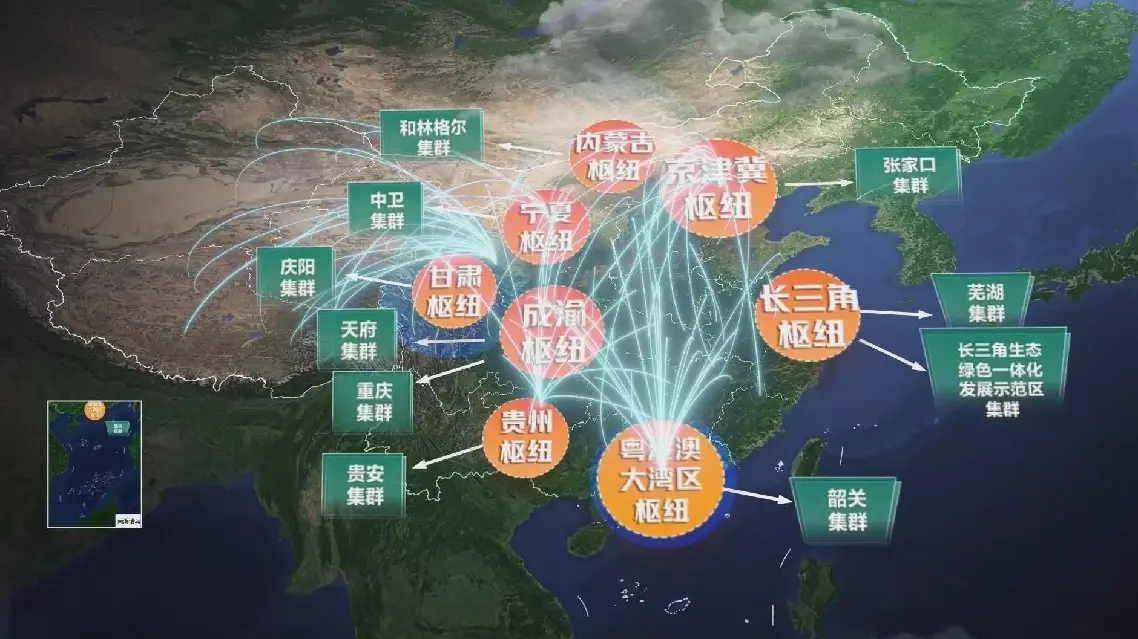
Integrated computing network powers breakthroughs in China's digital push