Speech by DCS at Award Presentation Ceremony of Hong Kong Excellent Family Awards
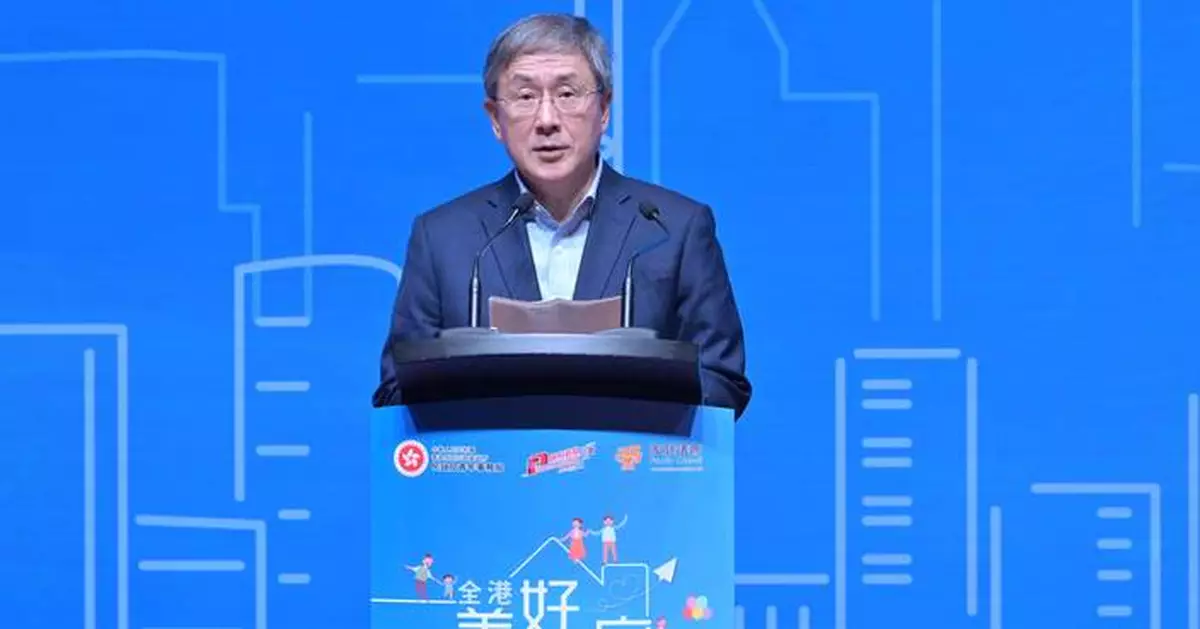
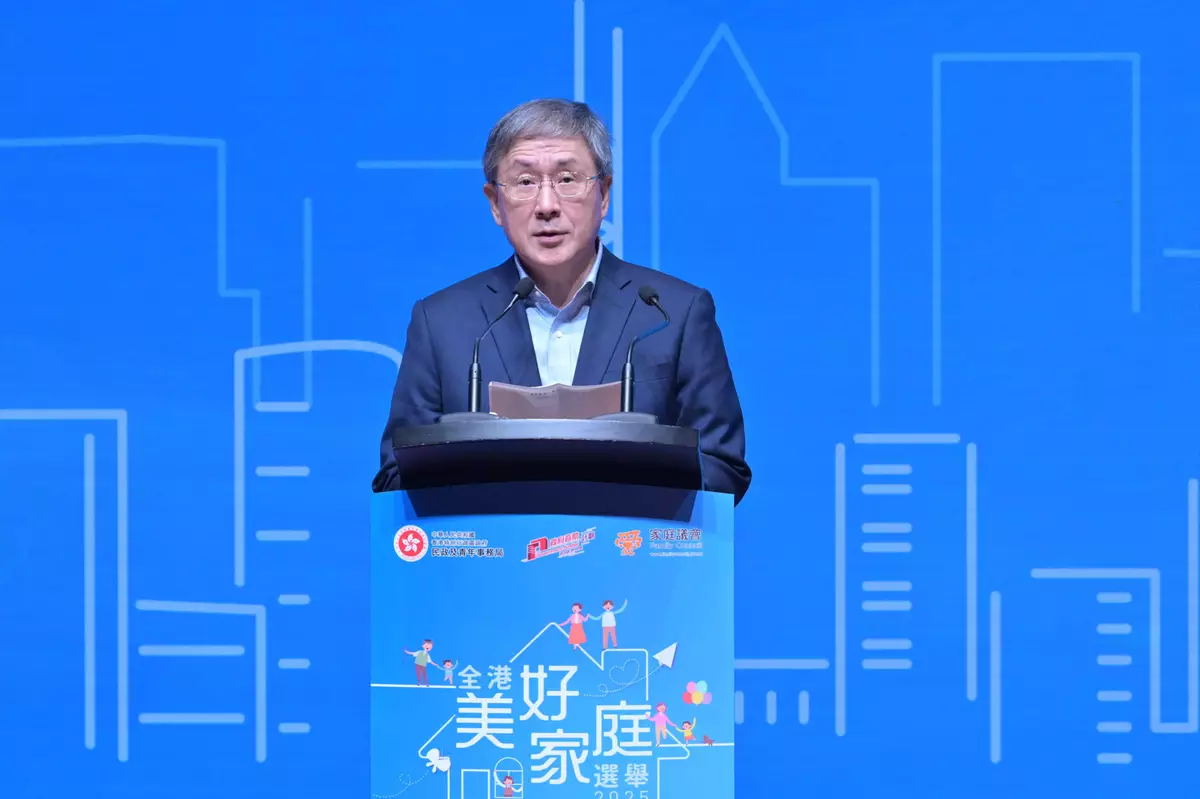
Following is the speech by the Deputy Chief Secretary for Administration, Mr Cheuk Wing-hing, at the Award Presentation Ceremony of the Hong Kong Excellent Family Awards today (October 19):
梁君彥主席(立法會主席暨全港美好家庭選舉評審委員會主席)、麥美娟局長(民政及青年事務局局長)、譚贛蘭教授(香港社福界心連心大行動副主席暨全港美好家庭選舉評審委員會委員)、彭韻僖主席(家庭議會主席暨全港美好家庭選舉評審委員會委員)、各位嘉賓、各位朋友:
大家好!今日很高興出席由民政及青年事務局(民青局)和家庭議會合辦的全港美好家庭選舉頒獎典禮,與各位一同見證香港美好家庭精神的典範。
中國源遠流長的文化和社會一直重視家庭和諧,珍視良好家教家風。正如習近平主席說:「家庭是社會的細胞。家庭和睦則社會安定,家庭幸福則社會祥和。」家庭的健康與國家和民族的前途命運緊密相連。國家《十四五規劃綱要》明確提出要加強家庭建設,推動家庭服務多元化發展,並充分發揮家教、家風在基層社會治理中的積極作用。國家在二○二二年實施的《家庭教育促進法》,更將家庭教育由「家事」提升為「國事」,充分體現國家對家庭教育和弘揚中華民族優良傳統的重視。
特區政府一直積極響應國家政策,致力推動家庭友善社會的建設及香港家庭的健康發展。特區政府於二○○七年成立家庭議會,作為跨界別及跨政策局的平台,向市民推廣關愛家庭的文化,並確立了三組家庭核心價值,即愛與關懷、責任與尊重及溝通與和諧,為社會注入和諧的原動力。
為了進一步深化家庭、家教及家風的建設工作,本屆政府在二○二四年十月推出了為期五年的家庭教育推廣計劃,每年撥款800萬元,資助民間推行家庭教育項目。計劃首年反應熱烈,共收到逾200個申請,反映社會對家庭教育的廣泛關注。
此外,政府於去年十月舉辦首屆香港家庭暨婦女發展高峰會(高峰會),吸引了超過900名本地及粵港澳大灣區婦女團體、商界和相關服務組織的代表參與。民青局將會在二○二六年一月舉辦第二屆高峰會,與各界代表一同探討持續推動本港家庭和婦女發展的措施。
全港美好家庭選舉是行政長官在《2024年施政報告》中提出推動家庭發展的措施,藉以弘揚家庭價值。項目於今年四月啟動,以建立穩固家庭關係樹立良好家教家風為重點,透過參賽家庭分享他們的動人故事,向市民大眾傳遞溫暖、互助、傳承美德的家庭力量。市民的反應踴躍,有接近1 200個家庭提交參賽作品。1 200個家庭的故事,有些是關於一同克服逆境,有些是關於日常確幸,參賽家庭有新來港家庭,也有幾代同堂的大家庭。
我衷心祝賀所有得奬家庭。你們的故事詮釋了甚麼是風雨同舟、休戚與共,什麼是舐犢情深、春暉寸草,生動體現了孝親敬老、夫妻和睦、團結互助的中華傳統美德,為全港家庭樹立了良好榜樣。透過你們的經歷,我感受到家庭關係越牢固,越能夠應對生活上各種挑戰。我相信民青局和家庭議會一定會繼續透過不同方式及平台傳播這些故事,將優良家風薪火相傳,培育對國家和家庭有承擔的年輕一代。
家庭不僅是社會的基本細胞,更是我們心靈的港灣。家庭的幸福需要政府、社會各界與每一位市民同心共建。讓我們同心同行,以關愛成就每個美好的家庭,共築和諧穩定的社會。
To our English-speaking guests and friends, a very warm welcome to you. It is a great pleasure to join you here for the Award Presentation Ceremony of the Hong Kong Excellent Family Awards, an initiative co-organised by the Home and Youth Affairs Bureau and the Family Council. Today, we are not just gathering here to present awards to the winners but to celebrate the very foundation of a harmonious society - the enduring bonds of love and care within families. By generously sharing your experiences, you inspire the wider community to uphold family values and the sanctity of family bonds.
May the love and traditional virtues we celebrate today ripple outwards, touching every heart in this city. Let us all be builders of close and happy families, architects of harmonious and benevolent communities, and creators of a brighter tomorrow for Hong Kong.
Thank you, and I wish you all a remarkable celebration today.
Source: AI-found images
Speech by DCS at Award Presentation Ceremony of Hong Kong Excellent Family Awards Source: HKSAR Government Press Releases
Source: AI-found images
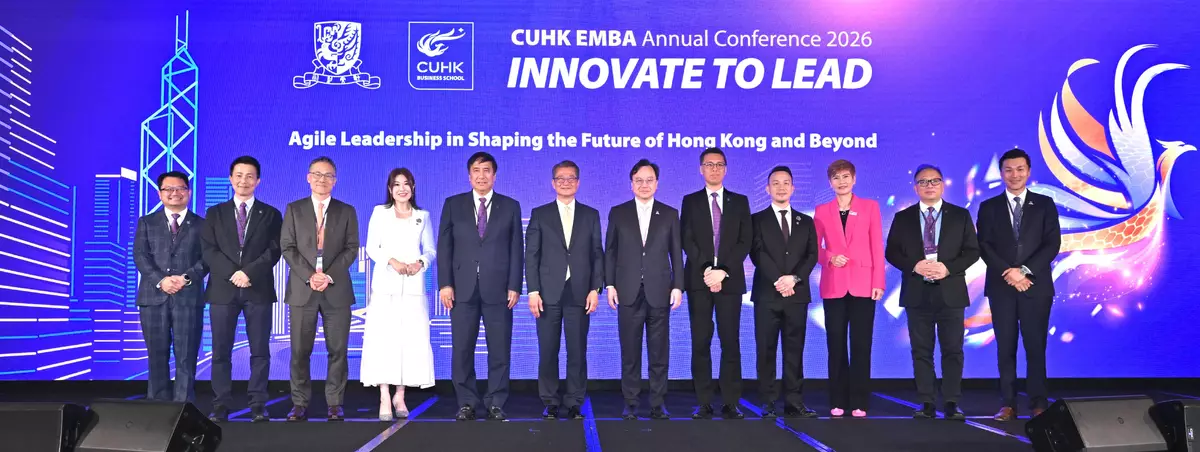
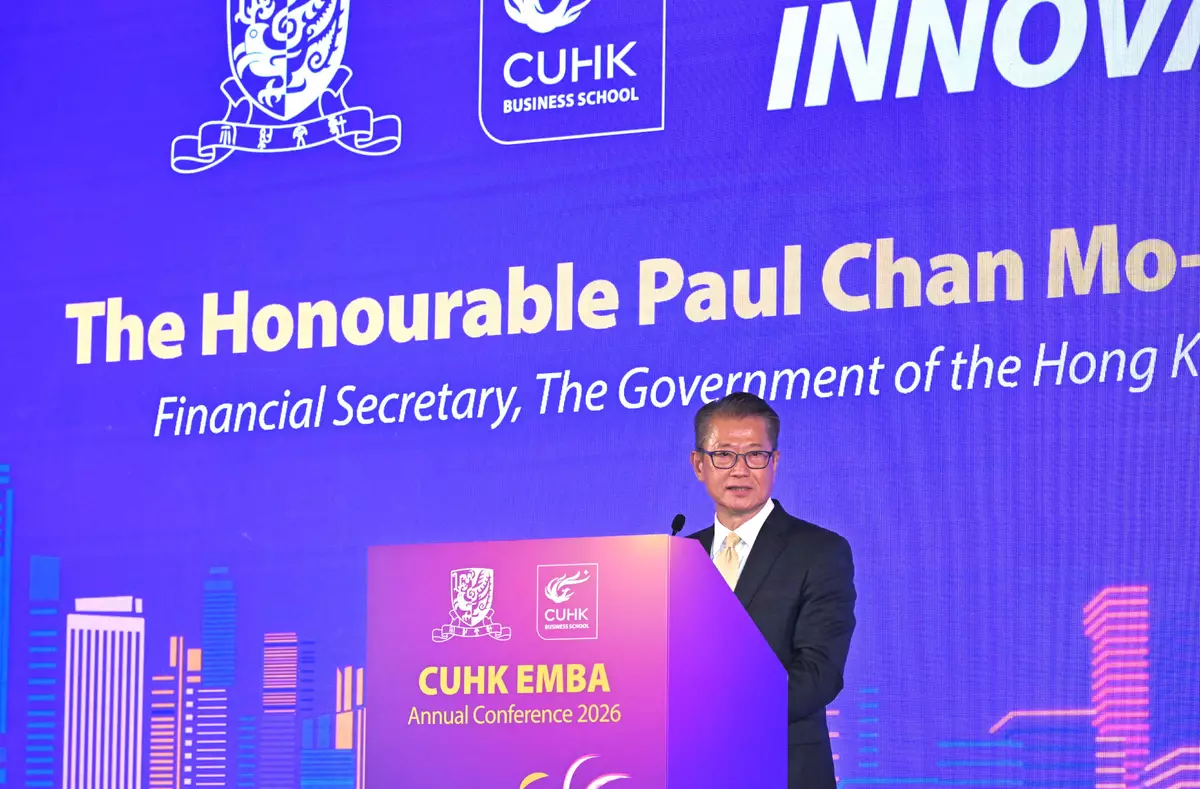
Speech by FS at CUHK EMBA Annual Conference
Following is the speech by the Financial Secretary, Mr Paul Chan, at the CUHK EMBA Annual Conference today (May 9):
Professor Dennis Lo (Vice-Chancellor and President, the Chinese University of Hong Kong (CUHK)), Professor Lin Zhou (Dean, CUHK Business School), Macy (Chairperson of Organizing Committee, Ms Macy Chan), Michael (Chairperson of Organizing Committee, Mr Michael Chan), CUHK EMBA alumni and students, business leaders, distinguished guests and friends,
Good evening.
Addressing a room full of Executive MBA students and graduates is both an honour and a privilege. There is a particular kind of ambition in this room — one that is not content with success alone, but driven to understand it more deeply, in the belief that better ideas lead to greater impact.
That kind of commitment — to learning, to growth, to asking harder questions — is precisely what today's conversation is about.
The theme of this conference, which focuses on innovation and agile leadership, could not be more timely. Most of us here have lived through the Internet age and the smartphone revolution, which made communication faster and more seamless than anyone had imagined.
Today, the rise of AI places us at a more fundamental tipping point. Technology is not merely changing the answers — it is redefining the questions themselves.
Consider what is already within reach. An AI assistant can learn your preferences, curate a personalised shortlist, and simply ask for your confirmation. We should even ask whether the smartphone and the search engine will remain our primary gateways to the digital world, or whether something altogether new is already taking shape.
To draw an analogy, the power of technology does not lie in drawing the old map with greater precision. It lies in revealing how much of that map remains uncharted — and in showing us that entirely new maps, with new co-ordinates, are being drawn.
This redefinition is unfolding across three dimensions simultaneously.
First, the redefinition of products. Products are no longer discrete, standalone objects. A smart car is a vehicle, but also a mobile platform for data. An insurance policy can be a contract, but equally a dynamic reflection of health data. Innovation today is born from cross-sector convergence and continuous evolution.
Second, the redefinition of services. Services are no longer delivered solely by enterprises. They emerge from collaborative networks of people and AI. But the more profound shift is in what customers now expect. In the past, good service meant reaching the right person quickly. Today, customers expect a solution that anticipates their needs before articulating them. This requires a new architecture of service delivery: human and machine, with AI handling the scale, the speed, and the personalisation that no human team alone could sustain.
Third, and most importantly, the redefinition of business models. In the past, we sought optimal solutions within established frameworks — when demand rose, we expanded capacity; when service needs grew, we opened more branches. Technology invites us to break out of those frameworks entirely. Intelligent manufacturing means that "economies of scale" is no longer the only answer; flexible supply chains have made customised, on-demand production the new normal.
These three redefinitions are opening a commercial frontier unlike anything we have seen before. But if the benefits of technology accrue only to a small circle, its power remains fundamentally constrained. This brings me to the second message I want to leave with you today: inclusivity.
Inclusivity is not charity. Yet it is the smartest business strategy available. The unmet needs of the broader public represent the largest and most underserved market opportunity in existence. When you make quality healthcare, education and financial services accessible and affordable to ordinary residents, you are not serving a group in need of handouts — you are unlocking a vast market that traditional business models have consistently overlooked.
Hong Kong has a distinctive role to play here. We can be a co-architect of standards, a hub for capital, and a bridge between innovation and real-world deployment — from clinical validation of smart healthcare, to green technology financing, to regulatory sandboxes for fintech. Our contribution draws not only on institutional strengths and international networks, but on our genuine commitment to broad-based participation.
Yet inclusive products and services are only the first step. The deeper dimension is empowerment.
History reminds us that the dividends of technological revolution need to be actively guided to reach the many. In the age of steam, and again in the Internet era, early gains concentrated among capital owners and top-tier talent. But today we have the opportunity to write a different story. AI, as an amplifier of human capability, is already enabling what was previously unimaginable: a solo entrepreneur, with the right tools and the right vision, can build a unicorn.
In other words, the unit of competitive advantage is shifting — from the size of your team to the skill with which you orchestrate your tools.
Our mission should be to make that shift available to everyone. To turn individual readiness into collective prosperity, and to ensure that the productivity gains of AI flow broadly across the society.
This is precisely why, in this year's Budget, I placed such emphasis on the "AI Training for All" initiative.
We are not trying to turn everyone into an engineer. We are ensuring that workers, managers, SME (small and medium-sized enterprise) owners, and ordinary residents become capable collaborators with AI: people who can access it, use it effectively, and put it to work as their assistant.
That may sound ambitious, but consider this: if AI can one day be as intuitive as the smartphone, then mass adoption is not difficult to imagine at all. Just as computers once migrated from specialist facilities into offices and homes, AI will find its way into everyone's daily work and life.
For business leaders, it may be tempting to think of AI as "digital employee" that can replace existing workers. But think of a different framing: equipping your workforce with powerful digital assistants can achieve productivity gains, while also freeing your people to do what humans do best — create, imagine and innovate.
Companies that take those extra steps, and think those extra moves ahead, will find that an empowered workforce is also a more innovative one.
All in all, the power of technology must ultimately be measured by its contribution to inclusive growth. And inclusive growth, in the end, depends on, yes, commercial acumen — but also empathy, compassion, and the conviction that a rising tide should lift all boats. I can see that those qualities live in this room.
I will close with this thought. Someone once joked that economists know the price of everything and the value of nothing. With AI, let us never fall into the same trap — in our race to price every efficiency gain, let us not lose sight of the deeper value we are trying to create: a society where the fruits of innovation are broadly shared, and where technology lifts not just the fortunate few, but everyone willing to reach for it.
So here is my ask: let us grow the pie together. And make sure we cut it well.
Thank you very much.
Source: AI-found images
Speech by FS at CUHK EMBA Annual Conference Source: HKSAR Government Press Releases
Speech by FS at CUHK EMBA Annual Conference Source: HKSAR Government Press Releases
Source: AI-found images