Skip to Content Facebook Feature Image

The next major film studios could be in Nevada if some unions have their way

ENT

The next major film studios could be in Nevada if some unions have their way
ENT

ENT

The next major film studios could be in Nevada if some unions have their way

2025-10-19 20:02 Last Updated At:20:10

LAS VEGAS (AP) — Movies like “The Hangover” and “Ocean's Eleven” piqued interest in the Las Vegas Strip long ago. But now Nevada labor unions hoping to boost jobs and tourism are pushing state officials to offer tax credits aimed at bringing more Hollywood filmmaking to the state.

The effort to offer up to $95 million in tax credits to Sony Pictures Entertainment and Warner Bros. Discovery for a new film production facility in the Vegas suburbs didn't win enough legislative support earlier this year. But more than a dozen labor unions are pushing to revive the proposal during an expected special session next month.

“We believe if we can get the public behind us, we’ll be able to get the legislators to understand what a big change this can bring to Southern Nevada,” said Tommy White, business manager-secretary treasurer of Laborers’ International Union of North America, Local 872 in Las Vegas.

Trade unions formed a political action committee called Nevada Jobs Now, which has raised over $1 million to be used for digital advertisements, mailers and some TV commercials, White said. The production companies behind the project say it would create 19,000 construction jobs.

If the unions are successful, Las Vegas would be competing with cities like Atlanta, where the film industry has boomed for more than a decade thanks to a far more generous tax break. California, meanwhile, recently revamped its own tax incentive programs to combat a multiyear downward trend in Hollywood film production.

The production companies would not come to Las Vegas if they don’t receive the tax incentives, according to David O’Reilly, CEO of Howard Hughes Holdings, the developer of the proposal called Summerlin Studios. It would include 10 movie stages, hotels, a medical center and be part of a master-planned neighborhood in West Las Vegas.

“There would be no reason for Sony and Warner to film in Nevada when they can get tax credits in 20 other states or around the globe,” he said. “They need to bring their productions to where they have the best economic deal, and we’re just trying to make Nevada competitive with everybody else.”

To be eligible for the tax credits, $400 million needs to be spent building a studio and $1.8 billion spent building the mixed-use development of shops and restaurants, O’Reilly said. Sony and Warner Bros. would have to spend $4.5 billion over 15 years. They would be eligible for the tax credits after the studio is built and filming begins, he said.

The proposal comes as Las Vegas continues to see a decline in tourism. Between June 2024 and June 2025, the Las Vegas Convention and Visitors Authority reported an 11.3% decline in visitors.

White and other supporters argue that not only will the film studios bring jobs and revenue, it will also attract tourists.

“With movie studios, you bring in a whole different type of tourist,” White said, likening it to how major sports teams draw visitors. “You don’t just bring the person that’s come in to go to a resort to gamble.”

Stephen Weizenecker, an Atlanta attorney who was involved in Georgia’s film tax credit program since its inception in 2008, said Georgia has seen more tourists wanting to visit the scenes where movies like “The Hunger Games” and “Forrest Gump” were filmed.

Dubbed the “Hollywood of the South,” metro Atlanta became a ubiquitous backdrop for huge projects, including Marvel films and Netflix’s “Stranger Things.” Its program has supported thousands of jobs and the creation of several thriving studios. But it is expensive — the state in 2024 was projected to give out $1.35 billion in credits that year alone.

The state's return is an average of 17 cents in tax revenue for every state dollar spent, according to Carlianne Patrick, an associate professor at Georgia State University who conducts audits of the state’s tax credit programs.

Georgia has seen a large increase in production activity and an increase in jobs, though not all of them are full-time, permanent positions, Patrick said.

Some don’t see the payoff in giving tax credits to the film studios.

The American Federation of State, County and Municipal Employees (AFSCME), a union representing thousands of state workers, joined other Nevada organizations this week in sending a letter to the governor urging him to not include the film tax credit proposal in the upcoming special session. Republican Gov. Joe Lombardo says he will call lawmakers back to the capital before the years ends, but it's not yet clear what issues lawmakers will tackle.

They argue the project is “fiscally irresponsible and politically indefensible” and would only generate $0.52 in tax revenue for every $1 in credit, citing a May 2025 report commissioned by the state.

“Every dollar we lock into a corporate handout is a dollar we can’t put toward our rainy-day readiness, public education, health care, wildfire mitigation, housing, and the basic services Nevadans rely on when times get tight," the organizations wrote in the letter.

Jared Kluesner, a psychiatric nurse at the Southern Nevada Adult Mental Health campus in Las Vegas and member of AFSCME, said the state should prioritize public services for people with mental health issues.

Kluesner wants Sony and Warner Bros. to build a film studio facility and create more jobs for Nevadans, but “if they’re going to do it at the cost of public services and funds that should be allocated to state workers, then that’s not really solving any problems.”
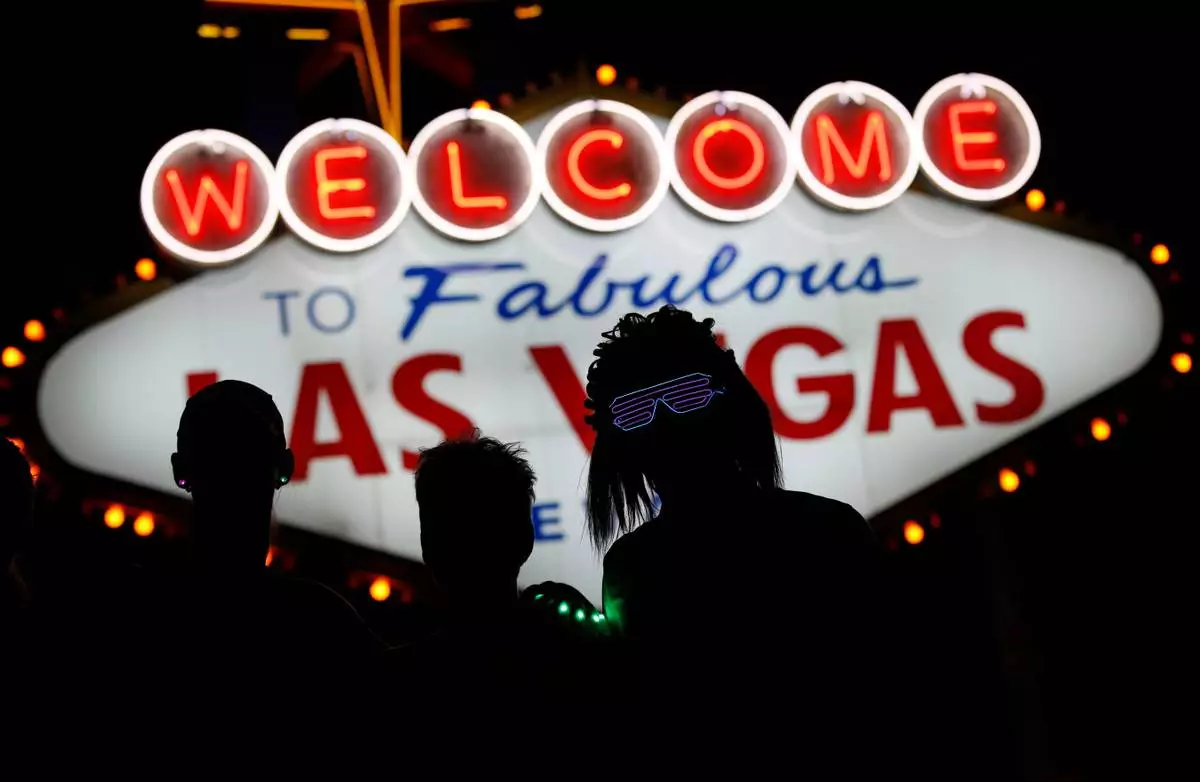
FILE - Runners stop to to have photos taken by official photographers at the Welcome to Las Vegas sign during the Rock 'n' Roll Las Vegas Marathon, Sunday, Nov. 12, 2017, in Las Vegas. (AP Photo/John Locher, File)

FILE - Runners stop to to have photos taken by official photographers at the Welcome to Las Vegas sign during the Rock 'n' Roll Las Vegas Marathon, Sunday, Nov. 12, 2017, in Las Vegas. (AP Photo/John Locher, File)

NEW YORK (AP) — Stocks wavered in afternoon trading on Wall Street Tuesday as 2025 nudges closer to the finish line.

The S&P 500 was mostly unchanged. The benchmark index is still on track for a gain of more than 17% for the year.

The Dow Jones Industrial Average fell 78 points, or 0.2%, as of 2:55 p.m. Eastern. The Nasdaq composite fell 0.1%.

The biggest weights on the market remained technology companies, especially those focused on advancements for artificial intelligence.

Nvidia and Apple wobbled between small losses and breaking even. Both companies have outsized values that have a greater overall impact on the market’s broader direction.

On the winning side, Facebook parent Meta Platforms rose 1.3%. The company is buying artificial intelligence startup Manus as it continues an aggressive push to amp up AI offerings across its platforms.

Markets were mixed in Asia and higher in Europe.

With just two trading days left before the year ends, most big investors have closed out their positions and volume has been thin. U.S. markets will be closed on Thursday for New Year's day.

The more notable action was again in the commodities markets. Gold, silver and copper all resumed their ascent after steep declines a day earlier.

The price of gold rose 0.7% and silver prices gained 9.2% after slumping Monday when the Chicago Mercantile Exchange, one of the largest trading floors for commodities, asked traders to put up more cash to make bets on precious metals. Prices for both metals have surged in 2025 on a mix of economic worries and supply deficits.

Copper rose 3.6% and is up more 40% for the year on strong demand. The base metal is critical to global energy infrastructure, and demand is expected to keep growing as the development of artificial intelligence technology puts more of a strain on data centers and the energy grid.

Crude oil prices were relatively steady. The price of U.S. crude oil fell 0.1%. The price of Brent crude, the international standard, rose 0.1%.

Treasury yields mostly rose in the bond market. The yield on the 10-year Treasury rose to 4.13% from 4.11% late Monday. The yield on the two-year Treasury, which moves more closely with expectations for what the Federal Reserve will do, held steady at 3.45% from late Monday.

Overall, Treasury yields have fallen significantly through the year, partly because of the market's expectations for a shift in interest rate policy at the Fed. The central bank cut interest rates three times late in 2025, most recently at its meeting earlier in December.

The central bank has been dealing with a more complex economic picture. Consumer confidence has been weakening throughout the year as inflation squeezes consumers and businesses. The continued impact of a wide-ranging U.S.-led trade war threatens to add more fuel to inflation.

Inflation remains stubbornly high while the jobs market slows down. The Fed can cut interest rates to help the economy weather a slower jobs market. But, that could add more fuel to inflation that is still solidly above the Fed's 2% target. Hotter inflation could stunt economic growth.

The Fed has signaled more caution moving forward. Minutes from its December meeting reflect the divisions within the central bank as it deals with uncertainty about the threats facing the economy.

Wall Street is betting that the Fed will hold interest rates steady at its next meeting in January.

Elaine Kurtenbach contributed to this report.

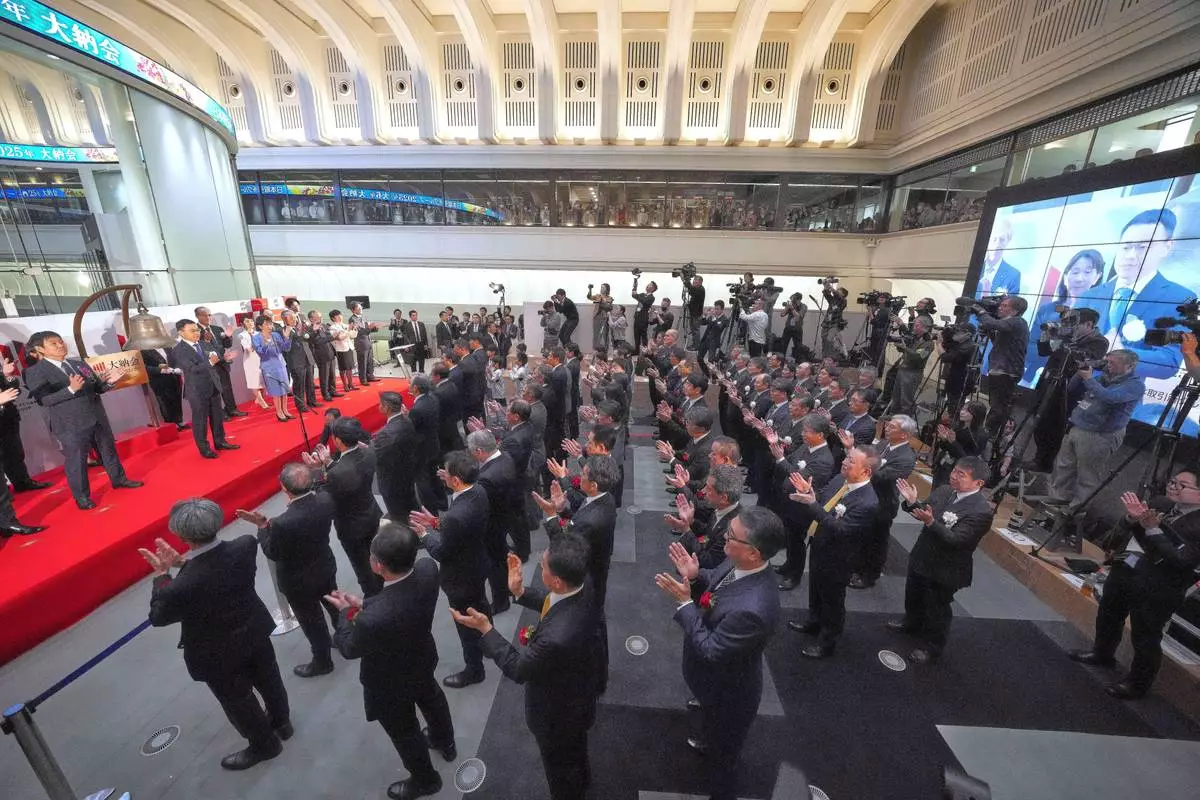
Participants perform a traditional hand clap at the end of a ceremony to conclude the year's trading at the Tokyo Stock Exchange Tuesday, Dec. 30, 2025, in Tokyo. (AP Photo/Eugene Hoshiko)

Participants perform a traditional hand clap at the end of a ceremony to conclude the year's trading at the Tokyo Stock Exchange Tuesday, Dec. 30, 2025, in Tokyo. (AP Photo/Eugene Hoshiko)

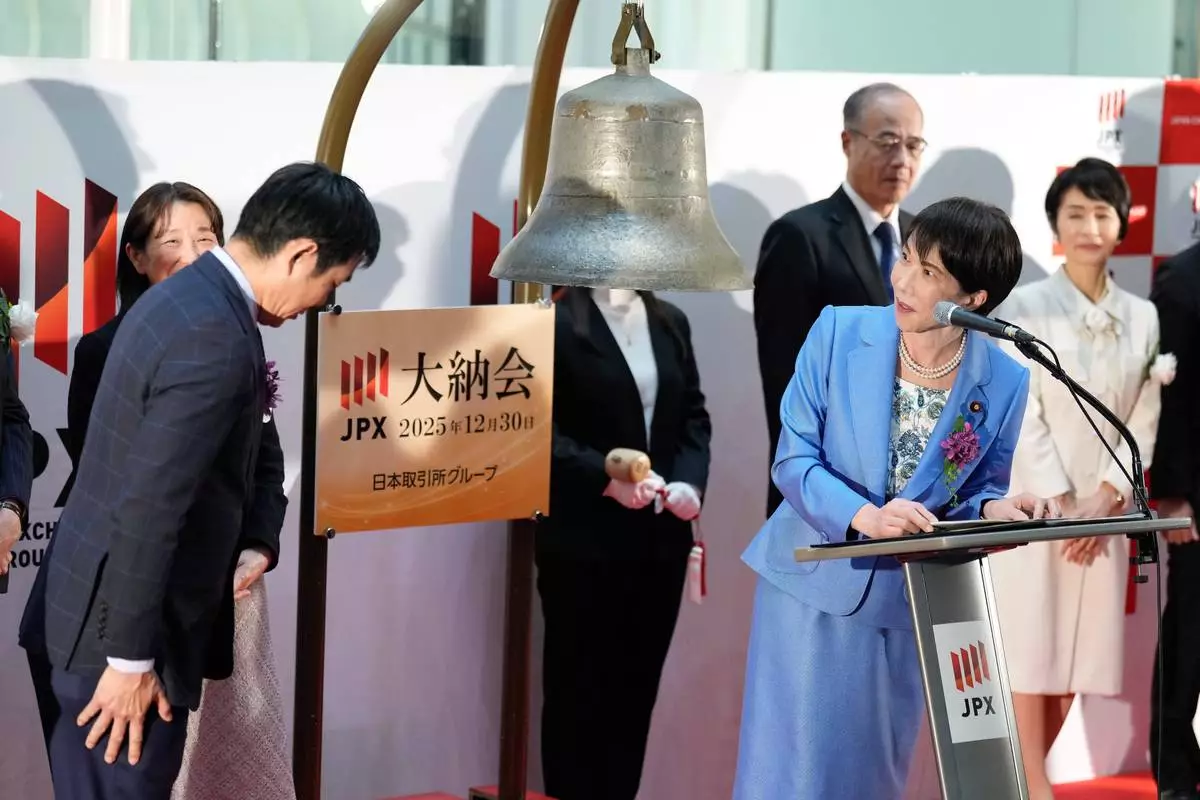
Japan's Prime Minister Sanae Takaichi, right, delivers a speech as Hajime Moriyasu, left, the head coach of Japanese national soccer team, bows during a ceremony to mark the last trading day of the year on the Tokyo Stock ExchangeTuesday, Dec. 30, 2025, in Tokyo. (AP Photo/Eugene Hoshiko)

Japan's Prime Minister Sanae Takaichi, right, delivers a speech as Hajime Moriyasu, left, the head coach of Japanese national soccer team, bows during a ceremony to mark the last trading day of the year on the Tokyo Stock ExchangeTuesday, Dec. 30, 2025, in Tokyo. (AP Photo/Eugene Hoshiko)

Hajime Moriyasu, the head coach of Japanese national soccer team, rings the bell during a ceremony to mark the last trading day of the year on the Tokyo Stock Exchange Tuesday, Dec. 30, 2025, in Tokyo. (AP Photo/Eugene Hoshiko)

Hajime Moriyasu, the head coach of Japanese national soccer team, rings the bell during a ceremony to mark the last trading day of the year on the Tokyo Stock Exchange Tuesday, Dec. 30, 2025, in Tokyo. (AP Photo/Eugene Hoshiko)

Participants perform a traditional hand clap at the end of a ceremony to conclude the year's trading at the Tokyo Stock Exchange Tuesday, Dec. 30, 2025, in Tokyo. (AP Photo/Eugene Hoshiko)

Participants perform a traditional hand clap at the end of a ceremony to conclude the year's trading at the Tokyo Stock Exchange Tuesday, Dec. 30, 2025, in Tokyo. (AP Photo/Eugene Hoshiko)

Japan's Prime Minister Sanae Takaichi poses before ringing the bell during a ceremony to mark the last trading day of the year on the Tokyo Stock Exchange Tuesday, Dec. 30, 2025, in Tokyo. (AP Photo/Eugene Hoshiko)

Japan's Prime Minister Sanae Takaichi poses before ringing the bell during a ceremony to mark the last trading day of the year on the Tokyo Stock Exchange Tuesday, Dec. 30, 2025, in Tokyo. (AP Photo/Eugene Hoshiko)

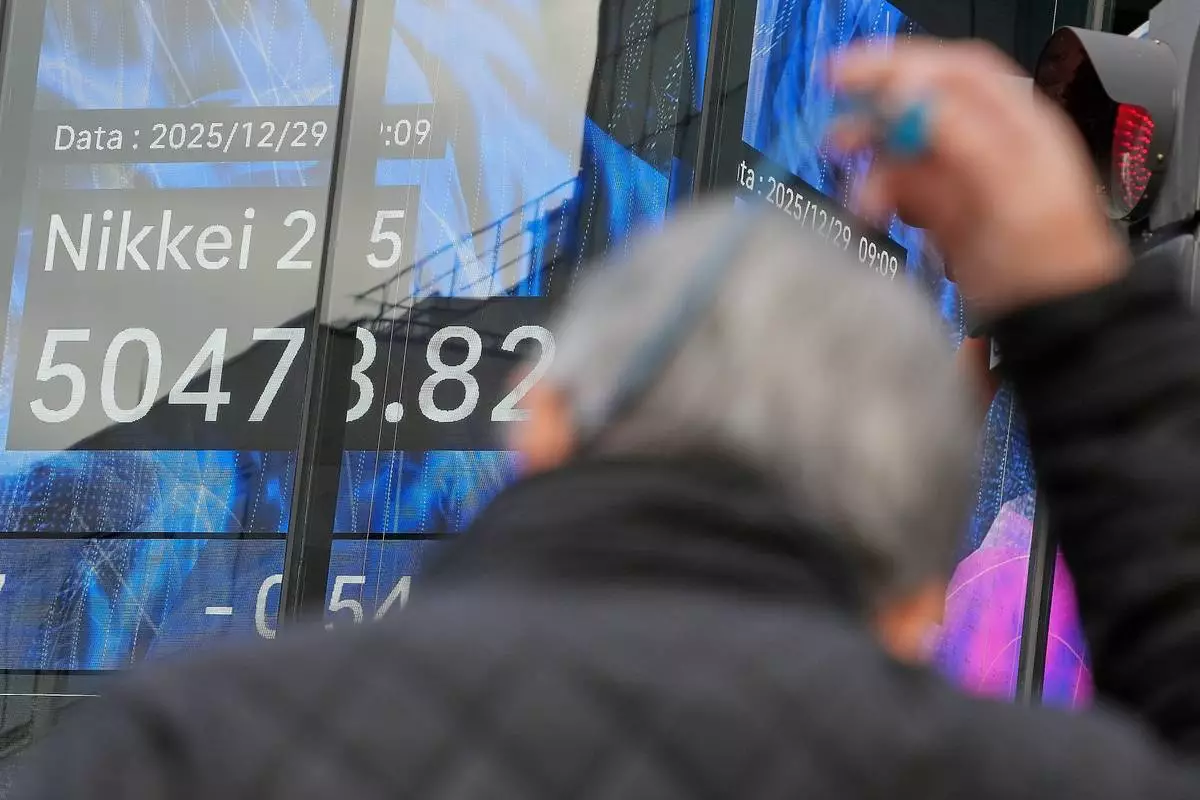
A person stands in front of an electronic stock board showing Japan's Nikkei index at a securities firm, Monday, Dec. 29, 2025, in Tokyo. (AP Photo/Eugene Hoshiko)

A person stands in front of an electronic stock board showing Japan's Nikkei index at a securities firm, Monday, Dec. 29, 2025, in Tokyo. (AP Photo/Eugene Hoshiko)

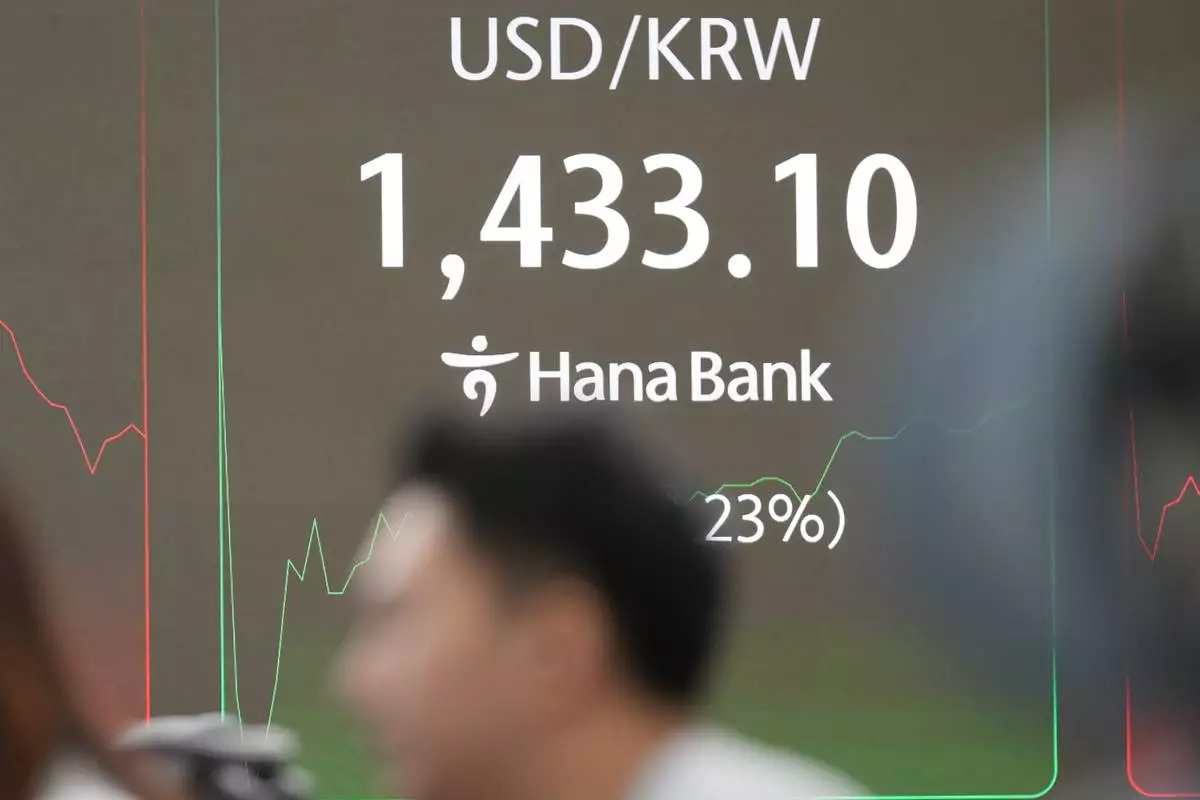
A dealer watches computer monitors near the screen showing the foreign exchange rate between U.S. dollar and South Korean won at a dealing room of Hana Bank in Seoul, South Korea, Tuesday, Dec. 30, 2025. (AP Photo/Lee Jin-man)

A dealer watches computer monitors near the screen showing the foreign exchange rate between U.S. dollar and South Korean won at a dealing room of Hana Bank in Seoul, South Korea, Tuesday, Dec. 30, 2025. (AP Photo/Lee Jin-man)

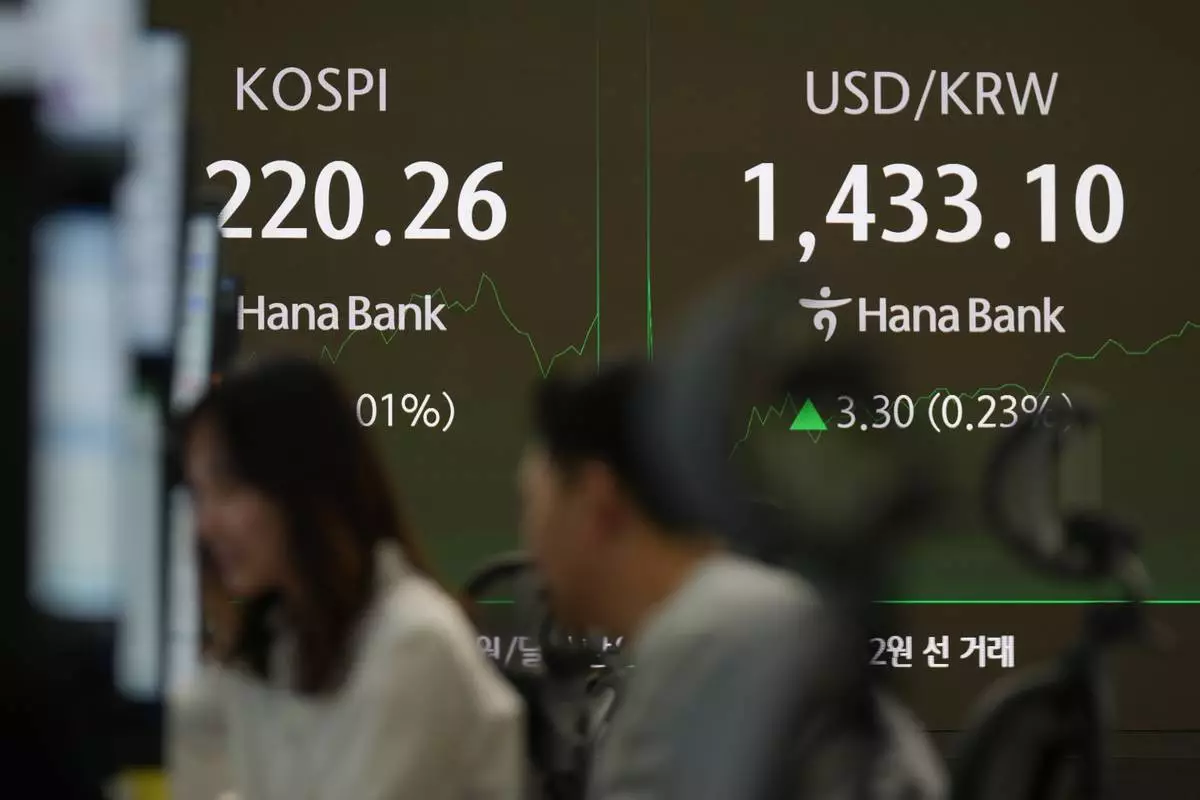
The screens showing the Korea Composite Stock Price Index (KOSPI), left, and the foreign exchange rate between U.S. dollar and South Korean won are seen at a dealing room of Hana Bank in Seoul, South Korea, Tuesday, Dec. 30, 2025. (AP Photo/Lee Jin-man)

The screens showing the Korea Composite Stock Price Index (KOSPI), left, and the foreign exchange rate between U.S. dollar and South Korean won are seen at a dealing room of Hana Bank in Seoul, South Korea, Tuesday, Dec. 30, 2025. (AP Photo/Lee Jin-man)

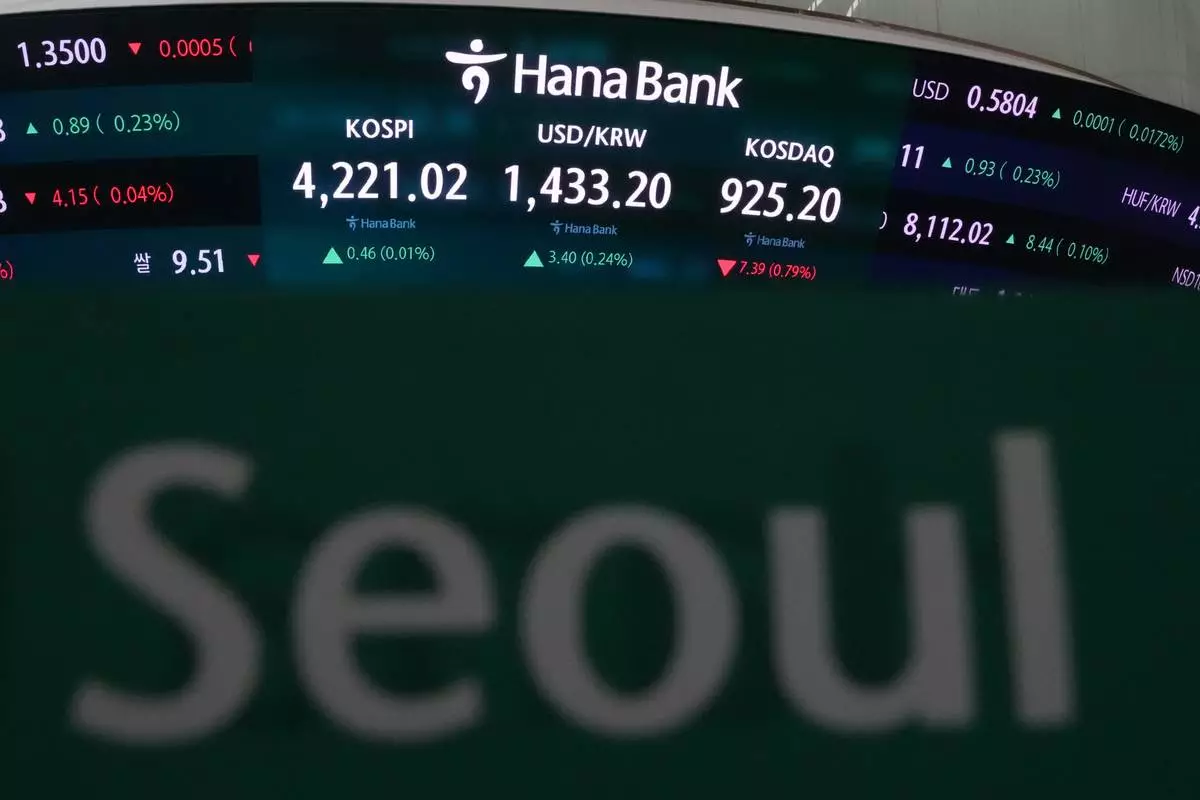
The screens show the Korea Composite Stock Price Index (KOSPI), left, the foreign exchange rate between U.S. dollar and South Korean won and the Korean Securities Dealers Automated Quotations (KOSDAQ) at a dealing room of Hana Bank in Seoul, South Korea, Tuesday, Dec. 30, 2025. (AP Photo/Lee Jin-man)

The screens show the Korea Composite Stock Price Index (KOSPI), left, the foreign exchange rate between U.S. dollar and South Korean won and the Korean Securities Dealers Automated Quotations (KOSDAQ) at a dealing room of Hana Bank in Seoul, South Korea, Tuesday, Dec. 30, 2025. (AP Photo/Lee Jin-man)

A dealer watches computer monitors at a dealing room of Hana Bank in Seoul, South Korea, Tuesday, Dec. 30, 2025. (AP Photo/Lee Jin-man)

A dealer watches computer monitors at a dealing room of Hana Bank in Seoul, South Korea, Tuesday, Dec. 30, 2025. (AP Photo/Lee Jin-man)

Recommended Articles