Skip to Content Facebook Feature Image

South African rowers of color become first to compete at Charles, part of larger trend toward access

News

South African rowers of color become first to compete at Charles, part of larger trend toward access
News

News

South African rowers of color become first to compete at Charles, part of larger trend toward access

2025-10-19 20:05 Last Updated At:20:20

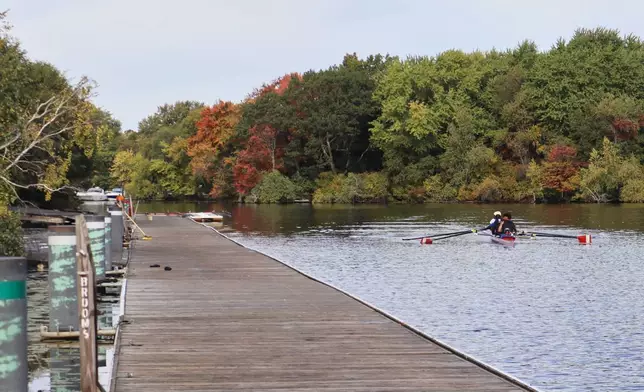
BOSTON (AP) — Four South African rowers are making history over the weekend at the prestigious Head of the Charles Regatta in Boston as the first crew of color from the country to compete internationally.

Their participation marks a multinational effort to expand access to one of the most elite and exclusive sports, dominated by white athletes, and to open the 60-year-old regatta to a more diverse future of rowers.

More Images
South African rowers practice on the Charles River in preparation for the Head of the Charles Regatta, Wednesday, Oct. 15, 2025, in Boston. (AP Photo/Leah Willingham)
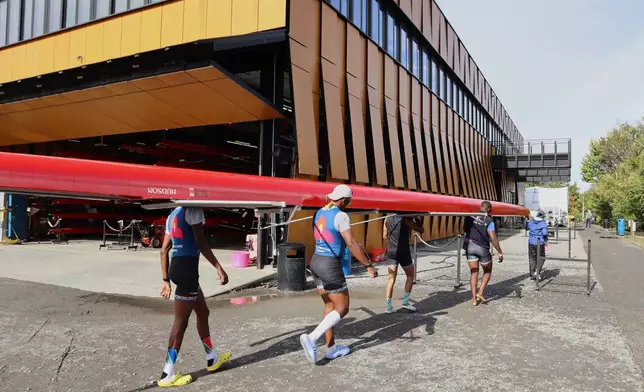
South African rowers practice on the Charles River in preparation for the Head of the Charles Regatta, Wednesday, Oct. 15, 2025, in Boston. (AP Photo/Leah Willingham)

South African rowers carry their boat after practice Wednesday, Oct. 15, 2025, in Boston. (AP Photo/Leah Willingham)
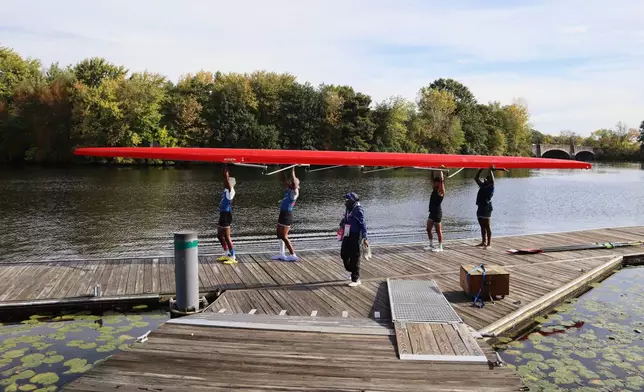
South African rowers carry their boat after practice Wednesday, Oct. 15, 2025, in Boston. (AP Photo/Leah Willingham)

South African rowers practice on the Charles River in preparation for the Head of the Charles Regatta, Wednesday, Oct. 15, 2025 in Boston. (AP Photo/Leah Willingham)
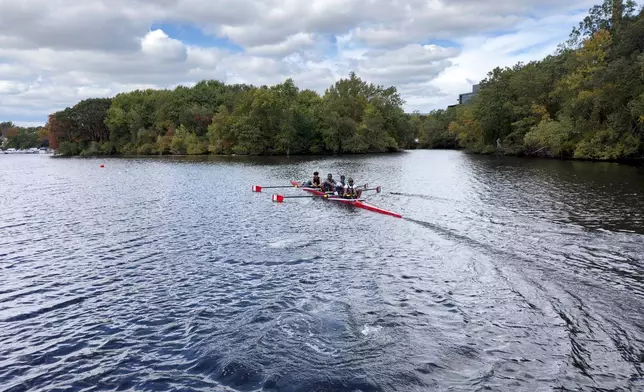
South African rowers practice on the Charles River in preparation for the Head of the Charles Regatta, Wednesday, Oct. 15, 2025 in Boston. (AP Photo/Leah Willingham)

South African rowers, from left, Sheldon Krishnasamy, Lwazi-Tsebo Zwane, Lebone Mokheseng, and Sepitle Leshilo practice on the Charles River in preparation for the Head of the Charles Regatta, Wednesday, Oct. 15, 2025, in Boston. (AP Photo/Rodrique Ngowi)

South African rowers, from left, Sheldon Krishnasamy, Lwazi-Tsebo Zwane, Lebone Mokheseng, and Sepitle Leshilo practice on the Charles River in preparation for the Head of the Charles Regatta, Wednesday, Oct. 15, 2025, in Boston. (AP Photo/Rodrique Ngowi)

South African rowers, from left, Sheldon Krishnasamy, Lwazi-Tsebo Zwane, Lebone Mokheseng, and Sepitle Leshilo practice on the Charles River in preparation for the Head of the Charles Regatta, Wednesday, Oct. 15, 2025, in Boston. (AP Photo/Rodrique Ngowi)

South African rowers, from left, Sheldon Krishnasamy, Lwazi-Tsebo Zwane, Lebone Mokheseng, and Sepitle Leshilo practice on the Charles River in preparation for the Head of the Charles Regatta, Wednesday, Oct. 15, 2025, in Boston. (AP Photo/Rodrique Ngowi)

Competitive rowing originates among Englishmen who colonized both South Africa and what is now the United States, but historically excluded large swaths of the populations that lived there from recreation on the water.

In recent years, a network of advocates has gathered athletes from around the world in efforts culminating with several firsts for representation at the Charles: the first all-Black women’s 8+ from the U.S., an indigenous 4+ and a native women’s 4+, among others. An 8+ is an eight-oared sweep boat with eight athletes and a coxswain to steer and direct the rowers, while a 4+ is a four-oared sweep boat with a coxswain.

Lwazi-Tsebo Zwane, a 23-year-old who trains in Germiston, South Africa, east of Johannesburg, said he and his boatmates are very aware they are role models for younger rowers.

"It takes a lot to be at this regatta," said Zwane, who will compete in the Men’s Championship 4+ event. “There’s been a lot of pitfalls, there’s been a lot of barriers.”

Wearing the colors of Western Cape Rowing, Zwane said the legacy of poverty and economic inequality that were the result of racist policies like apartheid in South Africa and others leveraged in the U.S. "have shaped and narrated our story to be one of violence and oppression and being second rate.”

“There is a different story for us, but doing the work to get there is not an easy feat," he said of reframing the false narratives.

Rowers who aren't white or from affluent backgrounds in America and South Africa face many of the same issues, said Arshay Cooper, whose foundation worked to bring the South African crew to the Charles, as well as crews of underrepresented athletes from the U.S.

Among those issues: lack of access to waterways and to skills like swimming and the cost of buying and storing equipment. Rowing shells alone cost tens of thousands of dollars.

“There’s structural limitations, there’s neglect,” said Cooper, who joined America's first all-Black high school rowing team in Chicago in 1997. “There’s talent everywhere, but not a lot of access and opportunity.”

In both countries, some public schools — where athletes of color are more likely to attend — offer access to some type of rowing program. But the equipment is older and the coaches more novice, making it hard to compete with private schools with more resources.

Modern competitive rowing emerged in the 19th century at British schools like Oxford and Cambridge and expanded to elite American colleges, like Harvard, Yale and Princeton — institutions that excluded those who were from working-class backgrounds and not white or male.

A 2016 analysis by U.S. Rowing found the typical rower is often perceived as “white and come from a middle or upper class suburban community”. A 2021 study on gender and race in sports by the NCAA found that among female collegiate rowers, just 2% identified as Black, while 5% identified as Hispanic and 3% identified as Asian. The sport ranked among the bottom third least diverse sports of the 45 that the NCAA polled.

“For most people of color, they’re the only person of color in the boat,” said Denise Aquino, a Filipino American and co-founder of the nonprofit podcast Rowing in Color, which organized the Head of the Charles' first all-Black women’s 8+ in 2022.

Cooper said the goal is to add new faces to the sport. Sometimes those new faces are using the platform to highlight social issues. Last year, the regatta's first-ever indigenous four raced down the course with red hands painted on their oars and faces to honor murdered and missing indigenous women.

Aquino said she said she and her team felt an added layer of urgency this year because of recent policies from the U.S. White House limiting government diversity, equity and inclusion initiatives.

“We’re definitely feeling that sense of fear, but also we’re going to do it anyway,” she said. "It’s about the young people and people of all ages who will see these boats and feel not just resonance, but feel visibility and represented in the sport that we all love.”

Coach Michael Ortlepp said many of the university athletes he usually coaches in the southwestern coastal city of Cape Town make considerable sacrifices to even get to the boathouse for practice. Most live inland in formerly segregated townships where public transportation isn't reliable. A few have struggled to find housing at all. Some mornings, he gets messages from rowers saying they can't attend practice because of gang warnings in their neighborhoods and shootings. Part of the funding from Cooper's foundation has helped to pay for a bus to collect athletes for practice.

With Cooper's support, Ortlepp's Association has grown from eight rowers to 45 in three years.

“I’ve had rowers living in cafeterias for a week at a time without food or any kind of accommodation. Those are common stories; they’re not rare,” Ortlepp said.

Zwane, who first began rowing at age 14, said he takes several mini buses a day to get to Victoria Lake, near Johannesburg.

The community rowing boathouse where he is preparing for the race in Boston, one of many boathouses dotting the shores of the Charles River, is a far cry from the facilities he is used to.

“It does feel a little bit disorientating to be in this environment because this is everyone’s day-to-day, just normal life. This is — from my perspective, from a lot of kids who understand how it is to grow up from my place — it’s a luxury. If anything, it’s a once-in-a-lifetime experience,” he said. "Every day I get on the water, every day we leave here, every day we see different sights. ... It is always on the back of my head that this is not normal for me, but it is for somebody else.”

"I think we’re more fortunate to have the ability to get closer to these spaces, but getting to those spaces has become harder than anything."
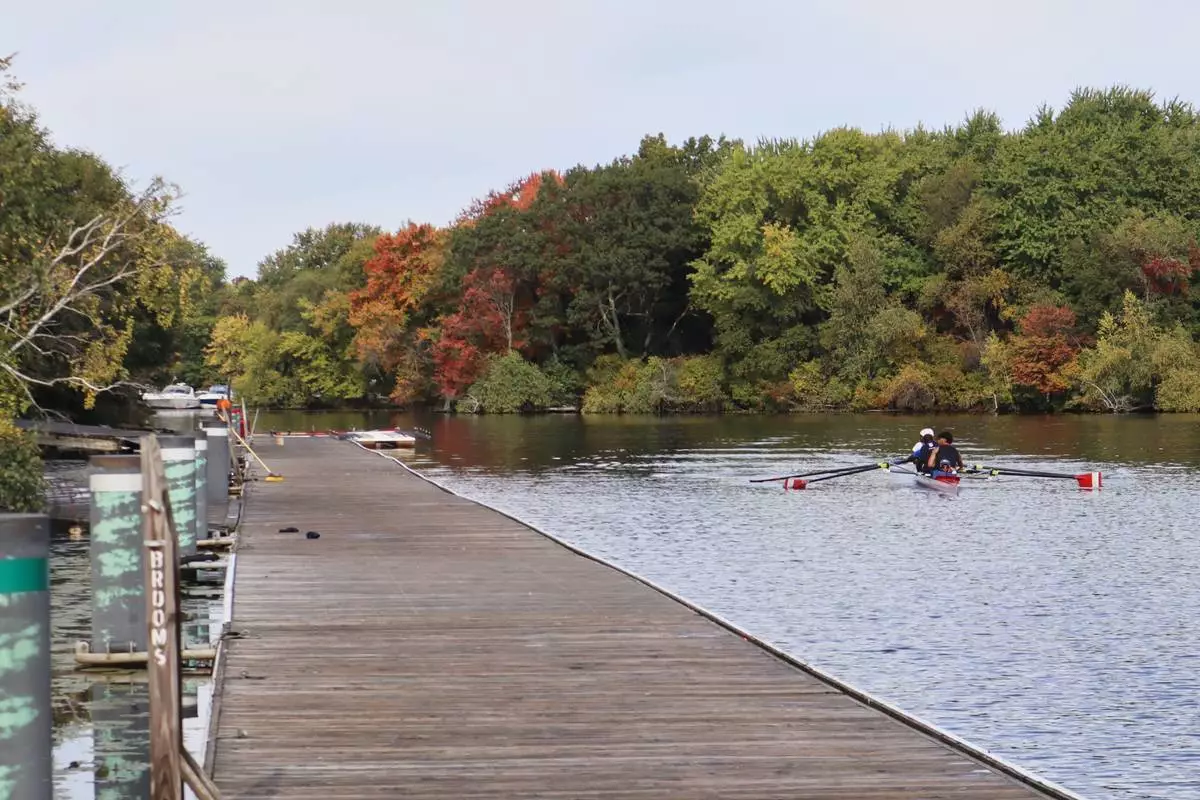
South African rowers practice on the Charles River in preparation for the Head of the Charles Regatta, Wednesday, Oct. 15, 2025, in Boston. (AP Photo/Leah Willingham)
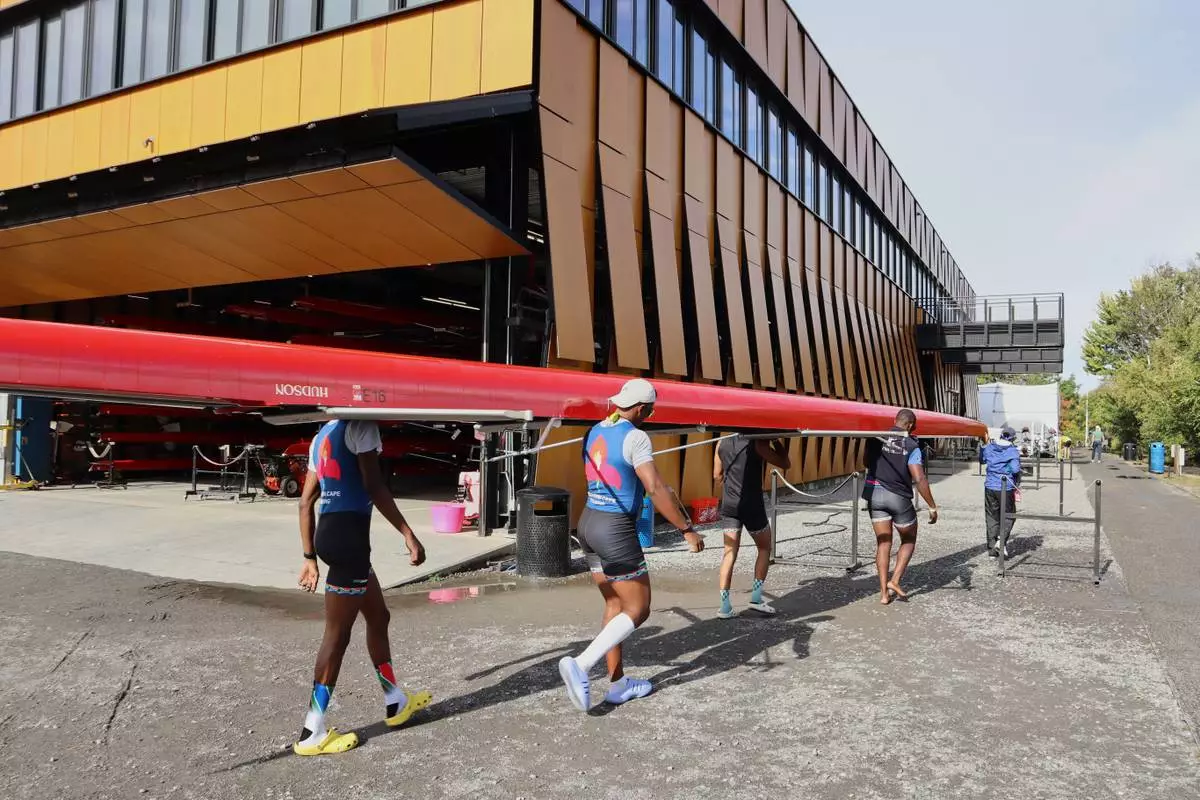
South African rowers practice on the Charles River in preparation for the Head of the Charles Regatta, Wednesday, Oct. 15, 2025, in Boston. (AP Photo/Leah Willingham)

South African rowers carry their boat after practice Wednesday, Oct. 15, 2025, in Boston. (AP Photo/Leah Willingham)
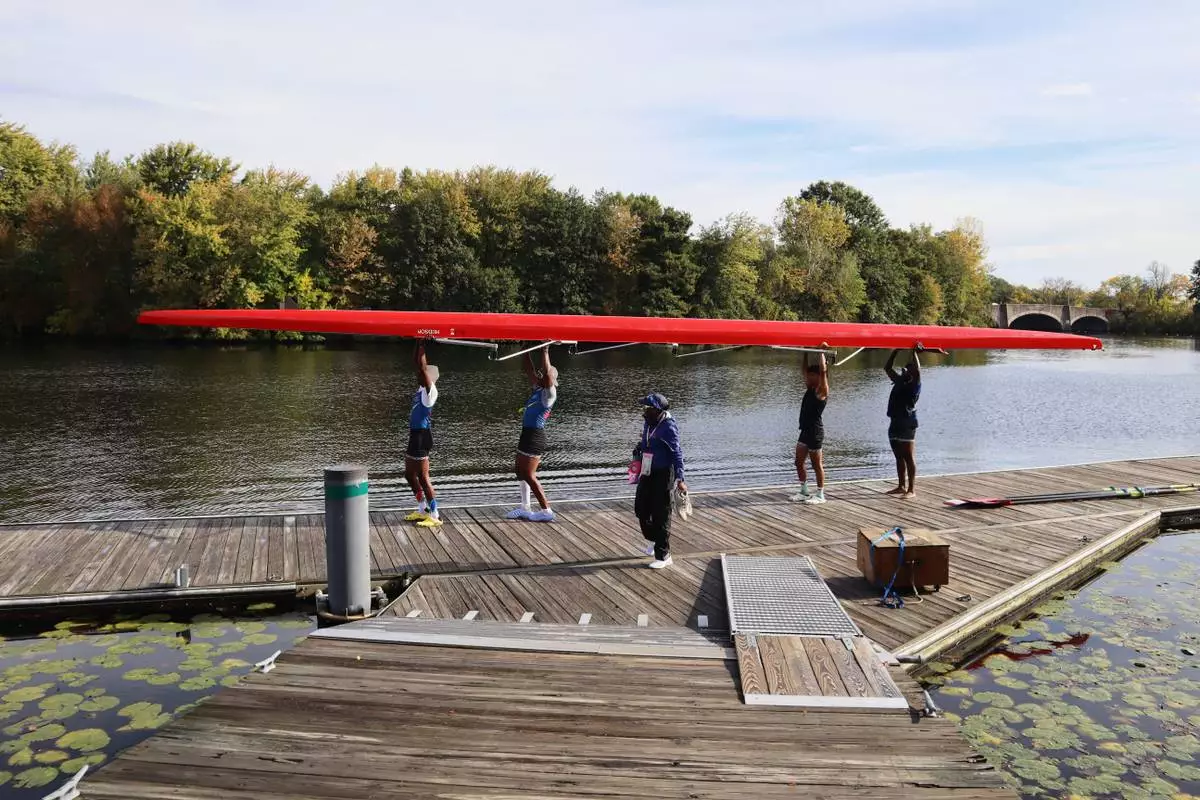
South African rowers carry their boat after practice Wednesday, Oct. 15, 2025, in Boston. (AP Photo/Leah Willingham)

South African rowers practice on the Charles River in preparation for the Head of the Charles Regatta, Wednesday, Oct. 15, 2025 in Boston. (AP Photo/Leah Willingham)

South African rowers practice on the Charles River in preparation for the Head of the Charles Regatta, Wednesday, Oct. 15, 2025 in Boston. (AP Photo/Leah Willingham)

South African rowers, from left, Sheldon Krishnasamy, Lwazi-Tsebo Zwane, Lebone Mokheseng, and Sepitle Leshilo practice on the Charles River in preparation for the Head of the Charles Regatta, Wednesday, Oct. 15, 2025, in Boston. (AP Photo/Rodrique Ngowi)
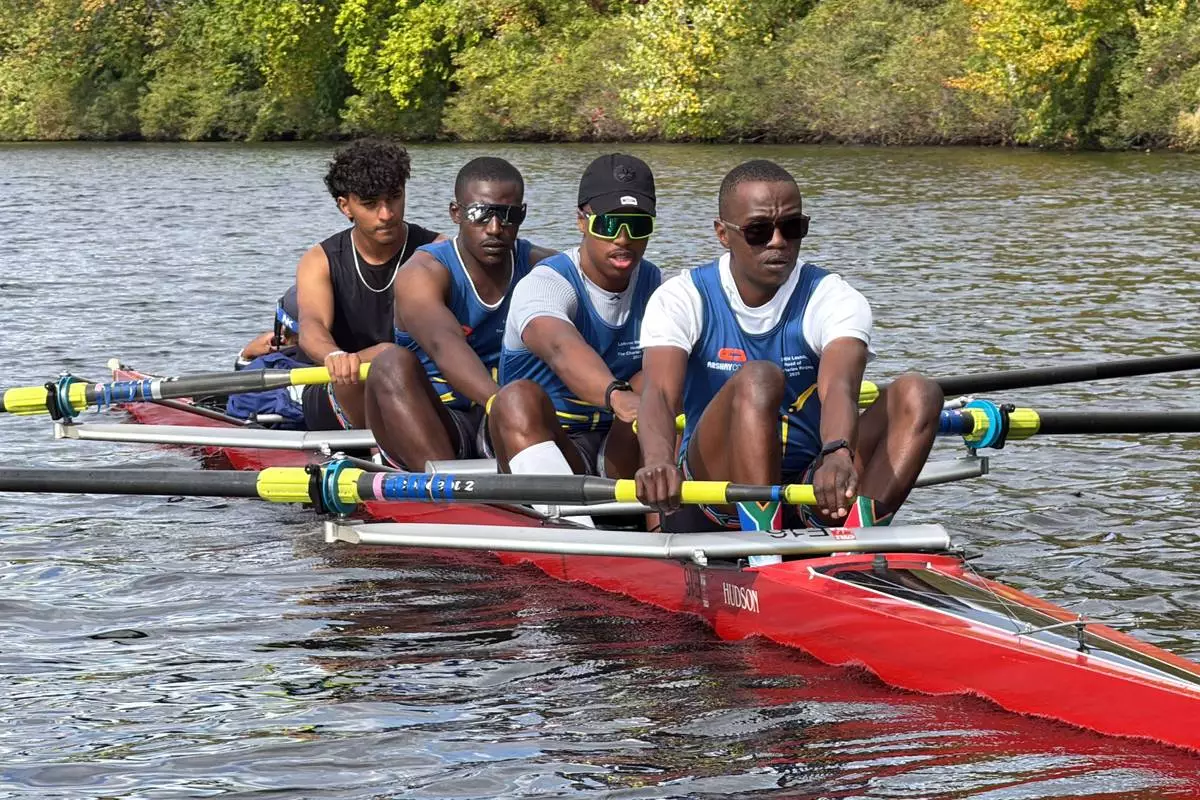
South African rowers, from left, Sheldon Krishnasamy, Lwazi-Tsebo Zwane, Lebone Mokheseng, and Sepitle Leshilo practice on the Charles River in preparation for the Head of the Charles Regatta, Wednesday, Oct. 15, 2025, in Boston. (AP Photo/Rodrique Ngowi)
South African rowers, from left, Sheldon Krishnasamy, Lwazi-Tsebo Zwane, Lebone Mokheseng, and Sepitle Leshilo practice on the Charles River in preparation for the Head of the Charles Regatta, Wednesday, Oct. 15, 2025, in Boston. (AP Photo/Rodrique Ngowi)
South African rowers, from left, Sheldon Krishnasamy, Lwazi-Tsebo Zwane, Lebone Mokheseng, and Sepitle Leshilo practice on the Charles River in preparation for the Head of the Charles Regatta, Wednesday, Oct. 15, 2025, in Boston. (AP Photo/Rodrique Ngowi)
NEW YORK (AP) — Stocks wavered in afternoon trading on Wall Street Tuesday as 2025 nudges closer to the finish line.

The S&P 500 was mostly unchanged. The benchmark index is still on track for a gain of more than 17% for the year.

The Dow Jones Industrial Average fell 78 points, or 0.2%, as of 2:55 p.m. Eastern. The Nasdaq composite fell 0.1%.

The biggest weights on the market remained technology companies, especially those focused on advancements for artificial intelligence.

Nvidia and Apple wobbled between small losses and breaking even. Both companies have outsized values that have a greater overall impact on the market’s broader direction.

On the winning side, Facebook parent Meta Platforms rose 1.3%. The company is buying artificial intelligence startup Manus as it continues an aggressive push to amp up AI offerings across its platforms.

Markets were mixed in Asia and higher in Europe.

With just two trading days left before the year ends, most big investors have closed out their positions and volume has been thin. U.S. markets will be closed on Thursday for New Year's day.

The more notable action was again in the commodities markets. Gold, silver and copper all resumed their ascent after steep declines a day earlier.

The price of gold rose 0.7% and silver prices gained 9.2% after slumping Monday when the Chicago Mercantile Exchange, one of the largest trading floors for commodities, asked traders to put up more cash to make bets on precious metals. Prices for both metals have surged in 2025 on a mix of economic worries and supply deficits.

Copper rose 3.6% and is up more 40% for the year on strong demand. The base metal is critical to global energy infrastructure, and demand is expected to keep growing as the development of artificial intelligence technology puts more of a strain on data centers and the energy grid.

Crude oil prices were relatively steady. The price of U.S. crude oil fell 0.1%. The price of Brent crude, the international standard, rose 0.1%.

Treasury yields mostly rose in the bond market. The yield on the 10-year Treasury rose to 4.13% from 4.11% late Monday. The yield on the two-year Treasury, which moves more closely with expectations for what the Federal Reserve will do, held steady at 3.45% from late Monday.

Overall, Treasury yields have fallen significantly through the year, partly because of the market's expectations for a shift in interest rate policy at the Fed. The central bank cut interest rates three times late in 2025, most recently at its meeting earlier in December.

The central bank has been dealing with a more complex economic picture. Consumer confidence has been weakening throughout the year as inflation squeezes consumers and businesses. The continued impact of a wide-ranging U.S.-led trade war threatens to add more fuel to inflation.

Inflation remains stubbornly high while the jobs market slows down. The Fed can cut interest rates to help the economy weather a slower jobs market. But, that could add more fuel to inflation that is still solidly above the Fed's 2% target. Hotter inflation could stunt economic growth.

The Fed has signaled more caution moving forward. Minutes from its December meeting reflect the divisions within the central bank as it deals with uncertainty about the threats facing the economy.

Wall Street is betting that the Fed will hold interest rates steady at its next meeting in January.

Elaine Kurtenbach contributed to this report.

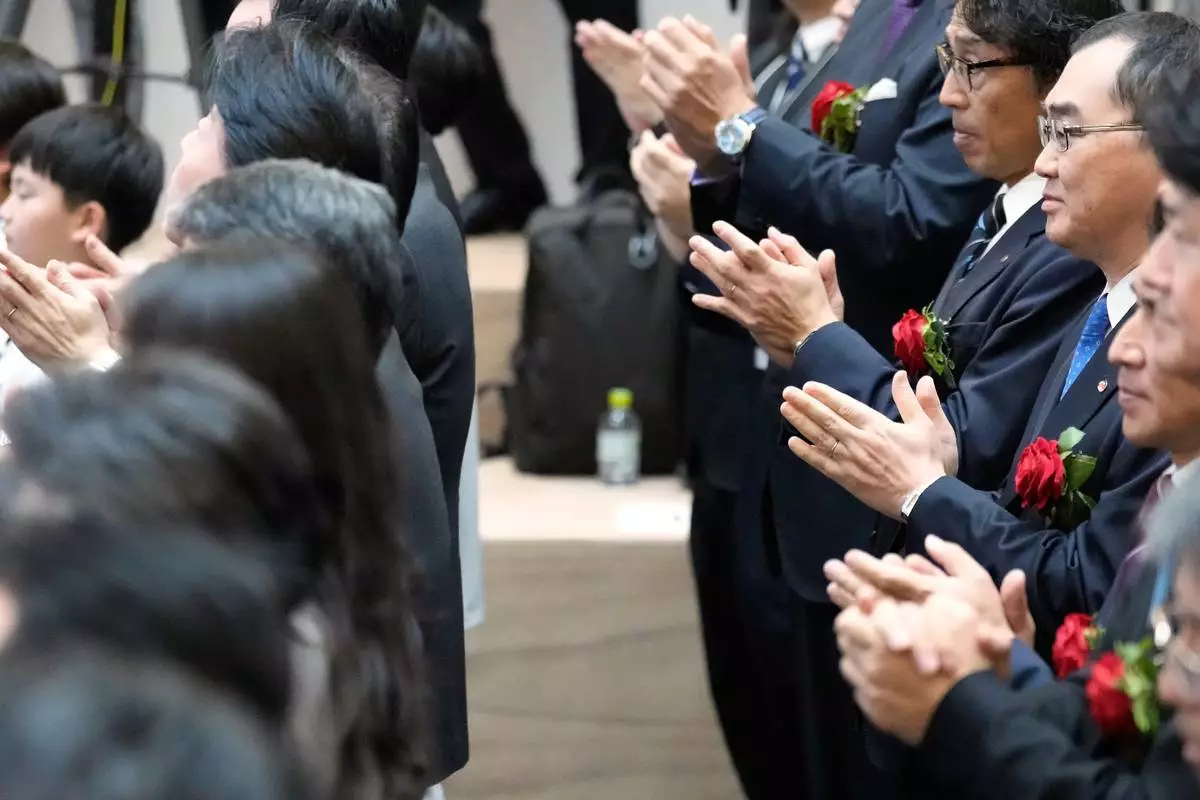
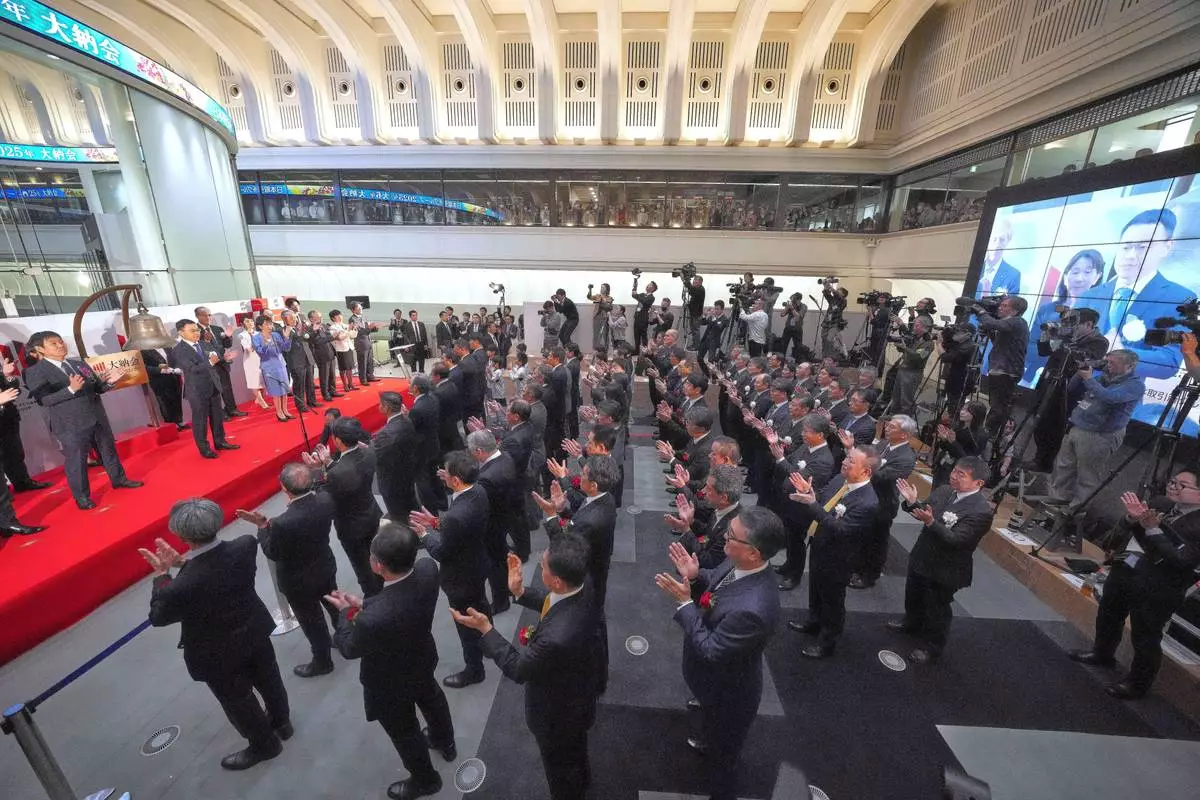
Participants perform a traditional hand clap at the end of a ceremony to conclude the year's trading at the Tokyo Stock Exchange Tuesday, Dec. 30, 2025, in Tokyo. (AP Photo/Eugene Hoshiko)

Participants perform a traditional hand clap at the end of a ceremony to conclude the year's trading at the Tokyo Stock Exchange Tuesday, Dec. 30, 2025, in Tokyo. (AP Photo/Eugene Hoshiko)

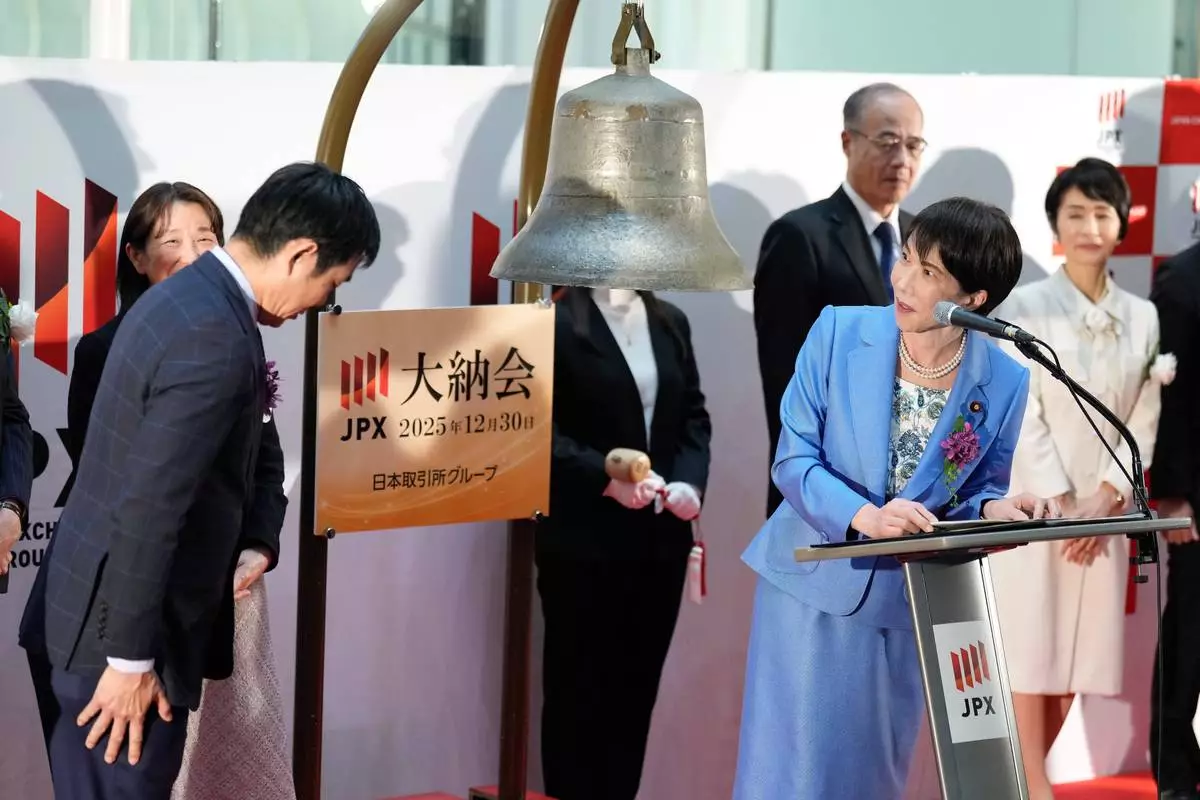
Japan's Prime Minister Sanae Takaichi, right, delivers a speech as Hajime Moriyasu, left, the head coach of Japanese national soccer team, bows during a ceremony to mark the last trading day of the year on the Tokyo Stock ExchangeTuesday, Dec. 30, 2025, in Tokyo. (AP Photo/Eugene Hoshiko)

Japan's Prime Minister Sanae Takaichi, right, delivers a speech as Hajime Moriyasu, left, the head coach of Japanese national soccer team, bows during a ceremony to mark the last trading day of the year on the Tokyo Stock ExchangeTuesday, Dec. 30, 2025, in Tokyo. (AP Photo/Eugene Hoshiko)

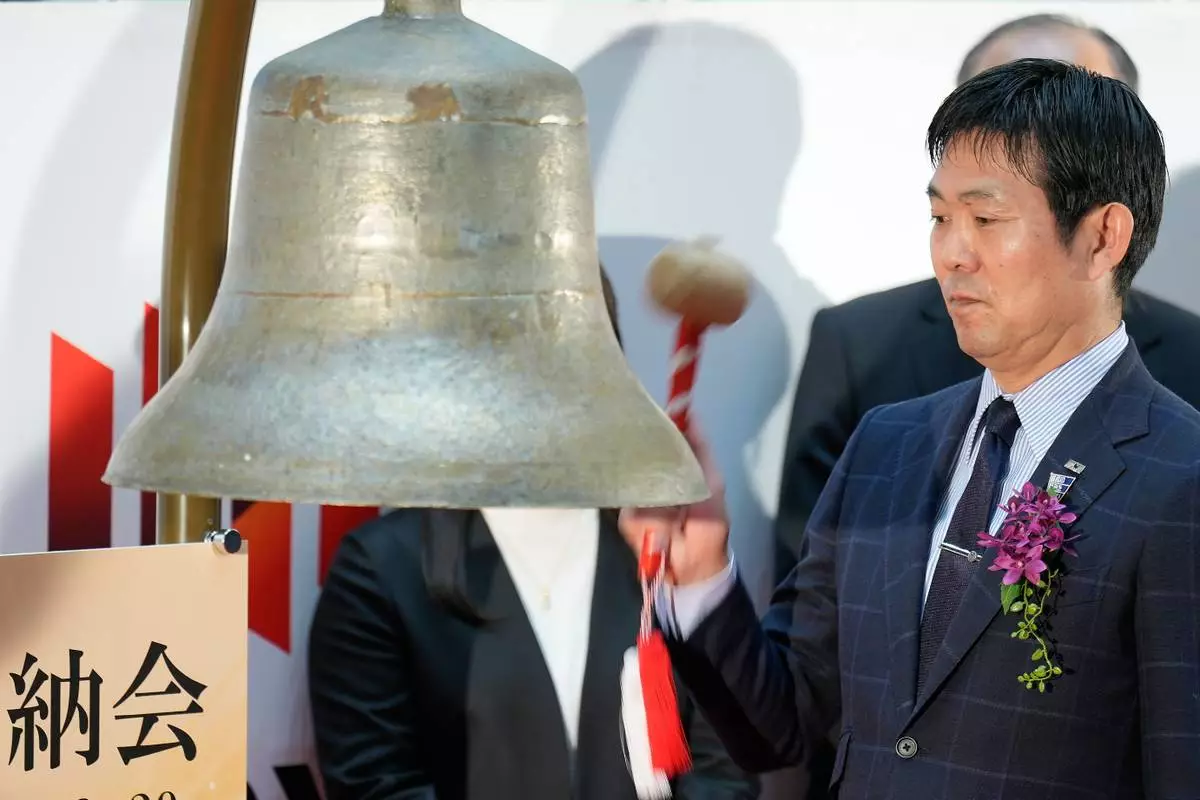
Hajime Moriyasu, the head coach of Japanese national soccer team, rings the bell during a ceremony to mark the last trading day of the year on the Tokyo Stock Exchange Tuesday, Dec. 30, 2025, in Tokyo. (AP Photo/Eugene Hoshiko)

Hajime Moriyasu, the head coach of Japanese national soccer team, rings the bell during a ceremony to mark the last trading day of the year on the Tokyo Stock Exchange Tuesday, Dec. 30, 2025, in Tokyo. (AP Photo/Eugene Hoshiko)

Participants perform a traditional hand clap at the end of a ceremony to conclude the year's trading at the Tokyo Stock Exchange Tuesday, Dec. 30, 2025, in Tokyo. (AP Photo/Eugene Hoshiko)

Participants perform a traditional hand clap at the end of a ceremony to conclude the year's trading at the Tokyo Stock Exchange Tuesday, Dec. 30, 2025, in Tokyo. (AP Photo/Eugene Hoshiko)

Japan's Prime Minister Sanae Takaichi poses before ringing the bell during a ceremony to mark the last trading day of the year on the Tokyo Stock Exchange Tuesday, Dec. 30, 2025, in Tokyo. (AP Photo/Eugene Hoshiko)

Japan's Prime Minister Sanae Takaichi poses before ringing the bell during a ceremony to mark the last trading day of the year on the Tokyo Stock Exchange Tuesday, Dec. 30, 2025, in Tokyo. (AP Photo/Eugene Hoshiko)

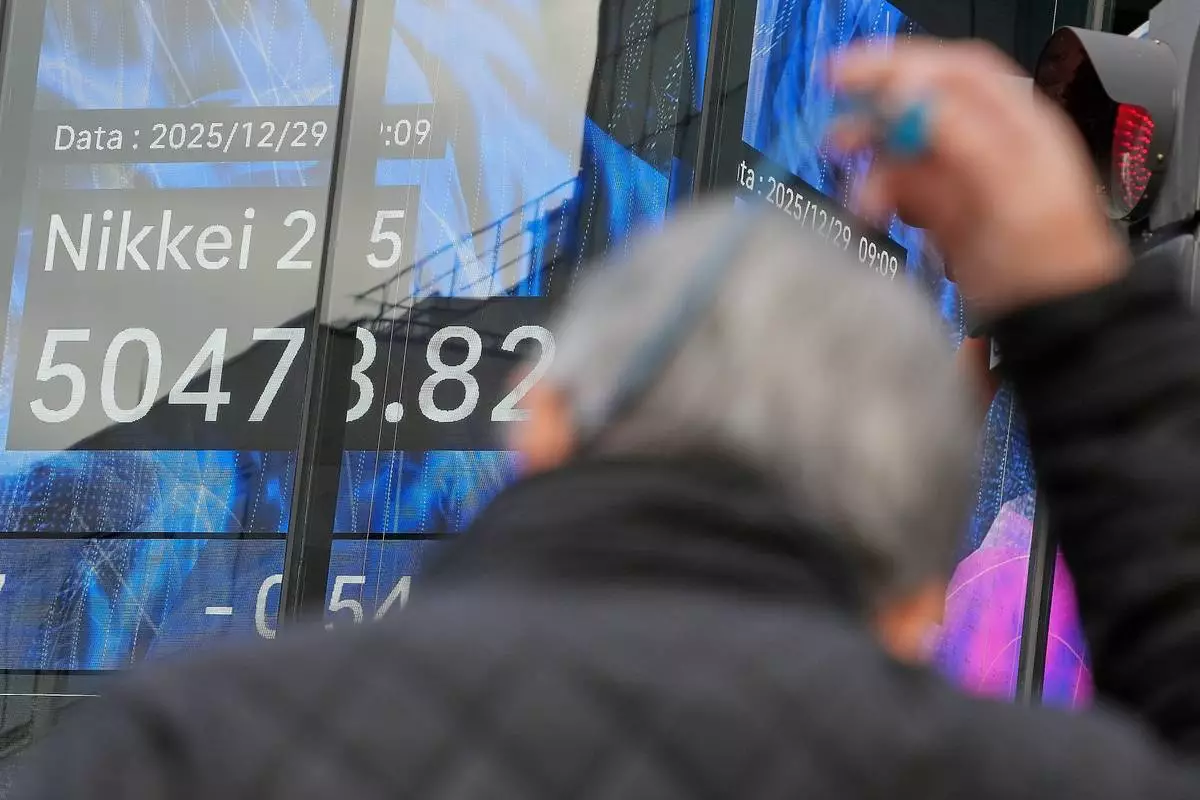
A person stands in front of an electronic stock board showing Japan's Nikkei index at a securities firm, Monday, Dec. 29, 2025, in Tokyo. (AP Photo/Eugene Hoshiko)

A person stands in front of an electronic stock board showing Japan's Nikkei index at a securities firm, Monday, Dec. 29, 2025, in Tokyo. (AP Photo/Eugene Hoshiko)

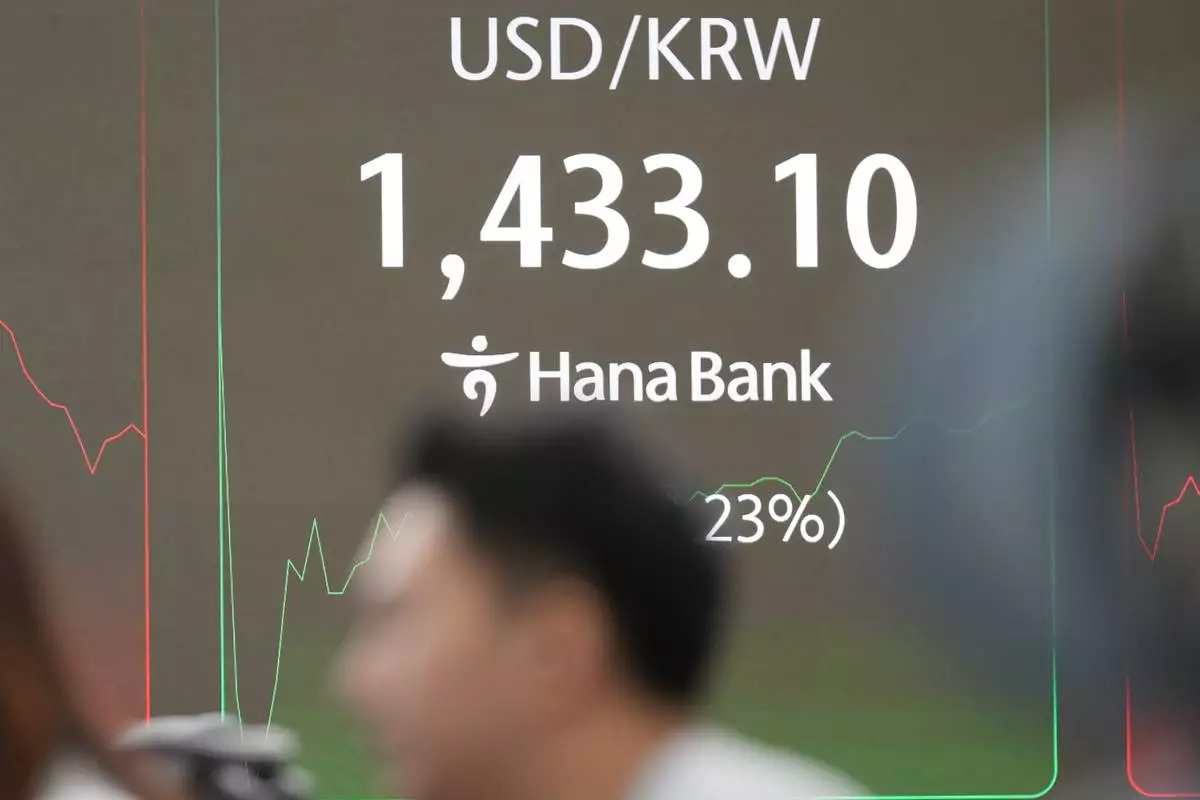
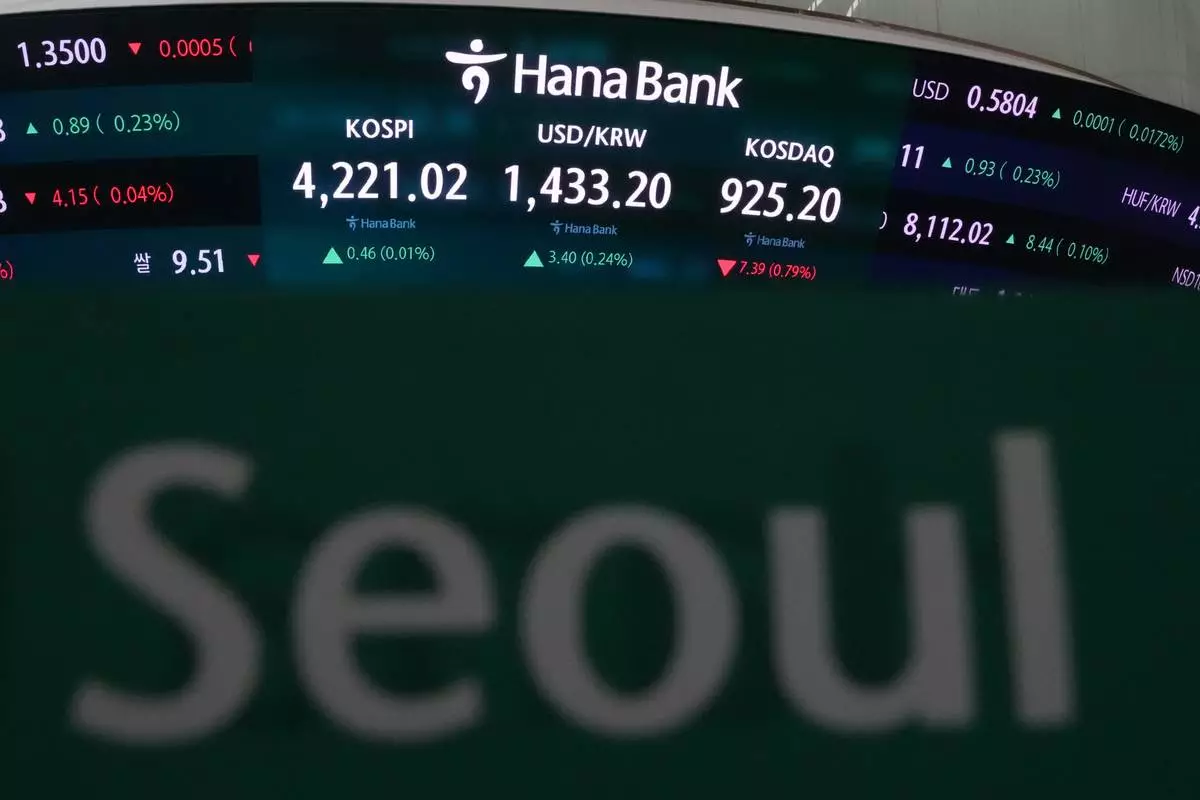
A dealer watches computer monitors near the screen showing the foreign exchange rate between U.S. dollar and South Korean won at a dealing room of Hana Bank in Seoul, South Korea, Tuesday, Dec. 30, 2025. (AP Photo/Lee Jin-man)

A dealer watches computer monitors near the screen showing the foreign exchange rate between U.S. dollar and South Korean won at a dealing room of Hana Bank in Seoul, South Korea, Tuesday, Dec. 30, 2025. (AP Photo/Lee Jin-man)

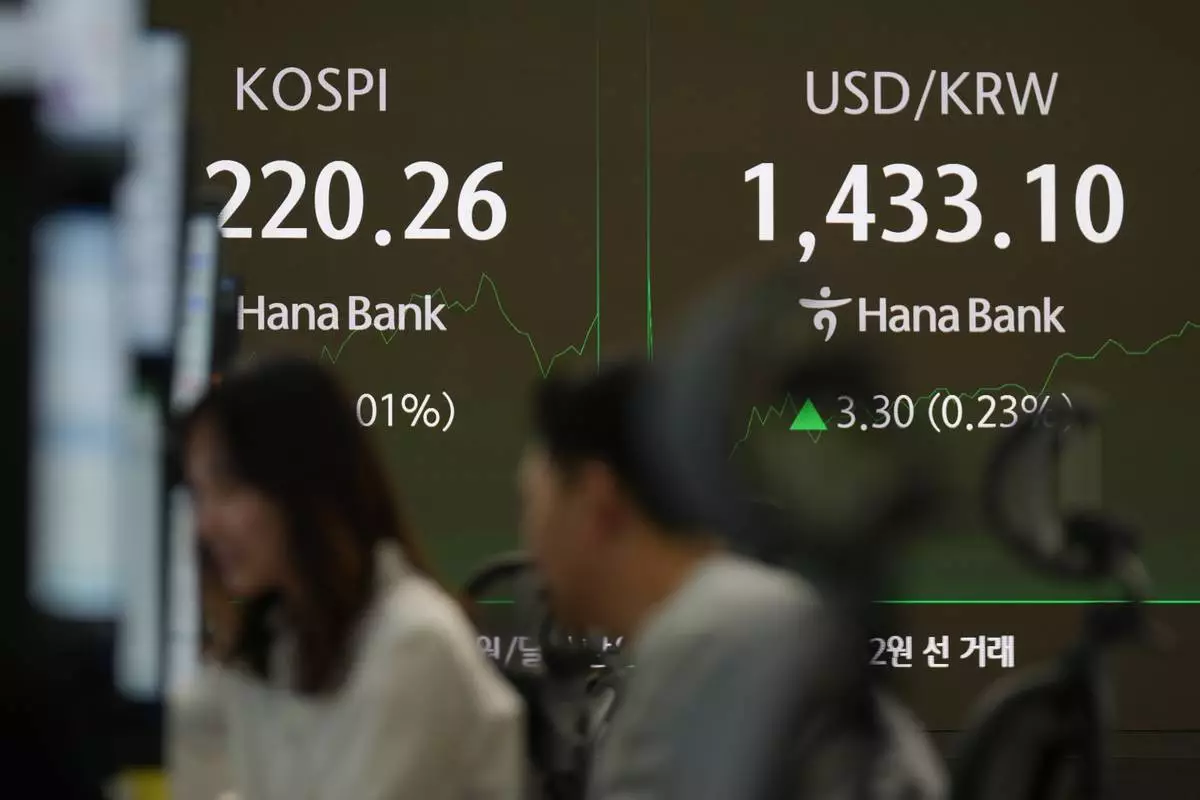
The screens showing the Korea Composite Stock Price Index (KOSPI), left, and the foreign exchange rate between U.S. dollar and South Korean won are seen at a dealing room of Hana Bank in Seoul, South Korea, Tuesday, Dec. 30, 2025. (AP Photo/Lee Jin-man)

The screens showing the Korea Composite Stock Price Index (KOSPI), left, and the foreign exchange rate between U.S. dollar and South Korean won are seen at a dealing room of Hana Bank in Seoul, South Korea, Tuesday, Dec. 30, 2025. (AP Photo/Lee Jin-man)

The screens show the Korea Composite Stock Price Index (KOSPI), left, the foreign exchange rate between U.S. dollar and South Korean won and the Korean Securities Dealers Automated Quotations (KOSDAQ) at a dealing room of Hana Bank in Seoul, South Korea, Tuesday, Dec. 30, 2025. (AP Photo/Lee Jin-man)

The screens show the Korea Composite Stock Price Index (KOSPI), left, the foreign exchange rate between U.S. dollar and South Korean won and the Korean Securities Dealers Automated Quotations (KOSDAQ) at a dealing room of Hana Bank in Seoul, South Korea, Tuesday, Dec. 30, 2025. (AP Photo/Lee Jin-man)

A dealer watches computer monitors at a dealing room of Hana Bank in Seoul, South Korea, Tuesday, Dec. 30, 2025. (AP Photo/Lee Jin-man)

A dealer watches computer monitors at a dealing room of Hana Bank in Seoul, South Korea, Tuesday, Dec. 30, 2025. (AP Photo/Lee Jin-man)

Recommended Articles