WASHINGTON (AP) — Leaders at the Pentagon have significantly altered how military officials will speak with Congress after a pair of new memos issued last week.
In an Oct. 15 memo, Defense Secretary Pete Hegseth and his deputy, Steve Feinberg, ordered Pentagon officials — including the chairman of the Joint Chiefs of Staff — to obtain permission from the department’s main legislative affairs office before they have any communication with Capitol Hill.
The memo was issued the same day the vast majority of Pentagon reporters exited the building rather than agree to the Defense Department's new restrictions on their work, and it appears to be part of a broader effort by Hegseth to exert tighter control over what the department communicates to the outside world.
According to the memo, a copy of which was authenticated by a Pentagon official, “unauthorized engagements with Congress by (Pentagon) personnel acting in their official capacity, no matter how well-intentioned, may undermine Department-wide priorities critical to achieving our legislative objectives.”
Sean Parnell, the top Pentagon spokesman, called the move a “pragmatic step” that’s part of an effort “to improve accuracy and responsiveness in communicating with the Congress to facilitate increased transparency.”
Previously, individual agencies and military branches within the Pentagon were able to manage their own communications with Congress.
A second memo, issued Oct. 17, directed a “working group to further define the guidance on legislative engagements.”
The memos were first reported by the website Breaking Defense.
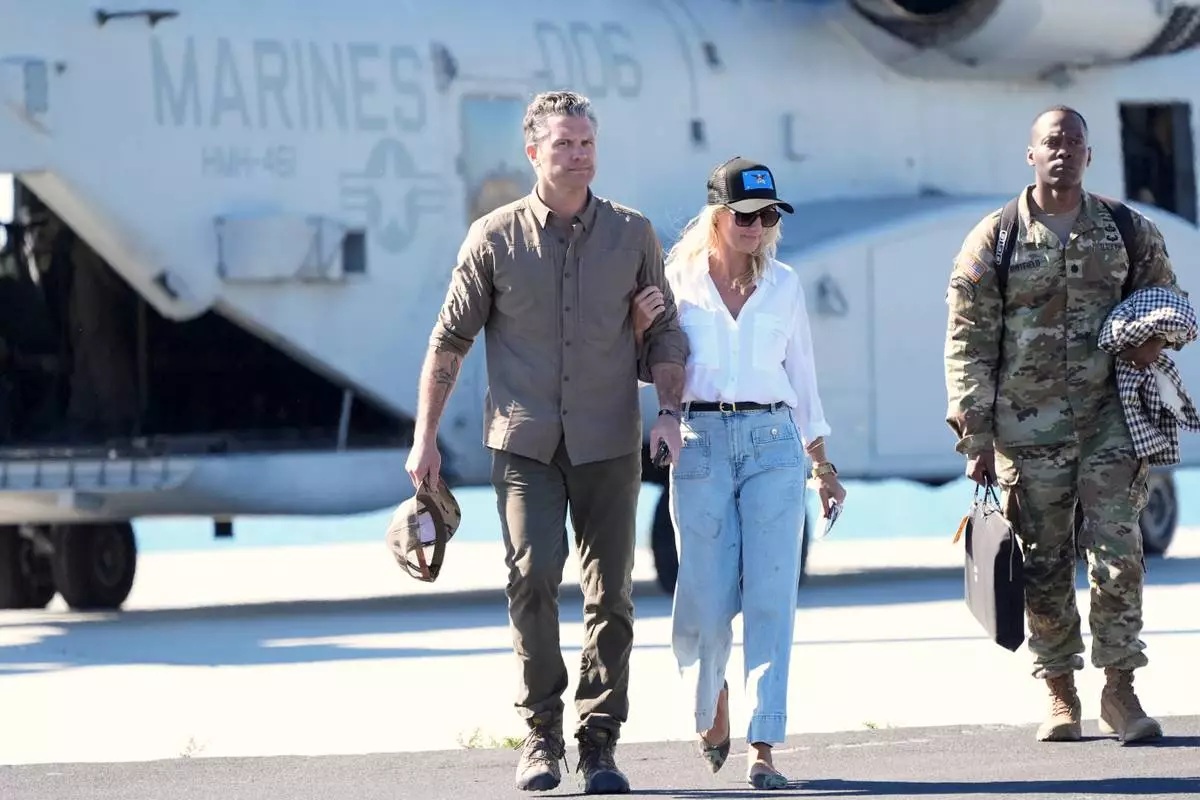
Defense Secretary Pete Hegseth, from left, and his wife Jennifer Rauchet walk during activities to mark the upcoming Marine Corps' 250th anniversary Saturday, Oct 18, 2025, on Marine Corps Base Camp Pendleton in Camp Pendleton, Calif. (AP Photo/Gregory Bull)
FRANKFURT, Germany (AP) — Germany's troubled economy returned to modest growth last year after two years of falling output, official figures showed, as hopes rise that government spending on bridges, rail lines and defense may help end years of stagnation.
The expansion in gross domestic product of 0.2% for 2025 was fueled by stronger consumer and government spending while exports sagged under the weight of more restrictive U.S. trade policy under President Donald Trump, the German Federal Statistical Office said on Thursday.
That follows shrinkage of 0.5% in 2024 and 0.9% in 2023.
“Germany’s export business faced strong headwinds owing to higher U.S. tariffs, the appreciation of the euro and increased competition from China,” statistical office head Ruth Brand said in a statement accompanying the statistical release.
Expectations have risen for Germany to finally see stronger growth this year as the government under Chancellor Friedrich Merz implements plans to increase spending on infrastructure to make up for years of underinvestment. Meanwhile defense spending is rising due to a perceived higher level of threat from Russia after its invasion of Ukraine.
Germany has endured a period of extended stagnation following the COVID-19 pandemic. Higher energy costs following the war in Ukraine and increasing competition from China in key German specialties such as autos and industrial machinery have held back an economy that is heavily focused on exports. Then came Trump's imposition of higher tariffs, or import taxes, on goods from the European Union. The slow growth has also exposed long-term structural issues such as excessive bureaucracy and lack of skilled labor. A stronger euro has also made exports less competitive on price.
A group of leading economists has predicted 0.9% growth for this year but said that forecast could be at risk if the increase in government spending is unleashed more slowly than expected.
The German economy grew 0.2% in the last three months of 2025, according to available preliminary data.
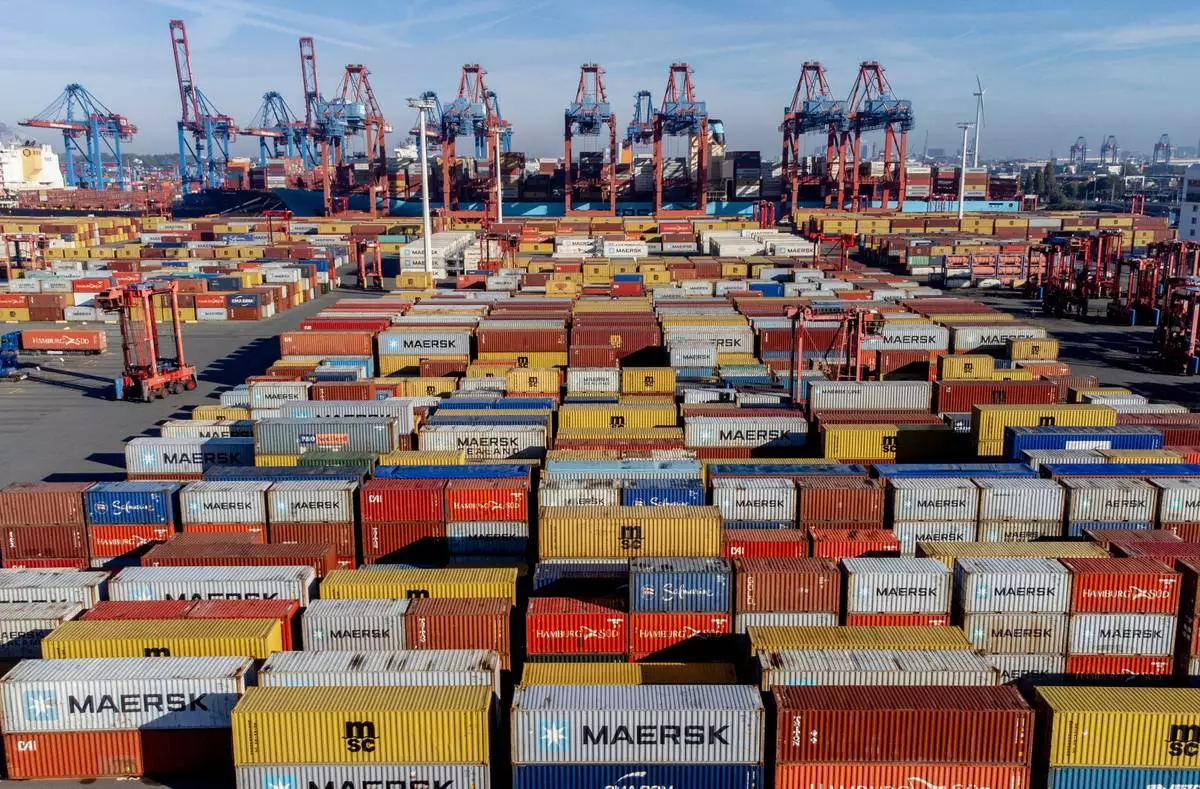
FILE - Containers are piled up in the harbor in Hamburg, Germany, on Oct. 26, 2022. (AP Photo/Michael Probst, file)