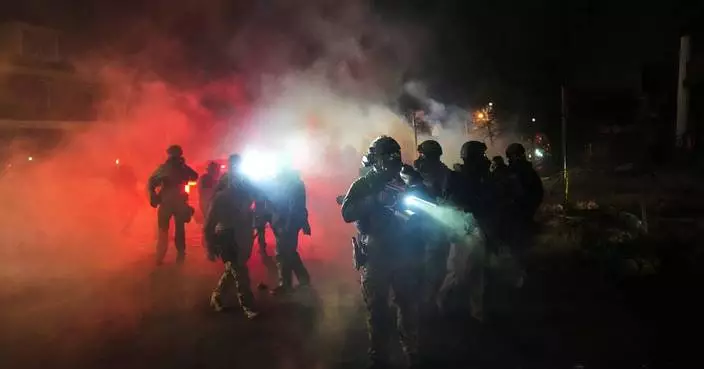
BELGRADE, Serbia (AP) — A fire and shooting at a camp hosting loyalists of Serbian President Aleksandar Vucic in central Belgrade on Wednesday injured one person, officials said, while Vucic described the incident as a “terrorist attack.”
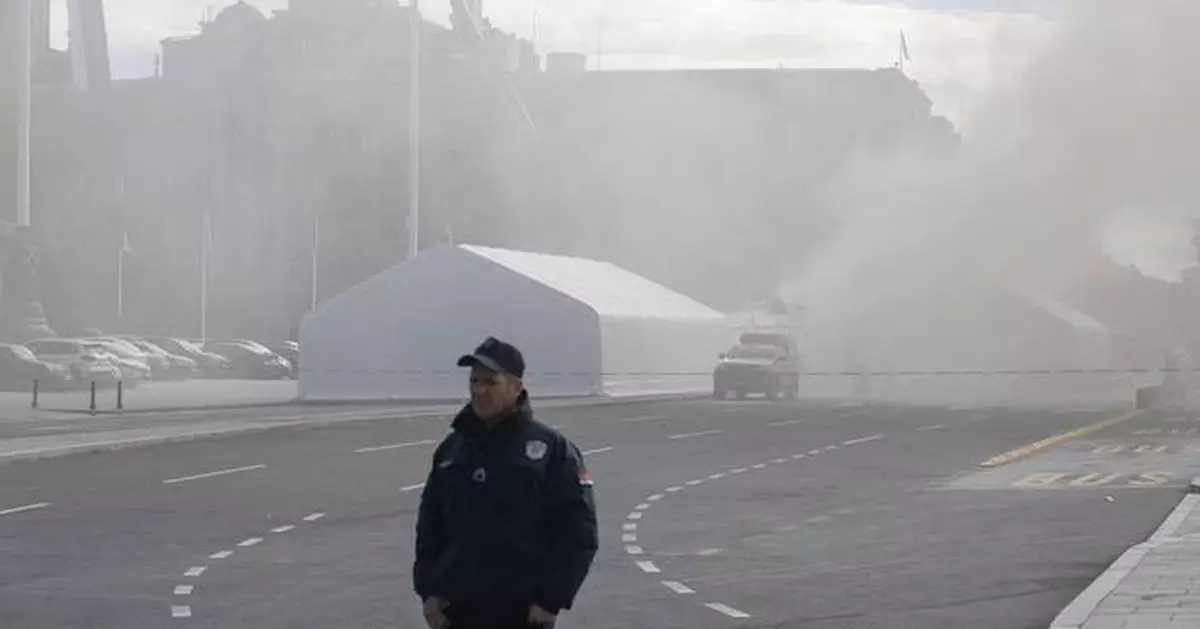
The fire erupted Wednesday morning at the tents outside the Serbian parliament building, which were set up in March as an apparent human shield against anti-government protests that have roiled Serbia for months and pose the most serious challenge to Vucic's rule.
Police said they arrested a 70-year-old man who fired shots toward one of the tents, sparking the fire. The man is facing charges of attempted murder, causing public danger and illegal possession of weapons, police said.
The camp, known colloquially as “Caciland,” encompasses the white-tent settlement in and around the park and the public square near the parliament building and the president's office.
Footage showed the fire breaking out in a tent after a series of popping sounds that resembled gunfire. Several police officers around the tent camp ducked, pulled out guns and told people for take cover.
Vucic described it as an “awful terrorist attack," telling a hastily called press conference that “it is my political judgement” because the man “used firearm with an aim to cause public danger and with an undoubtful political motive.” Pro-government tabloids accused a government opponent of being behind the reported shooting.
Vucic also showed video footage of the incident and the alleged shooter confessing upon arrest that he wanted police to kill him, and that he was “annoyed by the tents” in Belgrade.
“It was a question of time before this would happen,” said Vucic, who repeatedly has accused anti-government protesters of violence although their protests have largely been peaceful. “There were countless calls for this (shooting.)”
Health Minister Zlatibor Loncar said one person suffered serious injuries after being shot by a “man who thinks differently.” He did not elaborate.
The incident came ahead the Nov. 1 rally marking the first anniversary of a train station canopy collapse that triggered huge youth-led protests against Vucic's authoritarian rule.
The mass rally is planned in Novi Sad, where the Nov. 1, 2024, canopy collapse killed 16 people and was blamed on graft-fueled negligence in construction projects.
Authorities launched a campaign of intimidation against the protesters, including reports of arbitrary arrests and police violence. Serbia's Gen Z protesters have been demanding Vucic schedule an early parliamentary election, which he has so far refused.
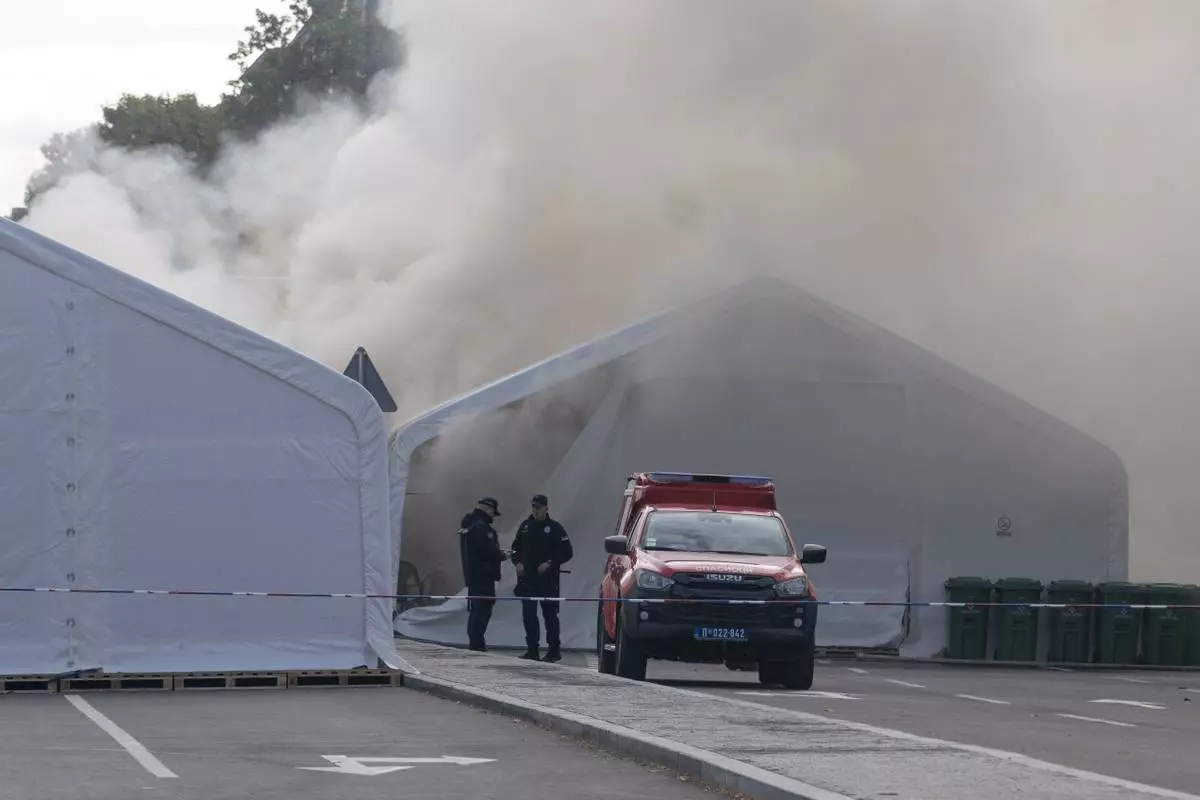
Police officers stand on a street as a fire is localized in the government supporters' camp outside the Serbian parliament in Belgrade, Serbia, Wednesday, Oct. 22, 2025. (AP Photo/Marko Drobnjakovic)
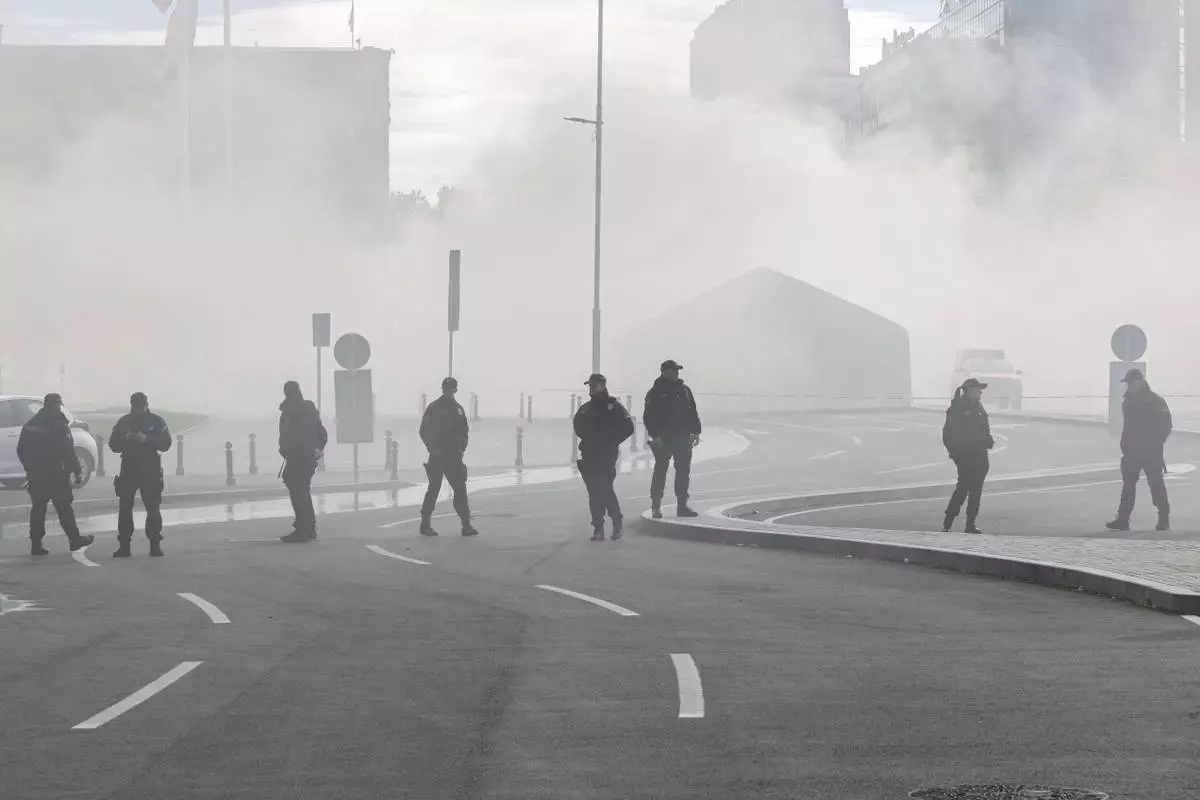
Police officers stand on a street as a fire is localized inside the government supporters' camp outside the Serbian parliament in Belgrade, Serbia, Wednesday, Oct. 22, 2025. (AP Photo/Marko Drobnjakovic)
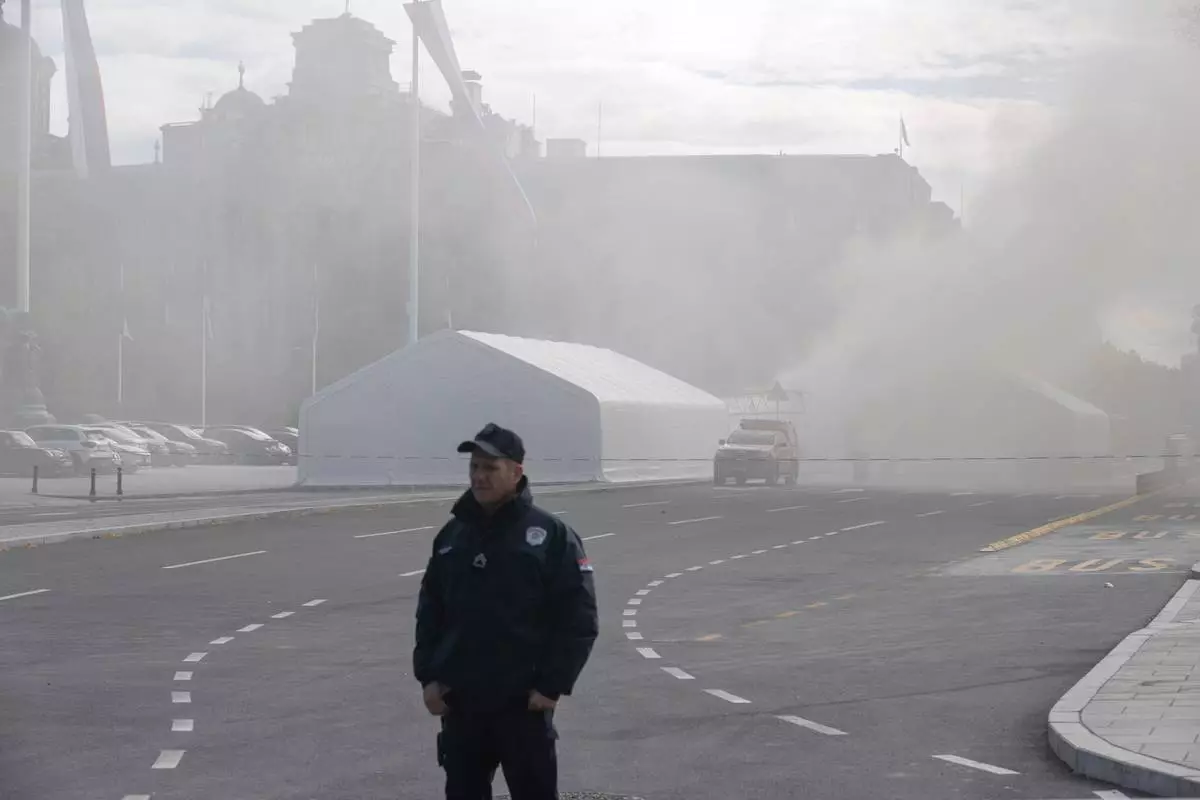
A policeman stands guard as a fire is localized inside the government supporters' camp outside the Serbian parliament in Belgrade, Serbia, Wednesday, Oct. 22, 2025. (AP Photo/Marko Drobnjakovic)
CARACAS, Venezuela (AP) — President Donald Trump is set to meet Thursday at the White House with Venezuelan opposition leader María Corina Machado, whose political party is widely considered to have won 2024 elections rejected by then-President Nicolás Maduro before the United States captured him in an audacious military raid this month.
Less than two weeks after U.S. forces seized Maduro and his wife at a heavily guarded compound in Caracas and brought them to New York to stand trial on drug trafficking charges, Trump will host the Nobel Peace Prize laureate Machado, having already dismissed her credibility to run Venezuela and raised doubts about his stated commitment to backing democratic rule in the country.
“She’s a very nice woman,” Trump told Reuters in an interview about Machado. “I’ve seen her on television. I think we’re just going to talk basics.”
The meeting comes as Trump and his top advisers have signaled their willingness to work with acting President Delcy Rodríguez, who was Maduro’s vice president and along with others in the deposed leader's inner circle remain in charge of day-to-day governmental operations.
Rodríguez herself has adopted a less strident position toward Trump and his “America First” policies toward the Western Hemisphere, saying she plans to continue releasing prisoners detained under Maduro — a move reportedly made at the behest of the Trump administration. Venezuela released several Americans this week.
Trump, a Republican, said Wednesday that he had a “great conversation” with Rodríguez, their first since Maduro was ousted.
“We had a call, a long call. We discussed a lot of things,” Trump told reporters. “And I think we’re getting along very well with Venezuela.”
In endorsing Rodríguez, Trump has sidelined Machado, who has long been a face of resistance in Venezuela. She had sought to cultivate relationships with Trump and key advisers like Secretary of State Marco Rubio among the American right wing in a political gamble to ally herself with the U.S. government. She also intends to have a meeting in the Senate on Thursday afternoon.
Despite her alliance with Republicans, Trump was quick to snub her following Maduro’s capture. Just hours afterward, Trump said of Machado that “it would be very tough for her to be the leader. She doesn’t have the support within or the respect within the country. She’s a very nice woman, but she doesn’t have the respect.”
Machado has steered a careful course to avoid offending Trump, notably after winning last year’s Nobel Peace Prize, which Trump coveted. She has since thanked Trump and offered to share the prize with him, a move that has been rejected by the Nobel Institute.
Machado’s whereabouts have been largely unknown since she went into hiding early last year after being briefly detained in Caracas. She briefly reappeared in Oslo, Norway, in December after her daughter received the Nobel Peace Prize on her behalf.
The industrial engineer and daughter of a steel magnate began challenging the ruling party in 2004, when the nongovernmental organization she co-founded, Súmate, promoted a referendum to recall then-President Hugo Chávez. The initiative failed, and Machado and other Súmate executives were charged with conspiracy.
A year later, she drew the anger of Chávez and his allies again for traveling to Washington to meet President George W. Bush. A photo showing her shaking hands with Bush in the Oval Office lives in the collective memory. Chávez considered Bush an adversary.
Almost two decades later, she marshaled millions of Venezuelans to reject Chávez’s successor, Maduro, for another term in the 2024 election. But ruling party-loyal electoral authorities declared him the winner despite ample credible evidence to the contrary. Ensuing anti-government protests ended in a brutal crackdown by state security forces.
Janetsky reported from Mexico City. AP Diplomatic Writer Matthew Lee in Washington contributed to this report.
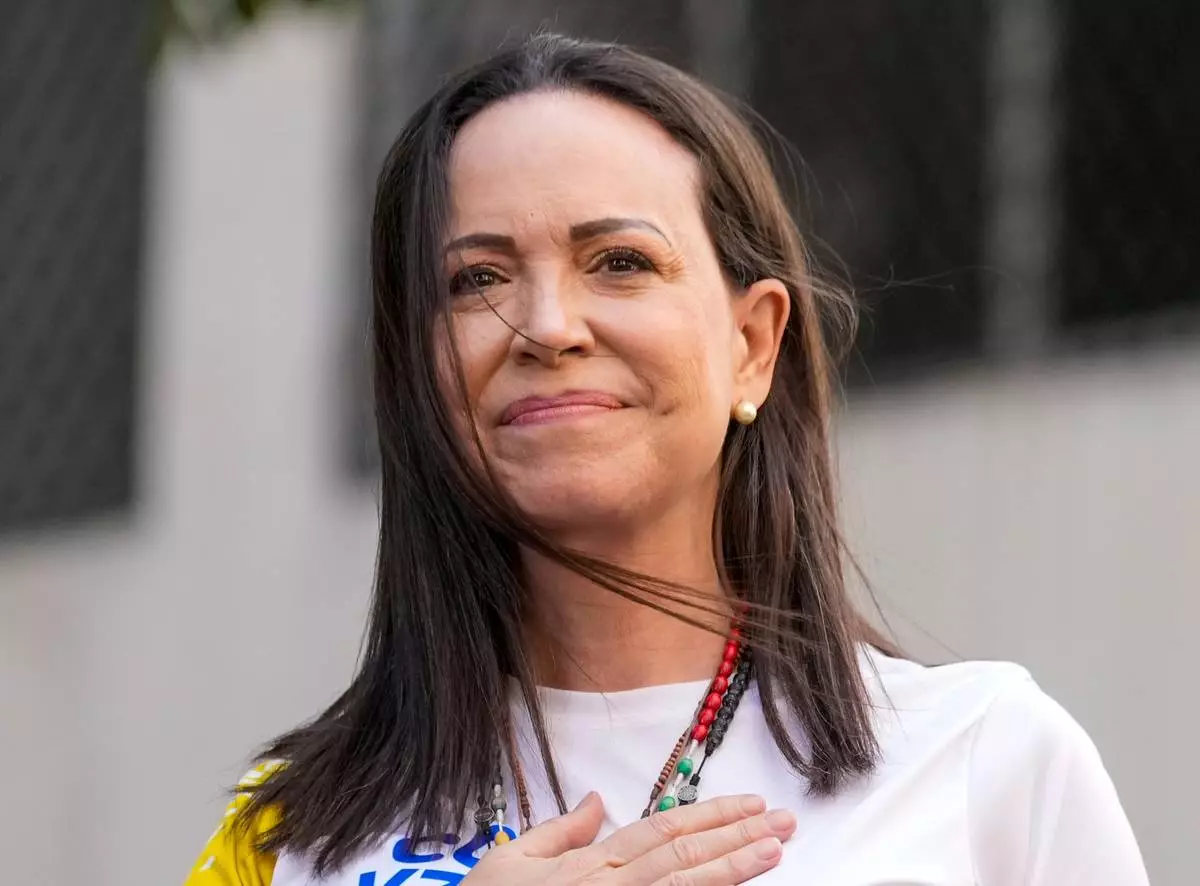
FILE - Opposition leader Maria Corina Machado gestures to supporters during a protest against President Nicolas Maduro the day before his inauguration for a third term, in Caracas, Venezuela, Thursday, Jan. 9, 2025. (AP Photo/Ariana Cubillos, file)